This painting by Thomas Eakins is an example of which artistic movement?
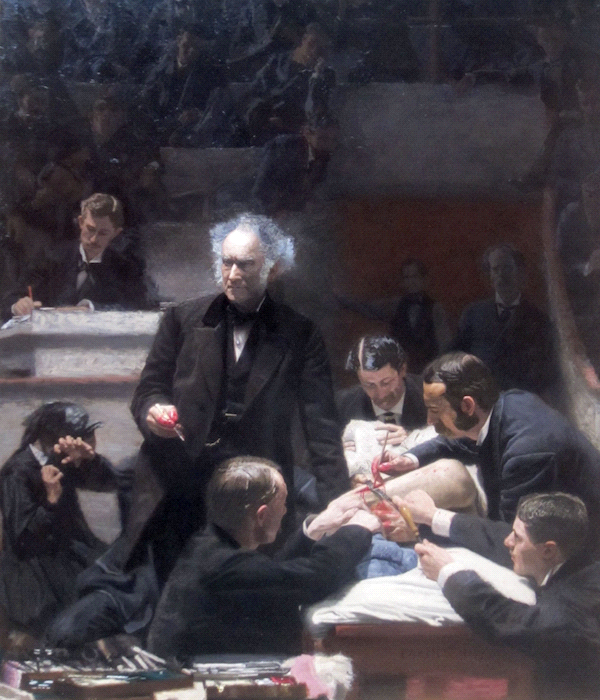
This painting by Thomas Eakins is an example of which artistic movement?
| Draggable item | arrow_right_alt | Corresponding Item |
|---|---|---|
Socialism | arrow_right_alt | Device that used coal and steam to generate power; fueled most early factories |
Cult of Domesticity | arrow_right_alt | Small and cramped single-family apartments that typically housed multiple families at once |
Karl Marx | arrow_right_alt | Scottish economist who established the ideas of free enterprise and laissez faire |
Tenements | arrow_right_alt | Economic system where the means of production are collectively owned by the public |
Adam Smith | arrow_right_alt | American inventor responsible for the light bulb, phonograph, and motion pictures |
Child labor | arrow_right_alt | Social system of the late 1800s where women were seen exclusively as homemakers: raising children, running the estate, managing servants |
Realism | arrow_right_alt | English philosopher who was the first to apply Darwin's theory of natural selection to human societies |
Samuel Morse | arrow_right_alt | Use of minors as laborers inside factories or mines |
Herbert Spencer | arrow_right_alt | German philosopher who saw all history as class conflict and believed there would be an international revolution where workers eliminated the ideas of private ownership and class |
Thomas Edison | arrow_right_alt | Inventor of the telegraph and the system used to interpret its signals |
Steam engine | arrow_right_alt | Artistic movement that criticized Romanticism, depicting life as it was during the Industrial Revolution |
Which statement best reflects the values of the social gospel movement?
What did Karl Marx predict would be the final result of centuries of class struggle and economic competition?
“Shortly before mid-day I placed the single earphone to my ear and started listening. . . . I heard, faintly but distinctly, pip-pip-pip. . . . I now felt for the first time absolutely certain that the day would come when mankind would be able to send messages without wires not only across the Atlantic, but between the farthermost ends of the earth.”
The person most likely to have spoken these words was
Industrial-era Americans who accused oil tycoon John D. Rockefeller of being a ruthless and greedy monopolist would likely have called him a...
“What is a microorganism [a microbe] that is innocuous [not harmful] to man or to a given animal species? It is a living being which does not possess the capacity to multiply in our body or in the body of the animal. But nothing proves that if the same microorganism should chance to come into contact with some other of the thousands of animal species in the Creation, it might invade it and render it sick. Its virulence might increase by repeated passages through that species, and might eventually affect man or domesticated animals.”
— Louis Pasteur
Which conclusion can be drawn from this quotation from Louis Pasteur?
The British philosopher Herbert Spencer coined the phrase “survival of the fittest.” With which theory is it most closely associated?
How did industrial tycoons use Social Darwinism to justify their business practices?
The invention of the steam engine was a key step that eventually led to...
This painting by Thomas Eakins is an example of which artistic movement?
Leaders of the temperance movement argued that a ban on alcohol would lead to
In practice, which economic system led to the highest degree of government control over economic decisions?
The practice of enclosure helped increase farm outputs by...
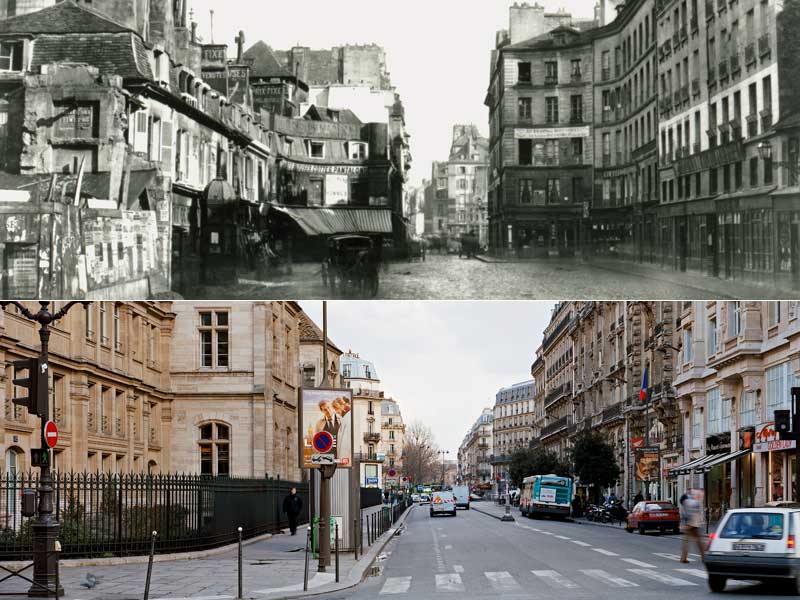
Georges Haussmann redesigned Paris in the 1850s (as seen below), transforming the city with spacious new squares and boulevards lined with government buildings, offices, department stores, and theaters. What was a major reason for this early experiment in urban renewal?
“Yes; the machine turns off a regular quantity of cardings, and of course, they must keep as regularly to their work the whole of the day; they must keep with the machine, and therefore however humane the slubber [the boss] may be, as he must keep up with the machine or be found fault with, he spurs the children to keep up also by various means but that which he commonly resorts to is to strap them when they become drowsy.”
—excerpt from Sadler Report
This is an excerpt from the 1832 Sadler Report, which resulted in
“We have been driven to the conclusion that only through legislation can any improvement be effected, and that that legislation can never be effected until we have the same power as men have to bring pressure to bear upon our representatives and upon Governments to give us the necessary legislation. . . . We are here not because we are law-breakers; we are here in our efforts to become law-makers.”
— Emmeline Pankhurst, The Prisoners at Bow Street speech, October 21, 1908
Which statement best summarizes the main idea of this quotation from Emmeline Pankhurst, a leader in the women’s suffrage movement?
Which of the following statements would most likely be supported in The Wealth of Nations by Adam Smith?
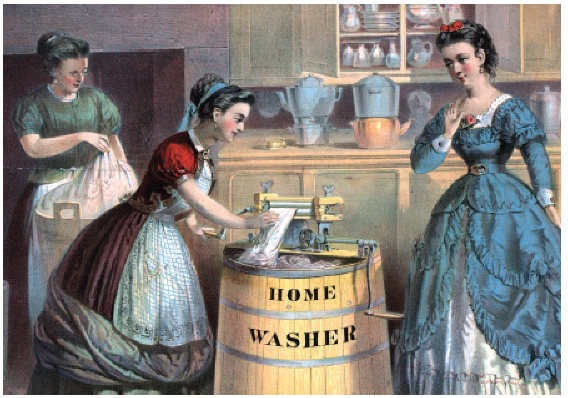
What does this image illustrate about the role of women in industrial Britain?
One of the positive effects of the Industrial Revolution was increased...
“The very first requirement in a hospital, is that it should do the sick no harm.”
— Florence Nightingale, Notes on Nursing 1859.
Which of the following would have been a step toward achieving the goal described in this quotation from Florence Nightingale?
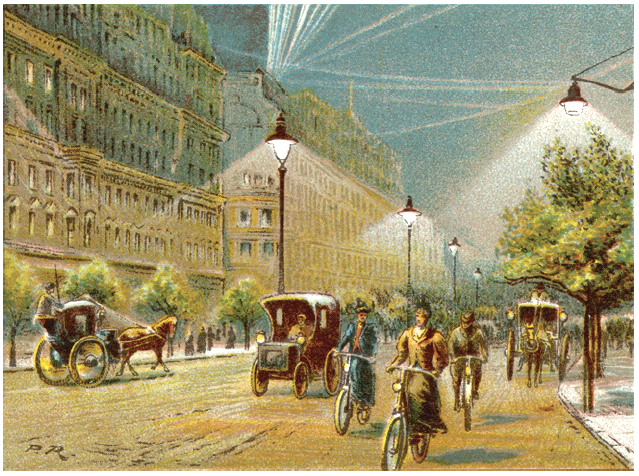
This street scene from the late 19th century illustrates the impact of which two inventors on urban life?
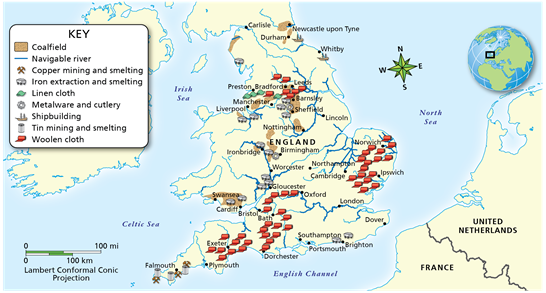
Based on this map, why do you think the cities of Birmingham and Sheffield became centers for the manufacture of metalware and cutlery?
What is formed when one person or company controls an entire industry?
How did the Industrial Revolution affect children?
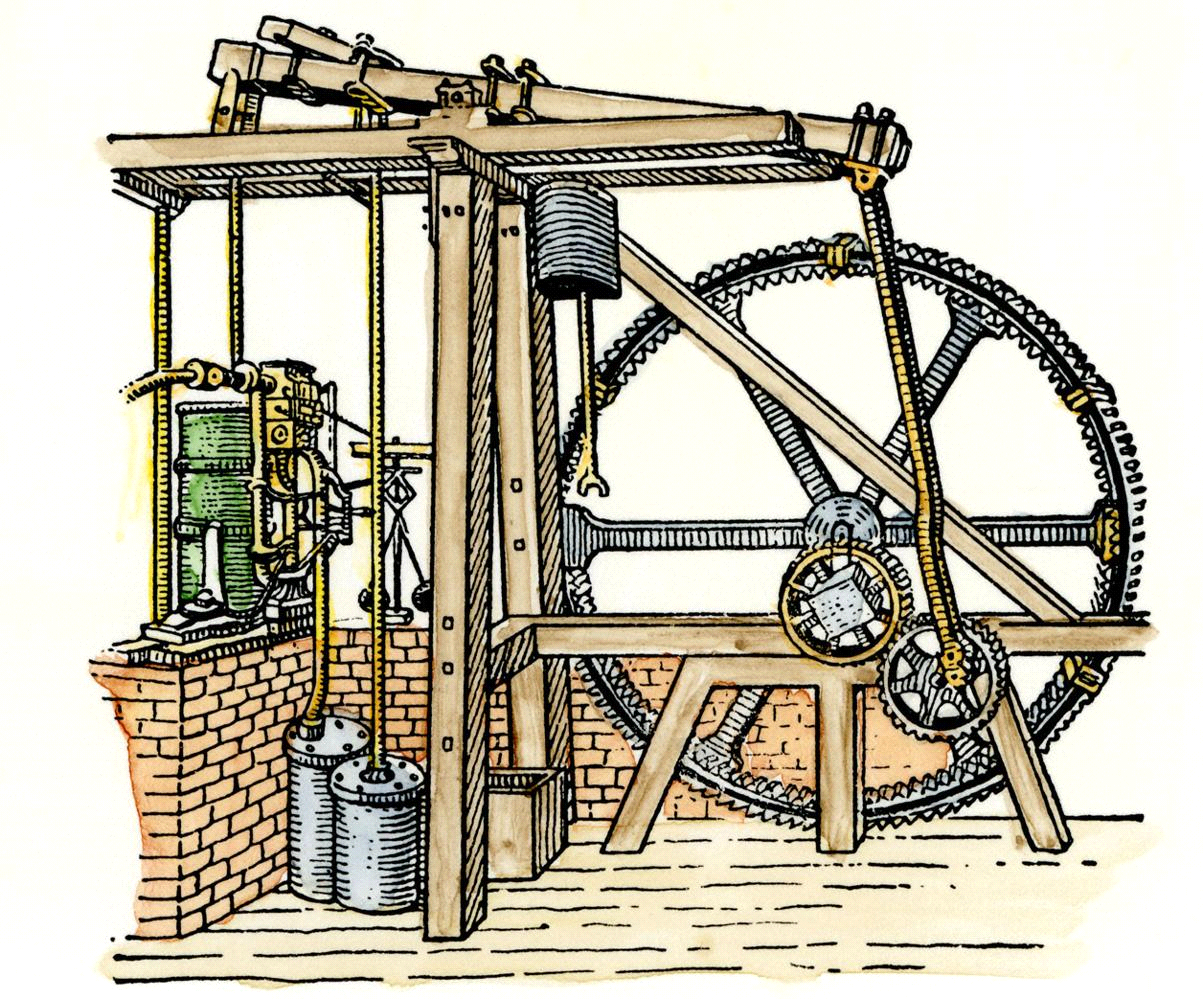
Which British invention, shown here, revolutionized industry and transportation?
Which statement best describes how changes in agriculture supported the early Industrial Revolution?
“Owing to the extensive use of machinery and to division of labor, the work of the proletarians has lost all individual character, and consequently, all charm for the workman. He becomes [a limb] of the machine, and it is only the most simple, most monotonous, and most easily acquired knack that is required of him. Hence, the cost of production of a workman is restricted entirely to the means of [survival] that he requires for his maintenance. . . .”
— Karl Marx and Friedrich Engels, The Communist Manifesto
In this quotation from The Communist Manifesto, what is the position of the worker in factories?
What is the main reason the “putting-out” system (cottage system) gave way to the factory system in the British textile industry?
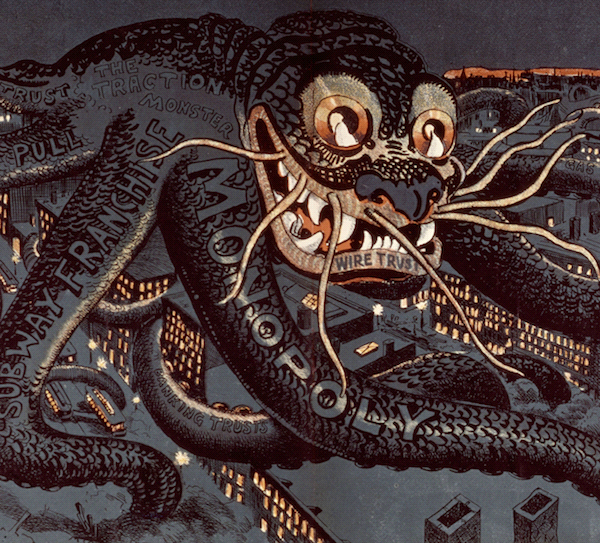
What does this 1889 cartoon emphasize about big business and monopolies?
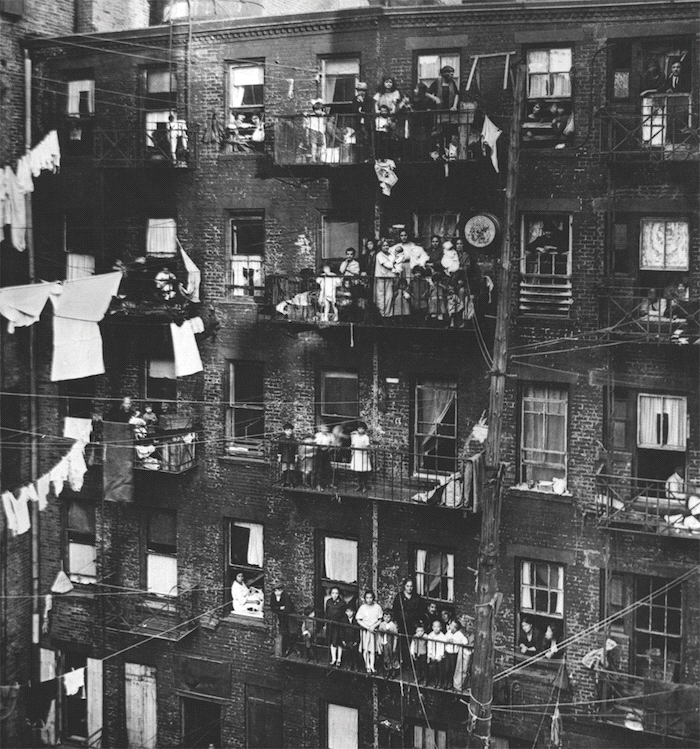
This photograph shows ____________ and illustrates the crowded, dirty conditions that many workers lived in as industrial cities grew.
“Woman is to win every thing by peace and love; by making herself so much respected, esteemed and loved, that to yield to her opinions and to gratify her wishes, will be the free-will offering of the heart. But this is to be all accomplished in the domestic and social circle. There let every woman become so cultivated and refined in intellect . . . so unassuming and unambitious . . . so ‘gentle and easy to be entreated,’ as that every heart will repose in her presence; then, the fathers, the husbands, and the sons, will find an influence thrown around them, to which they will yield not only willingly but proudly.”
Which social development is reflected in this 1837 quotation from Catharine Beecher?
Choose TWO of the following prompts and respond in complete sentences.
1. How did the creation of the factory system and new forms of transportation affect the growth and development of cities?
2. Which factors gave rise to socialism? How does socialism differ from laissez-faire capitalism?
3. Identify and explain a political, economic, or social factor that led to the Industrial Revolution beginning in Great Britain.