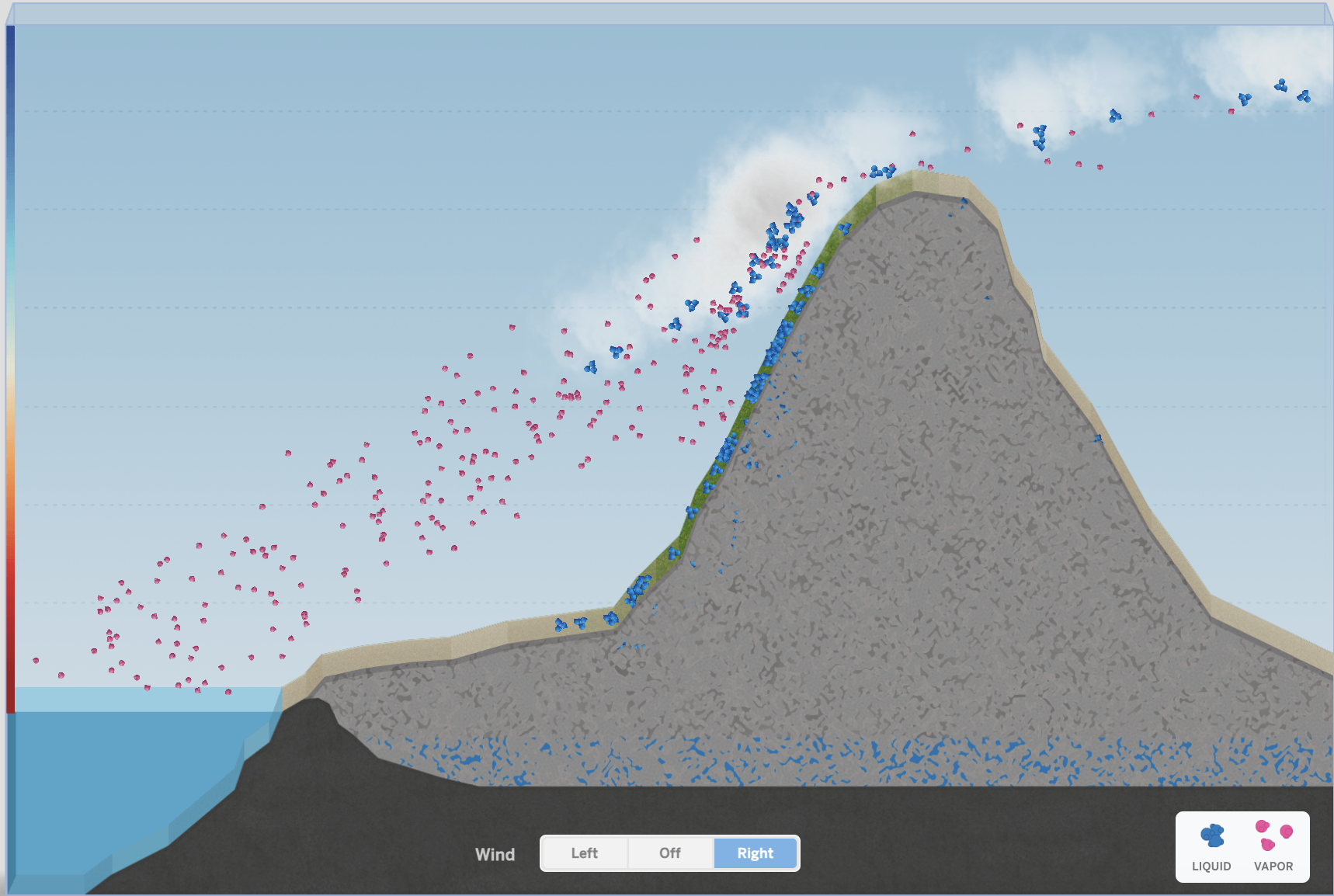
Choose the statement that best describes the movement of the water molecule that is outlined in the picture.
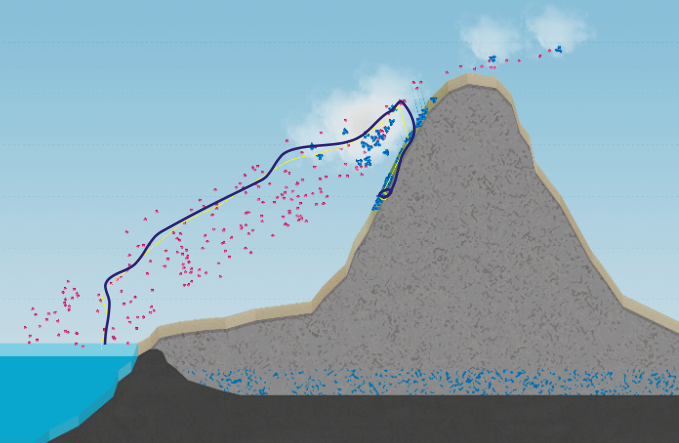
Choose the statement that best describes the movement of the water molecule that is outlined in the picture.
Choose the statement that best describes the movement of the water molecule that is outlined in the picture.
What are the 2 factors (things) that can cause water vapor to move to different parts of the atmosphere?
Click on the link to the sim: https://learning.amplify.com/earthsystem/#level/3
GOAL: Use the Sim to gather data about why one side of a mountain could get more rain than the other side, then answer the questions.
Choose Landscape 3.
In RUN, with Water Molecules ON, set Wind to blow RIGHT.
Press ANALYZE and use the slider to scroll backward in time.
Press on a water molecule that has just evaporated from the ocean to track its path, and scroll forward in time to observe its path.
In the table, make a tally mark to record what happened to the molecule.
Repeat steps 5-6 for at least 15 more molecules.
In the table, make a tally mark to record what happened to the molecule. Repeat steps 5-6 for at least 15 more molecules.
What happened to most of the water vapor? The water vapor __________
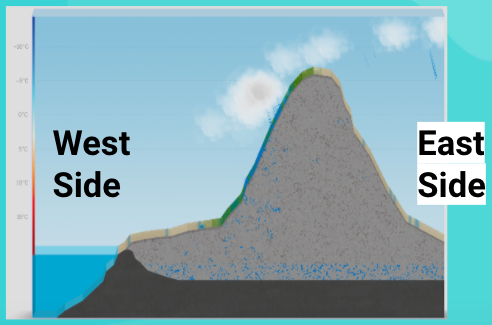
Where did most of the rain fall, on the East side or the West side?
The uneven pattern of rain caused by wind and mountains is called the rain shadow effect.
It rains more on one side of the mountain than the other side.
The dry area on one side of the mountain is called a rain shadow.
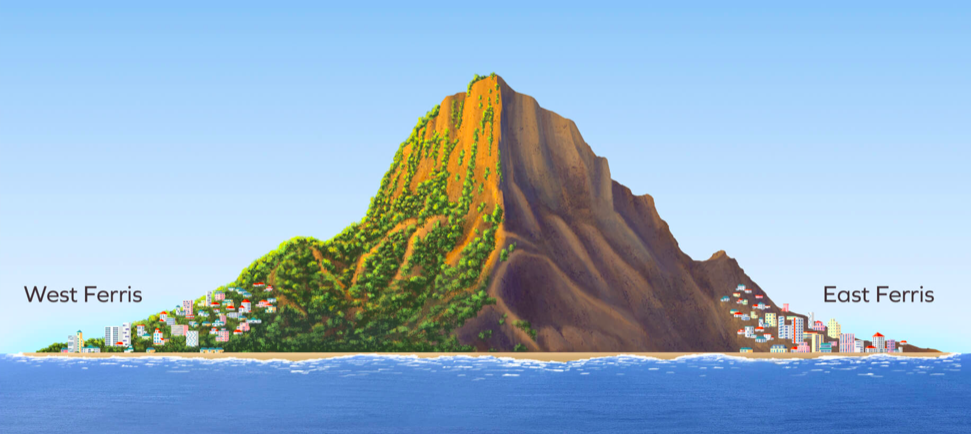
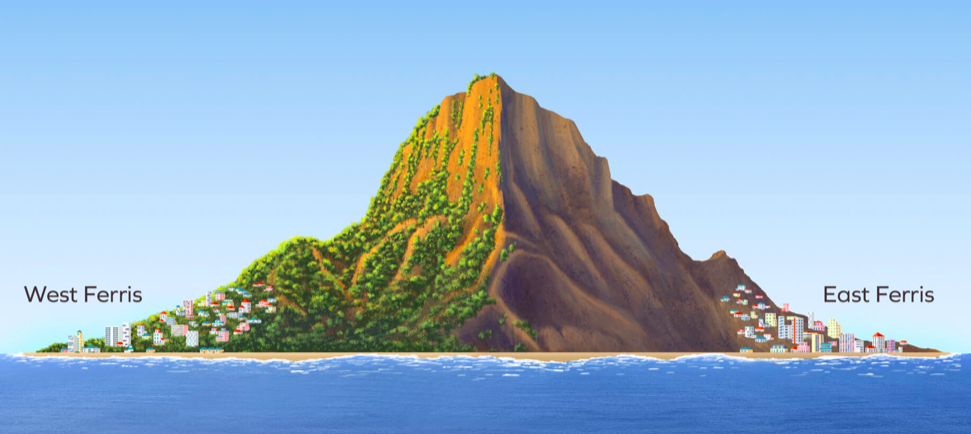
What side of Ferris Island is experiencing a rain shadow (dry area on one side of the mountain) - East Ferris or West Ferris?
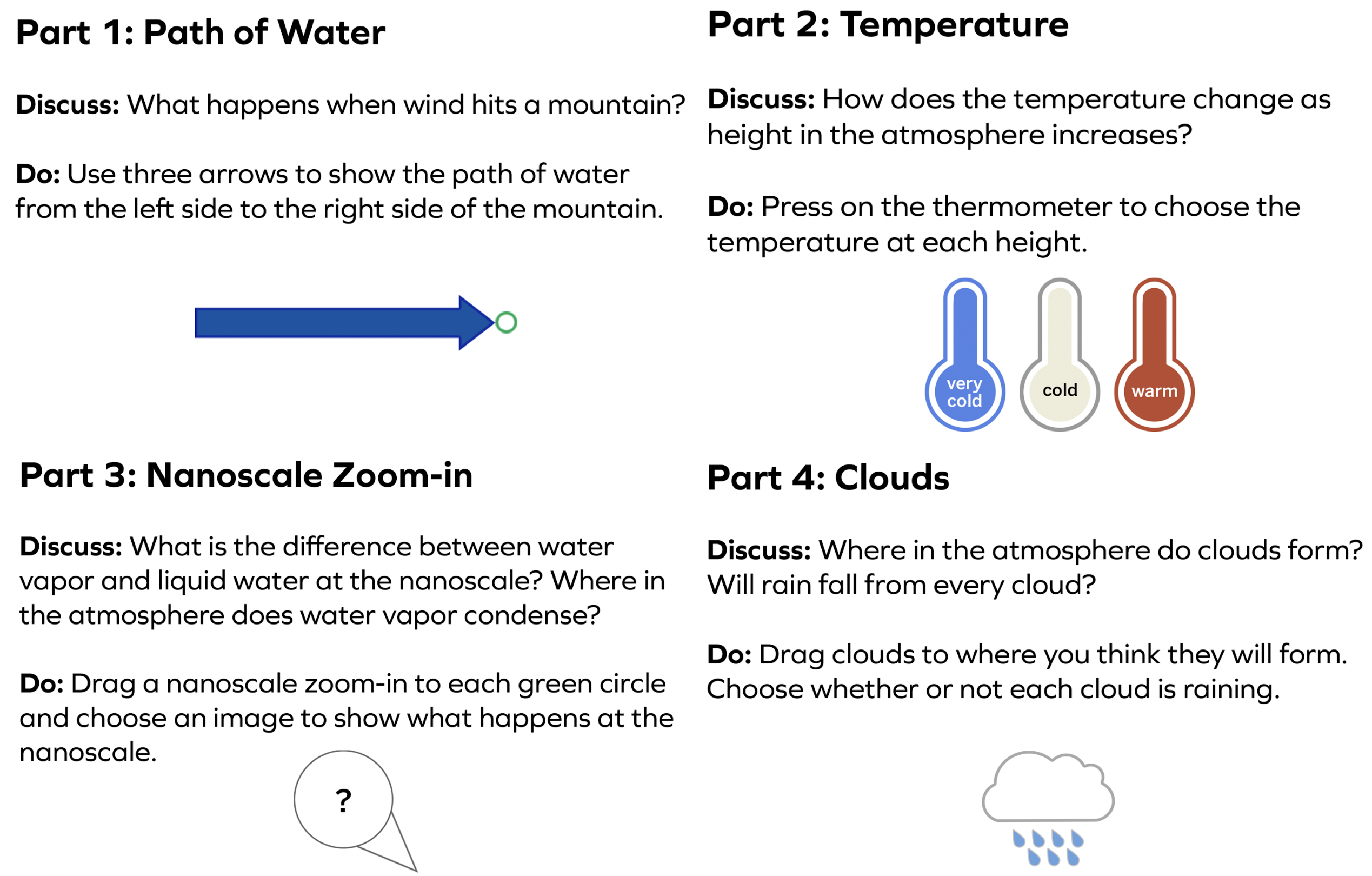
GOAL: Show what happens to water in the atmosphere when wind blows towards a mountain.
Click on the link below to get to the Model:
https://learning.amplify.com/modelingtool/#/tool/175/level/42_Rain_Shadow_id_2969
Criteria for Success:
Arrows show direction of the wind
Criteria For Success:
Explain how the water vapor moves into the atmosphere.
Identify what part of the atmosphere and temperature where raindrops form.
Explain what happens to water vapor at that part of the atmosphere.
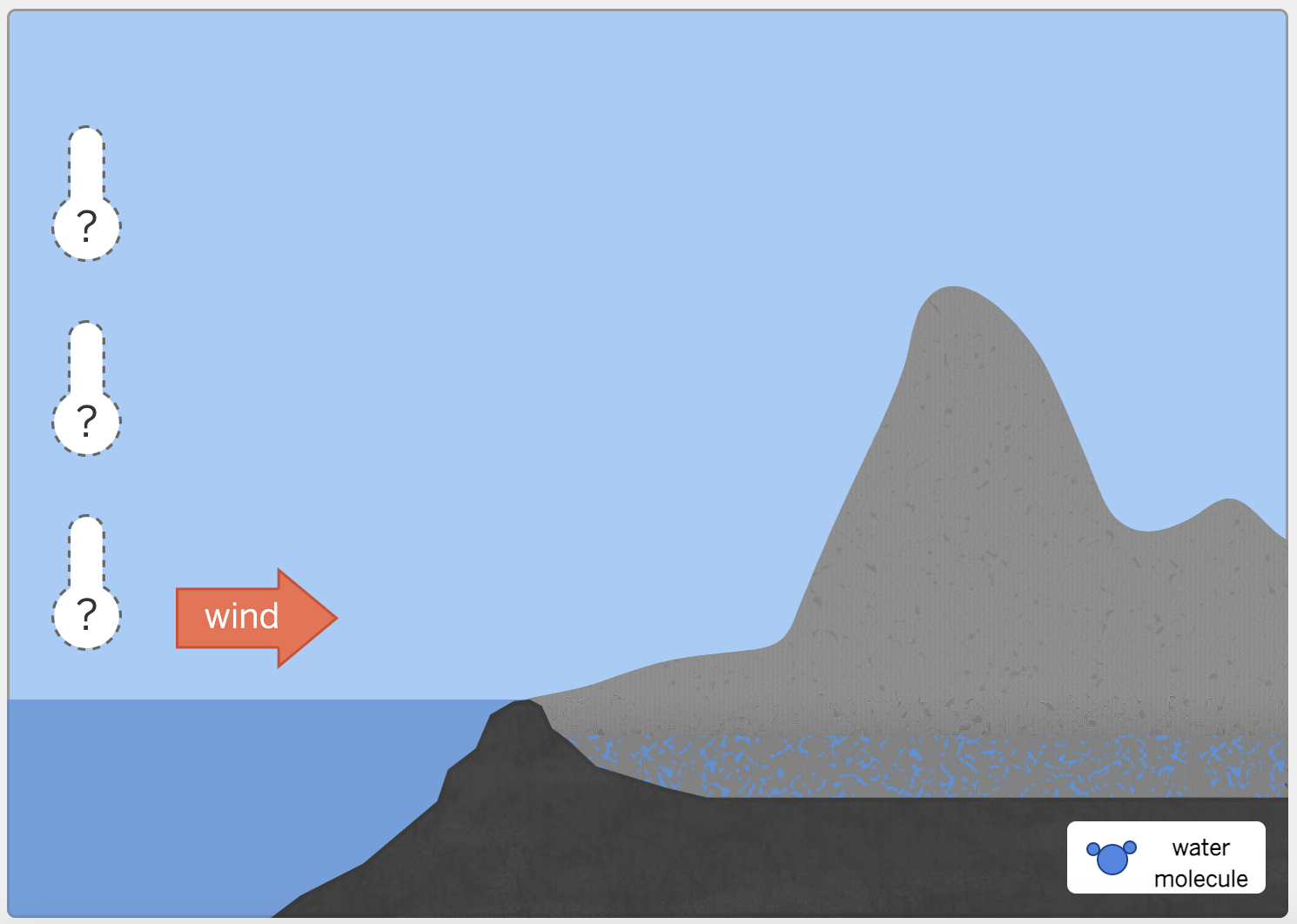
What happens to water molecules when the wind blows toward a mountain.
Explain what causes the rain shadow effect
Criteria For Success:
Identify where the water for raindrops come from
Identify the amount necessary for rain
Identify what part of the atmosphere where raindrops form.
Why does it rain more on the west side of the mountain?
Why does it rain less on the other side of the mountain?
Rain shadow Effect - one side of a mountain can get a lot of rain while the other side gets very little rain
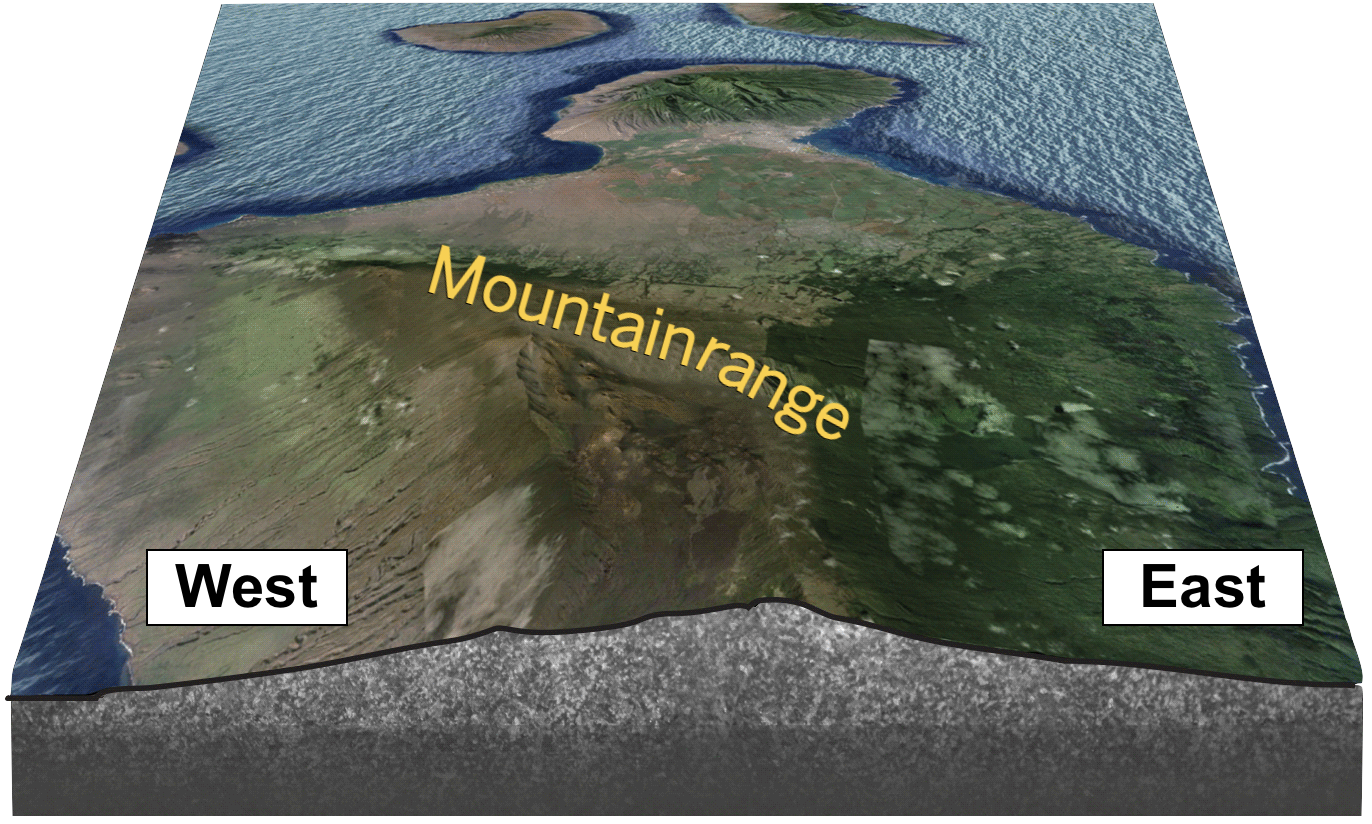
Which side of Maui is getting more rain? East or West? How do you know?
Which side is the rain shadow? East or West? How do you know?
We know that the water vapor in the air comes from liquid water that has evaporated.
Where does water vapor come from in this landscape (Maui)?
Click on the link to go the Maui Rainfall Model
https://learning.amplify.com/modelingtool/#/tool/175/level/42_Rainfall_Patterns-_Maui_id_2968
Use the arrow to show the direction of the wind.
Label where condensation and evaporation occurs.
Click on the link to go the Tibet Rainfall Model
https://learning.amplify.com/modelingtool/#/tool/175/level/42_Rainfall_Patterns-_Tibet_id_2966
Use the arrow to show the direction of the wind.
Label where condensation and evaporation occurs.
Your friend Jaleel was learning about the “spheres” on Earth. He says that the hydrosphere and the geosphere do not interact with one another, because when he looks at the ocean, a lake, or even a river, the water (hydrosphere) stops right where the sand (geosphere) begins.
Do you agree or disagree with Jaleel?
Explain your answer
Where did wind and mountain move the water vapor? Use the words wind and mountain in your answer.
Check For Understanding
Why did it rain more on one side of the mountain?
Check For Understanding
Why did it rain less on the other side of the mountain?