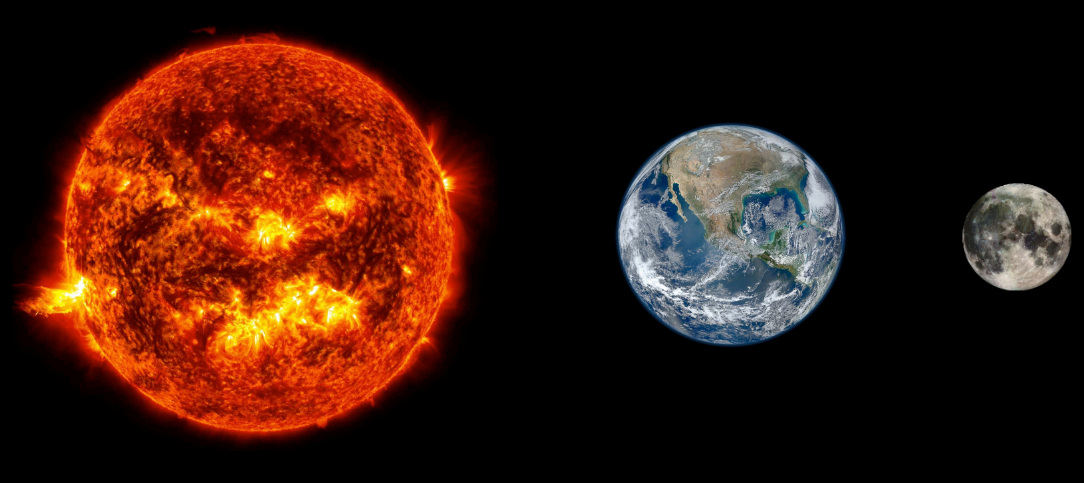
Drag each title to the correct celestial body.
Mmuae Afoforo a Wobɛpaw:
Earth
Sun
Moon
Which celestial body has the highest temperature on its surface?
What makes life possible on Earth compared to the Sun and Moon?
Which celestial body orbits around the Earth?
Which celestial body is smallest in size?
Match the celestial bodies with their physical characteristics.
| Draggable item | arrow_right_alt | Corresponding Item |
|---|---|---|
Moon | arrow_right_alt | Large gas ball radiating heat and light, central to solar system. |
Earth | arrow_right_alt | No atmosphere, experiences extreme temperature changes. |
Sun | arrow_right_alt | Has a breathable atmosphere and supports life. |
Pair these celestial objects with their corresponding atmosphere features.
| Draggable item | arrow_right_alt | Corresponding Item |
|---|---|---|
Earth | arrow_right_alt | Almost Non-Existent |
Moon | arrow_right_alt | Hot and Dense |
Sun | arrow_right_alt | Rich in Oxygen |
Align these celestial bodies with their position in the Solar System.
| Draggable item | arrow_right_alt | Corresponding Item |
|---|---|---|
Sun | arrow_right_alt | Earth's Satellite |
Earth | arrow_right_alt | Center |
Moon | arrow_right_alt | Third Planet |
Match the celestial body to its gravitational pull.
| Draggable item | arrow_right_alt | Corresponding Item |
|---|---|---|
Moon | arrow_right_alt | Medium |
Earth | arrow_right_alt | Strongest |
Sun | arrow_right_alt | Weakest |
What are the main gases present in the Earth's atmosphere?
What differentiates the Sun from the Earth and the Moon?
What are differences in the surface characteristics between Sun, Earth, and Moon?
What are two differences between the Earth and the Moon?
The Sun, the Earth, and the Moon are all about the same size.
The Moon is closer to Earth than the Sun and reflects the Sun's light.
True or False: The Sun is a planet like Earth and the moon, with a surface you could stand on.
The Sun produces its own light and heat due to nuclear reactions.
Explain the composition of each celestial body
Mostly Iron, Oxygen, Nitrogen, water
Hydrogen and Helium
Silicon, Iron, Magnesium
Sun's composition
Moon's composition
Earth's composition
Drag the physical characteristics to the correct celestial body.
23.5° tilt on axis
affects tides on Earth
Its gravity holds the solar system together
Yellow dwarf star
breathable atmosphere
Earth's only natural satellite
Sun
Earth
Moon
Drag each title to the correct celestial body.
Select the physical characteristics found on each celestial body. Multiple selections are allowed on each row.
Sun | Earth | Moon | |
|---|---|---|---|
Star | |||
Reflects light from the sun | |||
Has gravity | |||
Contains rocks | |||
Has an atmosphere | |||
Supports life | |||
Produces light | |||
Has craters | |||
Has a core | |||
Shape like a sphere |
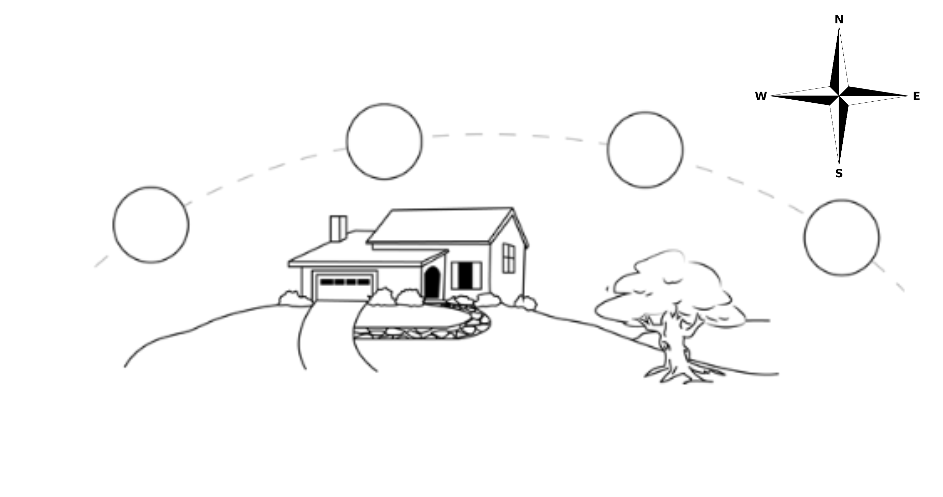
Drag the time of day to the correct position of the sun.