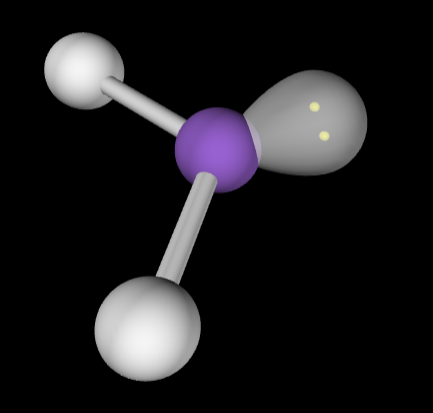
If the lone pair on this molecular model was removed, the molecule would most likely:
If the lone pair on this molecular model was removed, the molecule would most likely:
If the lone pair on this molecular model was removed, the molecule would most likely:
Which of the following statements is true about the molecule shown below?
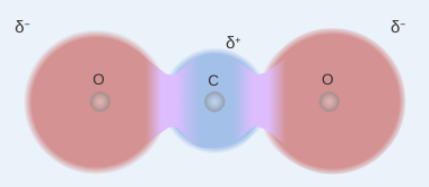
When lone pairs of electrons are present in a polar molecule, how are they arranged around the center atom—on the same side of the molecule or on opposite sides of the molecule?
What types of bonds are shown?
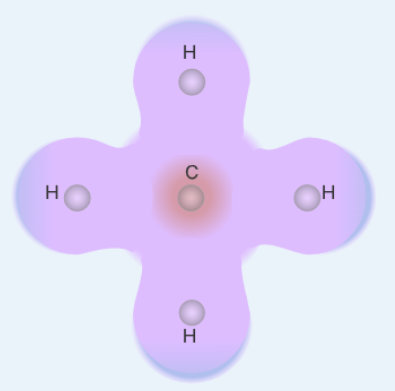
What type of bond will result if two nitrogen atoms combine (only one nitrogen is shown)? The electronegativity of nitrogen atom is given.

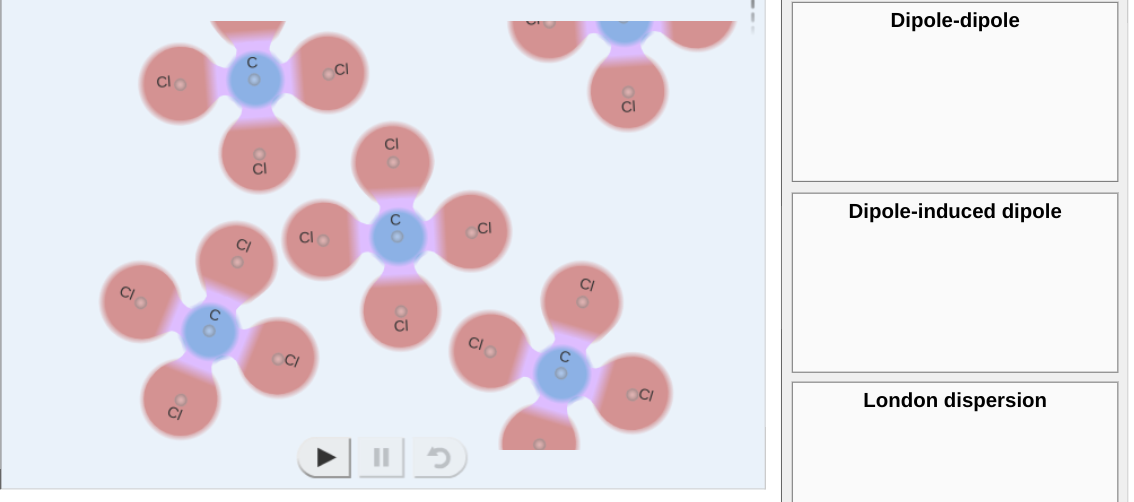
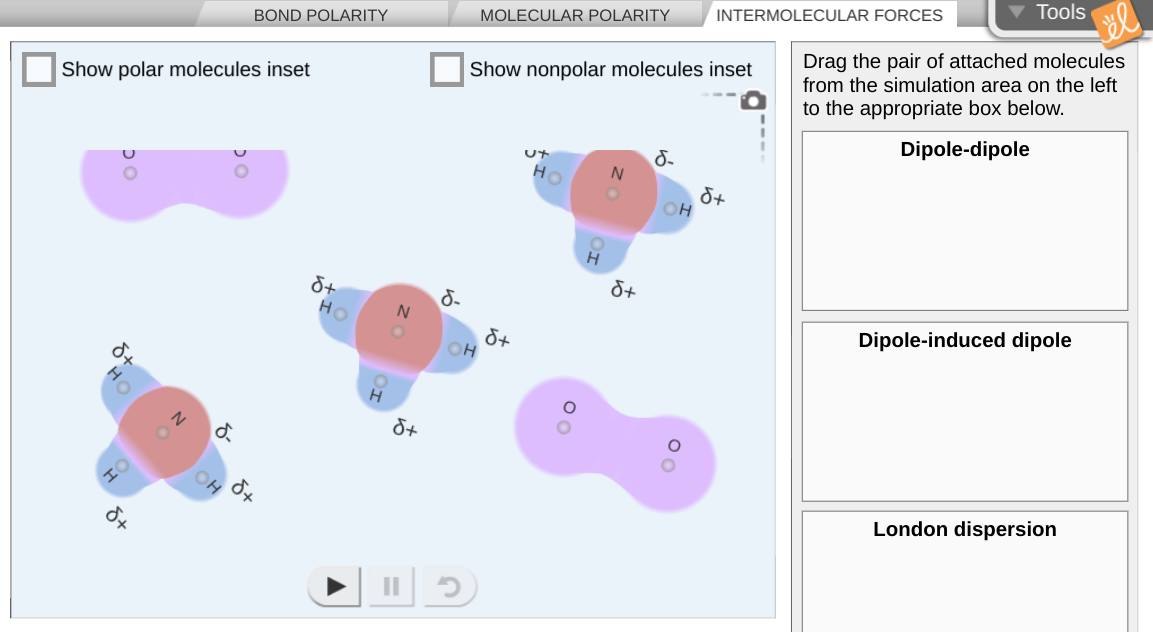
If you were working in the Intermolecular Forces section of the Gizmo, and you had the molecules shown in the image, which "bucket" would you drag the molecules to in order to represent their forces of attraction?
If you were working in the Intermolecular Forces section of the Gizmo, and you had the molecules shown in the image, which "bucket" would you drag the molecules to in order to represent their forces of attraction?
Which substance has weaker intermolecular attractions?
Classify each bond as polar or nonpolar covalent using the electronegativity values given below.
Electronegativity Values
P = 2.19
Cl = 3.16
N = 3.04
O = 3.43
P - Cl
N - O
P - O
polar covalent bond
nonpolar covalent bond
Polar molecules _________ contain a mixture of polar and nonpolar bonds.