Work AP
star
star
star
star
star
Last updated about 2 years ago
10 Nsɛmmisa
1
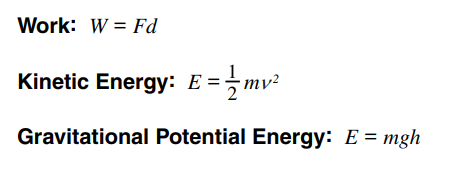
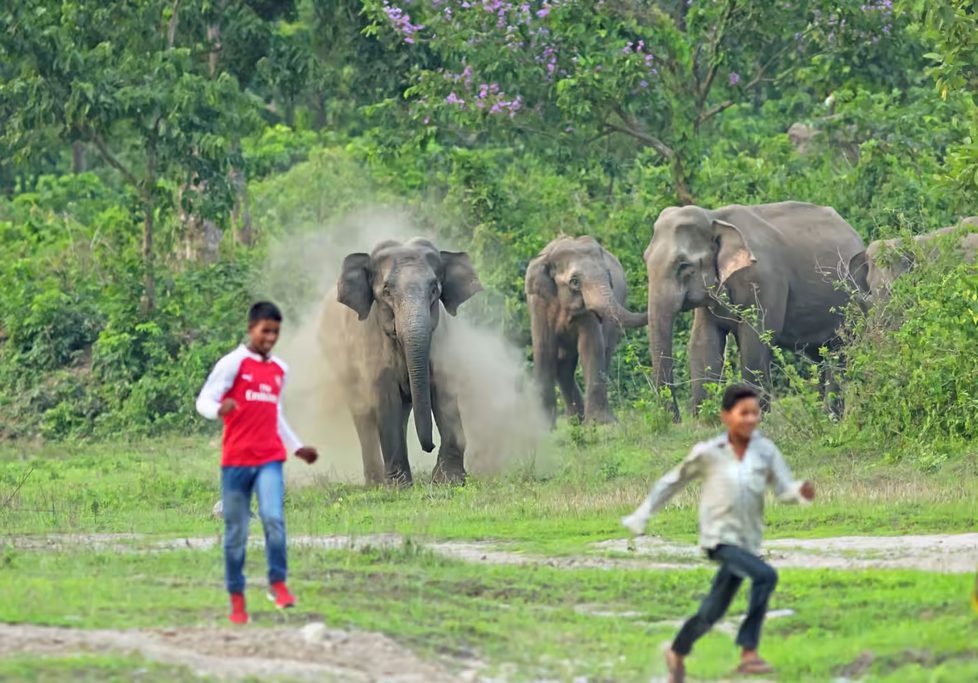
How fast must a 3000-kg elephant move to have the same kinetic energy as a 65.0-kg sprinter running at 10.0 m/s?
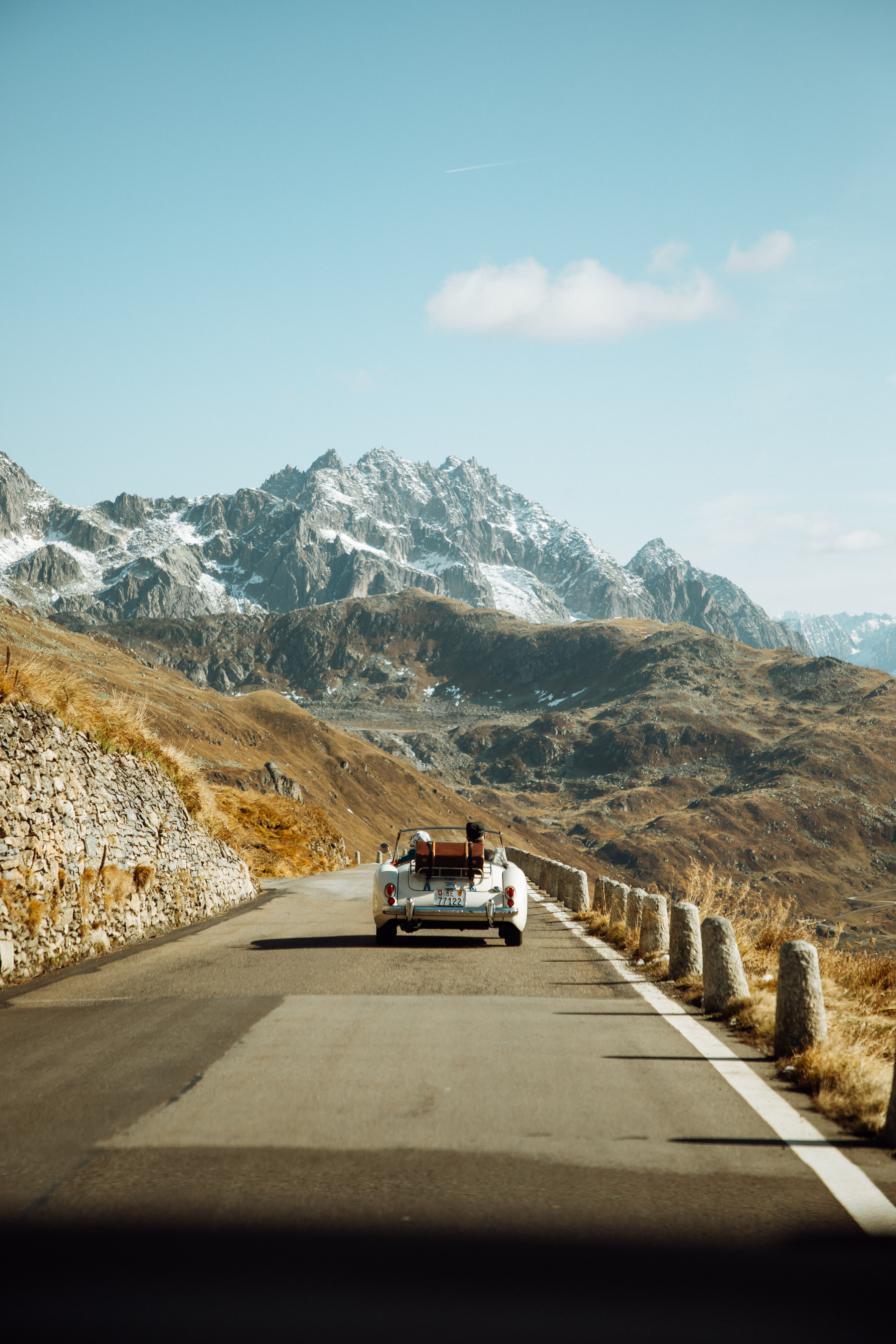
How high a hill can a car coast up (engine disengaged) if work done by friction is negligible and its initial speed is 110 km/h?
If, in actuality, a 750-kg car with an initial speed of 110 km/h is observed to coast up a hill to a height 22.0 m above its starting point, how much thermal energy was generated by friction?
What is the average force of friction if the hill has a slope 2.5° above the horizontal?

A person pushes a 16.0-kg shopping cart at a constant velocity for a distance of 22.0 m. She pushes in a direction 29.0° below the horizontal. A 48.0-N frictional force opposes the motion of the cart. What is the magnitude of the force that the shopper exerts?
How much work was done by the pushing force?
How much work was done by the friction? (Hint- Did the energy of the system change?
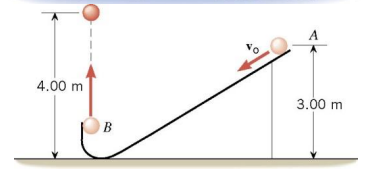
A particle, starting from point A in the drawing, is shot down the curved runway. Upon leaving the runway at point B, the particle is traveling straight upward and reaches a height of 4.00 m above the floor before falling back down. Ignoring friction and air resistance, find the speed of the particle at point A.
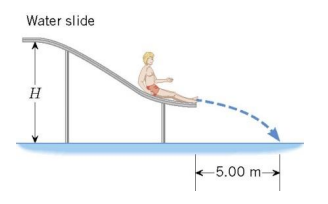
5. A water slide is constructed so that swimmers, starting from rest at the top of the slide, leave the end of the slide traveling horizontally. As the drawing shows, one person hits the water 5.00 m from the end of the slide in a time of 0.500 s after leaving the slide. Ignoring friction and air resistance, find the height H in the drawing. (Hint: Start by using projectile motion to find the speed when the person hits the water, then use conservation of mechanical energy to find the height.)
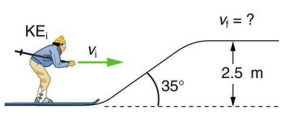
A 60.0-kg skier with an initial speed of 12.0 m/s coasts up a 2.50-m high rise as shown in the figure. Find her final speed at the top, given that the coefficient of friction between her skis and the snow is 0.0800. (Hint: Find the distance traveled up the incline assuming a straight-line path as shown in the figure.)