1
1
1
1
1
1
1
1
1
1
1
1
1
1
1
1
1
1
1
1
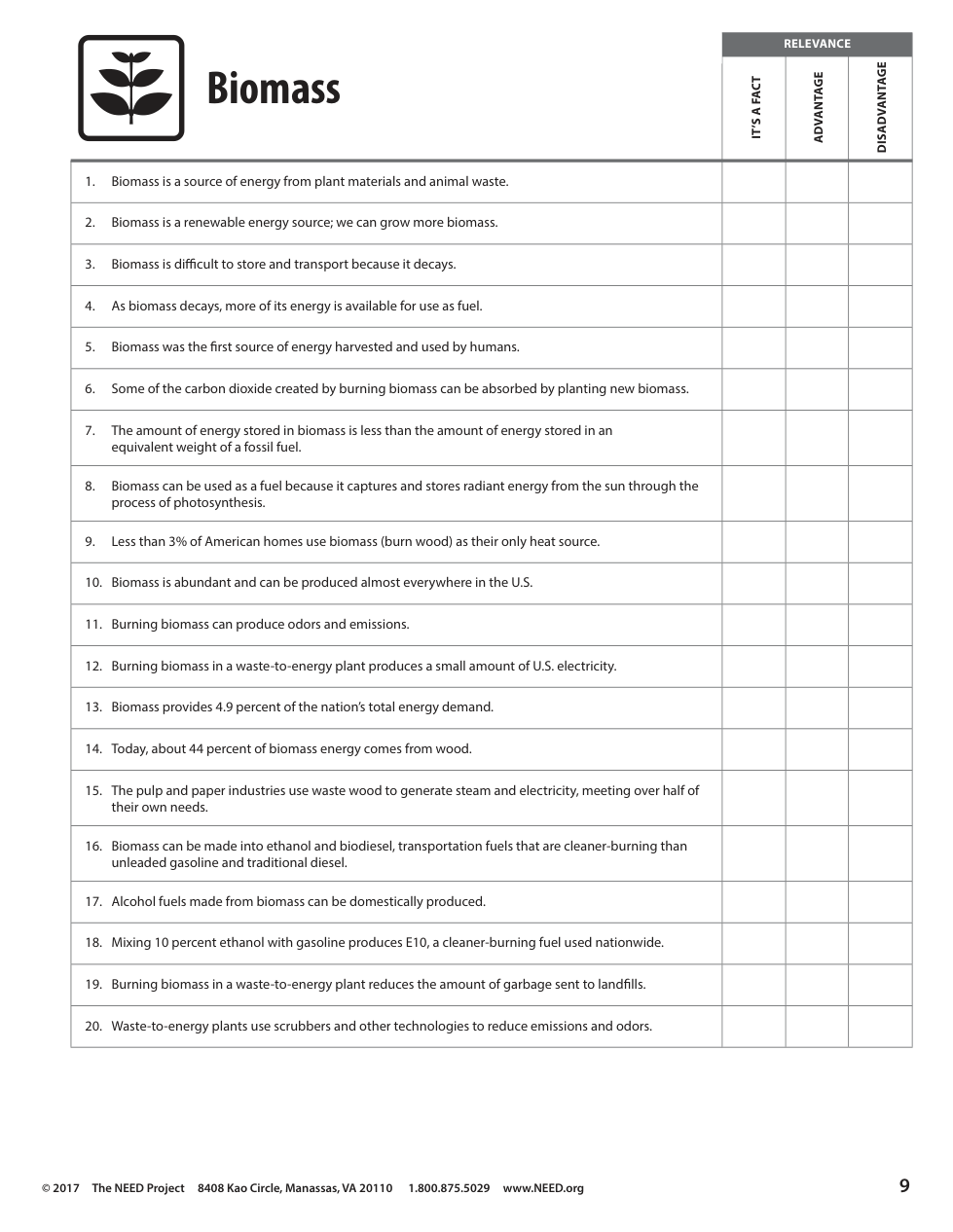
What is biomass?
Is biomass a renewable energy source?
Why is it difficult to store and transport biomass?
What happens to the energy in biomass as it decays?
What was the first source of energy harvested and used by humans?
Can planting new biomass absorb some of the carbon dioxide created by burning biomass?
Is the amount of energy stored in biomass more than the amount of energy stored in fossil fuel?
Biomass be used as a fuel by capturing and storing the radiant energy from the sun through the process of _______.
What percentage of American homes use biomass as their ONLY heat source?
Is biomass abundant in the U.S.?
What are the disadvantages of burning biomass?
What kind of a factory plant produces a small amount of US electricity?
The percentage of the nation's total energy demand is _______ from biomass energy.
What is the main source of biomass energy?
How do the pulp and paper industries utilize waste wood?
Can biomass be made into cleaner-burning transportation fuels?
Can alcohol fuels made from biomass be domestically produced?
What is produced when 10 percent ethanol is mixed with gasoline?
What is the benefit of burning biomass in a waste-to-energy plant?
What technologies do waste-to-energy plants use to reduce emissions and odors?
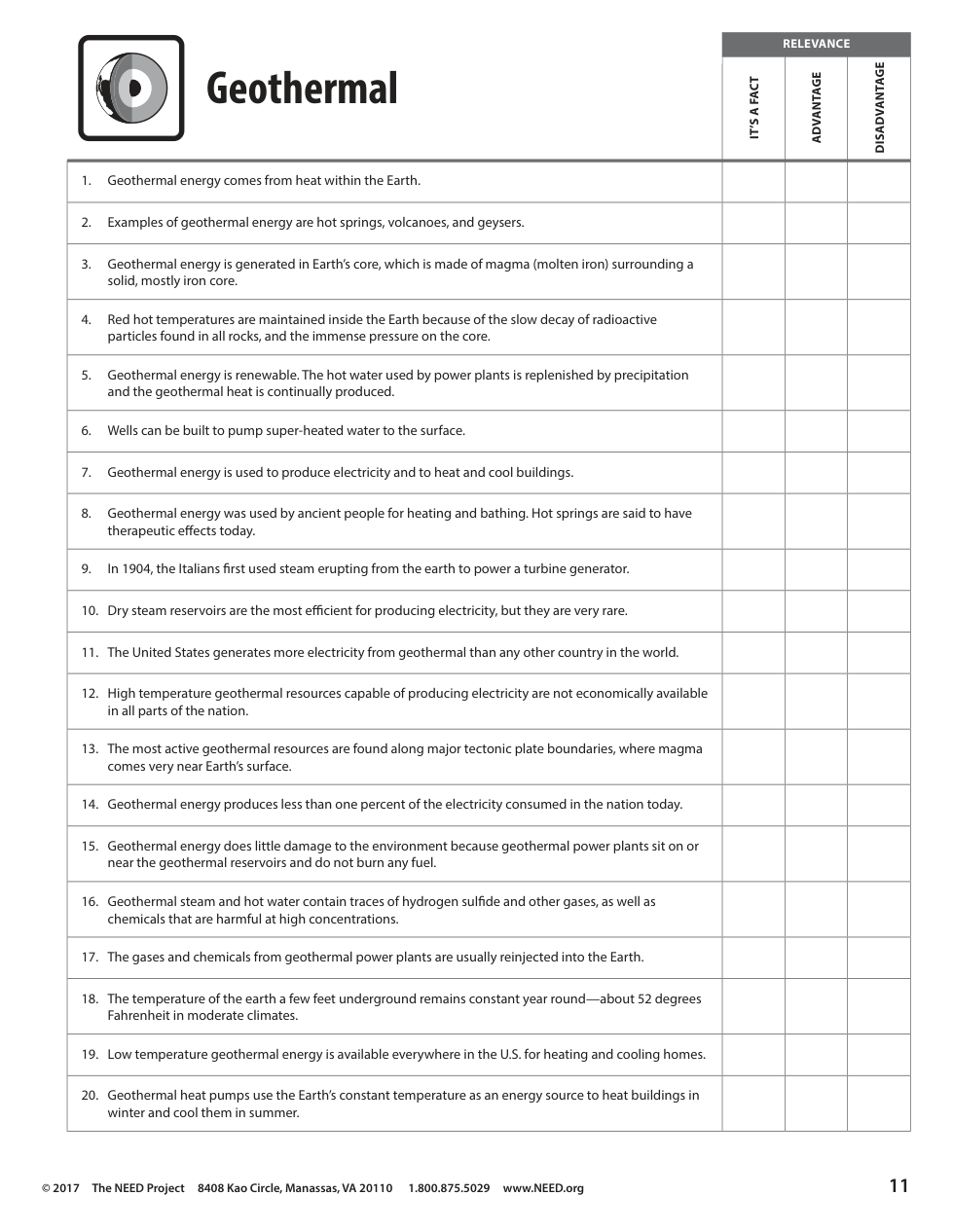
Geothermal energy comes from heat within the Earth.
Examples of geothermal energy are hot springs, volcanoes, and geysers.
Geothermal energy is generated in Earth’s core, which is made of magma (molten iron) surrounding a solid, mostly iron core.
Red hot temperatures are maintained inside the Earth because of the slow decay of radioactive particles found in all rocks, and the immense pressure on the core.
Geothermal energy is renewable. The hot water used by power plants is replenished by precipitation and the geothermal heat is continually produced.
Wells can be built to pump super-heated water to the surface.
Geothermal energy is used to produce electricity and to heat and cool buildings.
Geothermal energy was used by ancient people for heating and bathing. Hot springs are said to have therapeutic effects today.
In 1904, the Italians first used steam erupting from the earth to power a turbine generator.
Dry steam reservoirs are the most efficient for producing electricity, but they are very rare.
The United States generates more electricity from geothermal than any other country in the world.
High temperature geothermal resources capable of producing electricity are not economically available in all parts of the nation.
The most active geothermal resources are found along major tectonic plate boundaries, where magma comes very near Earth’s surface.
Geothermal energy produces less than one percent of the electricity consumed in the nation today.
Geothermal energy does little damage to the environment because geothermal power plants sit on or near the geothermal reservoirs and do not burn any fuel.
Geothermal steam and hot water contain traces of hydrogen sulfide and other gases, as well as chemicals that are harmful at high concentrations.
The gases and chemicals from geothermal power plants are usually reinjected into the Earth.
The temperature of the earth a few feet underground remains constant year round—about 52 degrees Fahrenheit in moderate climates.
Low temperature geothermal energy is available everywhere in the U.S. for heating and cooling homes.
Geothermal heat pumps use the Earth’s constant temperature as an energy source to heat buildings in winter and cool them in summer.
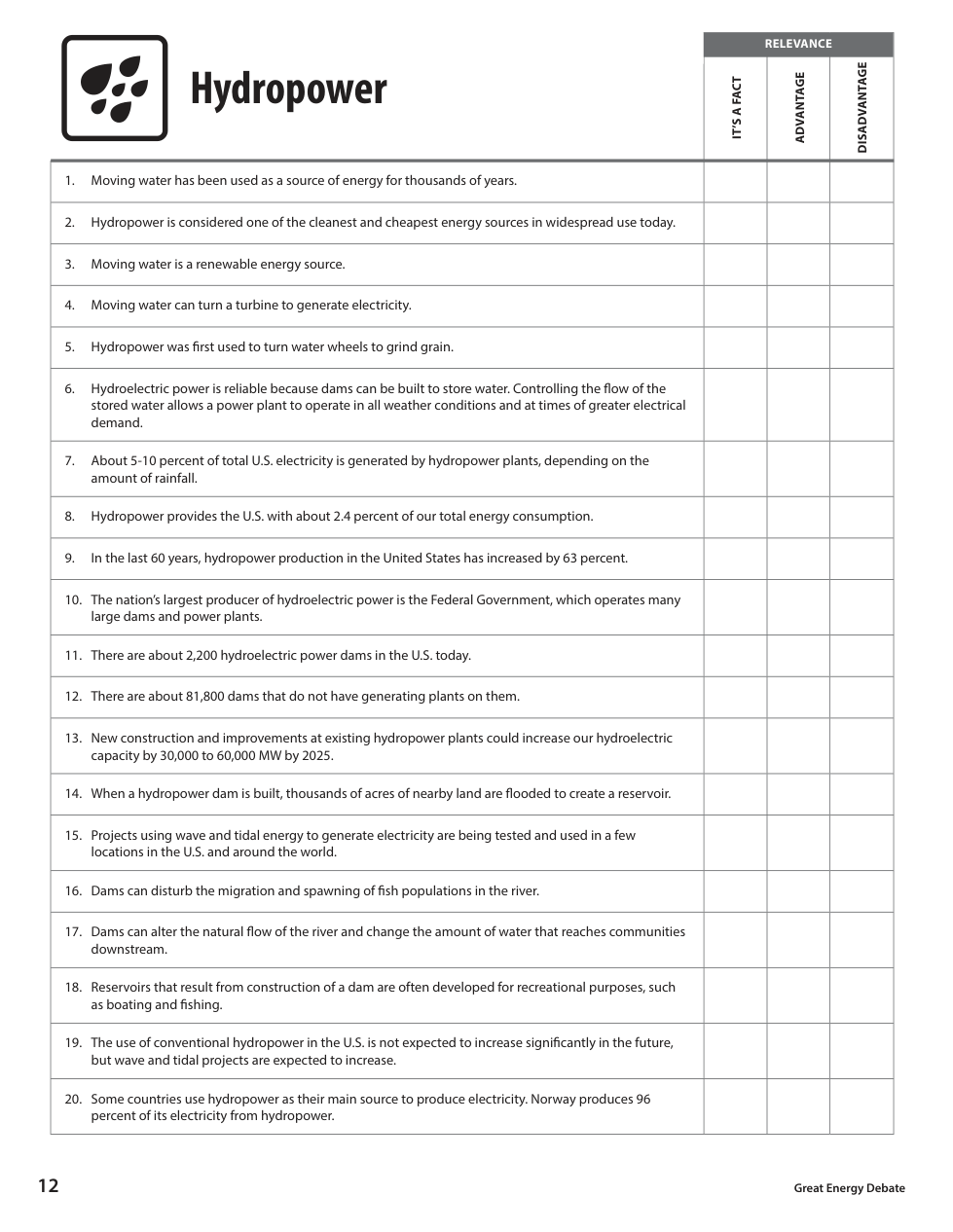
Moving water has been used as a source of energy for thousands of years.
Hydropower is considered one of the cleanest and cheapest energy sources in widespread use today.
Moving water is a renewable energy source.
Moving water can turn a turbine to generate electricity.
Hydropower was first used to turn water wheels to grind grain.
Hydroelectric power is reliable because dams can be built to store water. Controlling the flow of the stored water allows a power plant to operate in all weather conditions and at times of greater electrical demand.
About what percentage of total U.S. electricity is generated by hydropower plants, depending on the amount of rainfall?
Hydropower provides the U.S. with about what percentage of our total energy consumption?
In the last 60 years, hydropower production in the United States has increased by 63 percent.
The nation's largest producer of hydroelectric power is the Federal Government, which operates many large dams and power plants.
How many hydroelectric power dams are there in the U.S. today?
How many dams in the U.S. do not have generating plants on them?
New construction and improvements at existing hydropower plants could increase our hydroelectric capacity by how much MW by 2025?
When a hydropower dam is built, thousands of acres of nearby land are flooded to create a reservoir.
Projects using wave and tidal energy to generate electricity are being tested and used in a few locations in the U.S. and around the world.
Dams can disturb the migration and spawning of fish populations in the river.
Dams can alter the natural flow of the river and change the amount of water that reaches communities downstream.
Reservoirs that result from construction of a dam are often developed for recreational purposes, such as boating and fishing.
The use of conventional hydropower in the U.S. is not expected to increase significantly in the future, but wave and tidal projects are expected to increase.
Which country produces 96 percent of its electricity from hydropower?
Hydropower has which four main factors associated with it?
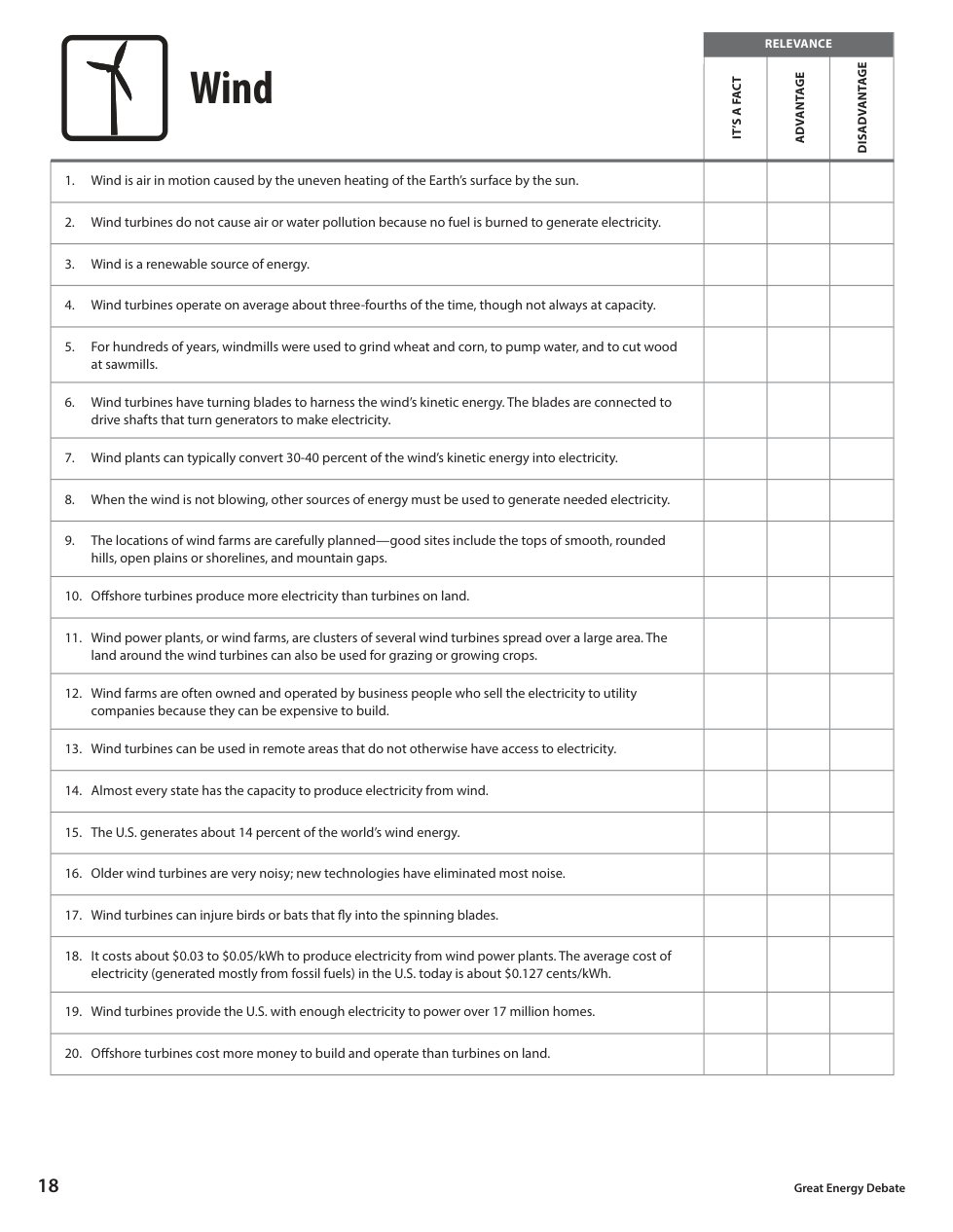
What is wind?
Do wind turbines cause air or water pollution?
Is wind a renewable source of energy?
How often do wind turbines operate on average?
What were windmills used for in the past?
What do wind turbines have to harness wind's kinetic energy?
How much of the wind's kinetic energy can wind plants convert into electricity?
What must be used to generate electricity when the wind is not blowing?
What are good locations for wind farms?
Do offshore turbines produce more electricity than turbines on land?
What are wind power plants or wind farms?
Who often owns and operates wind farms?
Where can wind turbines be used?
Does every state have the capacity to produce electricity from wind?
How much of the world's wind energy does the U.S. generate?
Are older wind turbines noisy?
What can wind turbines potentially injure?
How much does it cost to produce electricity from wind power plants compared to the average cost of electricity in the U.S.?
How many homes can wind turbines power in the U.S.?
Do offshore turbines cost more money to build and operate than turbines on land?