Log in
Sign up for FREE
arrow_back
Library

Untitled Formative 2

star
star
star
star
star
Last updated about 2 years ago
85 questions
1
1
1
1
1
Question 1
1.

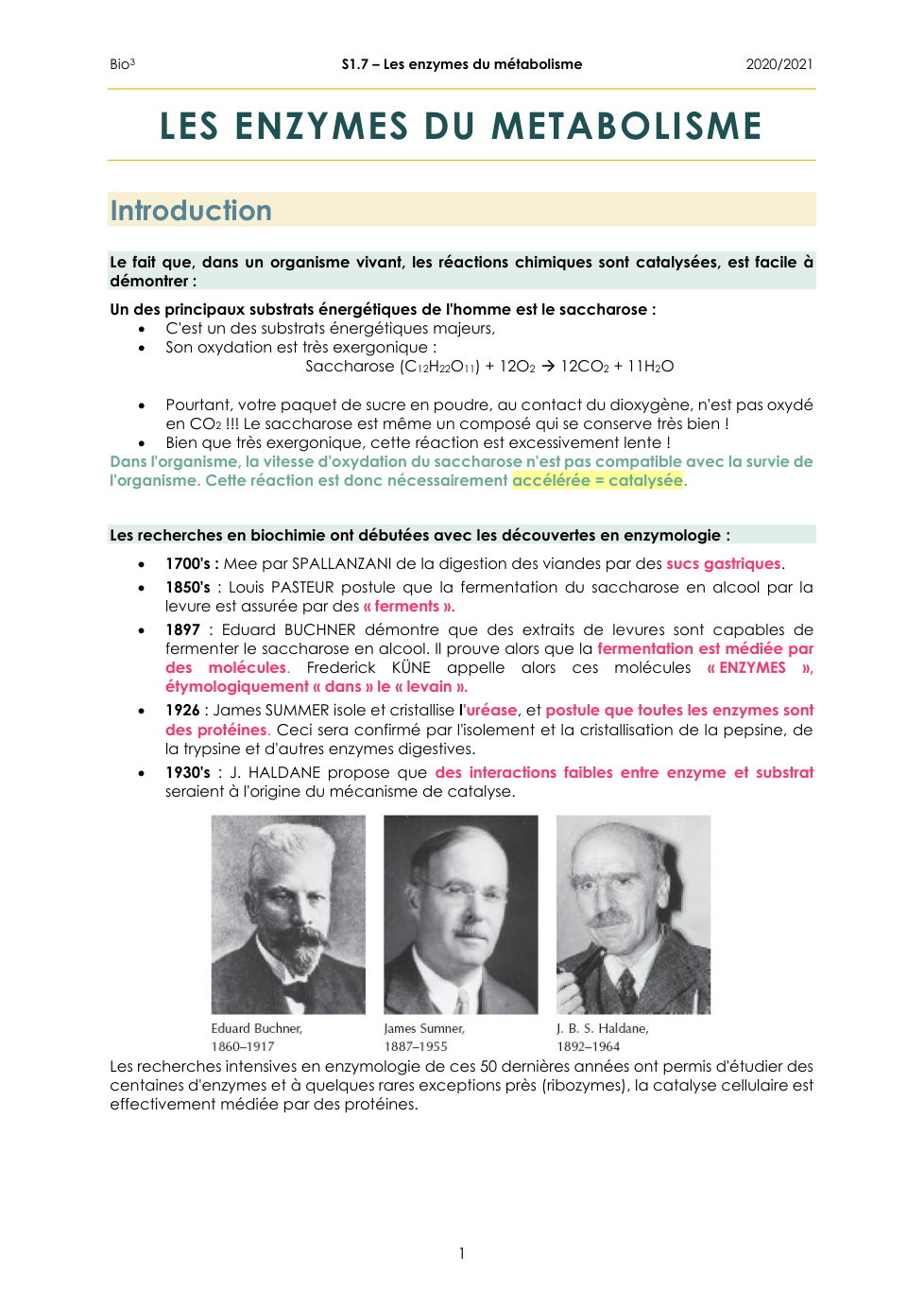
Quel est un des principaux substrats énergétiques de l'homme?

1
Question 2
2.

Quelle est l'équation d'oxydation du saccharose?

1
1
1
1
1
1
Question 8
8.

Comment ces protéines sont-elles capables de catalyser (accélérer) les réactions biologiques?

1
Question 9
9.

Comment expliquer leur exceptionnelle efficacité et spécificité?

1
Question 10
10.

Caractéristiques des enzymes

1
Question 11
11.

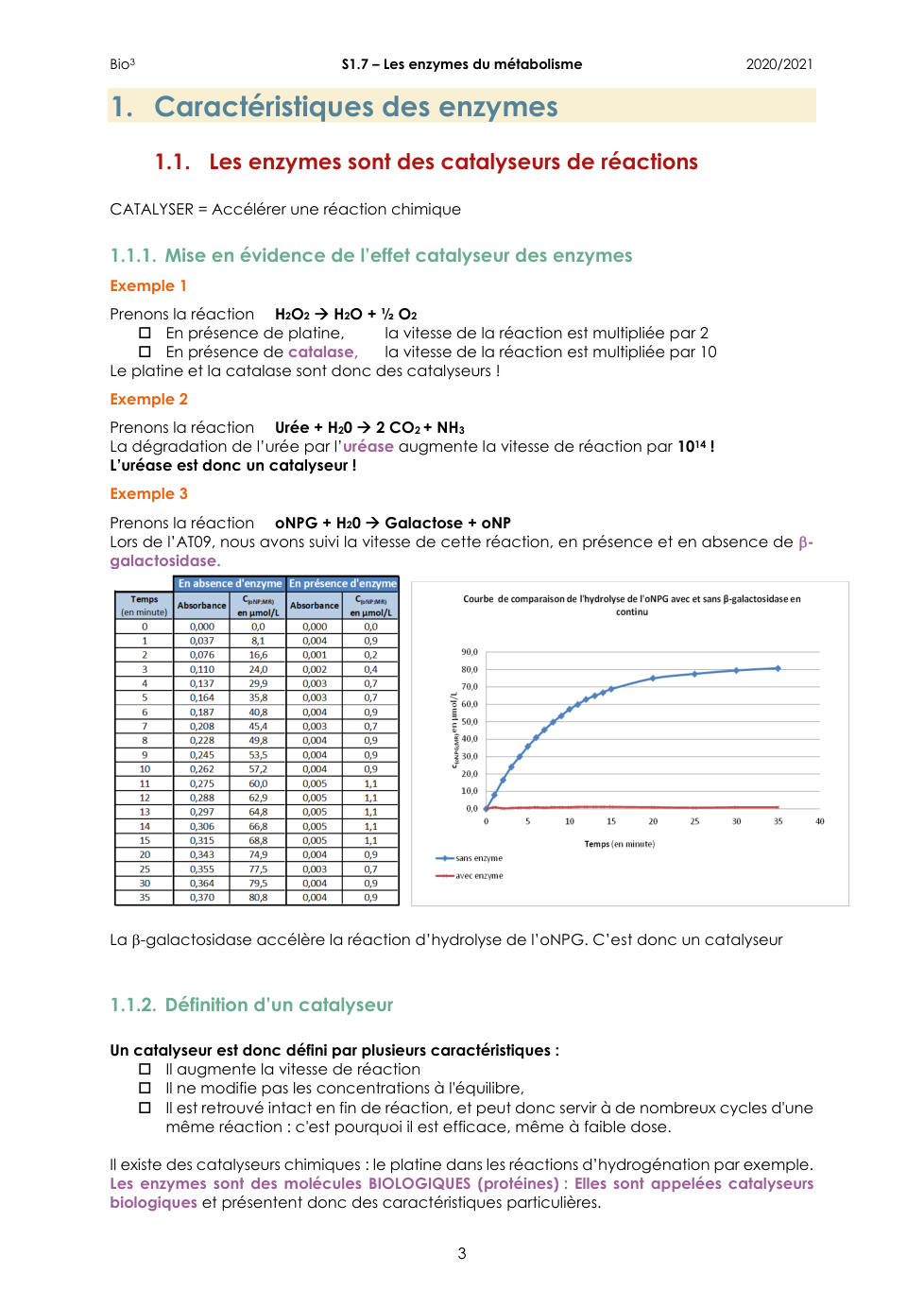
Mise en évidence de l'effet catalyseur des enzymes.

1
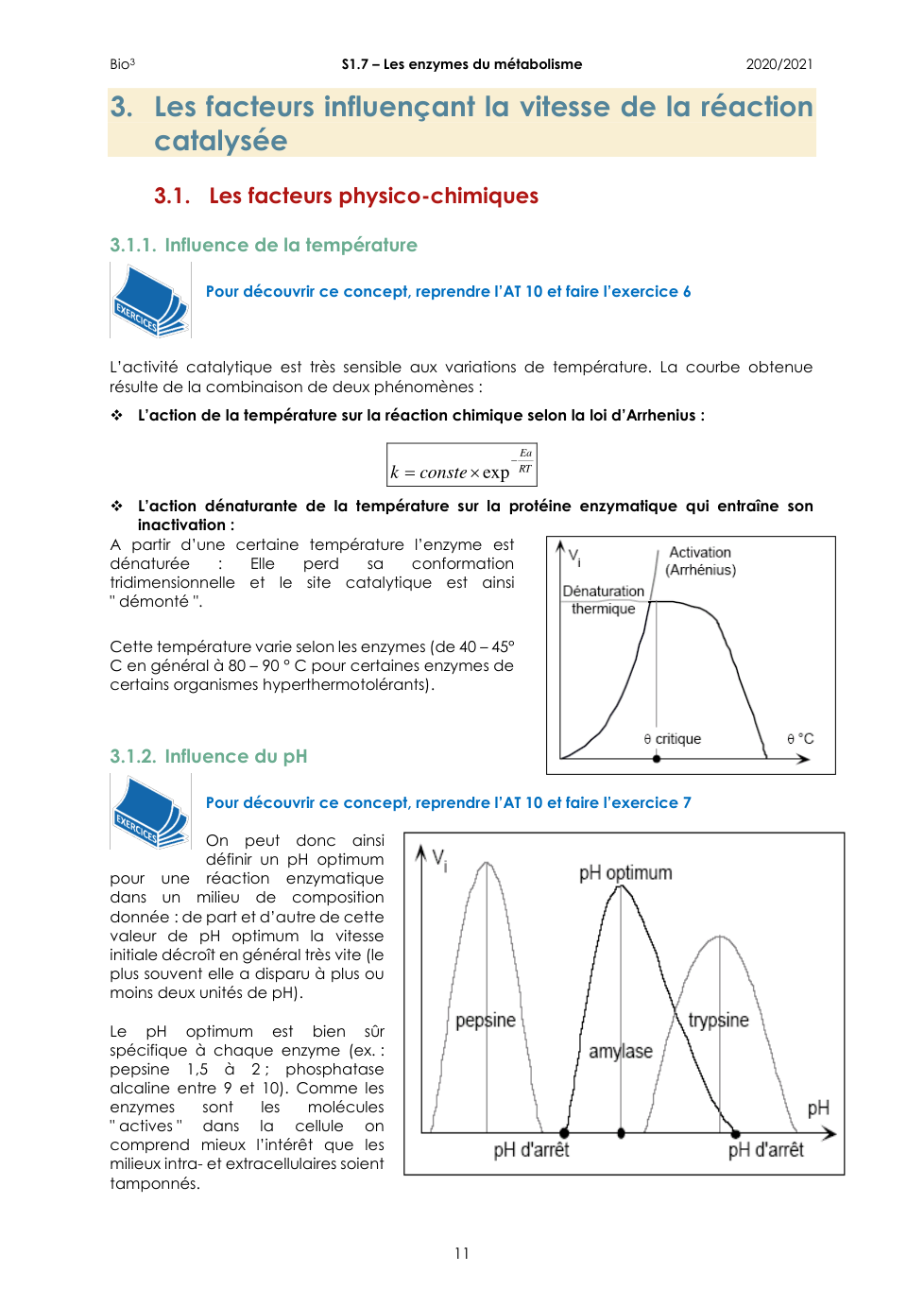
Question 12
12.

Définition d'un catalyseur.

1
Question 13
13.

Quelles sont les caractéristiques des enzymes en tant que catalyseurs biologiques?

1
Question 14
14.

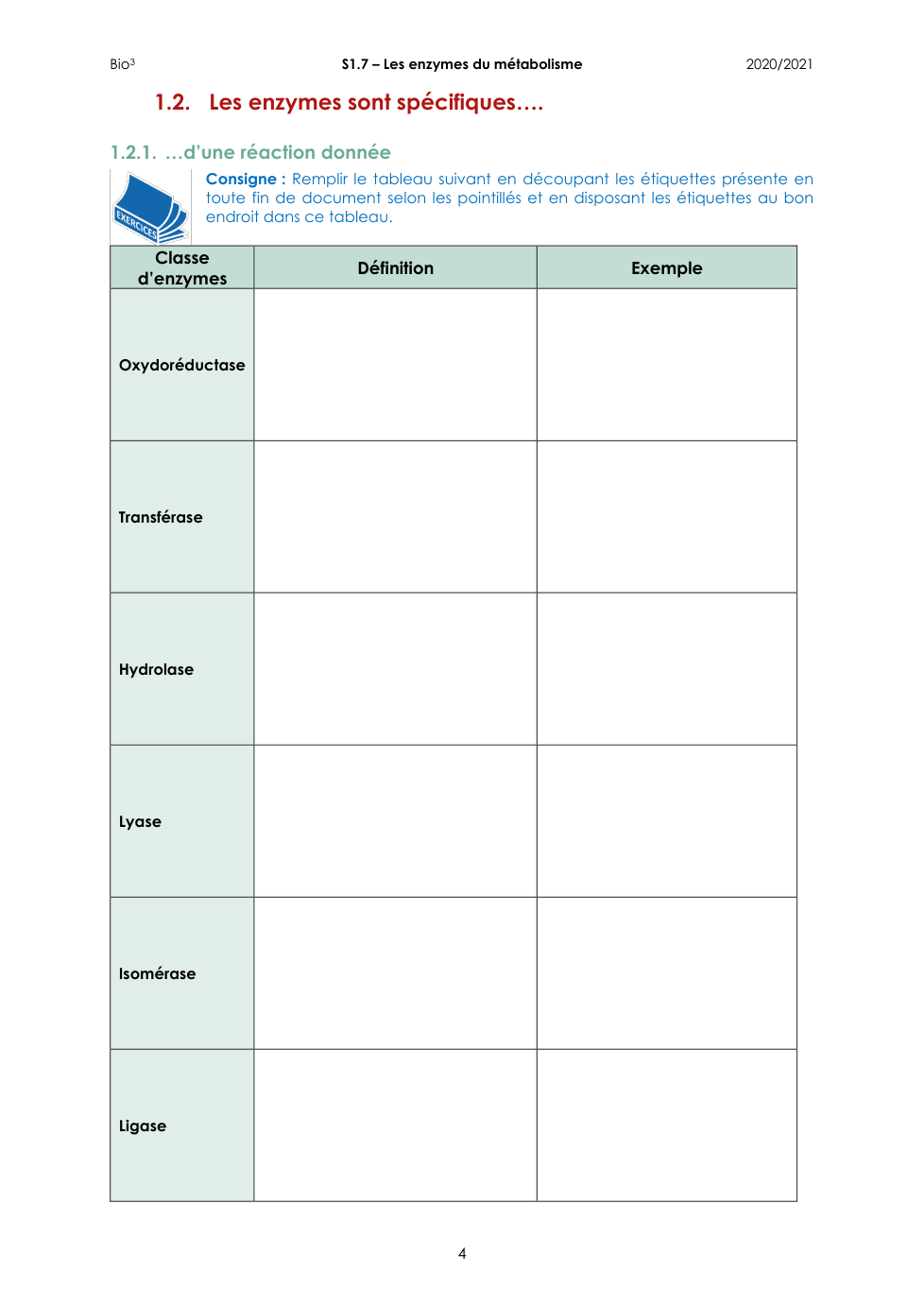
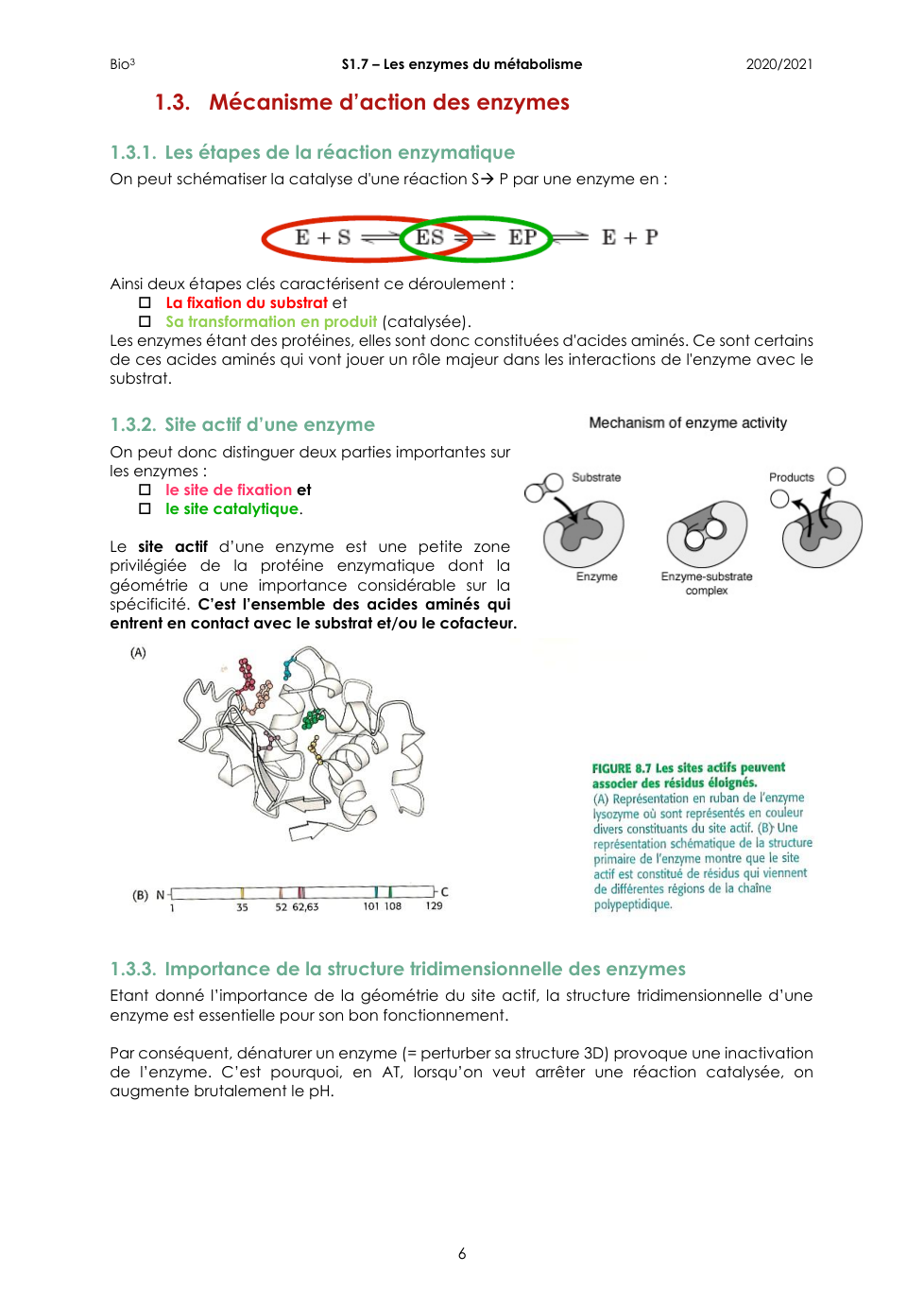
1.2. Les enzymes sont spécifiques…. 1.2.1. …d’une réaction donnée

1
Question 15
15.

Consigne : Remplir le tableau suivant en découpant les étiquettes présente en toute fin de document selon les pointillés et en disposant les étiquettes au bon endroit dans ce tableau.

1
Question 16
16.

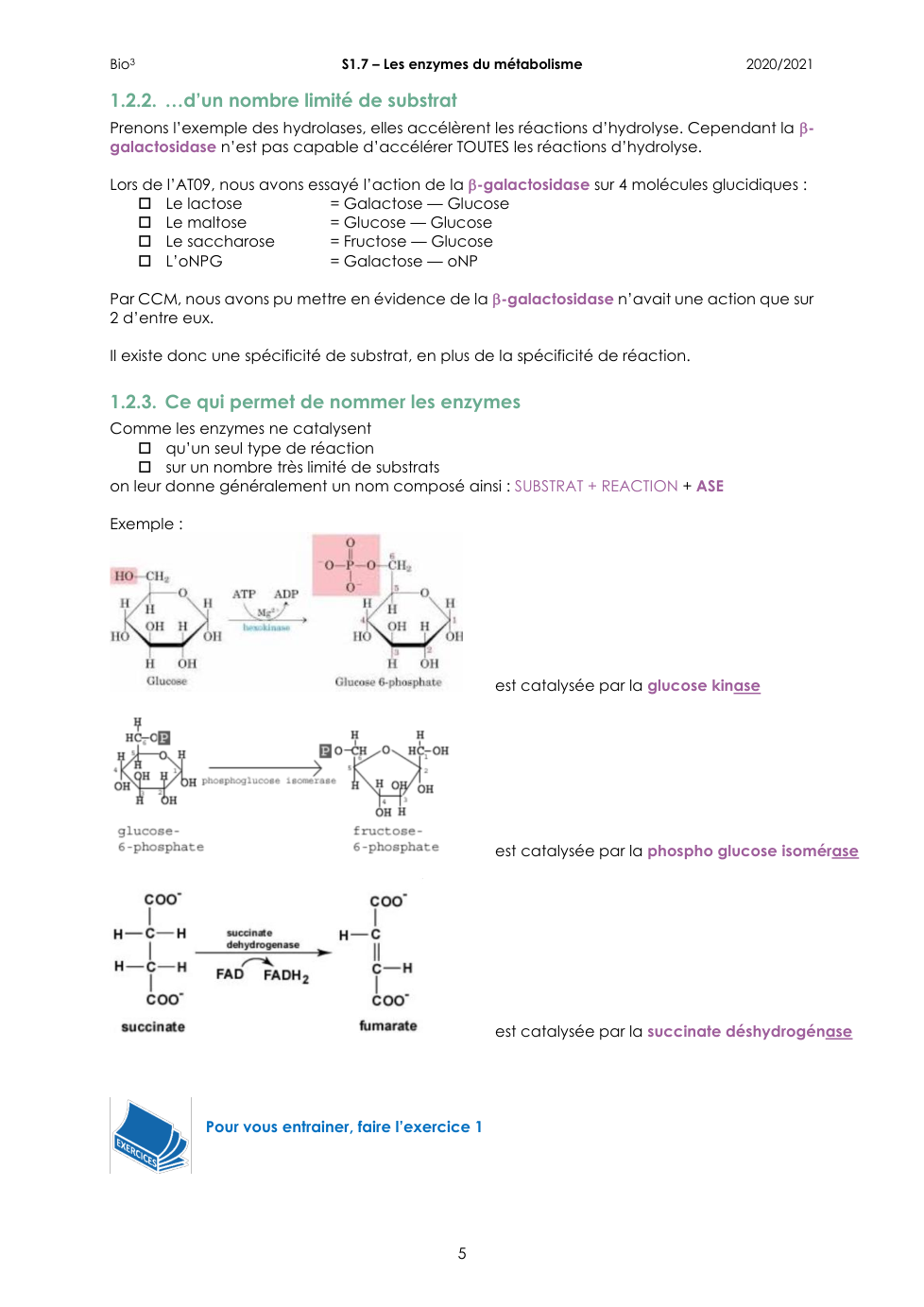
1.2.2. Dans l'AT09, quelle est l'action de la β-galactosidase sur les 4 molécules glucidiques ?

1
Question 17
17.

1.2.3. Comment sont nommées les enzymes et pourquoi ?

1
Question 18
18.

What is the topic of the text?

1
Question 19
19.

What are the two key steps in the catalysis of a reaction?

1
1
1
1
1
Question 24
24.

Un cofacteur est:

1
1
Question 26
26.

2.1. Méthodologie du suivi d'une réaction enzymatique

1
Question 27
27.

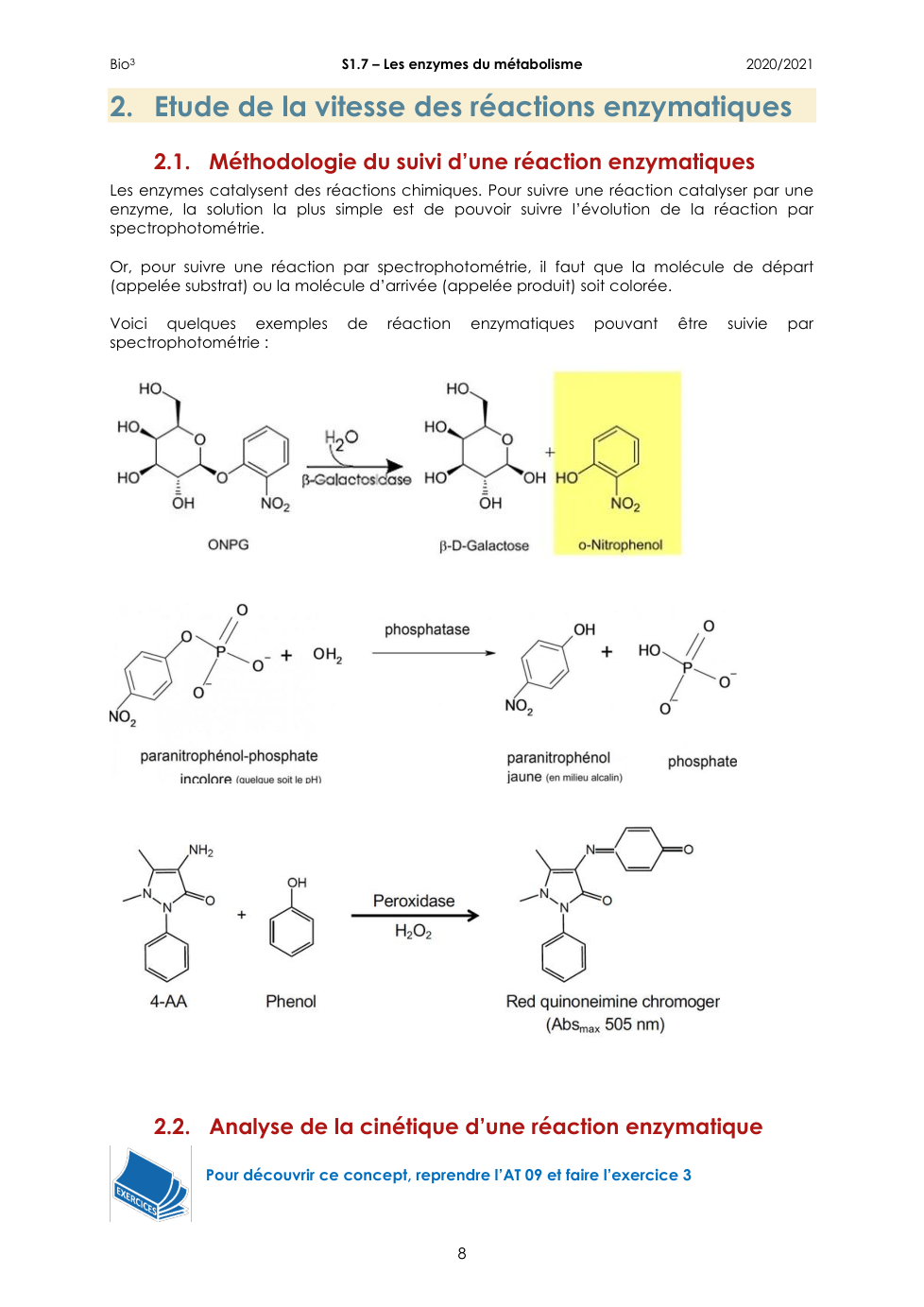
Les enzymes catalysent des réactions chimiques. Pour suivre une réaction catalysée par une enzyme, la solution la plus simple est de pouvoir suivre l'évolution de la réaction par spectrophotométrie. Or, pour suivre une réaction par spectrophotométrie, il faut que la molécule de départ (appelée substrat) ou la molécule d'arrivée (appelée produit) soit colorée. Voici quelques exemples de réactions enzymatiques pouvant être suivies par spectrophotométrie:

1
Question 28
28.

2.2. Analyse de la cinétique d'une réaction enzymatique

1
1
Question 30
30.

What is the experimental protocol?

1
Question 31
31.

What is introduced in the cuve?

1
1
1
1
1
1
Question 37
37.

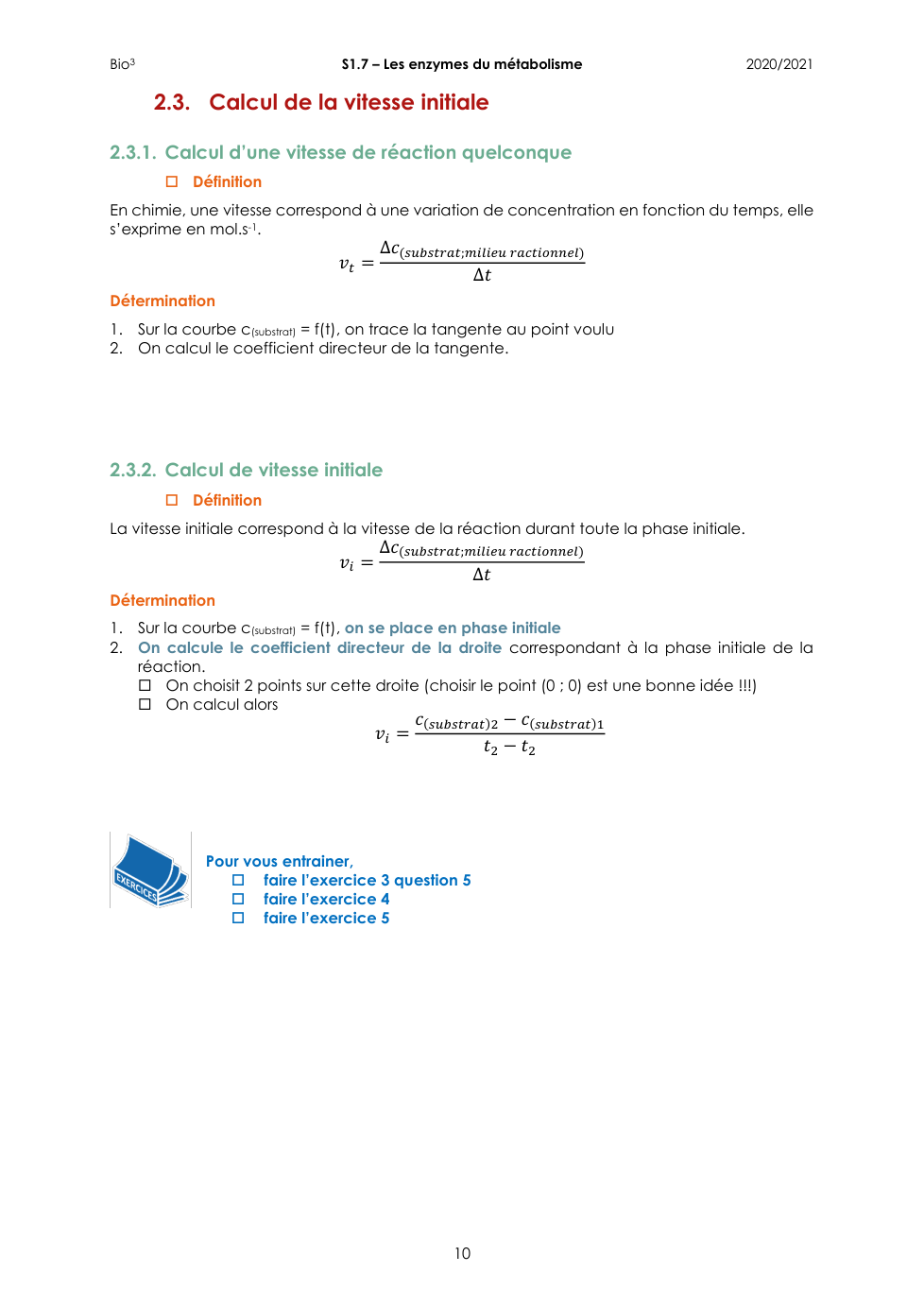
Définition

1
Question 38
38.

Détermination

1
Question 39
39.

Définition

1
1
Question 42
42.

Qu'est-ce qu'un substrat dans le contexte de l'enzymologie?

Question 43
43.

Que signifie le terme 'spécificité enzymatique'?

Question 44
44.

Comment un inhibiteur enzymatique affecte-t-il la réaction enzymatique?

Question 45
45.

Quel est le rôle de l'enzyme dans une réaction chimique?

1
Question 46
46.

What are the factors that influence the rate of catalyzed reaction?

1
Question 47
47.

What is the influence of temperature on catalytic activity?

1
Question 48
48.

What is the influence of temperature on enzyme denaturation?

1
1
1
Question 51
51.

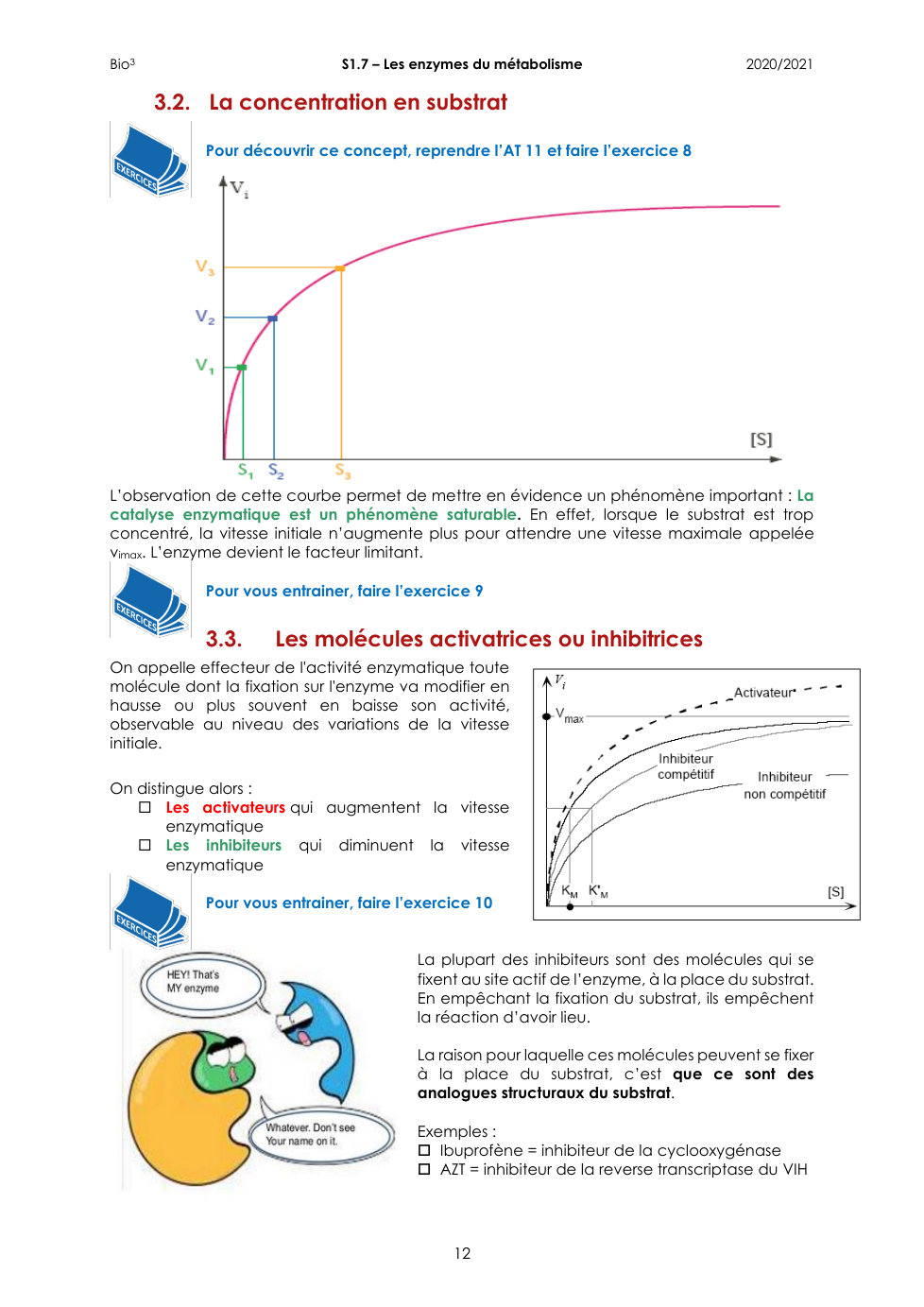
What is the phenomenon observed when the substrate concentration is too high?

1
Question 52
52.

What are the two types of effectors that can modify enzyme activity?

1
Question 53
53.

Where do most inhibitors bind?

1
Question 54
54.

What is the reason these molecules can bind to the active site?

1
Question 55
55.

Exercice 1. Noms et classe des enzymes: Relier, grâce aux points, chaque réaction au nom de l'enzyme qui la catalyse.

Draggable itemarrow_right_altCorresponding Item

arrow_right_alt

1
Question 56
56.

The given text appears to be a series of questions from a biology exam. Here is the parsed version of the text:

1
Question 57
57.

Bio 3 S1.7 - Les enzymes du métabolisme 2020/2021

1
Question 58
58.

Question 14:

1
Question 59
59.

Exercice 2. Extrait du baccalauréat 2015 (Polynésie)

1
Question 60
60.

What is the topic of Bio 3 S1.7?

1
Question 61
61.

What is the year of the course?

1
Question 62
62.

How many dots are there in the text?

1
Question 63
63.

What topic is the text related to?

1
Question 64
64.

Which academic year is mentioned in the text?

1
Question 65
65.

What number is mentioned in the text?

1
Question 66
66.

Without further context, what do you think the number '16' refers to in the text?

1
Question 67
67.

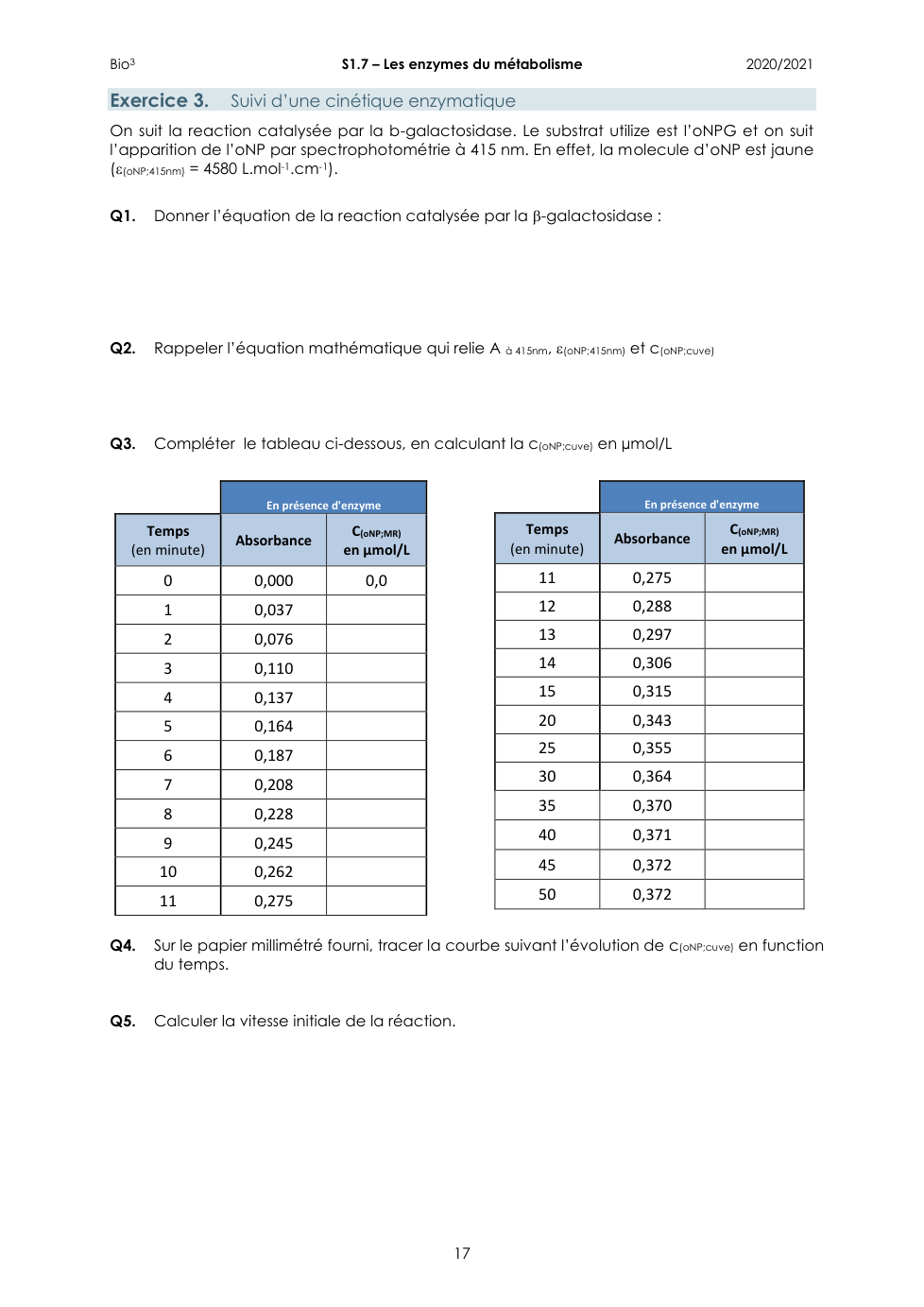
Q1. Donner l’équation de la réaction catalysée par la β-galactosidase:

1
Question 68
68.

Q2. Rappeler l’équation mathématique qui relie A à 415nm, ε(oNP;415nm) et c(oNP;cuve)

1
Question 69
69.

Q3. Compléter le tableau ci-dessous, en calculant la c(oNP;cuve) en μmol/L En présence d'enzyme Temps (en minute) Absorbance C(oNP;MR) en μmol/L 0 0,000 0,0 1 0,037 2 0,076 3 0,110 4 0,137 5 0,164 6 0,187 7 0,208 8 0,228 9 0,245 10 0,262 11 0,275 En présence d'enzyme Temps (en minute) Absorbance C(oNP;MR) en μmol/L 11 0,275 12 0,288 13 0,297 14 0,306 15 0,315 20 0,343 25 0,355 30 0,364 35 0,370 40 0,371 45 0,372 50 0,372

1
1
1
Question 72
72.

Q1. What is the reaction catalyzed by the PAL enzyme (with the developed formulas)?

1
Question 73
73.

Q2. How do you plot the kinetics of this reaction on the millimeter paper?

1
Question 74
74.

Calculer la vitesse initiale de la réaction en mmol.L - 1 .min - 1 (Donnée: ε PNP = 18500 L.mol - 1 .cm - 1)

1
Question 75
75.

Convertir la vitesse initiale de la réaction en mmol.L - 1 .s - 1

1
Question 76
76.

What are enzymes?

1
Question 77
77.

Explain the role of enzymes in metabolism.

1
1
1
1
Question 81
81.

What is the topic of the course 'Bio 3'?

1
Question 82
82.

What does 'S1.7' refer to in the course?

1
Question 83
83.

Translate 'Les enzymes du métabolisme' to English.

1
Question 84
84.

What does '2020/2021' indicate in relation to the course?

1
Question 85
85.

What is the title of the text?

Question 3
3.

Pourquoi le saccharose ne s'oxyde pas en CO2 au contact du dioxygène?

Question 4
4.

Qu'est-ce qui accélère la vitesse d'oxydation du saccharose dans l'organisme?

Question 5
5.

Qui a appelé les molécules responsables de la fermentation du saccharose en alcool 'enzymes'?

Question 6
6.

Selon James SUMMER, qu'est-ce que toutes les enzymes sont?

Question 7
7.

Quelles sont les interactions à l'origine du mécanisme de catalyse selon J. HALDANE?

Question 20
20.

What are the two important parts of an enzyme?

Question 21
21.

What is the site active of an enzyme?

Question 22
22.

Why is the tridimensional structure of an enzyme important?

Question 23
23.

What happens when an enzyme is denatured?

Question 25
25.

On peut citer par exemple:

Question 29
29.

Pour découvrir ce concept, reprendre l'AT 09 et faire l'exercice 3

Question 32
32.

What is measured at different times?

Question 33
33.

What is obtained from the experiment?

Question 34
34.

What are the three phases of a chemical kinetics?

Question 35
35.

What is the time scale on the X-axis?

Question 36
36.

What is the name of the reaction being monitored?

Question 40
40.

Détermination

Question 41
41.

Pour vous entraîner, faire l'exercice 3 question 5, faire l'exercice 4, faire l'exercice 5

Question 49
49.

What is the influence of pH on enzymatic reaction?

Question 50
50.

What is the significance of pH optimum in enzymatic reactions?

Question 70
70.

Q4. Sur le papier millimétré fourni, tracer la courbe suivant l’évolution de c(oNP;cuve) en fonction du temps.

Question 71
71.

Q5. Calculer la vitesse initiale de la réaction.

Question 78
78.

Enzymes are proteins.

Question 79
79.

Which of the following is not a property of enzymes?

Question 80
80.

Select all the statements that are true about enzymes.