Twa kɔ nsɛm atitiriw so
Log in
Sign up for FREE
arrow_back
Laabri

Friday 2/14 - TES 5.3

star
star
star
star
star
Last updated 7 months ago
21 Nsɛmmisa
TES 5.3: Chemical Reactions at the Nanoscale
Did a Chemical Reaction Happen?
Untitled Section

Modeling Chemical Reactions

We know that during a chemical reaction, new substances and molecules form. But where do the new molecules come from? Let’s find out by modeling the reactions we’ve studied.

Conservation of Matter
0
Exit Ticket

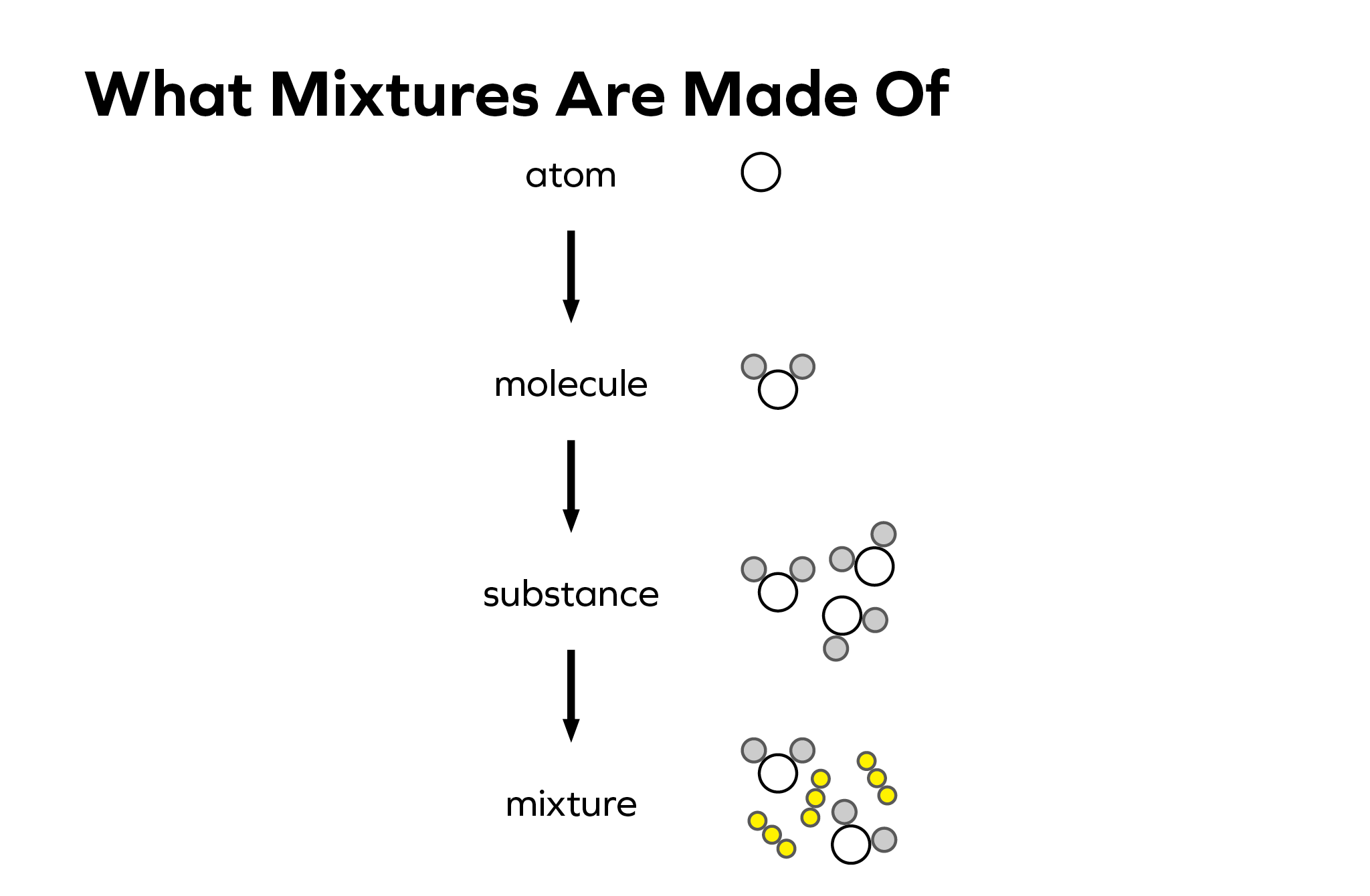
Directions: Using the chart to help you if you need it, match the vocabulary word to the correct definition by writing the letter of the word in the box.
5
Asemmisa {{asɛmmisaAhyɛnsode}}
1.

Match the vocabulary word with the defintion

Draggable itemarrow_right_altCorresponding Item

Atom

arrow_right_alt

matter that is made of only one kind of atom or molecule

Molecule

arrow_right_alt

matter that is made of more than one substance

Mixture

arrow_right_alt

the stuff that things are made of

Matter

arrow_right_alt

a tiny piece of matter that is too small to see

Substance

arrow_right_alt

a group of atoms joined together in a particular way

Chemical Reaction - Substances are mixed and at least one new substance with different properties is formed.

1
Asemmisa {{asɛmmisaAhyɛnsode}}
2.

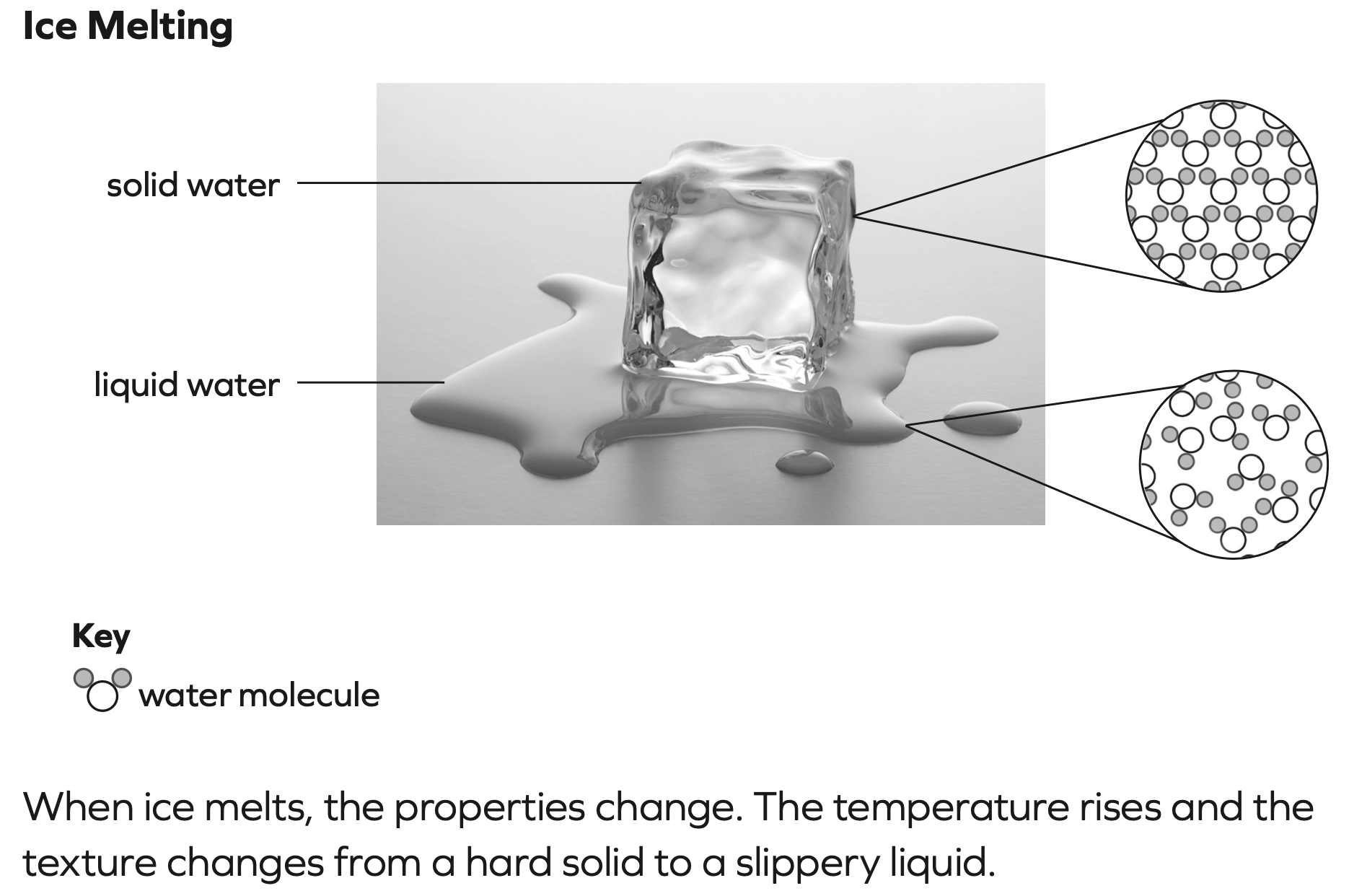
Ice Melting: Is there evidence of a chemical reaction?

1
1

Chemical Reaction - Substances are mixed and at least one new substance with different properties is formed.

1
Asemmisa {{asɛmmisaAhyɛnsode}}
5.

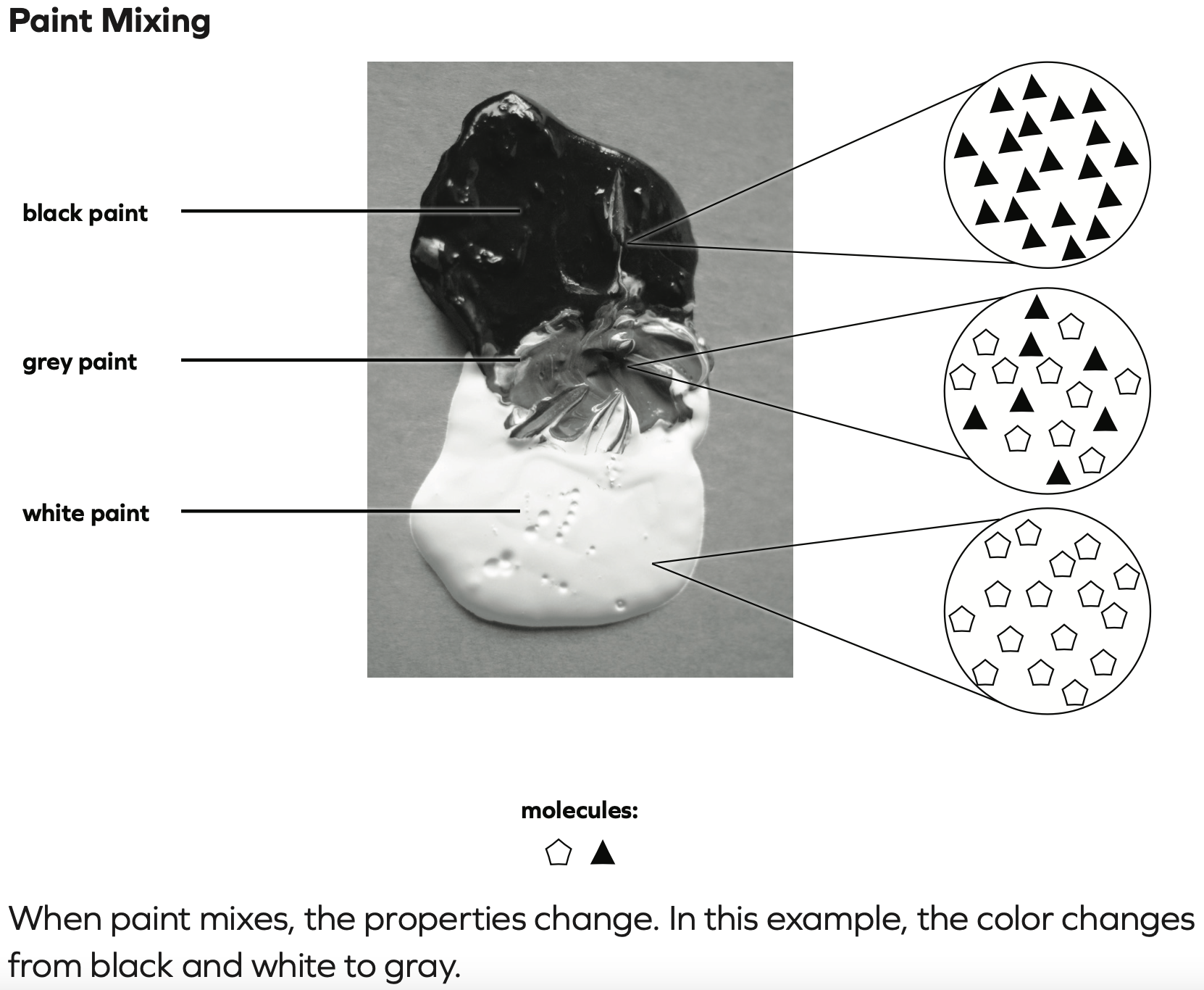
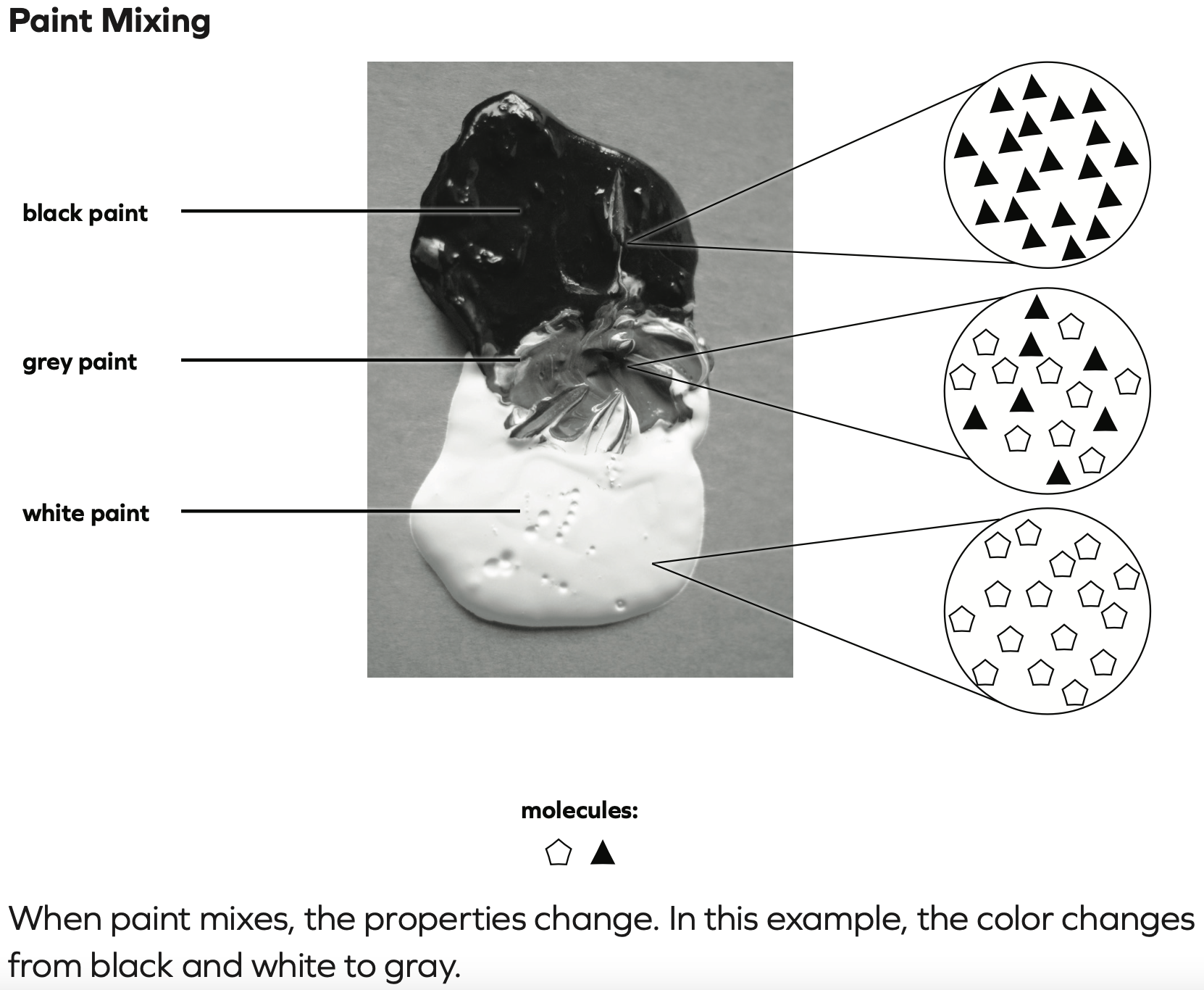
Paint Mixing: Is there evidence of a chemical reaction?

0
1

Chemical Reaction - Substances are mixed and at least one new substance with different properties is formed.

1
Asemmisa {{asɛmmisaAhyɛnsode}}
8.

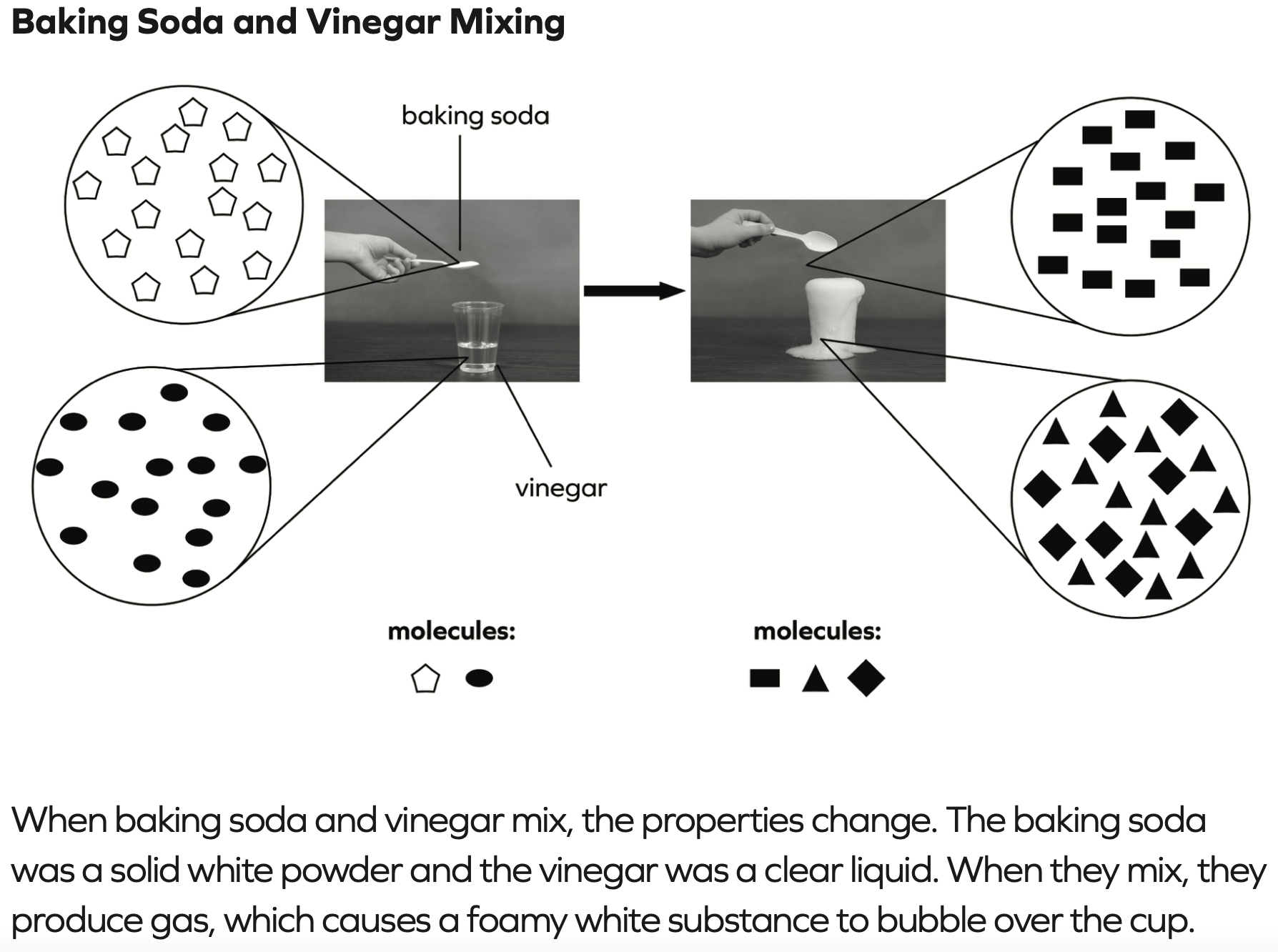
Baking Soda and Vinegar Mixing: Is there evidence of a chemical reaction?

1
1

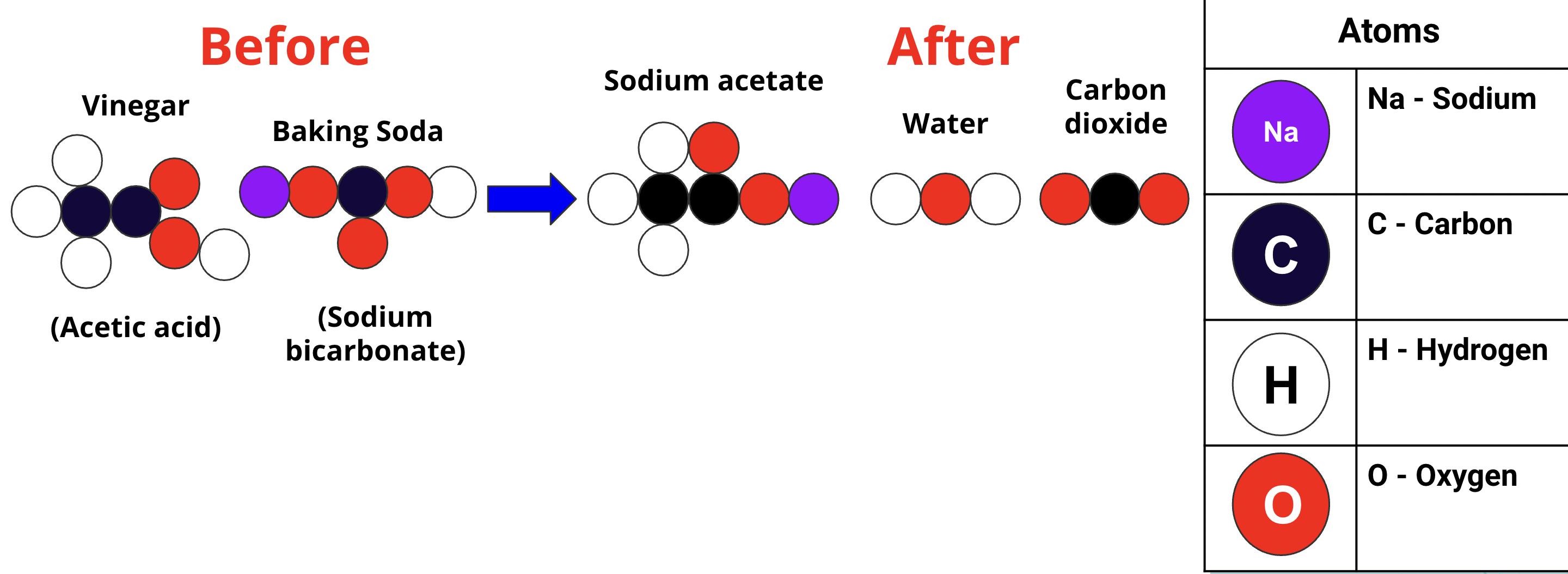
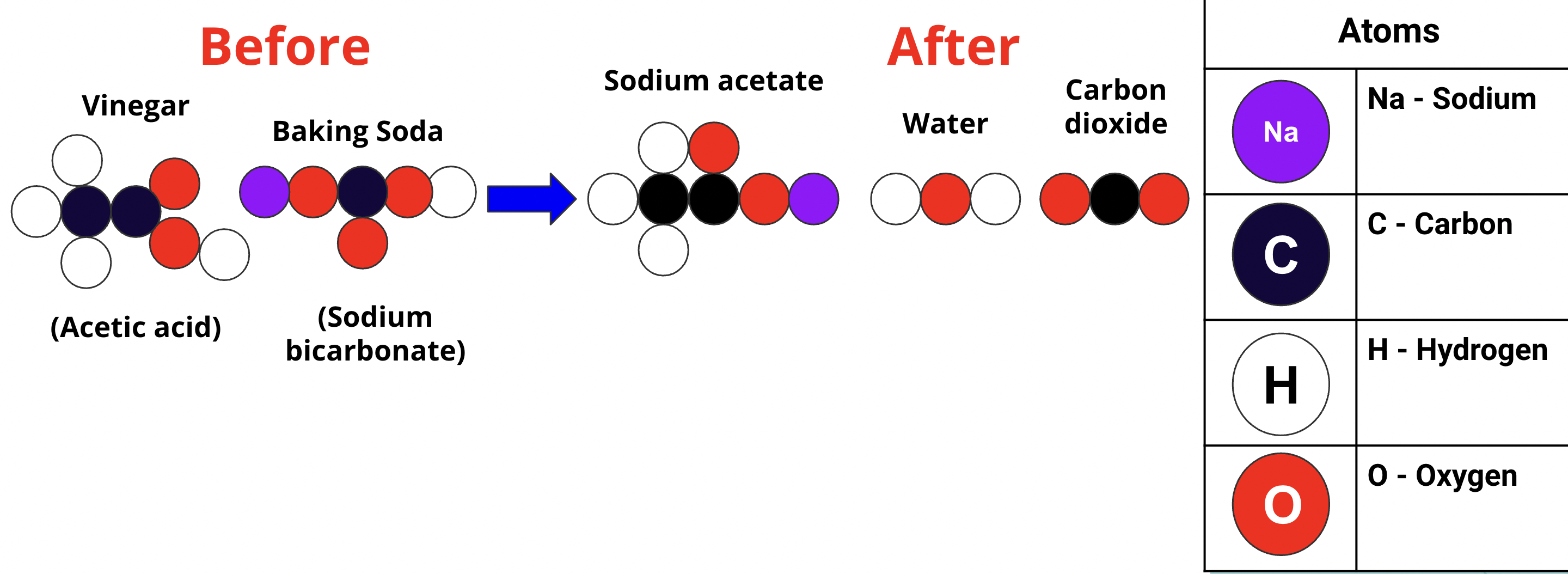
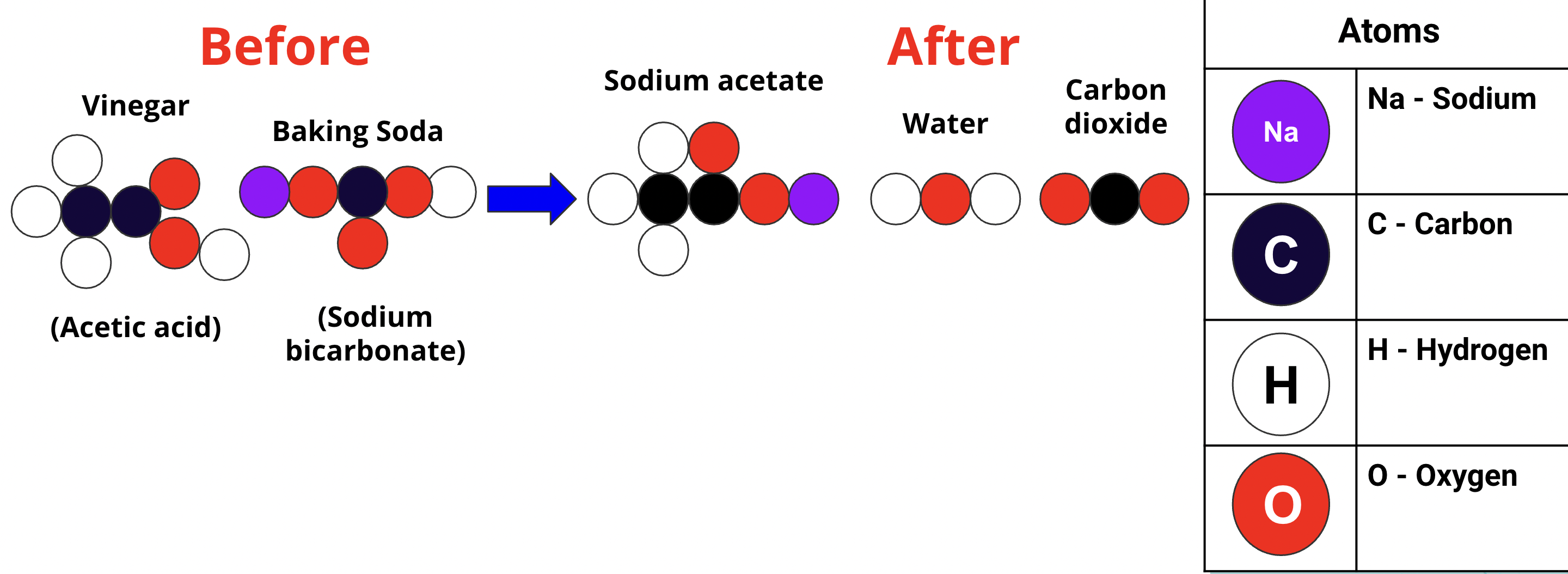
Chemical Formula: CH3COOH + NaHCO3 → CH3COONa + CO2 + H2O.

Do this model-->

Baking Soda and Vinegar

Go to the amplify model by clicking this link: https://apps.learning.amplify.com/modelingtool/#/tool/175/level/53_Baking_Soda_and_Vinegar_id_2970

1. Together with your class, use the Baking Soda and Vinegar Model to show which atoms make up the molecules that form after baking soda and vinegar react.

2. Look at the molecule key to see which atoms are in each molecule.

Sodium acetate molecule - 1 sodium atom, 2 carbon atoms, 2 oxygen atoms, 3 hydrogen atoms

Water molecule - 1 oxygen atom, 2 hydrogen atoms

Carbon dioxide - 1 carbon atom, 2 oxygen atoms

Use this diagram / model to answer the questions below:

Chemical Reaction - Substances are mixed and at least one new substance with different properties is formed.

1
1
1
1
1
1
1
1
Asemmisa {{asɛmmisaAhyɛnsode}}
19.

What do you notice about the number of atoms of each substance (chemical) BEFORE and AFTER the chemical reaction?

Exit Ticket

Paint Mixing

Criteria For Success:

  • Look at the molecules before and after the substances mix

  • Identify if a new substance was formed

  • Explain why this is or isn't a chemical reaction

Chemical Reaction - Substances are mixed and at least one new substance with different properties is formed.

0
Asemmisa {{asɛmmisaAhyɛnsode}}
20.

Was there a chemical reaction? How do you know?

0
Asemmisa {{asɛmmisaAhyɛnsode}}
21.

Do any atoms appear or disappear during a chemical reaction? How do you know?

Asemmisa {{asɛmmisaAhyɛnsode}}
3.

What did you notice at the nanoscale?

Asemmisa {{asɛmmisaAhyɛnsode}}
4.

Ice Melting: Is this a chemical reaction? Yes or no and explain why.

Asemmisa {{asɛmmisaAhyɛnsode}}
6.

What did you notice at the nanoscale?

Asemmisa {{asɛmmisaAhyɛnsode}}
7.

Paint Mixing: Is this a chemical reaction? Yes or no and explain why.

Asemmisa {{asɛmmisaAhyɛnsode}}
9.

What did you notice at the nanoscale?

Asemmisa {{asɛmmisaAhyɛnsode}}
10.

Baking Soda and Vinegar Mixing Is this a chemical reaction? Yes or no and explain why.

Asemmisa {{asɛmmisaAhyɛnsode}}
11.

How many Sodium (Na) atoms are there BEFORE the chemical reaction?

Asemmisa {{asɛmmisaAhyɛnsode}}
12.

How many Sodium (Na) atoms are there AFTER the chemical reaction?

Asemmisa {{asɛmmisaAhyɛnsode}}
13.

How many Carbon (C) atoms are there BEFORE the chemical reaction?

Asemmisa {{asɛmmisaAhyɛnsode}}
14.

How many Carbon (C) atoms are there AFTER the chemical reaction?

Asemmisa {{asɛmmisaAhyɛnsode}}
15.

How many Hydrogen (H) atoms are there BEFORE the chemical reaction?

Asemmisa {{asɛmmisaAhyɛnsode}}
16.

How many Hydrogen (H) atoms are there AFTER the chemical reaction?

Asemmisa {{asɛmmisaAhyɛnsode}}
17.

How many Oxygen (O) atoms are there BEFORE the chemical reaction?

Asemmisa {{asɛmmisaAhyɛnsode}}
18.

How many Oxygen (O) atoms are there AFTER the chemical reaction?