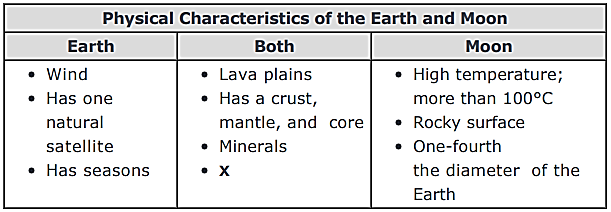
Which characteristic would best replace the X in the Physical Characteristics of the Earth and Moon chart above?
Which characteristic would best replace the X in the Physical Characteristics of the Earth and Moon chart above?
Which characteristic would best replace the X in the Physical Characteristics of the Earth and Moon chart above?
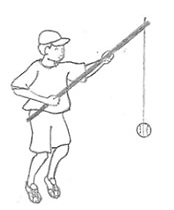
A student created a model to demonstrate the Sun and Earth system. He used a broomstick, a baseball, and one meter of string. His model is shown below.
Refer to the information above. If the baseball represents the Earth, how would the student demonstrate the day / night cycle?
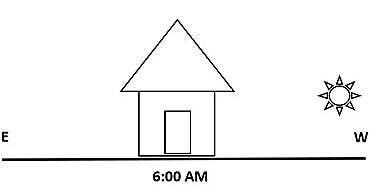
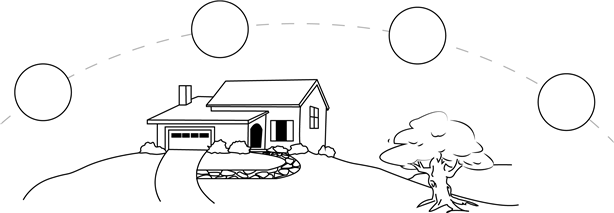
A student is designing a home for a school project. The student wants to wake up in the morning with natural sunlight coming through the windows, but wants minimal sunlight to enter the bedroom in the afternoon. Which diagram shows the best placement for the bedroom windows to meet the student’s goals?
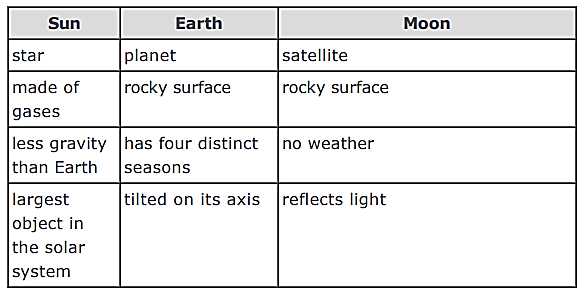
The chart contains information about the Sun, Earth, and Moon.
Which characteristic is NOT correct?
What could be done to make this diagram more accurate?
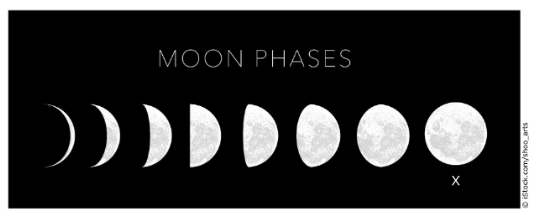
A diagram of some lunar phases is shown.
Based on the diagram, which lunar will occur directly after X?
A student has three spheres that each have a different size. How should the student label the spheres to model the size differences between the Sun, Earth, and Moon?
The Sun appears to move across the sky during the day.
Which model below presents the most accurate explanation for the apparent movement of the Sun across the sky as shown above?
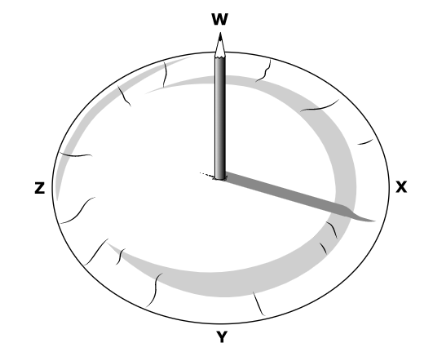
A student makes a sundial. The student takes a picture of the sundial at 3:30 P.M.
Based on the student's sundial, which letter is closest to the position of the sun when the picture was taken?
Drag the appropriate label to the areas marked in the Venn Diagram below.
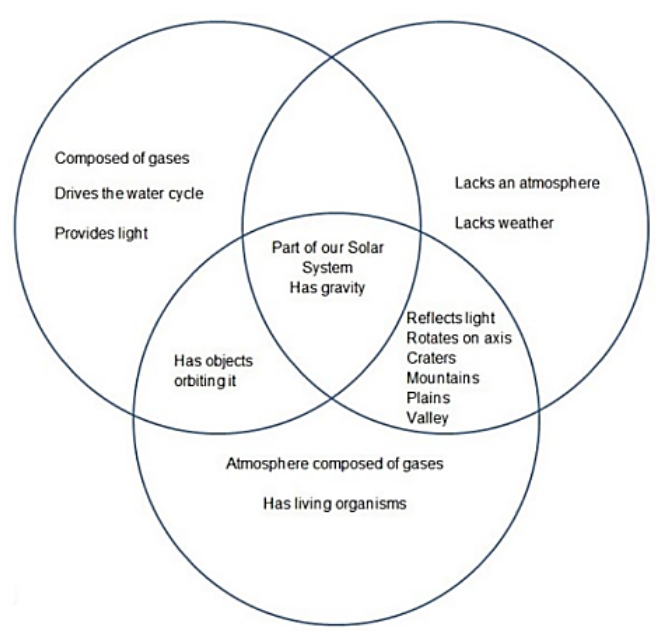
Earth is a planet with a solid surface that is most covered by water. It has landforms such as mountains, volcanoes, and deltas. The Earth's surface changes constantly because of the water cycle, weathering and erosion, and the actions of living things.
Which is also true about the Moon?
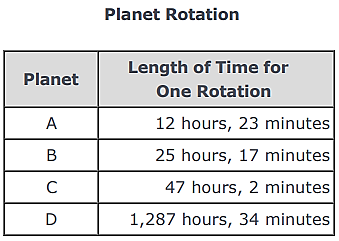
Planets rotate on their axis. The length of time for one rotation for each of the four planets is shown in the table below.
Which of the planets listed above has a length of rotation closest to the length of one rotation of the Earth?