Ɛhia
2
Ɛhia
2
Ɛhia
1
Deserts are usually found near large bodies of water.
Deserts are usually found near large bodies of water.
Describe how the mountain, desert, and water features of Southern and Eastern Asia impact trade and affect where people live.
Deserts are usually found near large bodies of water.
Southern and Eastern Asia is a region with diverse geography and people. The mountain, desert, and water features of this region impact trade and affect where people live. Water features provide resources and opportunities, but also challenges and risks. Deserts create barriers and difficulties, but also adaptations and innovations. Mountains offer beauty and diversity, but also isolation and hardship. The people of this region have learned to cope with their environment, using their skills, knowledge, and culture. They have also interacted with each other and the world, exchanging goods, ideas, and influences. As a traveler in Southern and Eastern Asia, you would discover the wonders and challenges of this region, and the stories and achievements of its people.
Imagine you are a traveler in Southern and Eastern Asia. You want to explore the diverse landscapes and cultures of this region. Where would you go? What would you see? How would you get there? How would the people you meet live and work? In this assignment, you will learn how the mountain, desert, and water features of Southern and Eastern Asia impact trade and affect where people live.
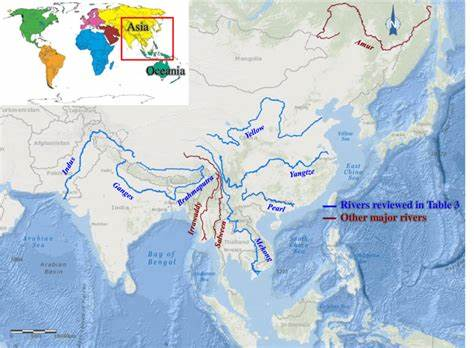
Water is essential for life. It provides food, transportation, and energy. It also shapes the land and the climate. Southern and Eastern Asia have many water features, such as rivers, lakes, seas, and oceans. Some of the most important rivers in this region are the Yangtze, the Yellow, the Mekong, the Ganges, and the Indus. These rivers flow from the high mountains to the low plains, creating fertile valleys and deltas. They also carry sediments and nutrients that enrich the soil and support agriculture. Many people in Southern and Eastern Asia live near these river banks, where they grow crops like rice, wheat, and cotton. They also raise animals like cows, pigs, and chickens. These rivers are also used for trade and transportation, connecting different regions and countries. For example, the Mekong River flows through six countries: China, Myanmar, Laos, Thailand, Cambodia, and Vietnam. Along the way, it carries goods and people, as well as cultural and religious influences.
Water also surrounds Southern and Eastern Asia, forming natural borders and access points. The Pacific Ocean, the Indian Ocean, and the Arabian Sea are some of the largest bodies of water in the world. They offer opportunities for fishing, shipping, and tourism. They also influence the climate and weather of the region, bringing monsoons, typhoons, and tsunamis. Some of the most populous and prosperous cities in Southern and Eastern Asia are located along the coastlines, such as Shanghai, Mumbai, and Tokyo. These cities are hubs of trade and commerce, attracting people from all over the world. They also face challenges such as pollution, overcrowding, and natural disasters.
The rivers of Southeast Asia support the economy of the region by allowing the people of the region to do which of the following
The Mekong River flows through all of the following countries EXCEPT
Which of these rivers is the longest in Southern and Eastern Asia?
How do the sediments and nutrients carried by the rivers affect the soil and agriculture in the region?
How do the sediments and nutrients carried by the rivers affect the soil and agriculture in the region?
Which is not a challenge that the coastal cities in Southern and Eastern Asia face due to their location?
How do the oceans and seas influence the climate and weather of Southern and Eastern Asia?
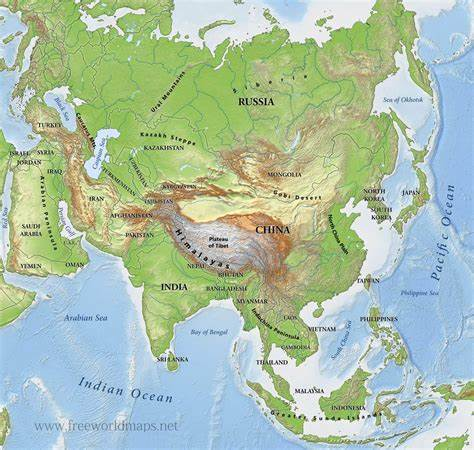
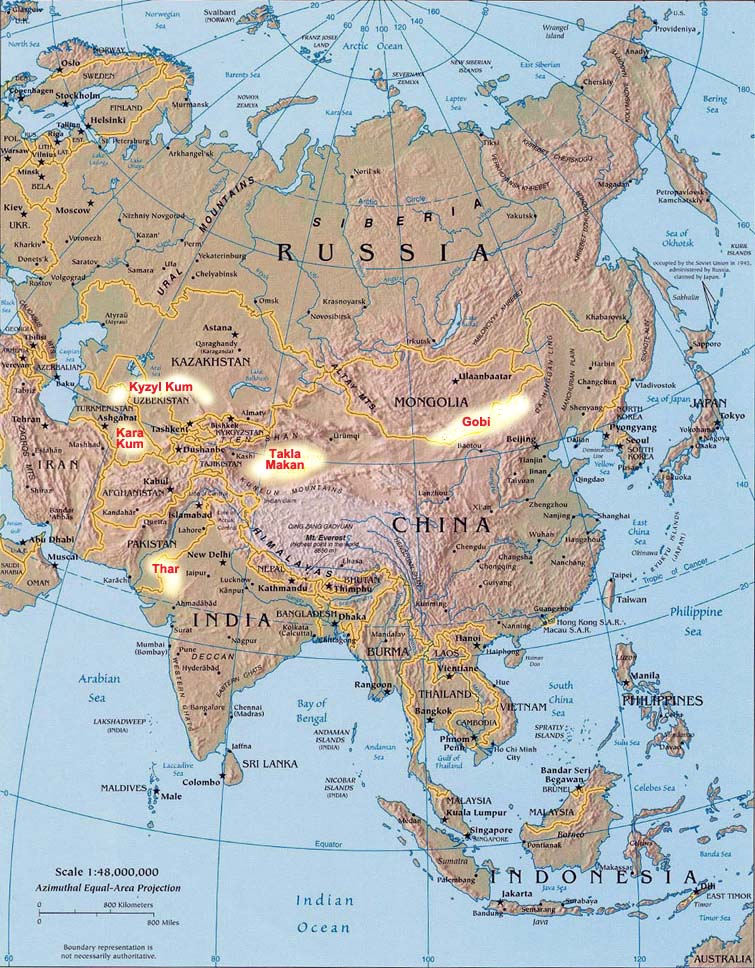
Deserts are areas that receive very little rainfall, usually less than 10 inches per year. They have extreme temperatures, ranging from very hot during the day to very cold at night. They have little vegetation and wildlife, making it hard to find food and water. Deserts cover about 20% of the land area in Southern and Eastern Asia. Some of the major deserts in this region are the Gobi, the Taklamakan, the Thar, and the Dasht-e Kavir. These deserts are located in the interior of the continent, away from the oceans and the mountains. They act as natural barriers, limiting trade and movement. They also create harsh living conditions, forcing people to adapt or migrate.
Some people in Southern and Eastern Asia live in or near deserts, where they practice semi-nomadic herding. They move from place to place with their animals, such as camels, goats, and sheep. They use these animals for food, clothing, and transportation. They also trade their products with other people, such as wool, milk, and cheese. They have to cope with the scarcity of resources, the unpredictability of weather, and the threat of invaders. They have developed skills and knowledge to survive in the desert, such as finding water sources, building shelters, and using solar power. They also have rich cultures and traditions, such as music, poetry, and festivals.
How do deserts affect trade and movement in Southern and Eastern Asia?
What are some of the skills and knowledge that nomads have developed to survive in the desert?
The Himalayan Mountain have what effect on the amount of annual rainfall received by the Gobi desert
What is the meaning of the word "scarcity" in the phrase "scarcity of resources"?
What are some of the cultural and traditional aspects of nomads in or near deserts?
How do nomads depend on animals in various aspects of their lives? Select all that apply.
In which country or countries is the Gobi Desert located?
In which country or countries is the Thar Desert located?
Select all that apply.
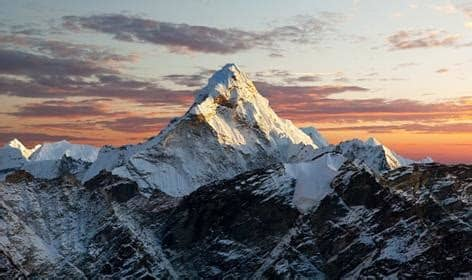
Mountains are landforms that rise above the surrounding terrain, usually more than 1,000 feet. They have steep slopes, rocky peaks, and snow-capped summits. They are formed by tectonic forces, such as the collision of continental plates. Mountains cover about 25% of the land area in Southern and Eastern Asia. Some of the highest and most famous mountains in the world are located in this region, such as the Himalayas, the Karakoram, the Kunlun, and the Tian Shan. These mountains stretch across several countries, such as China, India, Pakistan, Nepal, and Bhutan. They are home to some of the most spectacular scenery and biodiversity in the world, such as glaciers, lakes, forests, and wildlife. They also have religious and cultural significance, as they are considered sacred by many people, such as Buddhists, Hindus, and Sikhs.
Few people in Southern and Eastern Asia live in the high mountains, where the climate is cold, the air is thin, and the terrain is rugged. They face challenges such as isolation, poverty, and natural hazards. They have to rely on subsistence farming, hunting, and gathering for their livelihoods. They also have to deal with the impact of climate change, such as melting glaciers, flooding, and landslides. They have developed unique ways of life, such as terraced farming, yurt living, and yak herding. They also have diverse cultures and languages, such as Tibetan, Uyghur, and Mongolian.
The Himalayas, which are home to some of the world's tallest mountains such as Everest and K2, have long been a source of wonder for mankind. Reaching the summit, or top, of Mt. Everest is a difficult and dangerous accomplishment, but one that the bravest mountaineers attempt annually since the first time it was accomplished in 1953. But now humans are having a direct impact on Mt. Everest and other peaks like it.
What is one of the reasons why some mountains in Southern and Eastern Asia are considered sacred by many people?
The world's tallest mountain is...
The glaciers on Mt. Everest provide 1/5 of the world's population with fresh water.
The supply water from mountain glaciers is under threat because of
Mountains usually have a limited mount of biodiversity due to their elevation
People living in mountainous regions live an easy life with few hardships