Chemical Reactions Lab - Signs of a chemical Reaction

Last updated 11 months ago
5 questions

YOU MUST WEAR GOGGLES AND GLOVES FOR THIS!!!

Materials:

  • Goggles

LAB SAFETY


1. Wear goggles at all times during the lab.
2. Stay seated.
3. Take turns.
Do not hog someone's job, let them do it
4. Follow the directions closely.
Do not mix random things together. The steps are clear.
5. Perform over the tray
  • Pipettes must be used for only one type of solution do not mix it with others.

1

PART 1: Prepare and Test the following


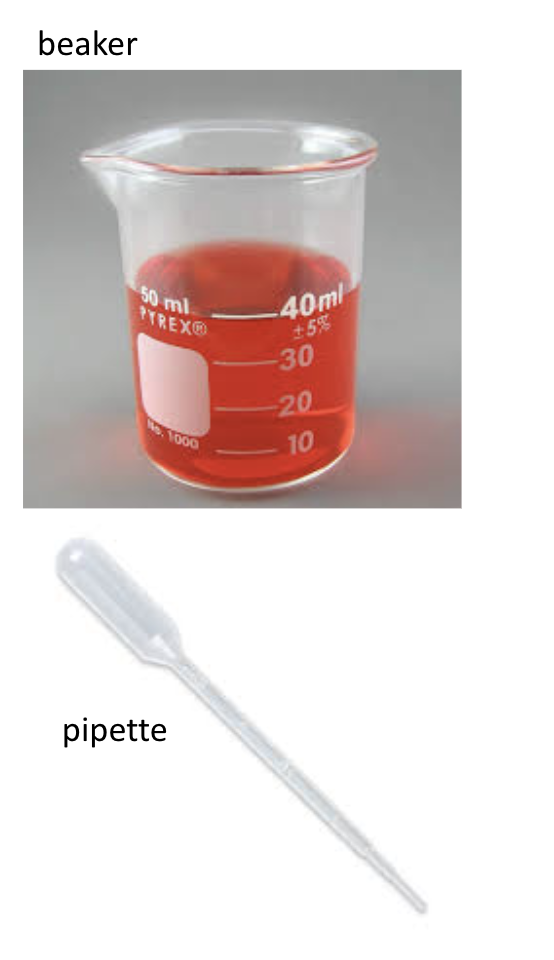
1. Obtain 1 cup (200 mL) of red cabbage juice solution in a cup (250-mL beaker). Obtain a small cup of each of the white powders: calcium chloride, sodium bicarbonate, magnesium sulfate, and sodium carbonate.
2. Add 1/4 cup (50 mL) of red cabbage juice solution to the cup labeled “sodium bicarbonate” and stir with a clean spoon.
3. Observe any changes that occur and record in your data table.
4. Make sure to touch the outside of the cup to observe any temperature change.
5. Perform the same procedure with each of the remaining powders.
6. Make sure to fill out the data table
7. Place a clean plastic spoon, pipette, or eye dropper in each of the aqueous solutions you have created. The spoons/pipettes must only be used for one type of solution. Make sure to return the pipette to the correct cup after each use.
8. Use a marker to label the baggies A, B, C, and D.
1
20

Observe any changes that occur and record in your data table.

PART 2: Prepare and Test the following

Magnesium Sulfate + Sodium Carbonate.
9. Use the pipette to add 1 spoon scoop (or three droppers) of the magnesium sulfate solution to bag A.
10. Use the pipette to add 1 spoon scoop (or three droppers) of sodium carbonate solution to bag A.
11.Observe any changes that occur and record them in your data table. Make sure to touch the outside of the bag to observe any temperature change.

Magnesium sulfate + Calcium Chloride.
13. Use the pipette to add 1 spoon scoop (or three droppers) of the magnesium sulfate solution to bag B.
14. Use the pipette to add 1 spoon scoop (or three droppers) of calcium chloride  solution to bag B.
15. 11.Observe any changes that occur and record them in your data table.

Magnesium Sulfate + Sodium Bicarbonate.
16. Use the pipette to add 1 spoon scoop (or three droppers) of the magnesium sulfate solution to bag C.
17. Use the pipette to add 1 spoon scoop (or three droppers) of sodium bicarbonate  solution to bag C.
18. .Observe any changes that occur and record them in your data table.

Calcium Chloride and Sodium Bicarbonate.
17.Use the pipette to add 1 spoon scoop (or three droppers) of the calcium chloride solution to bag D.
18. Use the pipette to add 1 spoon scoop (or three droppers) of sodium bicarbonate  solution to bag D.
19. Observe any changes that occur and record them in your data table.
20

Observe any changes that occur and record in your data table.

1

1 Paragraph


A) What is a chemical reaction?
B) How do we know a chemical reaction has occurred?
C) What is your favorite sign of a chemical reactions?
D) Which sign of a chemical reaction is the hardest to see in your opinion