1
CE.6a
1
CE.6a
1
CE.6a
1
CE.6a
1
CE.6a
1
CE.6a
1
CE.6a
1
CE.6a
1
CE.6a
1
CE.6a
1
CE.6a
1
CE.6a
1
CE.6a
1
CE.6a
1
CE.6a
1
CE.6b
1
CE.6b
1
CE.6b
1
CE.6b
1
CE.6b
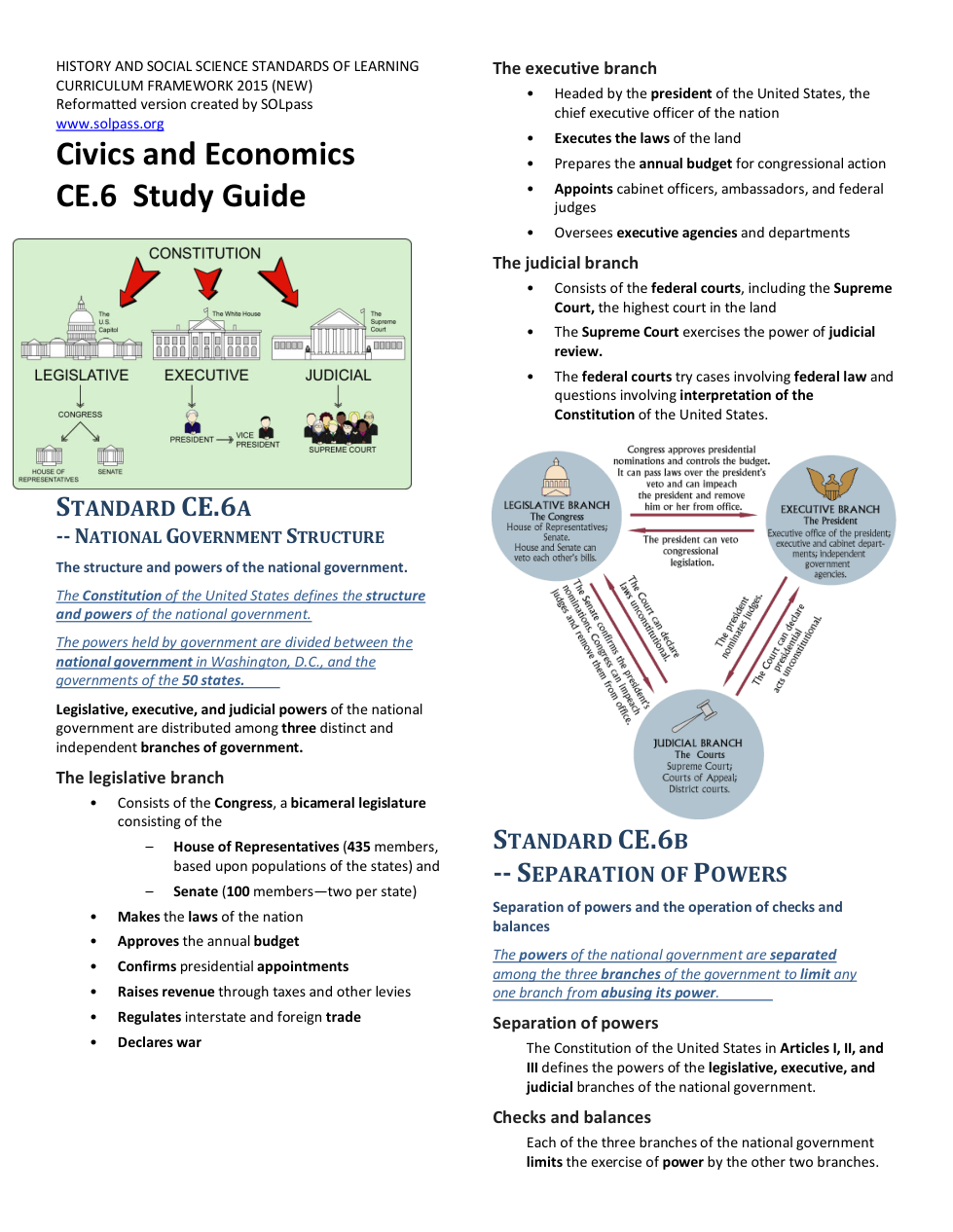
Which branch of the national government has the power to declare war?
Which branch is responsible for interpreting the constitution and laws of the land?
How many branches does the U.S. national government consist of?
What branch of the national government is responsible for making laws?
What is the primary function of the Executive Branch?
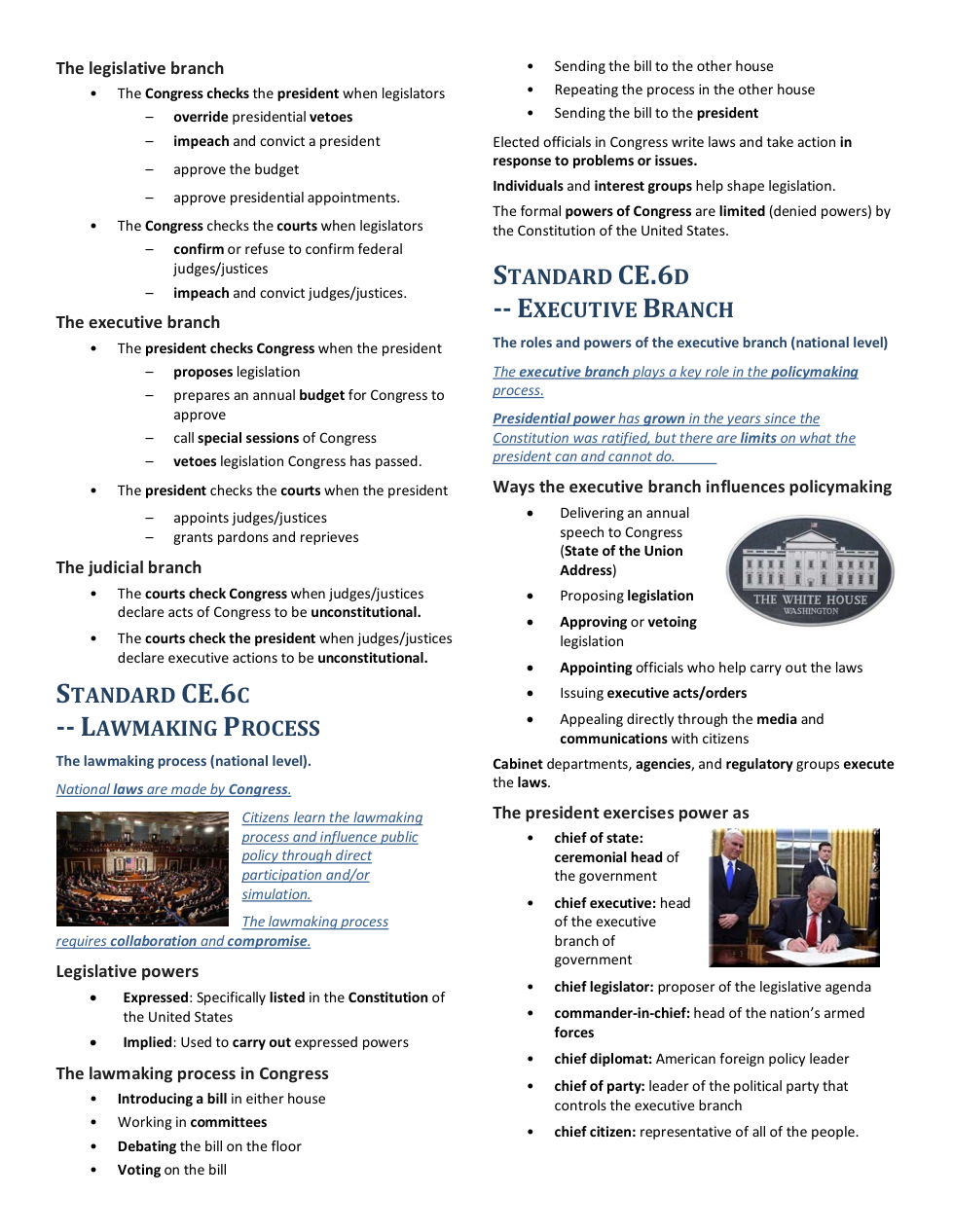
Which branch can check the power of the other branches by declaring their actions unconstitutional?
Which body makes up the legislative branch of the U.S. government?
How many houses is Congress divided into?
What are the two houses of Congress?
Who is the head of the executive branch of the U.S. government?
Who appoints federal judges?
Which group is at the top of the judicial branch of the United States?
What is judicial review?
Which part of Congress has 435 members?
Which part of Congress has 100 members?
Where in the constitution is the separation of powers outlined?
Which branch of government does Article I of the Constitution establish?
Which branch of government does Article II of the Constitution establish?
What does Article III of the Constitution establish?
The system of _______ and _____________ allows each branch to limit the power of the other two branches
Which power does the Executive branch have over the Legislative?
What authority does the Judicial branch hold over the Executive?
What specific check does the Legislative branch have over the Judicial?
What power does the executive branch have over the judicial branch?
How can the legislative branch check the executive branch?
Which of the following is an example of an expressed power?
What does 'implied powers' mean in the context of the US Constitution?
Why are implied powers important for the national government?
Who can propose a law in the U.S. Congress?
What is the first step in the lawmaking process?
What happens after a bill is introduced?
If both Houses of Congress approve a bill, what is the next step?
When a bill is vetoed by the president, what can Congress do next?
Presidential power has _____ since the Constitution was ratified.
How does the President, as part of the Executive branch, influence policy?
Who serves as the Commander-in-Chief of the military under the national government structure?
How can the executive branch influence policy through the use of executive orders?
Which is a true statement about presidential appointments?
What is the main duty of the president in foreign relations?
How does the President manage the executive branch?
Which is not part of the president's duties concerning national defense?