Sonoran Desert - Abiotic Components
World Atlas (link)
Soil Characteristics (link)
Sonoran Desert (link)

Overview
First-time visitors to Sonoran Desert Network parks are often surprised by the tremendous natural variation between, as well as within, each park. However, the very diversity of species, lifeforms, and landscapes is one of the common threads that unifies SODN parks.
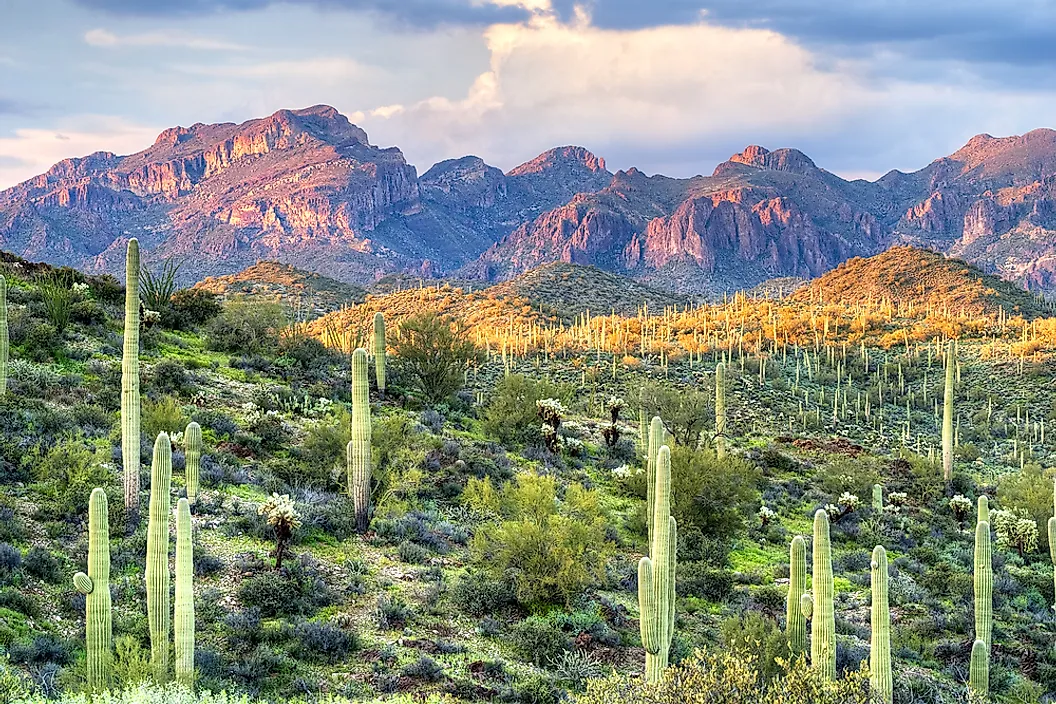
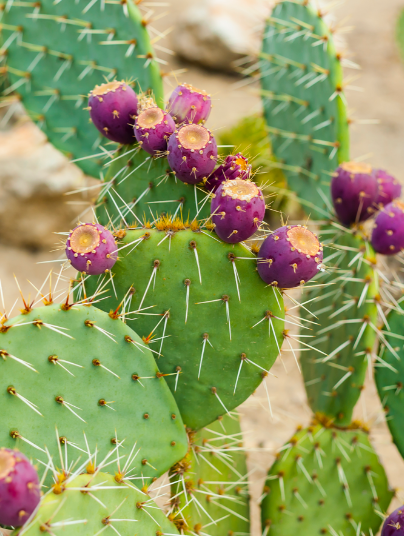
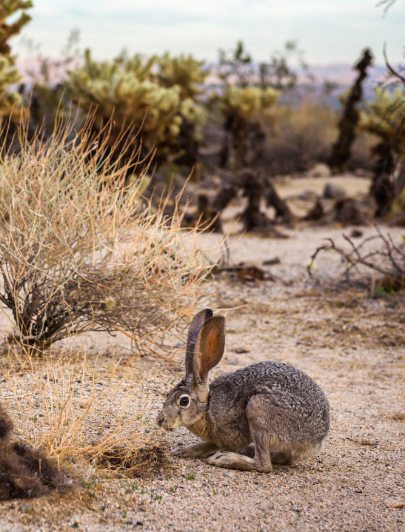
The Sonoran Desert is thought to have the greatest species diversity of any desert in North America, and that diversity occurs over relatively fine spatial scales. The Sonoran Desert is home to at least 60 species of mammals, more than 350 bird species, 20 amphibians, some 100 reptiles, and about 30 species of native fish. More than 2,000 species of plants have been identified in the Sonoran Desert, and each of the three physiological groupings of vascular plants (C3, C4, and CAM photosynthetic pathways) dominate one or more major biotic communities.
More striking than species diversity is the tremendous variability in Sonoran Desert lifeforms, from columnar cacti to conifers, Gila monsters to pygmy owls, cyanobacterial soil crusts to native ferns. Landscape diversity in the Sonoran Desert rivals that of any other terrestrial ecoregion on Earth, with nearly all of the planet's biomes represented, ranging from cold conifer forests to hot deserts, where frost is nearly absent and precipitation rare. This tremendous species, lifeform, and landscape biodiversity is the result of a host of factors: the subtropical climate, continental physiography, bimodal precipitation, varied geology, and wide-ranging topography.
Continental Physiography
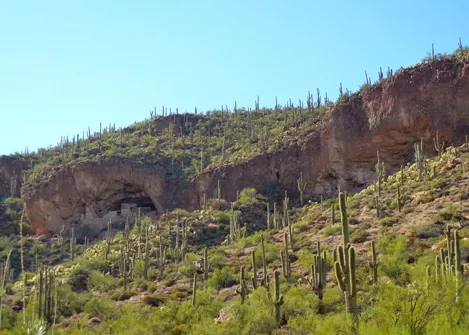
The Sonoran Desert occupies approximately 260,000 square km (100,387 square mi) of the southwestern United States and northwestern Mexico, including the southern half of Arizona, southeastern California, and most of the states of Sonora and Baja California, Mexico. Bounded on the north by the Mogollon Rim, the Sonoran Desert grades into the Chihuahuan Desert to the east, the Mohave Desert to the west, and the tropical forests and montane forests of central Mexico to the south. Extending between 23°N and 30°N, the subtropical Sonoran Desert represents a continental-scale ecotone between the tropics and temperate zones of western North America. At a regional scale, the Sonoran Desert serves as a transition between the Sierra Madre and the Rocky Mountains, the Pacific and Gulf coasts, and the coastal lowlands of Baja and the mid-continent.
Geology and Topography
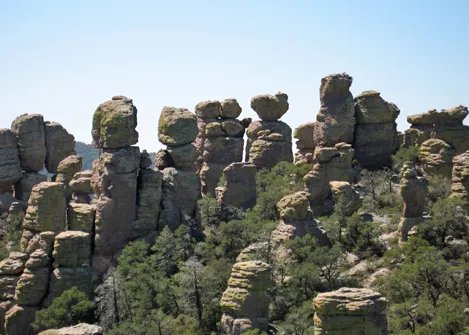
The Sonoran Desert is composed of sedimentary, igneous, and metamorphic rocks with widely varying ages, from 2 billion year-old Precambrian outcroppings in Arizona to relatively recent (ca. 700 A.D.) volcanism in the Pinacate region near the international border. Between 20 and 40 million years ago, numerous volcanoes were active in the Sonoran Desert, resulting in large calderas (basins formed by volcanic explosions), lava vents, and cinder cones. This tectonic activity, coupled with intense heat from below, placed tremendous stress on the crusts underlying the Sonoran Desert, causing the horizontal and vertical movements that produced its characteristic Basin and Range topography.
The result was roughly parallel mountain ranges, many approaching elevations of 3,048 m (10,000 ft), separated by broad valleys flanked by "bajadas" of coalesced alluvial fans. This precipitous topographic relief provides for radical differences in climate along slopes, with the relatively cool and moist (due to orographic precipitation) summits containing lifezones more characteristic of Canada than those of the valley bottoms below. These montane habitats (accentuated by north and east aspects and local topography) are termed "sky islands," which are analogous to actual marine islands from the perspective of biogeography, speciation, and landscape connectivity. In combination with the bimodal precipitation regime and mid-continental position, this tremendous variation in topography over relatively fine scales produces the amazing diversity of the Sonoran Desert.
Climate
Perhaps no feature defines the Sonoran Desert more than its bimodal precipitation regime. Interspersed between the Mohave and Chihuahuan deserts, the Sonoran Desert receives the frequent low-intensity winter (December/January) rains of the former, as well as the violent summer (July/August) "monsoon" thunderstorms of the latter. These distinct rainy seasons support a broad array of warm- and cool-season flora and fauna, and are the primary cause of the amazing species and lifeform diversity of the Sonoran Desert. Winter precipitation occurs when a low-pressure trough develops over the western United States, pushing the prevailing Pacific storm tracks south over the Sonoran Desert.
Annual precipitation in the Sonoran Desert averages from 76 to 500 mm (3–20 in) depending on location, with substantial inter- and intra-annual variability in timing and quantity. Precipitation is typically much higher with elevation due to the orographic effects of the sky islands, with a sizable proportion occurring as snowfall.
The Sonoran is a hot desert. Summer air temperatures routinely exceed 40°C (104°F), and often reach 48°C (118°F). These high near-surface temperatures interact with cool, moist air in the atmosphere to produce the violent thunderstorms of the summer monsoons. As moisture on the soil surface and near-surface air evaporate following a storm, temperatures may drop 10°C (18°F) or more, often within a matter of minutes. Winter temperatures are mild, with valley bottoms typically free of frost, while the surrounding mountains may have dense snow cover at high elevations and north and east aspects. During any season, diurnal swings of 15°C (27°F) or more are common, as the dry atmosphere and relatively low vegetation cover facilitate re-radiation of daytime heat into the atmosphere overnight.