Log in
Sign up for FREE
arrow_back
Library
Ecosystem Task Cards
By NICHOLAS GLAESER
star
star
star
star
star
Share
share
Last updated almost 2 years ago
20 questions
Add this activity
1
5.9.A
1
5.9.A
1
5.9.A
1
5.9.A
1
5.9.A
1
5.9.A
1
5.9.A
1
5.9.A
1
5.9.A
1
5.9.A
1
5.9.A
1
5.9.A
1
5.9.A
1
5.9.A
1
5.9.A
1
5.9.A
1
5.9.A
1
5.9.A
1
5.9.A
1
5.9.A
Question 1
1.
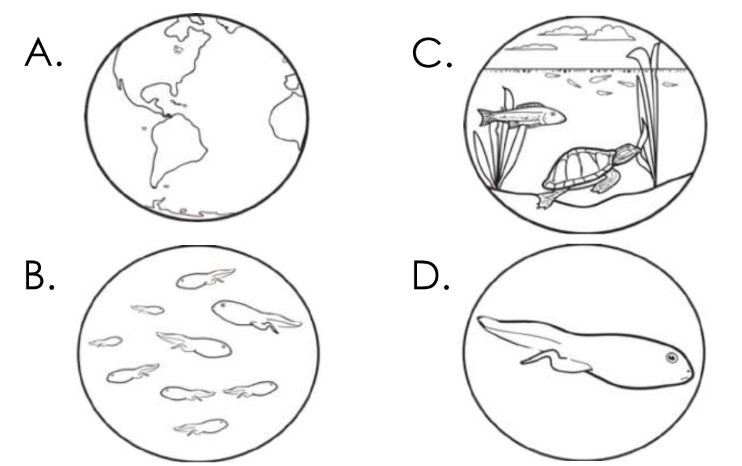
Which image best represents a community?
Question 2
2.
Which image best represents a population?
Question 3
3.
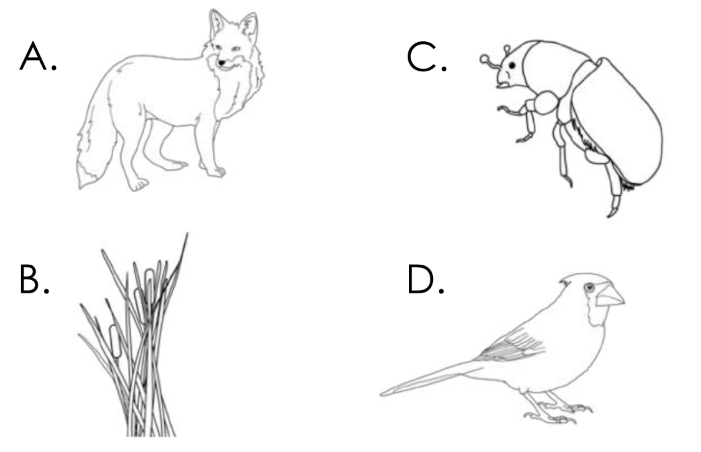
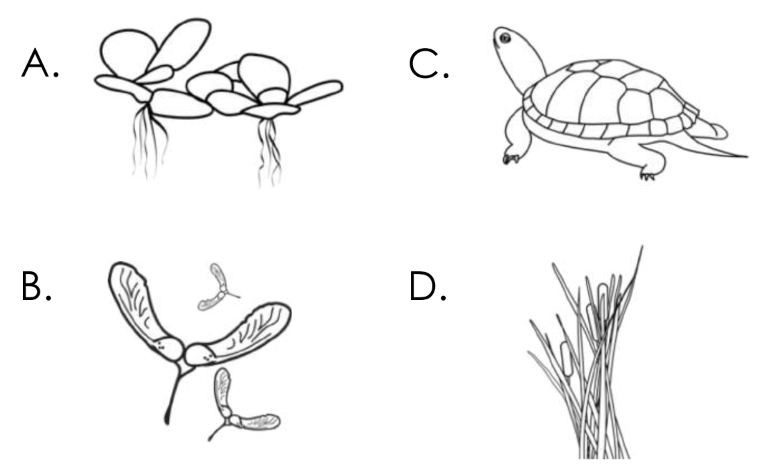
Which image shows a producer?
Question 4
4.
Which image shows a consumer?
Question 5
5.
Which of the following is NOT an example of an organism?
Soil
Phytoplankton
Fox
Oak tree
Question 6
6.
Which of the following is NOT a characteristic of living things?
The ability to reproduce
The ability to respond to their environment
Does not need energy
Requires water
Question 7
7.
Which of the following is an example of two organisms that most likely interact in an ecosystem?
Turtle and rock
Shark and deer
Flea and dog
Cat and water
Question 8
8.
Which list contains only nonliving components that impact a beach ecosystem?
Salt water, sand, crab, seaweed
Salt water, algae, wind
Sand, sunlight, salt water
Seaweed, algae, crab
Question 9
9.
What does it mean for an organism to perish?
To interact with another organism for survival
To die
To have more than enough resources for survival
To interact with a non-living thing for survival
Question 10
10.
What does it mean for something to be nonliving?
It has no basic needs and was never alive.
It has perished and no longer depends on basic needs.
It requires basic needs and is alive.
It must eat other organisms to obtain energy.
Question 11
11.
What does it mean for something to be once-living?
It has no basic needs and was never alive.
It has perished and no longer depends on basic needs.
It requires basic needs and is alive.
It must eat other organisms to obtain energy.
Question 12
12.
What is a habitat?
All the living and nonliving things in an area
The environment of an organism
All the living and nonliving things that interact in an area
Relationships between living things
Question 13
13.
What is the difference between an environment and an ecosystem?
An environment does not involve interactions and an ecosystem does.
An ecosystem does not involve interactions and an environment does.
An environment only involves nonliving things, and an ecosystem involves living things.
An ecosystem only involves nonliving things, and an environment involves living things.
Question 14
14.
What is the difference between a population and a community?
A community involves only one species, and a population involves all the species living in an area.
A population involves only one species, and a community involves all the species living in an area.
A community is all the organisms that interact in an area and a population involves organisms that do not interact.
A population includes only living things and a community includes only nonliving things.
Question 15
15.
What is the difference between a producer and a consumer?
A producer can be any type of organism, but a consumer is only human.
All animals are producers, and all plants are consumers.
Consumers can make their own food and producers cannot.
Producers can make their own food and consumers cannot.
Question 16
16.
How are once-living and nonliving organisms similar?
Both are considered plants.
Both are consumed by consumers.
Both get decomposed by organisms like worms.
Neither requires resources for survival.
Question 17
17.
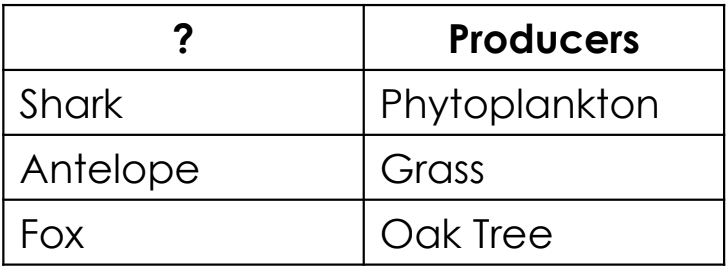
Which term best fits in the blank?
Organisms
Species
Consumers
Communities
Question 18
18.
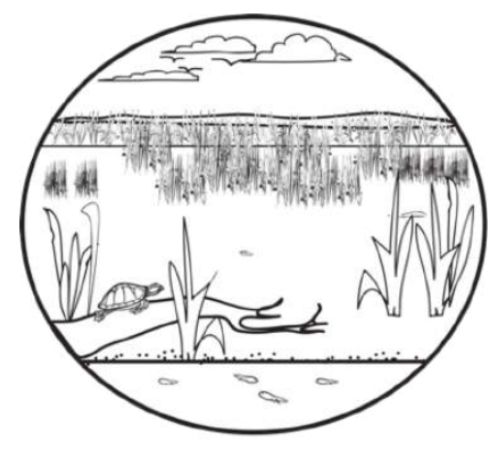
Which word best describes the image?
Species
Nonliving
Ecosystem
Population
Question 19
19.
Which of the follow lists a community?
Whales, foxes, sharks, and coyotes
Fish, squirrels, water, and sand
Cacti, duckweed, and roses
Foxes, deer, oak trees, and robins
Question 20
20.
What do Labradors, beagles, German shepherds, and poodles all have in common?
They’re all in the same ecosystem.
They’re all the same species.
They are all producers.
They are all each others’ predators and prey.