Log in
Sign up for FREE
arrow_back
Library
Economics SOL Standard 11: Marketplace decisions and Economic systems
By Danny Higgins
star
star
star
star
star
Share
share
Last updated almost 2 years ago
20 questions
Add this activity
zoom_in
1
CE.11a
1
CE.11a
1
CE.11a
1
CE.11a
1
CE.11a
1
CE.11a
1
CE.11b
1
CE.11b
1
CE.11b
1
CE.11b
1
CE.11b
1
CE.11b
1
CE.11b
zoom_in
1
CE.11b
1
CE.11b
1
CE.11b
1
CE.11b
1
CE.11b
1
CE.11b
1
CE.11b
Question 1
1.
What does the term 'scarcity' refer to in economics?
Resources being completely exhausted
Limitation of resources to meet all wants
The oversupply of goods
Question 2
2.
What are 'goods' in the context of economics?
Items that can be seen, touched and exchanged
Services offered for a fee
Performances provided by people
Question 3
3.
When we speak of 'services' in economics, what do we mean?
Items produced for direct use
Goods traded in the marketplace
Acts performed for others in exchange for compensation
Question 4
4.
What is 'opportunity cost' in economic terms?
The value of your second best option
Cost of producing goods or services
Expenses for advertisement
The price you pay for a product
Question 5
5.
What are the four factors of production in economics?
Land, Labor, Capital, Entrepreneurship
Supply, Demand, Capital, Labor
Buyers, Sellers, Products, Prices
Resources, Demand, Supply, Expenses
Question 6
6.
What does ‘capital‘ refer to in economics?
The monetary value of a company
The highest value product
The supply of finished goods
The machinery, tools and buildings
Question 7
7.
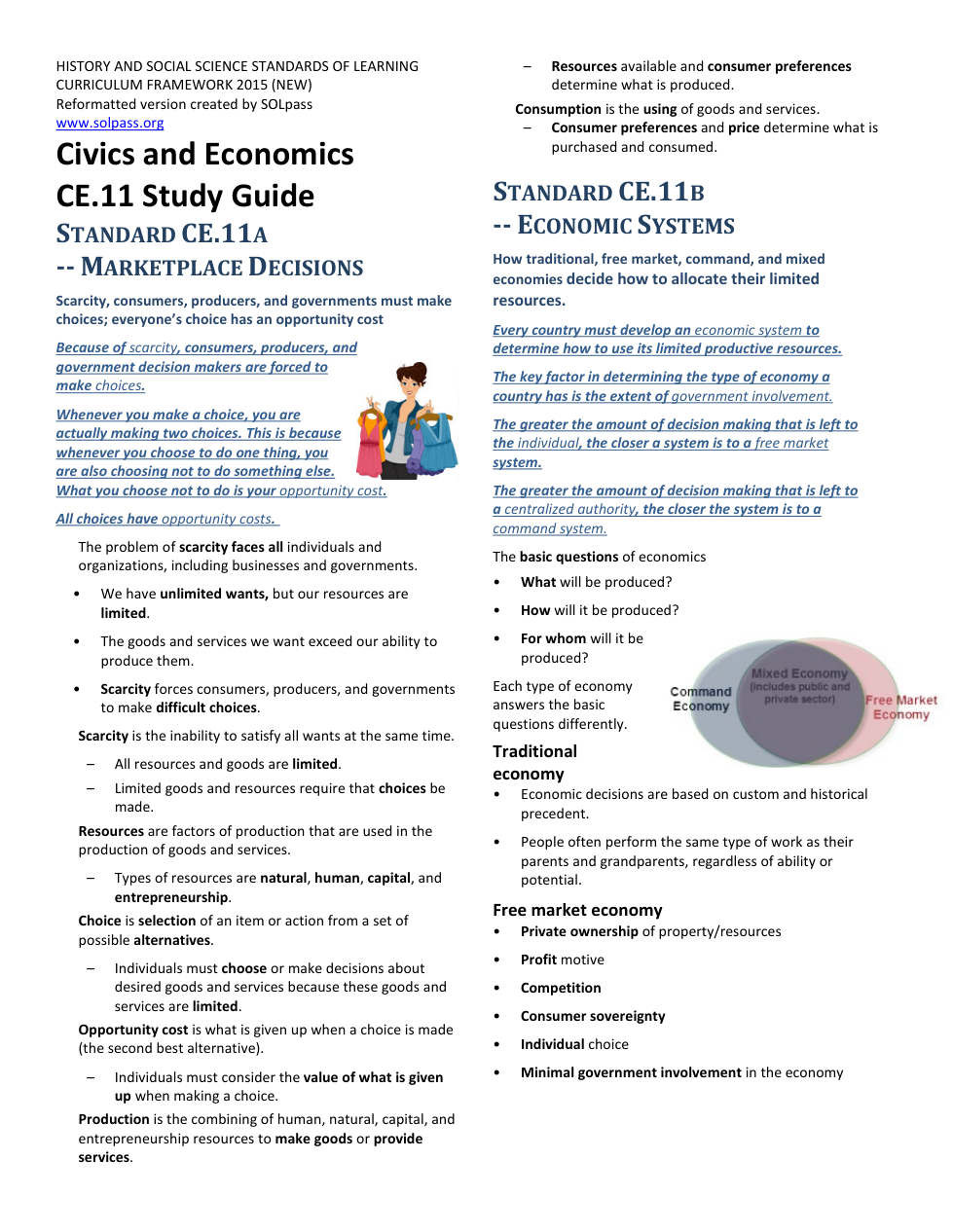
What are the three basic questions about economic systems?
Where, Why and How to produce?
What, How and for Whom to produce?
What, When and Where to produce?
How, When and What to produce?
Question 8
8.
Which economic system involves individuals and businesses making most decisions?
Command Economies
Market Economies
Mixed Economies
Traditional Economies
Question 9
9.
What is a characteristic of a traditional economy?
It has a high level of state control.
It uses modern technology.
It relies on customs and bartering.
Money is the main medium of exchange.
Question 10
10.
In which economy does the government have the least involvement?
Mixed economy
Command economy
Market economy
Question 11
11.
Which type of economy typically has the greatest income inequality?
Market economy
Mixed economy
Traditional economy
Command economy
Question 12
12.
What is a significant downside of a traditional economy?
It values profit over wellbeing.
It requires a lot of government intervention.
It may resist new ideas and technology.
Question 13
13.
What is a significant downside of a market economy?
It can lead to higher levels of economic inequality
Public services make up a greater share of the government’s budget
Tax rates are generally higher than in mixed or command economies
It provides more choices to consumers
Question 14
14.
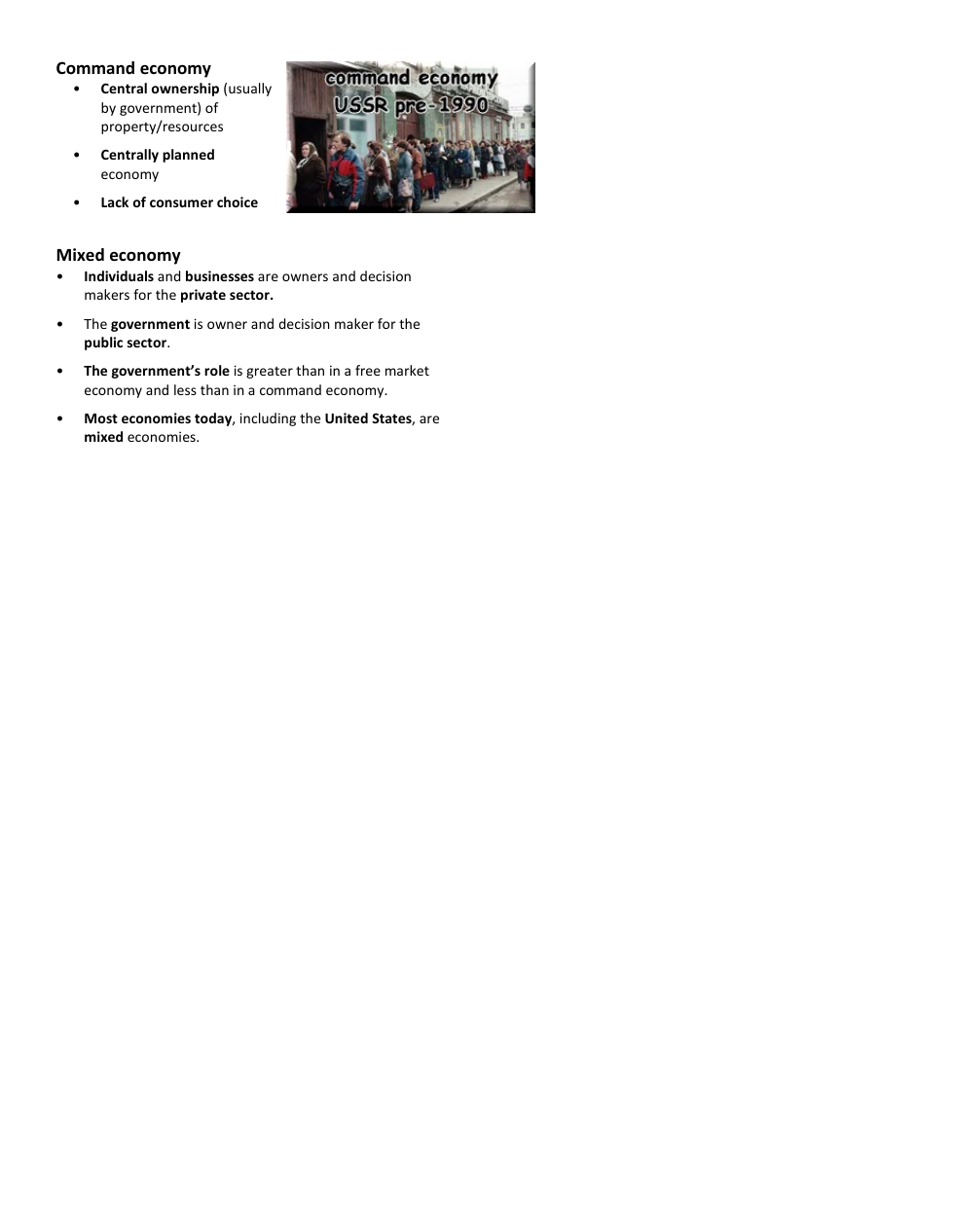
In which economic system does the government make all the decisions?
Command Economies
Traditional Economies
Market Economies
Mixed Economies
Question 15
15.
What is a common disadvantage of command economies?
Mixing of the public and private sector
More public services
Less economic freedom for individuals
High levels of economic inequality
Question 16
16.
What economic system is a blend of market and command economies?
Market Economies
Traditional Economies
Command Economies
Mixed Economies
Question 17
17.
What is a primary characteristic of a mixed economic system?
Only government control
No involvement of the state
Exclusive market freedom
Combination of public and private ownership
Question 18
18.
Who primarily makes economic decisions in the public sector of a mixed economy?
The government
International traders
Private companies
Individual consumers
Question 19
19.
In a mixed economy, who controls the production of goods in the private sector?
Private businesses
International organisations
Consumer groups
The government
Question 20
20.
The United States has a __________ economy
Command
Traditional
Market
Mixed