Q1 - Staying with Uncle Stephen

Last updated 9 months ago
4 questions
Note from the author:

6.7C - The student is expected to analyze plot elements, including rising action, climax, falling action, resolution, and non-linear elements such as flashback.

  • A story's plot provides its organizational structure. Although a story can be told in different ways, the plot of any story generally includes the same basic elements revealed in the a forward-progressing order: rising action (where the suspense/tension/conflict required in all stories appears), the climax (the decisive point at which the reader knows how the conflict will be resolved), the falling action (where the consequences of how the conflict was addressed play out), and the resolution (how the story ends). Once you understand that each of these structural elements plays a role in developing a story, you can begin examining how these parts were constructed and eventually draw conclusions about why those elements were constructed in that manner. This analysis of plot elements can confirm comprehension of the text or establish the need to review these parts more carefully.
  • Rising action: the element of plot structure that develops the conflict through a series of events to build interest, suspense, and tension and that propels a story to the climax

6.7C - The student is expected to analyze plot elements, including rising action, climax, falling action, resolution, and non-linear elements such as flashback.

  • A story's plot provides its organizational structure. Although a story can be told in different ways, the plot of any story generally includes the same basic elements revealed in the a forward-progressing order: rising action (where the suspense/tension/conflict required in all stories appears), the climax (the decisive point at which the reader knows how the conflict will be resolved), the falling action (where the consequences of how the conflict was addressed play out), and the resolution (how the story ends). Once you understand that each of these structural elements plays a role in developing a story, you can begin examining how these parts were constructed and eventually draw conclusions about why those elements were constructed in that manner. This analysis of plot elements can confirm comprehension of the text or establish the need to review these parts more carefully.
  • Rising action: the element of plot structure that develops the conflict through a series of events to build interest, suspense, and tension and that propels a story to the climax
1

Which answer did you pick for the question?

1. Why are the events in paragraph 1 important to the rising action of the story?

1

Why did you chose that answer?

Test Taking Tips

In order to answer this question, you should be familiar with the elements of plot.

The first time you read the story, create a plot graphic organizer and take note of the following:
  • Exposition: introduces character(s), setting, conflict
  • Conflict: something or someone preventing the main character from getting what they wants
  • Rising Action: events in which the character interacts in some way with their conflict
  • Climax: the character faces their conflict and either reaches or fails to reach their goal
  • Falling Action: 1-2 events that happen after the climax and is the beginning of the end of the story.
  • Resolution: main problem/conflict is solved. The main character usually displays some kind of change, and loose ends in the plot are tied up. On STAAR this is where you will generally find the theme of the story.
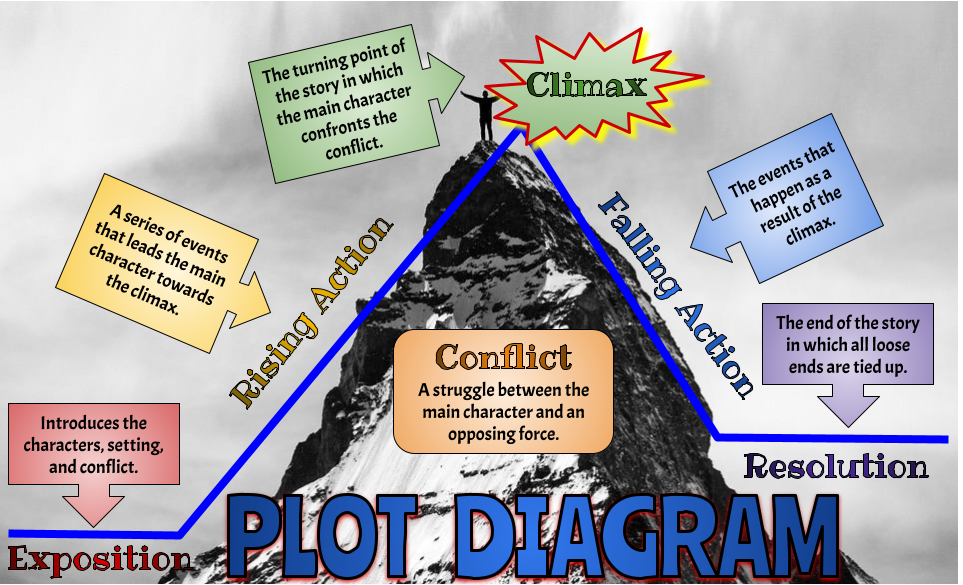
Answering the question:
  • Read the question carefully.
  • Look up any words in the question and answer choices that you do not understand. (It's difficult to answer the question correctly if you do not know what you are being asked.)
  • Review the notes you took on your graphic organizer.
  • Re-read paragraph 1. Since it is part of the exposition, the answer should deal with the character, setting, or conflict.
  • Use the process of elimination when analyzing the answer choices. Try to come up with a reason why the answer choice is wrong. If you can give a reason, use the answer eliminator tool to cross it out.
  • Remember, if any part of the answer choice is incorrect, the entire answer choice will be incorrect.

Paragraph 1

Brody stared out the kitchen window and heaved a sigh. His parents were traveling for business this weekend, and he was staying with his Uncle Stephen. Unfortunately, Uncle Stephen lived in a cabin in the countryside, 50 miles away from Brody's home in the bustling city. Restlessly Brody picked up the phone and called his friend Marisa.
1

Which answer should you have chosen?

1. Why are the events in paragraph 1 important to the rising action of the story?

1

What will you do differently next time?

After you submit, read the answer choice explanations. In your Reading Journal, write down why the answer choice you originally chose was wrong, and why the correct answer is right.