Preskoči na glavni sadržaj
Prijava
Sign up for FREE
arrow_back
Biblioteka

Photosynthesis

star
star
star
star
star
Posljednje ažuriranje about 1 year ago
5
3
6
1
6
1

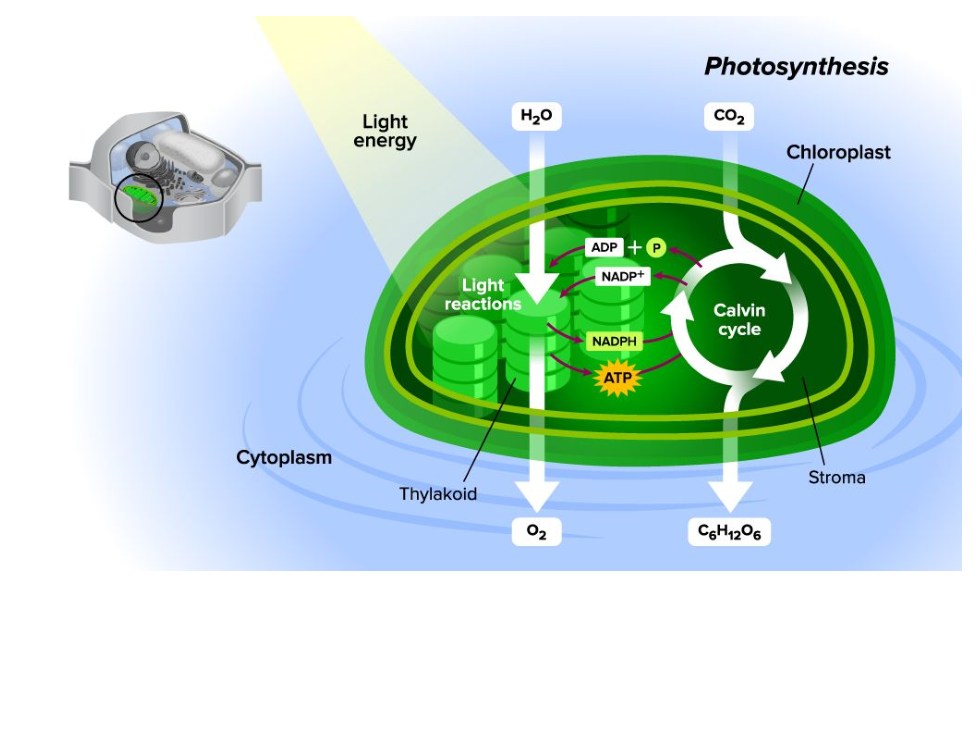
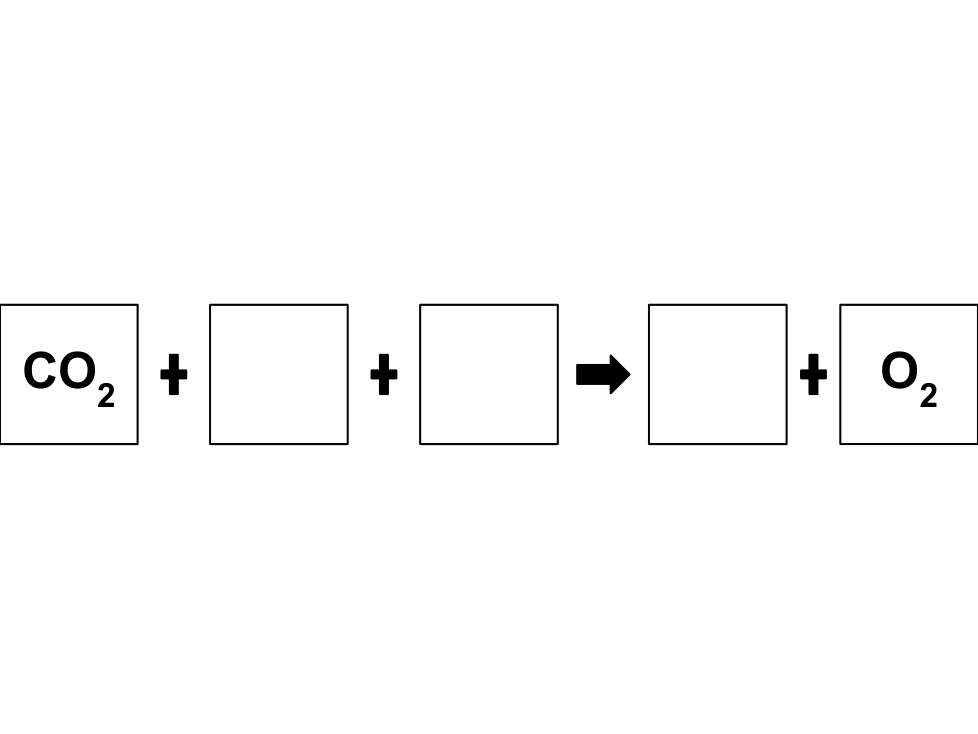
Most autotrophs, including plants, make organic compounds, such as sugars, by a process called photosynthesis. Photosynthesis is a process in which light energy is converted into chemical energy. The overall chemical equation for photosynthesis is:

6CO2 + 6H2O + light energy --> C6H12O6 (glucose) + 6O2

Carbon dioxide, water, and light energy are used to create glucose and oxygen.
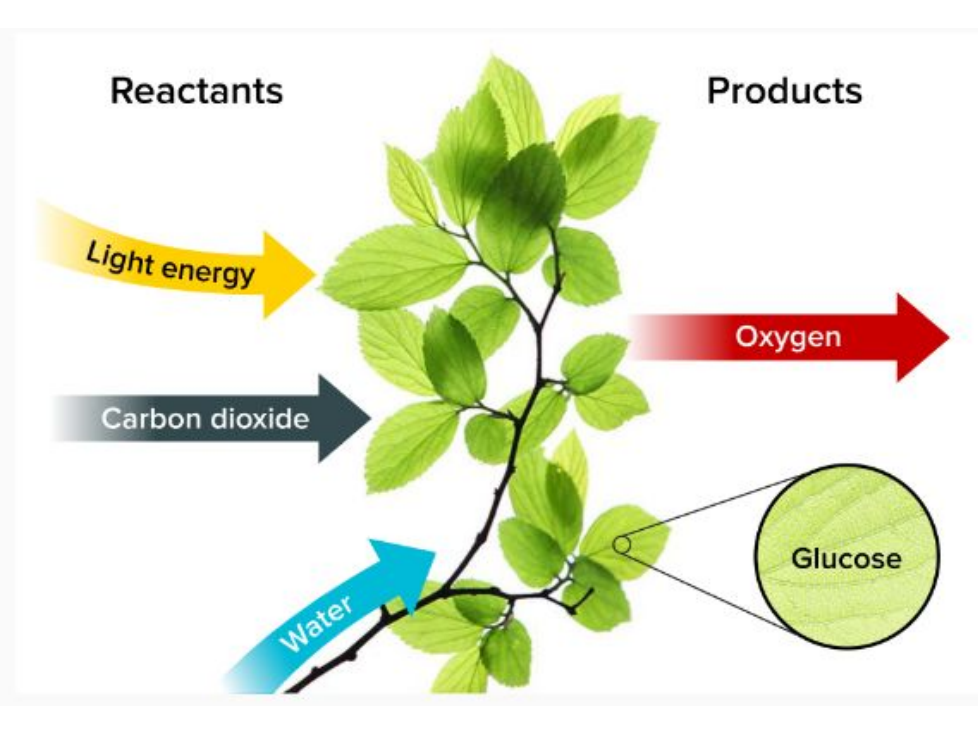
Photosynthesis occurs in 2 phases. In phases one, the light-dependent reactions, light energy is absorbed and then converted into chemical energy in the form of ATP and NADPH. In phase two, the light-independent reactions, the chemical energy stored in ATP and NADPH from phase one is used to make glucose. Once glucose is produced, it can be joined to other simple sugars to form larger molecules. These larger molecules are complex carbohydrates, such as starch. Carbohydrates are composed of repeating units of small organic molecules. The end products of photosynthesis also cab be used to make other organic molecules, such as proteins, lipids, and nucleic acids.

Phase 1: Light-dependent reactions

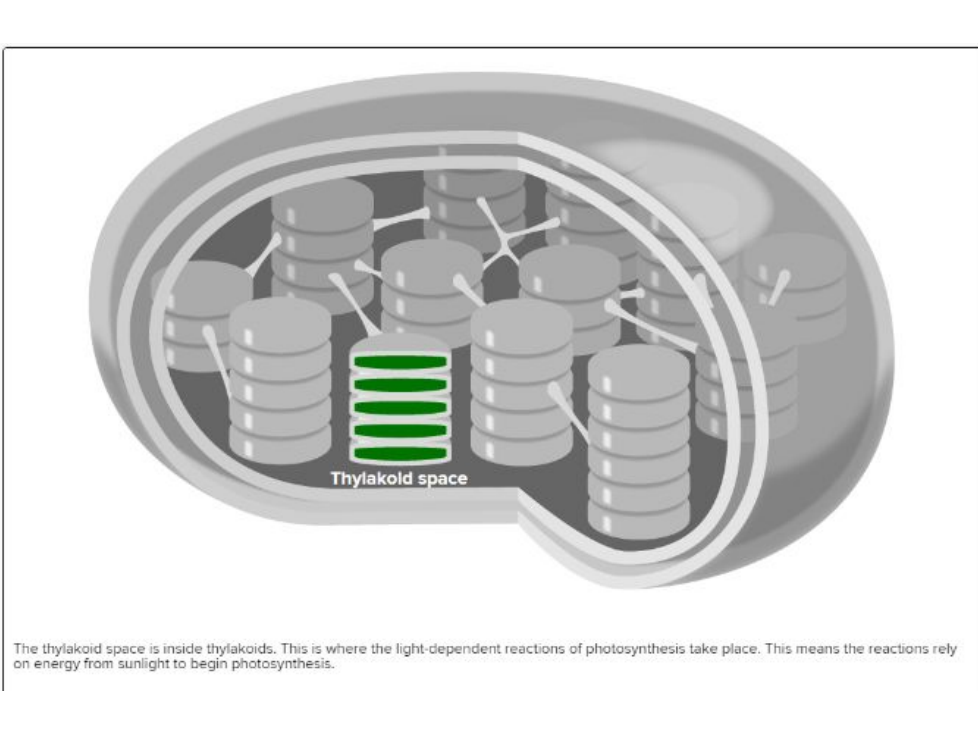
The absorption of light is the first step in photosynthesis. Plants have special organelles called chloroplasts to capture light energy. Once the energy is captured, two energy storage molecules, NADPH and ATP, are produced to be used in the light-independent reactions.

  • occurs in the thylakoids of chloroplasts

  • Light energy is absorbed and converted into chemical energy in the form of: ATP & NADPH

  • CO2 and H2O are used in this process

  • Oxygen is a product of the light-dependent reactions

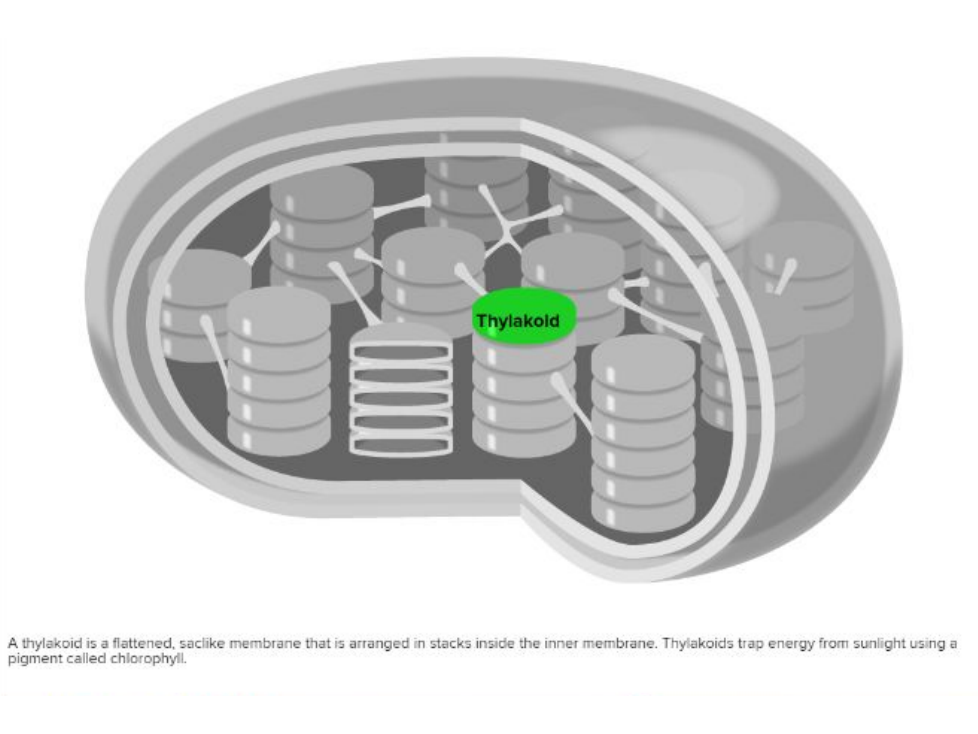
Chloroplasts

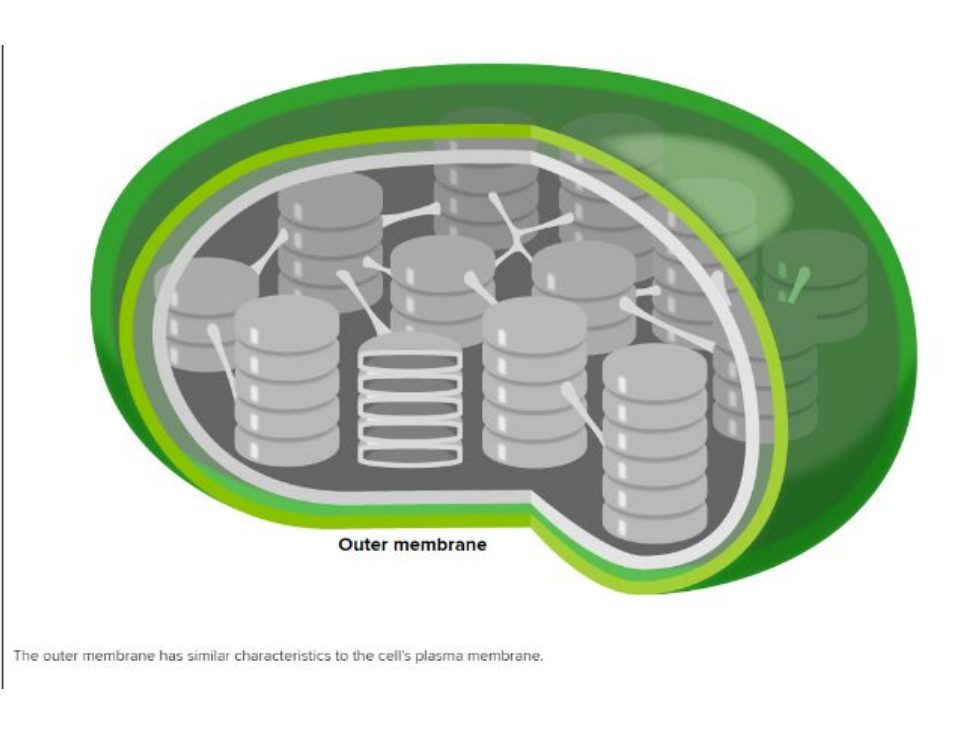
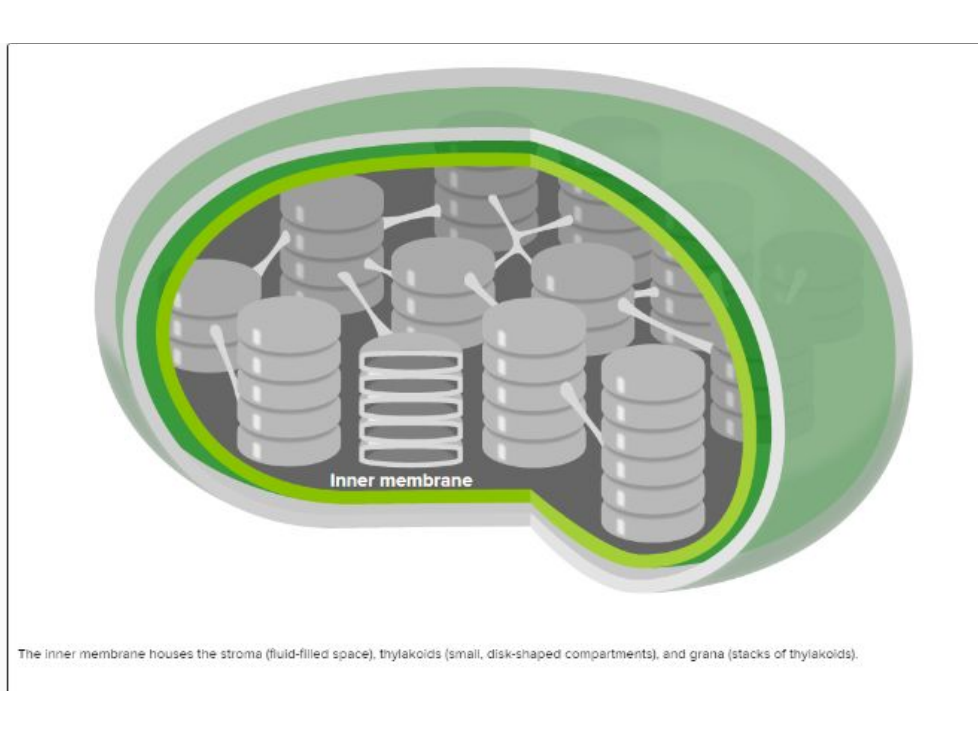
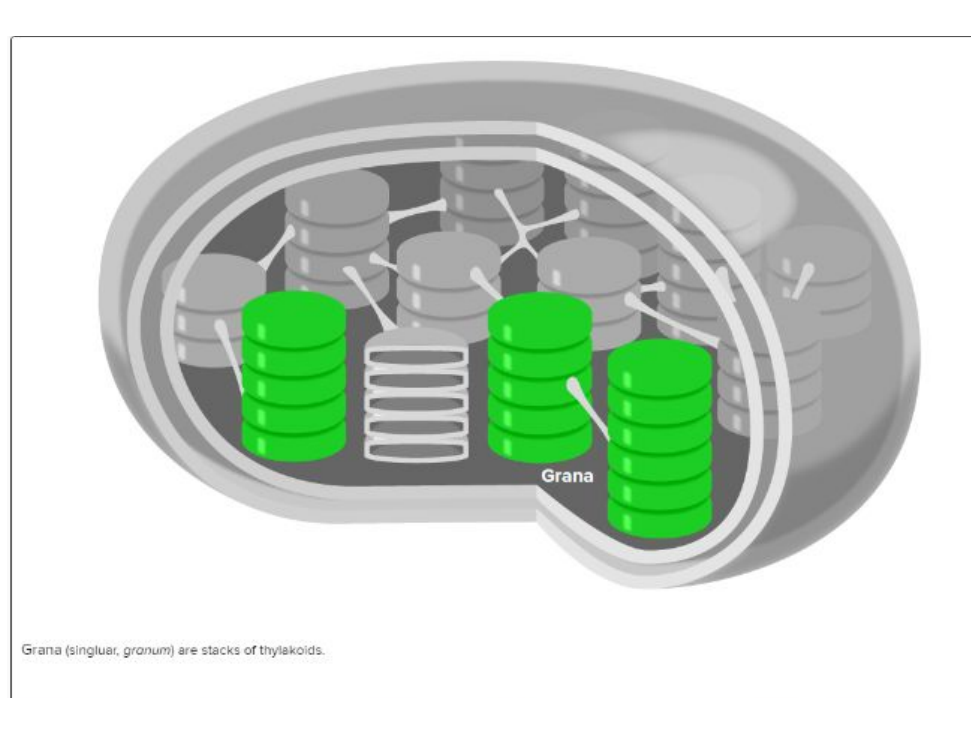
Large organelles, called chloroplasts, capture light energy in photosynthetic organisms. In plants, chloroplasts are found mainly in the cells of leaves. Chloroplasts are disk-shaped organelles that contain two main compartments essential to photosynthesis.

The first compartment is called the Thylakoid.

Phase 2: Light-independent reactions (Calvin Cycle)

  • Occurs in the stroma of chloroplasts

  • ATP & NADPH are used to make glucose (C6H12O6)

  • Glucose can join other simple sugars to form larger molecules (like starch)

  • Glucose can also be used for production of proteins, lipids, and nucleic acids

Pitanje 1
1.

Drag the missing pieces of the photosynthesis equation into the empty spots.

Drugi mogući odgovor:
Light energy

Pitanje 2
2.

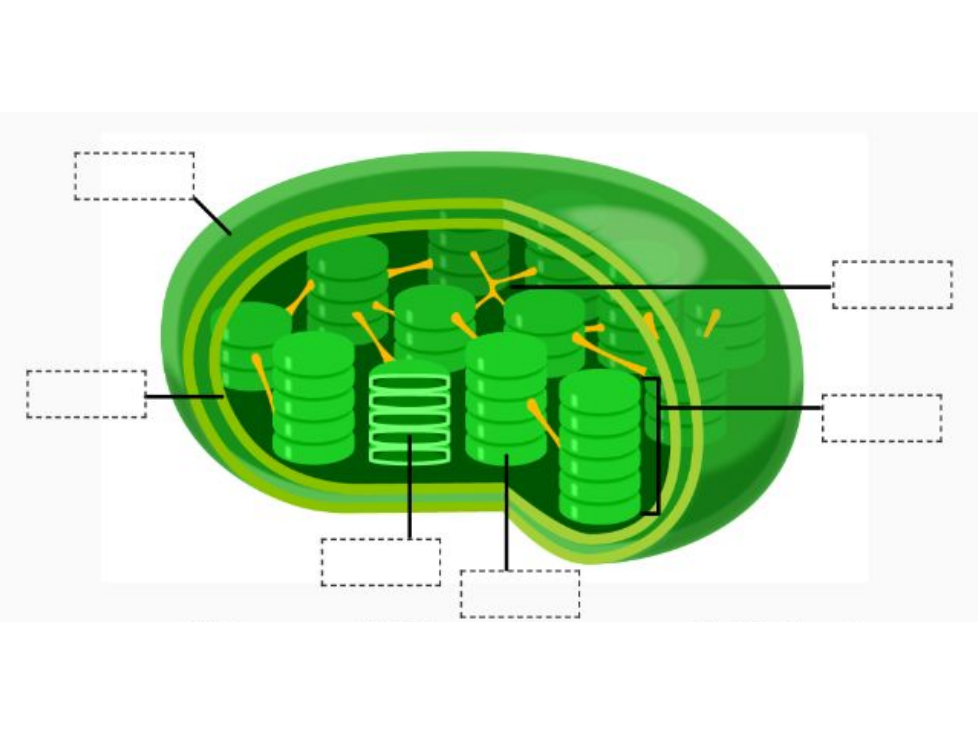
Drag the labels to the right spots.

Drugi mogući odgovor:
Outer Membrane
Granum
Inner Membrane
Thylakoid Space
Stroma
Thylakoid
Pitanje 3
3.

Plants appear green because chlorophyll absorbs green light.

Pitanje 4
4.
Stavka koja se može prevućiarrow_right_altOdgovarajuća stavka

Thylakoid space

arrow_right_alt

Light-independent reactions of photosynthesis occur here

Outer membrane

arrow_right_alt

Light-dependent reactions of photosynthesis occur here

Grana

arrow_right_alt

houses the thylakoids, grana, and stroma

Inner membrane

arrow_right_alt

protects the chloroplast from harmful substances

Thylakoid

arrow_right_alt

houses numerous thylakoids

Stroma

arrow_right_alt

traps energy from the sunlight using chlorophyll

Pitanje 5
5.

What is the main product of the Calvin Cycle?