
Which of the following best explains the impact of climate change on polar regions?
1 point
1
Question 2
2.
Based on the data in the graph, which of the following values best indicates the change in the present-day CO2 concentration as compared to the CO2 concentration approximately 200,000 years ago?
1 point
1
Question 3
3.
Which of the following best describes the relationship between the variables shown in the graphs?
1 point
1
Question 4
4.
Which of the following equations best represents the chemical changes that occur during ocean acidification?
1 point
1
Question 5
5.
Which of the following solutions can best reduce an anthropogenic cause of ocean acidification?
1 point
1
Question 6
6.
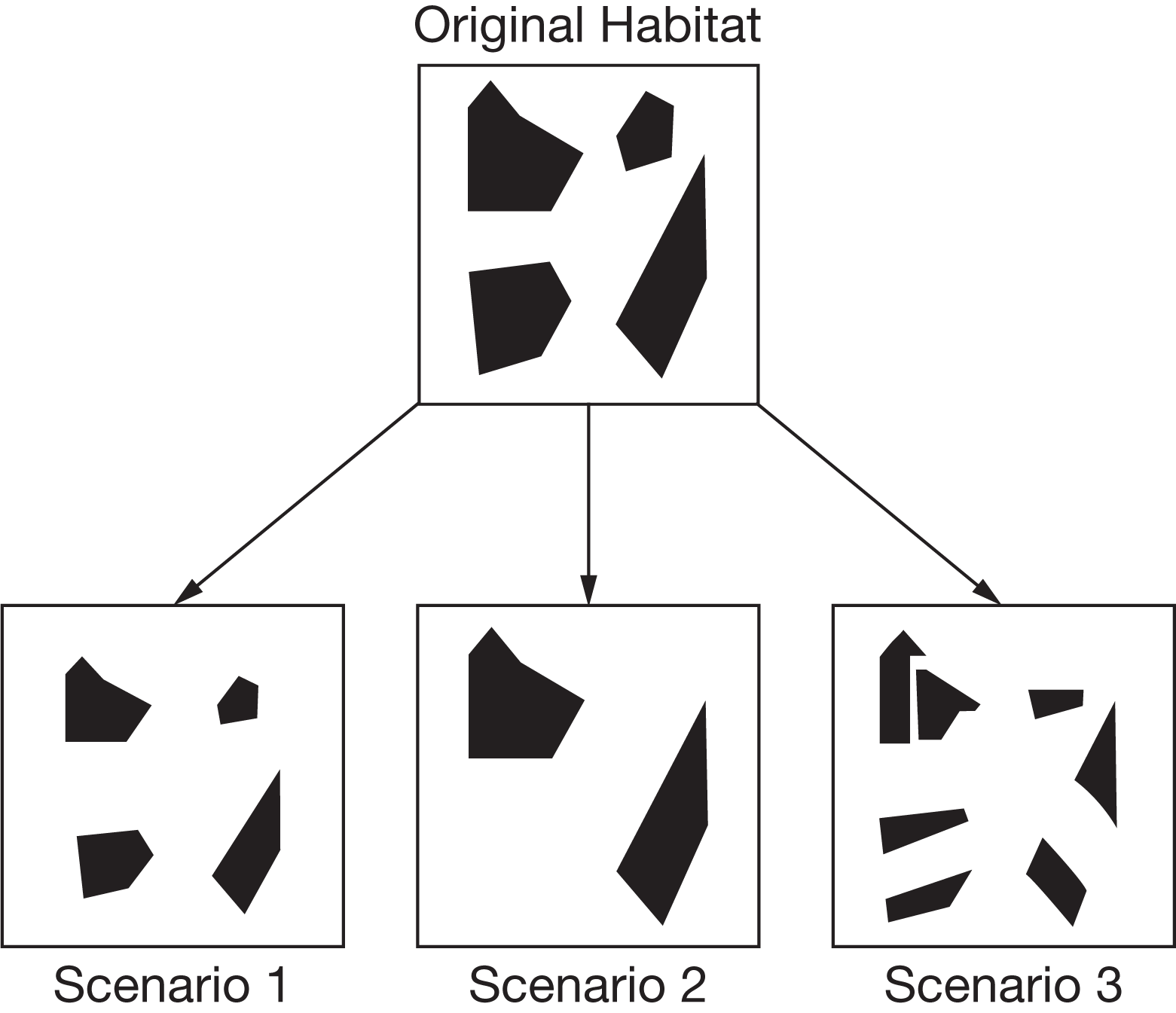
The diagram shows how a patch of habitat could possibly be altered.
Which of the following is a possible effect of global climate change as illustrated in Scenario 1?
1 point
1
Question 7
7.
The diagram shows how a patch of habitat could possibly be altered.
Which of the following would be most likely to occur in the scenarios that have experienced habitat loss and/or fragmentation in the diagram?
1 point
1
Question 8
8.
The diagram shows how a patch of habitat could possibly be altered.
Which of the following would be the most likely explanation for the changes shown in Scenario 3?
1 point
1
Question 9
9.
The diagram shows how a patch of habitat could possibly be altered.
Which of the following correctly identifies the type of habitat change(s) shown within each potential scenario in the diagram?
1 point
1
Question 10
10.
The spotted lanternfly is a herbivorous insect that is native to Asia and feeds on over 70 species of plants. The feeding behavior of the spotted lanternfly damages plants, and the nymph and adult lanternflies secrete sticky residues that exacerbate the damage to native plant species by promoting mold growth. The spotted lanternfly reproduces once during its lifetime by laying between 30 and 50 eggs, and the eggs hatch after a short amount of time. The range of the spotted lanternfly is increasing because the insects are transported to new environments by the movements of animals and people, and it is now found in many parts of the United States.
Which of the following best describes the spotted lanternfly in the United States?
1 point
1
Question 11
11.
Chemical compound banned in most countries because of link to stratospheric ozone depletion.
1 point
1
Question 12
12.
In 1978, the United States banned the use of CFCs in aerosols. Based on the data in the graph, which of the following best explains the effect of this ban as a solution to decrease global CFC production?
1 point
1
Question 13
13.
Which of the following statements best uses the data to support the claim that the Montreal Protocol was an effective solution for a global problem?
1 point
1
Question 14
14.
This layer of Earth’s atmosphere contains the ozone layer that absorbs the sun's ultraviolet rays.
1 point
1
Question 15
15.
Which of the following human activities is most closely associated with depletion of the stratospheric ozone layer?