Twa kɔ nsɛm atitiriw so
Log in
Sign up for FREE
arrow_back
Laabri

Context 23b - Distinguishing Distribution

star
star
star
star
star
Last updated over 2 years ago
9 Nsɛmmisa
Hyɛ no nsow a efi ɔkyerɛwfo no hɔ:

MMR Resources
1
Asemmisa {{asɛmmisaAhyɛnsode}}
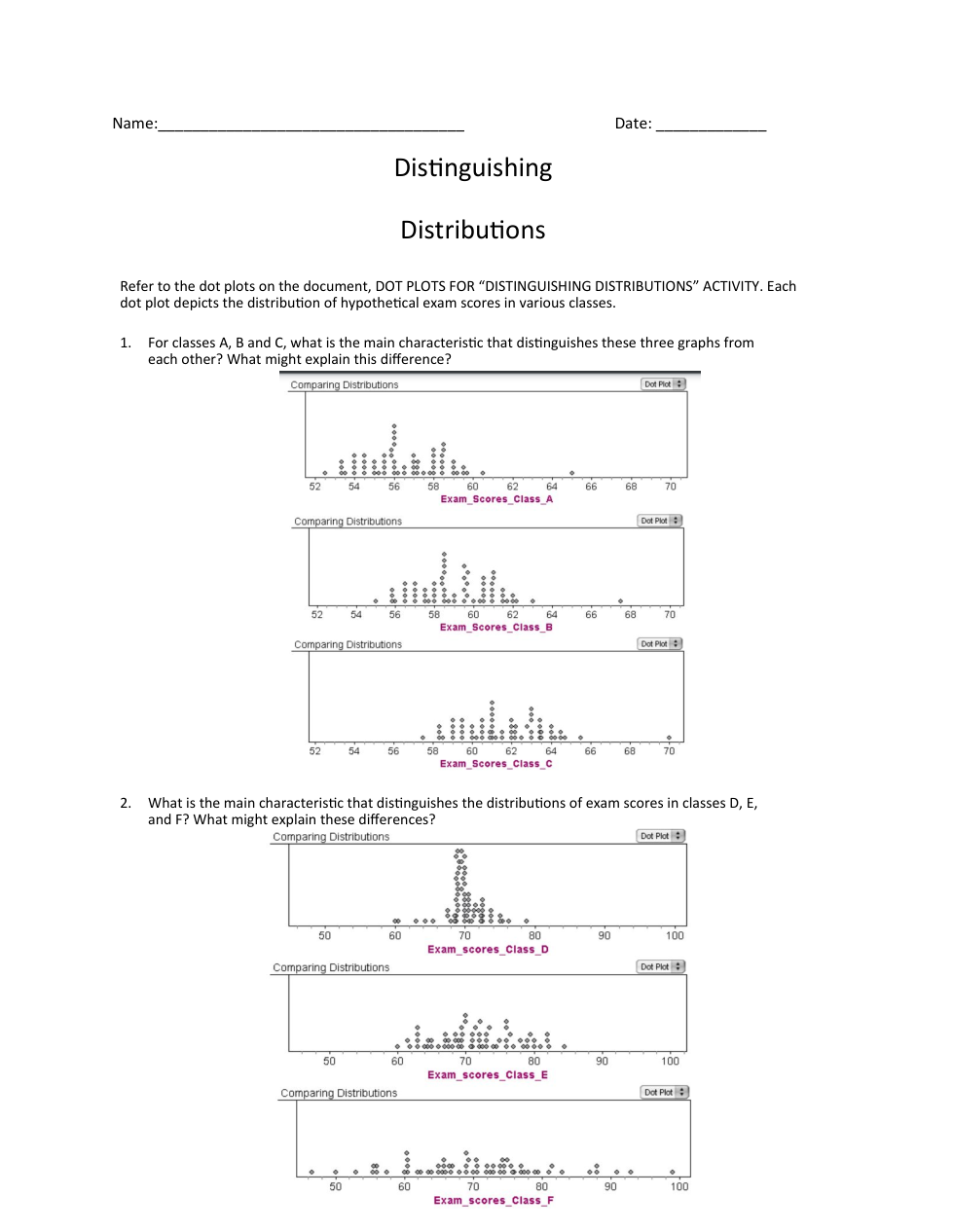
1.

For classes A, B, and C, what is the main difference between these graphs and what might explain this difference?

1
Asemmisa {{asɛmmisaAhyɛnsode}}
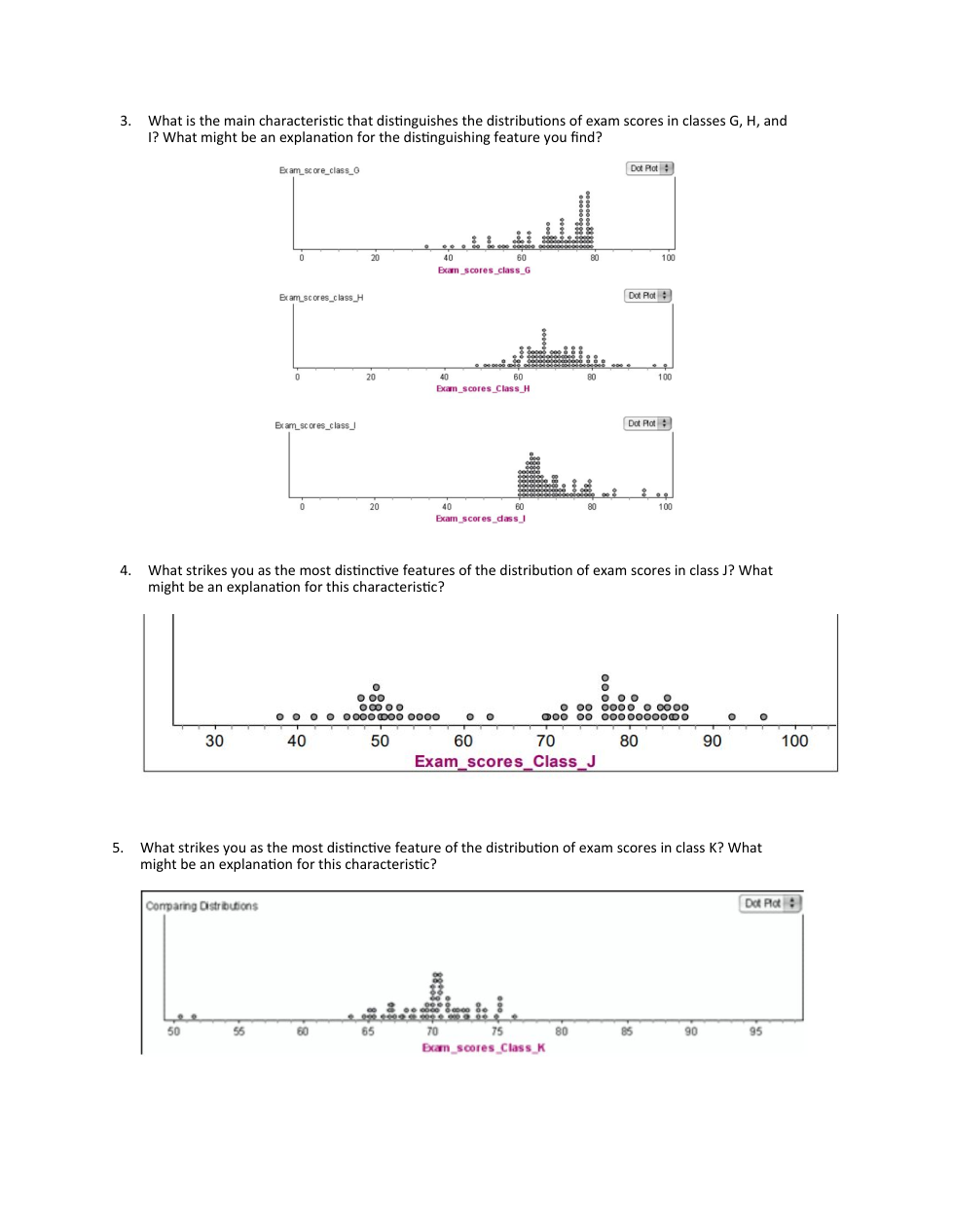
2.

For classes D, E, and F, what is the main difference between these graphs and what might explain this difference?

1
Asemmisa {{asɛmmisaAhyɛnsode}}
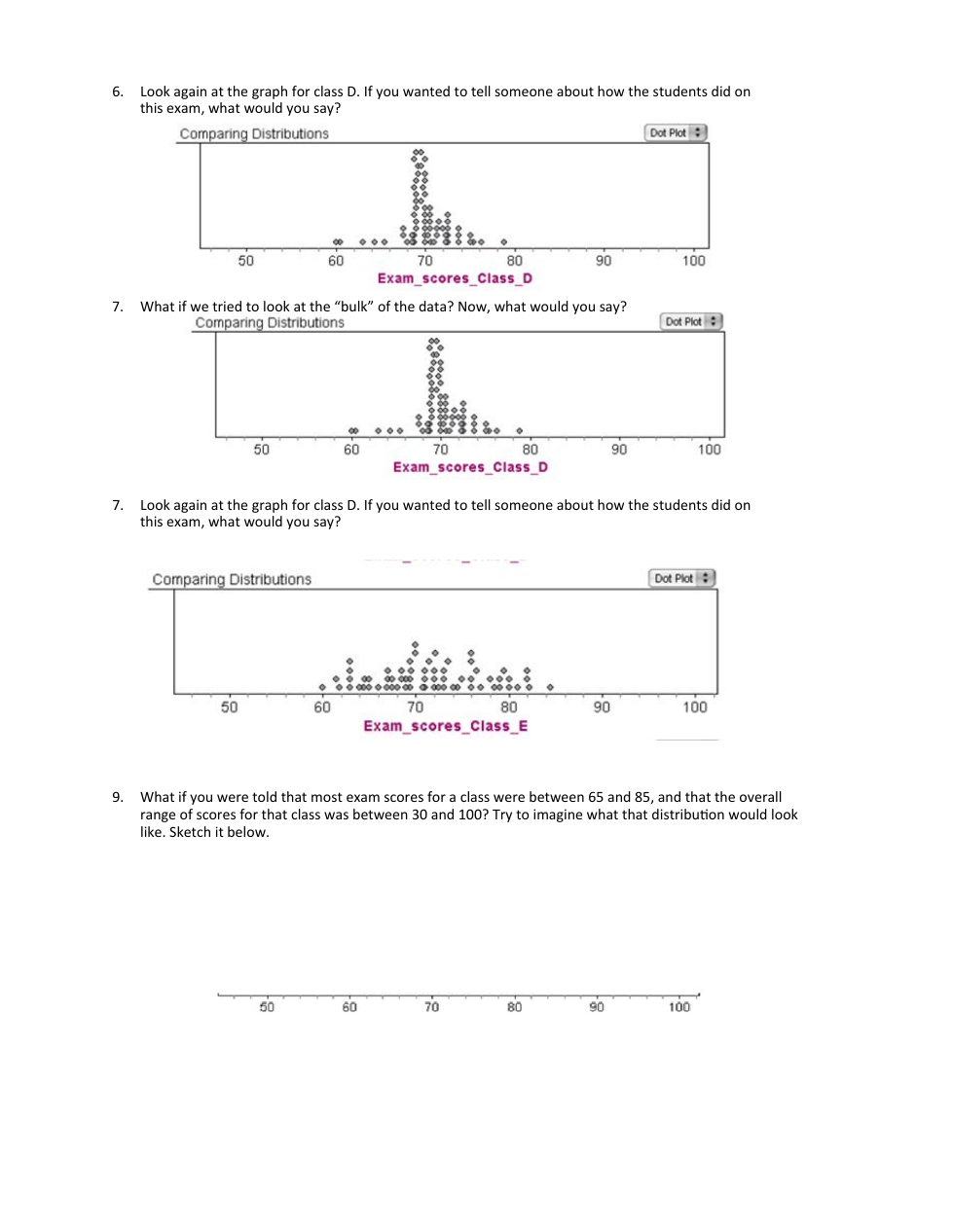
3.

For classes G, H, and I, what is the main difference between these graphs and what might explain this difference?

1
Asemmisa {{asɛmmisaAhyɛnsode}}
4.

4. What strikes you as the most distinctive features of the distribution of exam scores in class J? What might be an explanation for this characteristic?

1
Asemmisa {{asɛmmisaAhyɛnsode}}
5.

5. What strikes you as the most distinctive feature of the distribution of exam scores in class K? What might be an explanation for this characteristic?

1
Asemmisa {{asɛmmisaAhyɛnsode}}
6.

Look again at the graph for class D. If you wanted to tell someone about how the students did on this exam, what would you say?

1
Asemmisa {{asɛmmisaAhyɛnsode}}
7.

What if we tried to look at the “bulk” of the data? Now, what would you say?

1
Asemmisa {{asɛmmisaAhyɛnsode}}
8.

Look again at the graph for class E. If you wanted to tell someone about how the students did on this exam, what would you say?

1
Asemmisa {{asɛmmisaAhyɛnsode}}
9.

What if you were told that most exam scores for a class were between 65 and 85, and that the overall range of scores for that class was between 30 and 100? Try to imagine what that distribution would look like. Sketch it below.