Students are expected to support and elaborate on their ideas using specific points and examples. Careful selection of compelling facts or particularly illustrative details reflect depth of thought on the topic. Students should select specific facts, details, and anecdotes that help the reader better understand the ideas the students are trying to convey. When students do not provide specific facts or points to support and elaborate on ideas, the development of the composition remains superficial and unengaging.
focused, structured, and coherent piece of writing: As students produce rough drafts, they bring focus by narrowing the topic and refining the writing. Students write their topic sentences, add relevant details, and determine the most effective way to organize and present ideas in a manner that best reflects the intended purpose. The order and logic of the writing should make it easy for the reader to follow.
Students are expected to support and elaborate on their ideas using specific points and examples. Careful selection of compelling facts or particularly illustrative details reflect depth of thought on the topic. Students should select specific facts, details, and anecdotes that help the reader better understand the ideas the students are trying to convey. When students do not provide specific facts or points to support and elaborate on ideas, the development of the composition remains superficial and unengaging.
focused, structured, and coherent piece of writing: As students produce rough drafts, they bring focus by narrowing the topic and refining the writing. Students write their topic sentences, add relevant details, and determine the most effective way to organize and present ideas in a manner that best reflects the intended purpose. The order and logic of the writing should make it easy for the reader to follow.
Click on the word or phrase in each sentence that indicates the main subject of the sentence.

Which answer choice did you pick for question 31?
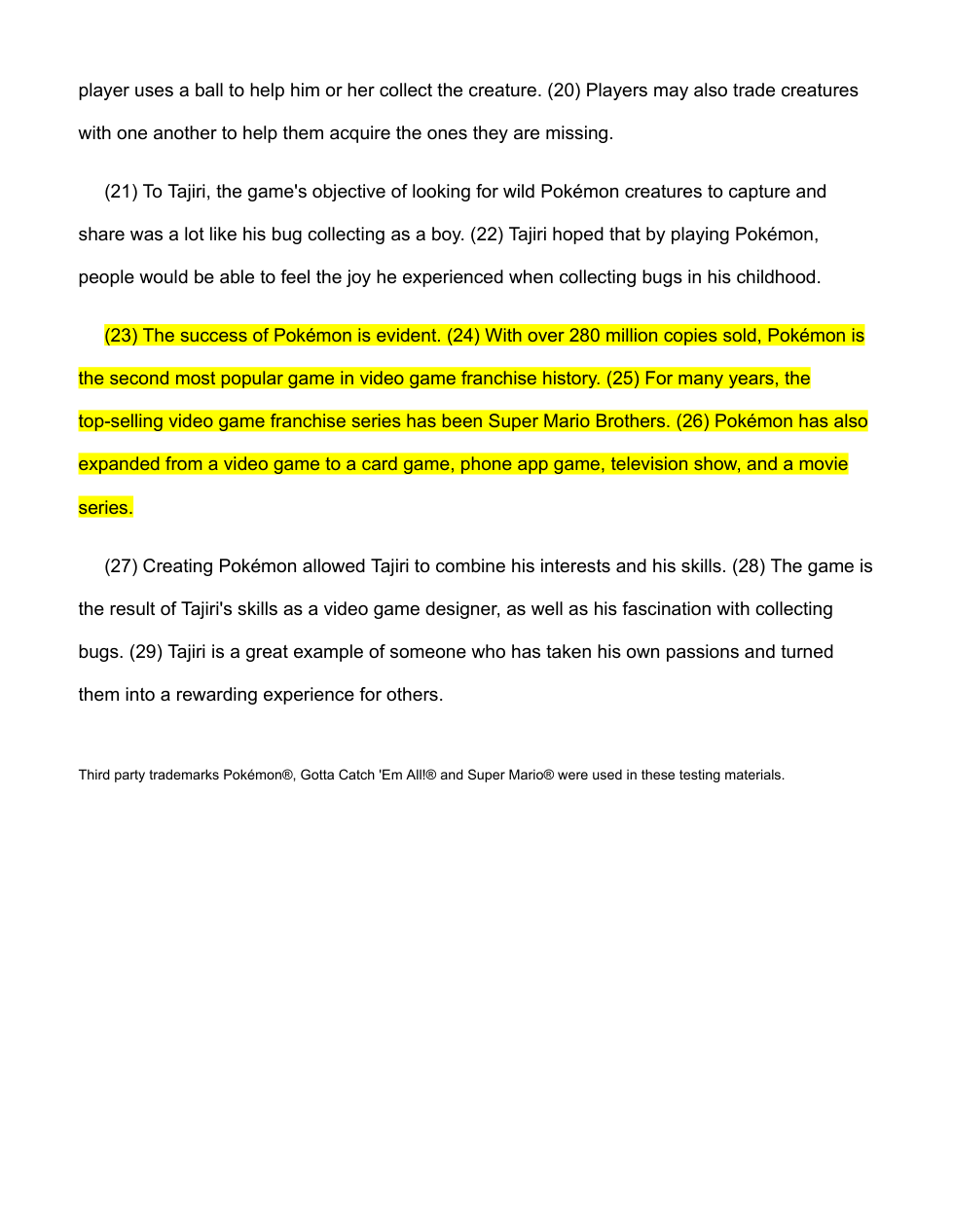
31. Which sentence in the sixth paragraph (sentences 23–26) contains unnecessary information and should be removed?
Why did you chose that answer?
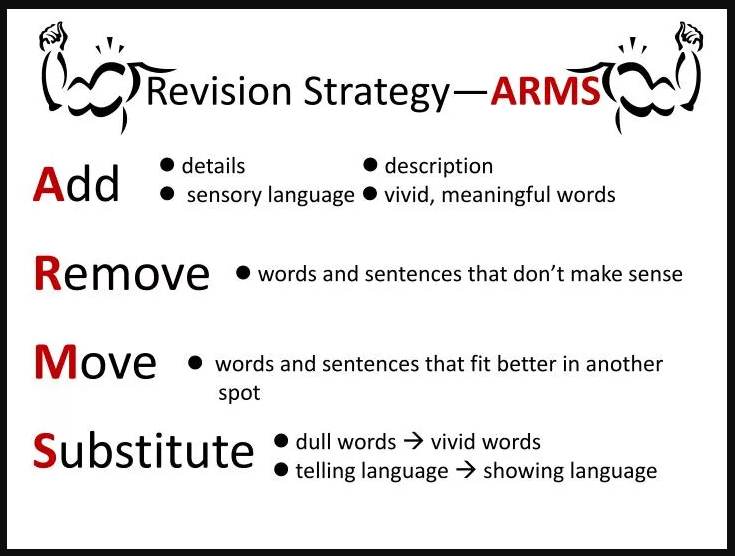
This question is asking you to REMOVE a sentence that contains unnecessary information doesn't connect to the main idea in paragraph 6.
To answer this question, identify the main idea of the paragraph.
Read each sentence and determine if it either states or supports the main idea.
If it does not, then it should be removed.
REMEMBER, the test writers will try to trick students who rush and don't read carefully by inserting a sentence that contains some information related to the main idea of the paragraph. Careful readers won't be fooled. They will realize that even though the information is similar, the sentence as a whole does not support the main idea of the paragraph and must be eliminated.


Which answer choice should you have chosen for question 31?
31. Which sentence in the sixth paragraph (sentences 23–26) contains unnecessary information and should be removed?
What will you do differently next time?