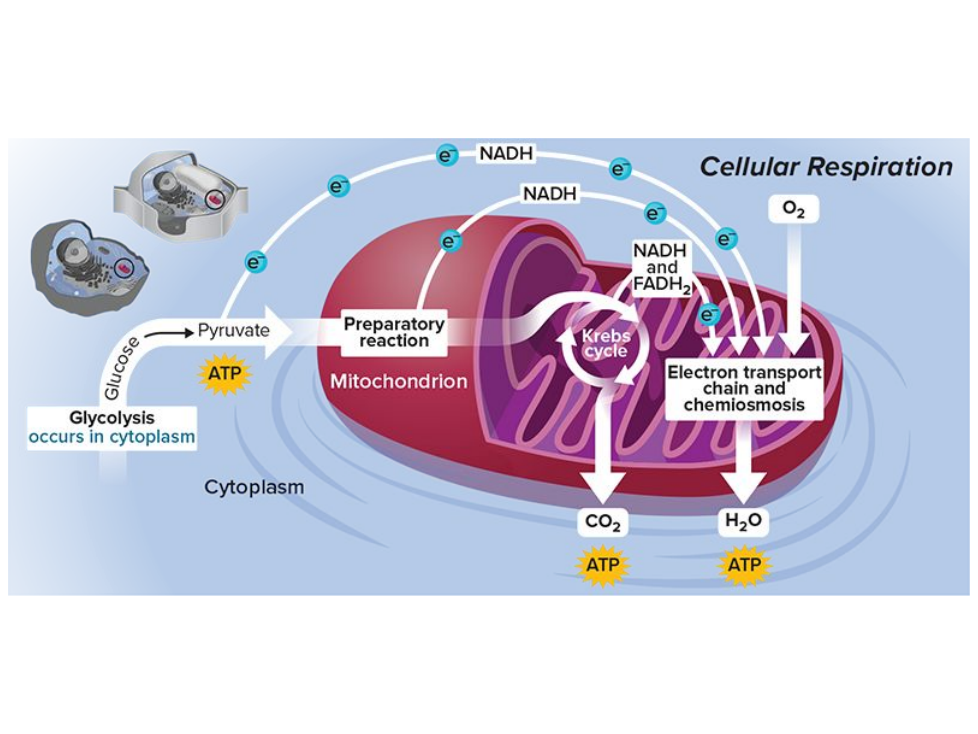
Organisms obtain energy in a process called cellular respiration. The function of cellular respiration is to harvest electrons from carbon compounds, such as glucose, and use that energy to make ATP. ATP is used to provide energy for cells to do work.
The overall chemical equation for cellular respiration is:
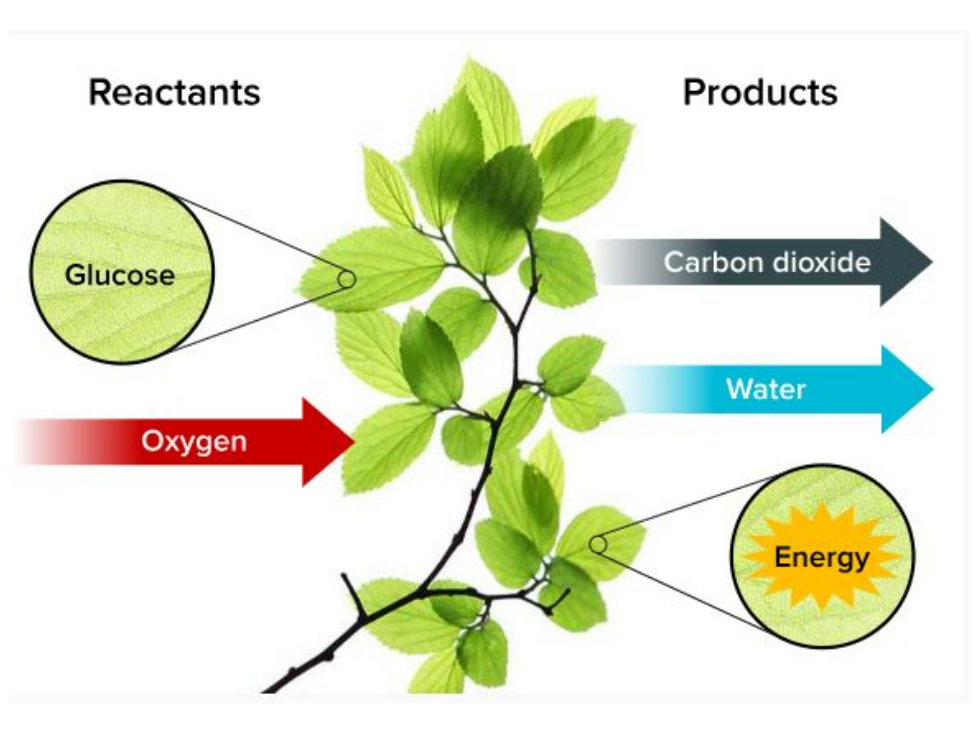
C6H12O6 + 6O2 --> 6CO2 + 6H2O + energy (ATP)
Glucose and oxygen are used to create carbo dioxide, water, and energy for the cell in the form of ATP. The equation for cellular respiration is the opposite of the equation for photosynthesis.
Cellular respiration occurs in two main phases: glycolysis & aerobic respiration. The first phase, glycolysis, is an anaerobic process. Anaerobic processes do not require oxygen. Aerobic respiration includes the Krebs cycle and electron transport, both of which require oxygen.
Phase 1: Glycolysis
occurs in the cytoplasm of cells
Glucose (C6H12O6) is broken down into: 2 molecules of pyruvate, 2 ATP, 2 NADH
Phase 2: Aerobic Respiration
Krebs cycle: occurs in mitochondria
Pyruvate is converted into Acetyl-CoA, then citric acid, then a 4 carbon compound.
That 4 carbon compound combines with acetyl-CoA to make more citric acid, and the cycle continues.
Carbon dioxide (CO2) is a product of the Krebs cycle.
Electron transport chain: occurs in the mitochondria, NADH molecules & FADH2 are used to make ATP, Oxygen is used to create water
1 point
1
Question 1
1.
Which of the following are the reactants (ingredients) of cellular respiration?
1 point
1
Question 2
2.
Which of the following are the products of cellular respiration?
1 point
1
Question 3
3.
Why is glycolysis an anaerobic process?
1 point
1
Question 4
4.
What are the products of the Krebs cycle? Select all that apply.