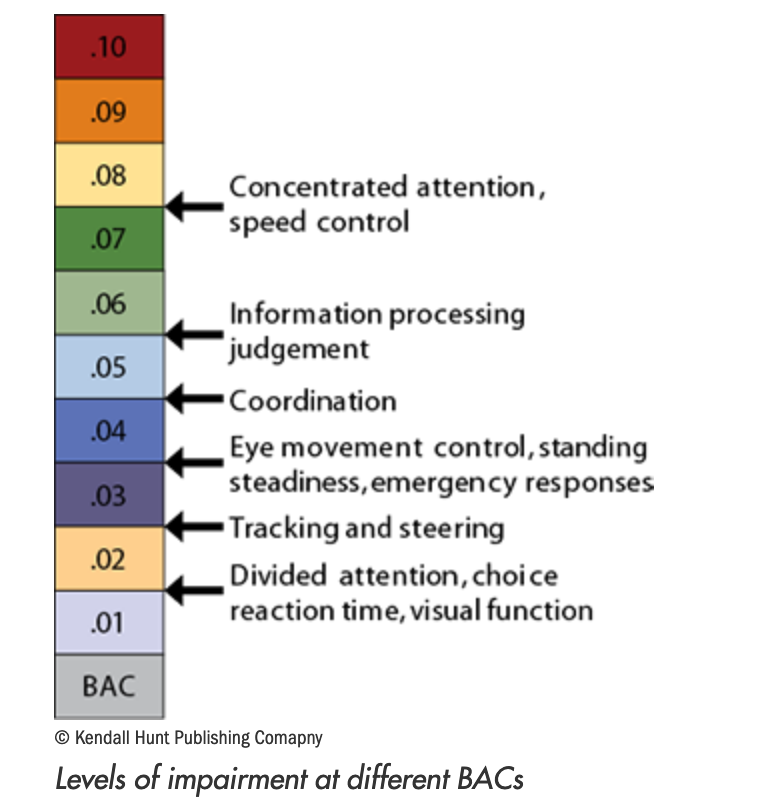
Select the legal limit of blood alcohol content for "safe" driving.
Select the legal limit of blood alcohol content for "safe" driving.
Monday 3/4/2024
need to start preparing us for CAST testing
What does "BAC" stand for?
Select the legal limit of blood alcohol content for "safe" driving.
Students use the periodic table to predict reactions between different elements and elemental bromine (Br2). An incomplete equation for the reaction between an element and Br2 is shown. Bromine atoms have 7 valence electrons.
_________ + Br2 --> __________
Based on the number of valence electrons of elements in a compound, which is an ionic compound that can form in a reaction between an element and Br2?
Tuesday 3/5/24
Yesterday we learned
how alcohol is metabolized in the body
how to calculate blood alcohol content (BAC)
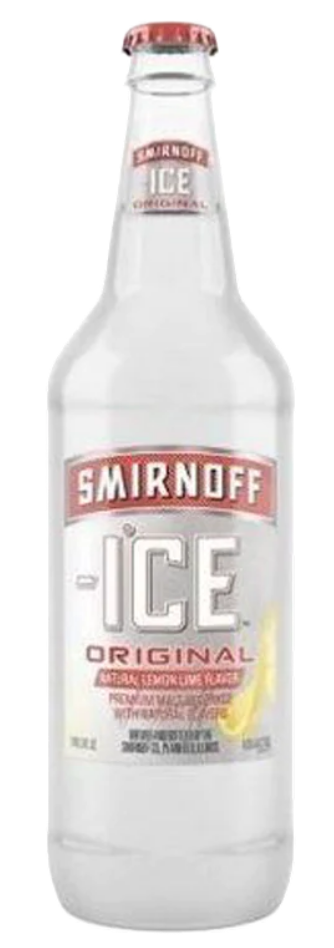
Monica had a rough day teaching the kiddos. They just wouldn't stop talking... She gets home, plunks onto the sofa, and opens up a bottle of Smirnoff IceTM.
Smirnoff IceTM is 4.5% alcohol and she finishes two 24-oz bottles within 1 hour. If Monica is currently 140 pounds, what would Monica's BAC be?
On average, alcohol is removed at a rate of 0.015 BAC per hour. How many hours (2 decimal places) would it take for Monica's body to finish metabolizing all of the alcohol she consumed?
is oxidized by an enzyme known as alcohol dehydrogenase. It is converted into a toxic metabolite known as in the .
Wednesday 3/6/2024
Yesterday we covered
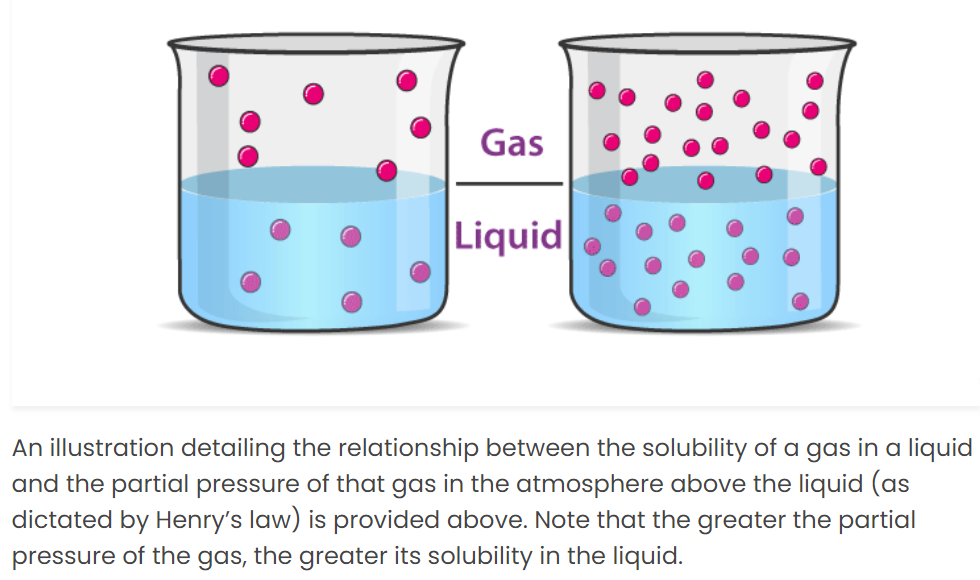
Henry's Law and its relation to breathalyzer technology
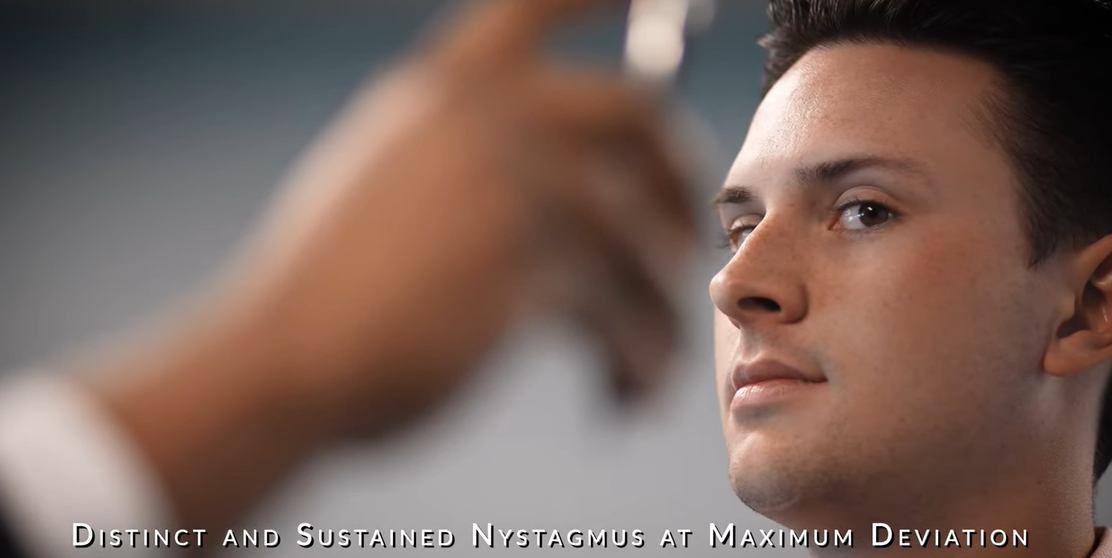
horizontal gaze nystagmus
Nystagmus means a(n)
How long should someone administering the horizontal gaze nystagmus test hold the stimulus at this point?
Thursday 3/7/24
Alcohol pre check-in
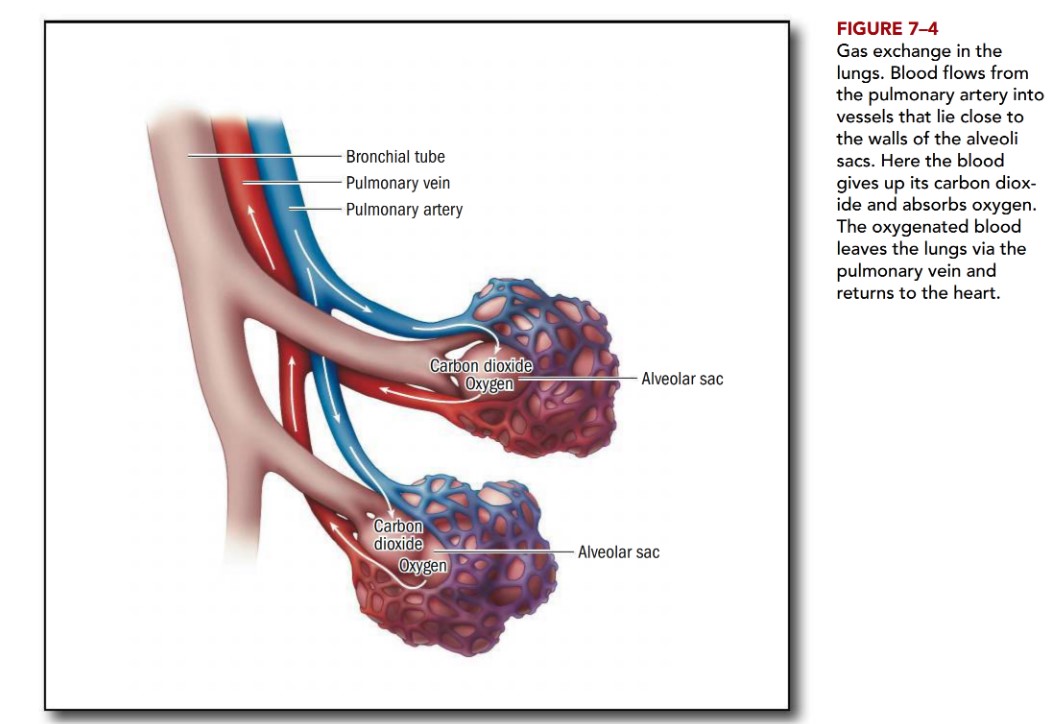
When a volatile chemical (alcohol) is dissolved in a liquid (blood) and is
brought to equilibrium with air (alveolar breath), there is a fixed ratio bet
ween the concentration of the volatile compound (alcohol) in air (alveolar
breath) and its concentration in the liquid (blood), and this ratio is constant
for a given temperature.
The temperature at which the breath leaves the mouth is normally 34°C.
At this temperature, the ratio of alcohol in the blood to alcohol in alveolar air is
approximately 2,100 to 1. In other words, 1 milliliter of blood contains nearly
the same amount of alcohol as 2,100 milliliters of alveolar breath. Henry’s law
thus becomes a basis for relating breath to blood-alcohol concentration.
Draw a revision of the following diagram but for alcohol and blood!
Hair can serve as a historical marker for determining drug intake.
A breath test, used to measure alcohol, reflects the alcohol concentration in the pulmonary vein.
The ratio of alcohol in the blood to alcohol in alveoli air is approximately:
The temperature at which the breath leaves the mouth is normally:
Which of the following is NOT a psychophysical test that a police officer may give to an individual suspected of being under the influence of alcohol?
The concentration of a drug present in urine is an excellent indicator of how extensively an individual's behavior or state is influenced by the drug.
With prolonged use of a drug, an individual may become less responsive to a drug’s effects and may be able to tolerate blood-drug concentrations that would normally be fatal to the casual user.
The average elimination or "burn-off" rate of alcohol is approximately:
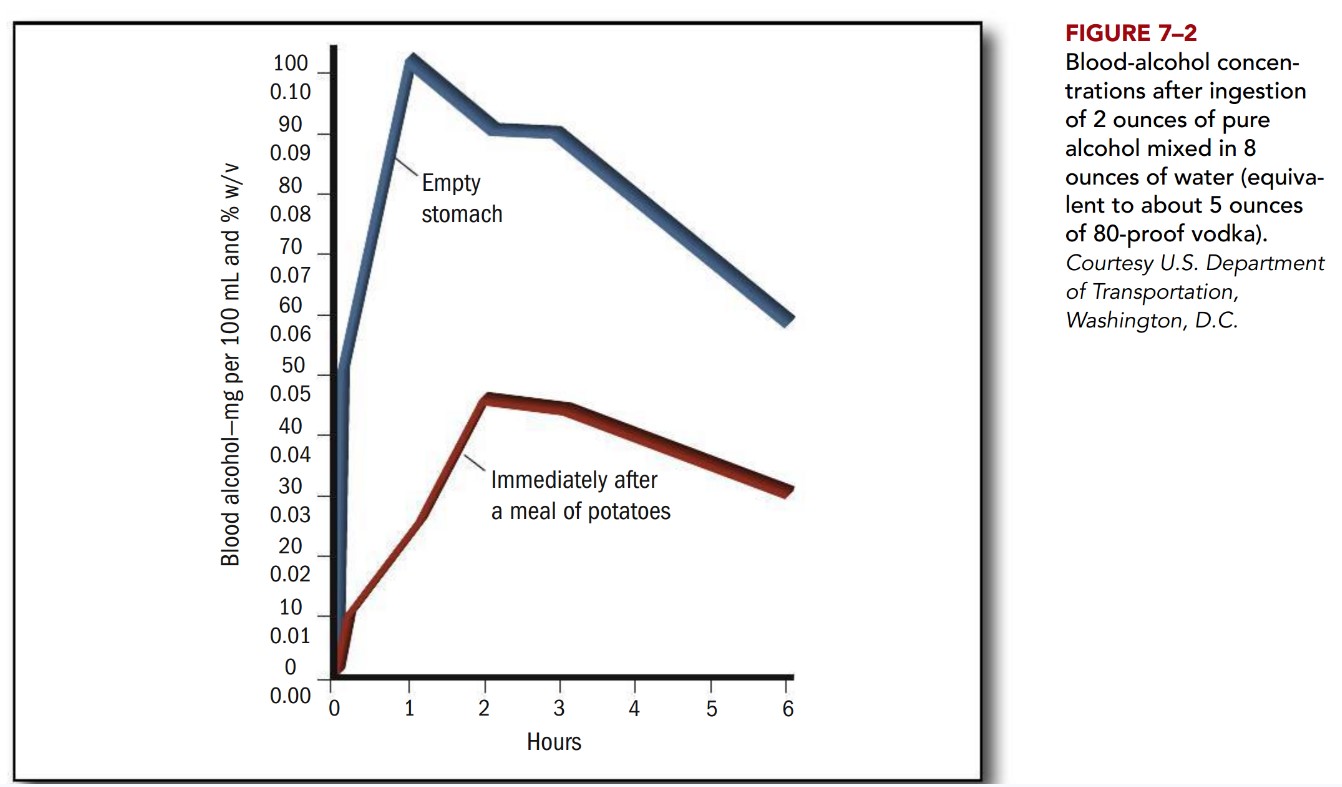
The longer the total time required for the complete absorption of alcohol, the lower will be the peak alcohol concentration in the blood.