U4D8 Polynomial Roots and Graphs Mar20
star
star
star
star
star
Last updated about 1 year ago
31 Nsɛmmisa

1
1
1
Translation:
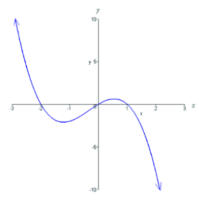
From this graph, can you tell if the lead coefficient is positive or negative?
DEGREE = (# of turns) + 1
Examples:
1 turn, so degree = 2.
3 turns, so degree = 4
2 turns, so degree = 3
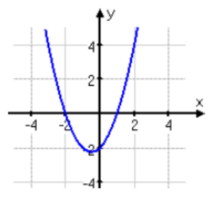
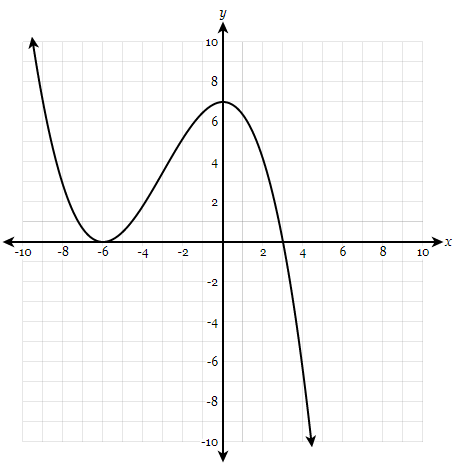
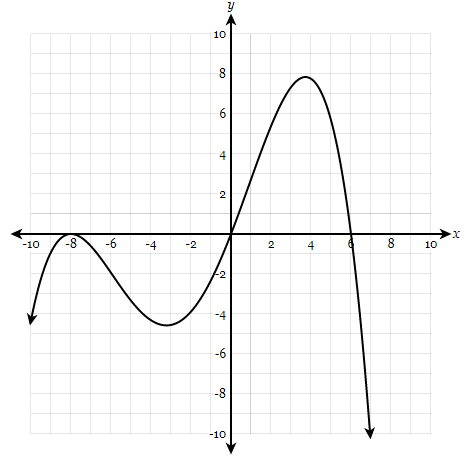
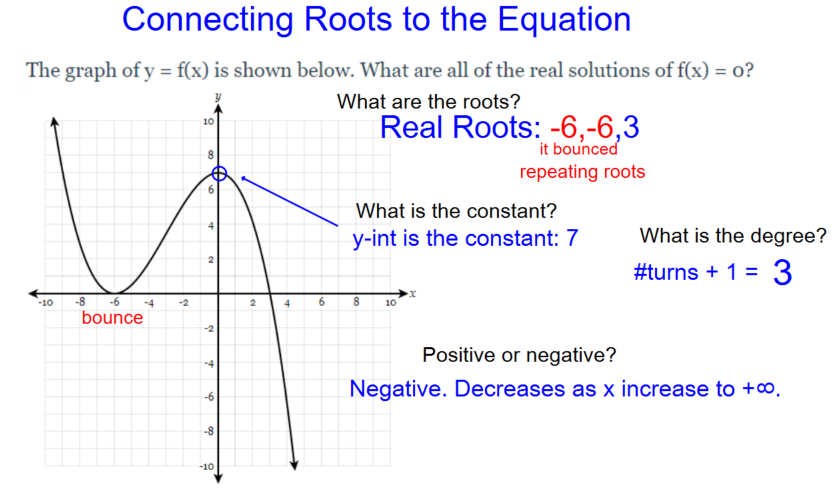
The graph of y = f(x) is graphed below.
a. Is the graph positive or negative?
b. What is the degree of f(x)?
c. What is the constant?
(hint: What is the y-intercept?)
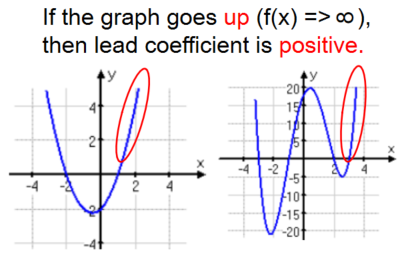
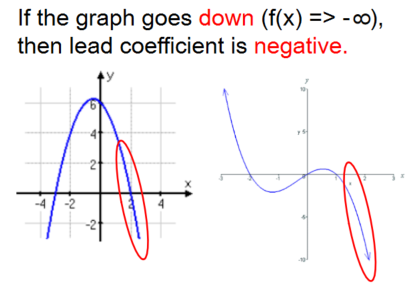
The lead coefficient controls how a graph "ends" (on the right).
A positive lead coefficient causes a graph to increase as the domain increases.
A negative lead coefficient causes a graph to decrease as the domain increases.
All these polynomial graphs have positive lead coefficients except two.
Select the two graphs that have negative lead coefficients.
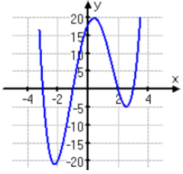
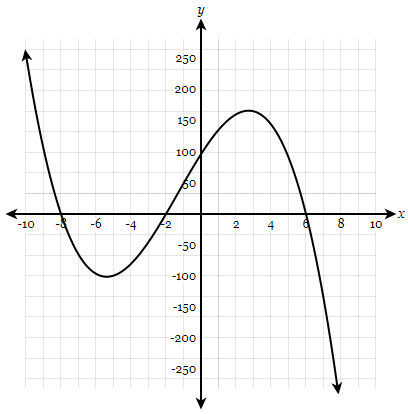
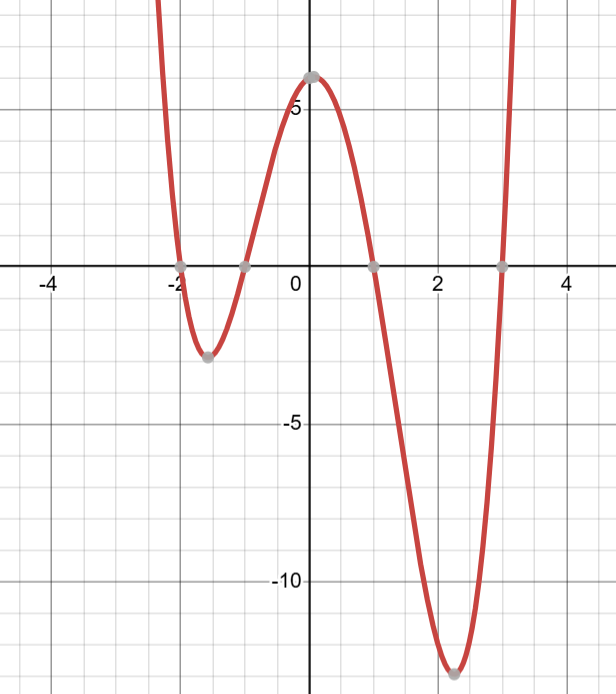
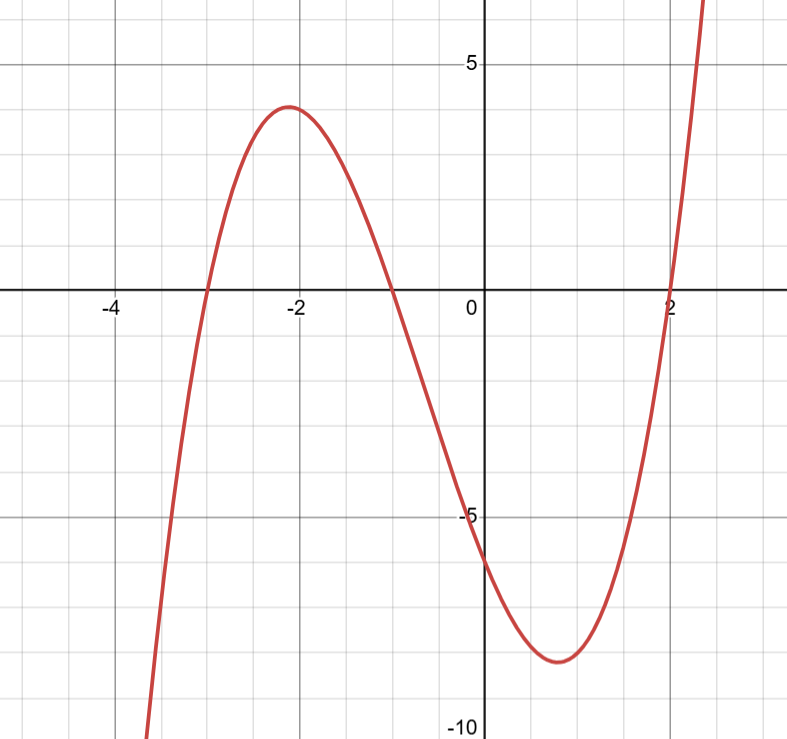
The graph of y = f(x) is shown below.
a. How many roots do you see?
f(x) has
b. What are all the real solutions of f(x) = 0?
The solutions are x =
c. What is the degree of f(x)?
Degree =
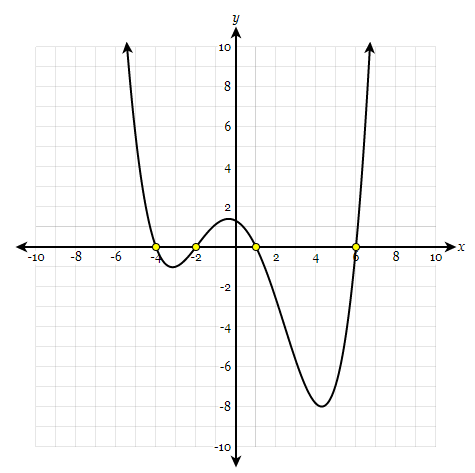
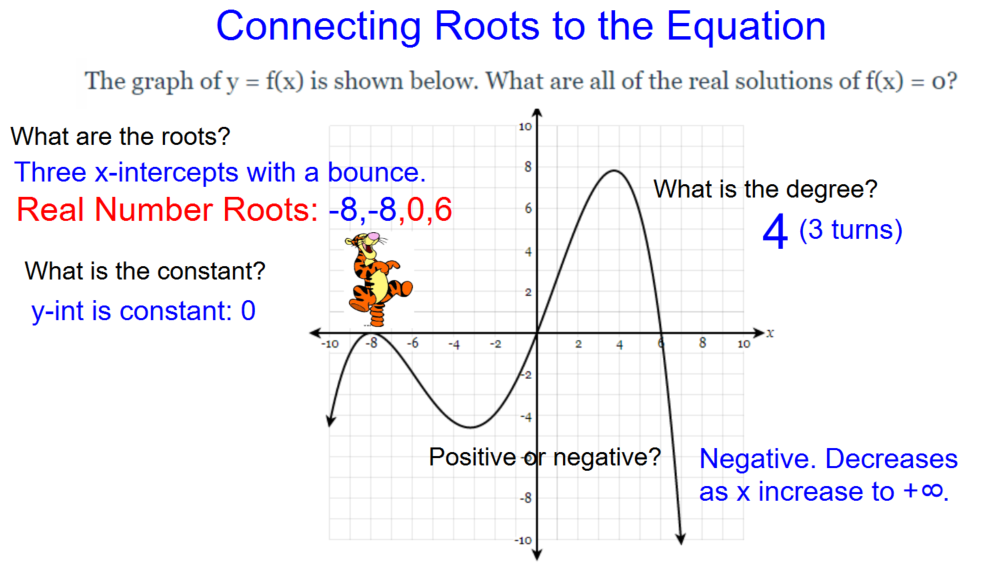
The graph of y = f(x) is shown below.
What are all the real solutions of f(x) = 0?
or
What are the roots for f(x)?
What is the degree of f(x)?
What is the constant for f(x)?
The graph of f(x) is
What are all the real solutions of f(x) = 0?
or
What are the roots of f(x)?
Example
What is the degree?
Example
What is the constant?
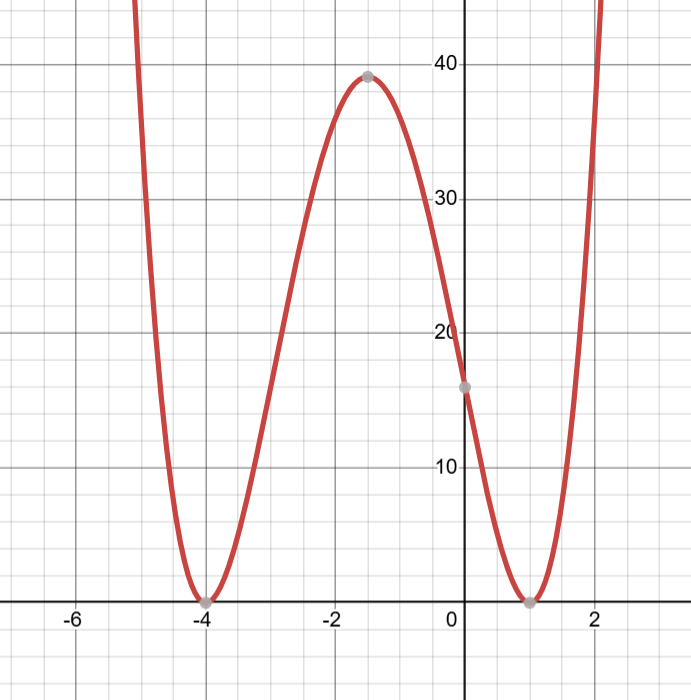
The graph of y = f(x) is shown below.
What are all the real solutions of f(x) = 0?
or
What are the roots of f(x)?
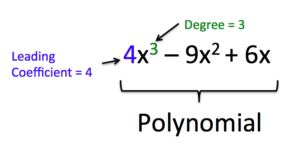
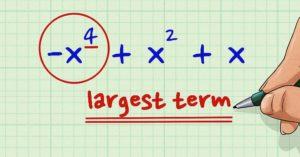
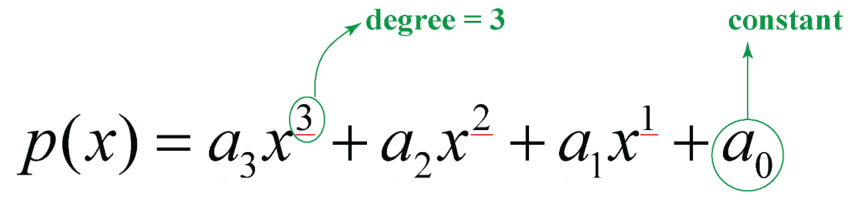
This an example of what the degree looks like in a polynomial.
What is the degree of f(x)?
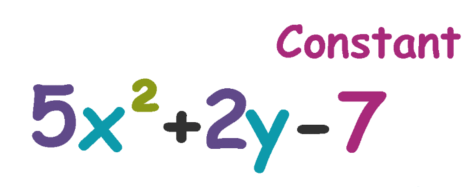
This is an example of a constant in a polynomial.
What is the constant for f(x)?
What are all the real solutions of f(x) = 0?
or
What are the roots of f(x)?
Example
What is the degree?
Example
What is the constant?
What are all the real solutions of f(x) = 0?
or
What are the roots of f(x)?
Example
What is the degree?
Example
What is the constant?
Sketch a graph for a polynomial function with a:
- positive lead coefficient
- degree = 3
- factors: (x + 8),(x + 1), (x - 3)
- y-intercept: (0,-24)
How many x-intercepts does f(x) have?
How many x-intercepts does f(x) have?
Use the x-intercepts and the roots to select the correct factored equation of f(x).
The graph of f(x) is
How many x-intercepts does f(x) have?
The graph of f(x) is
How many x-intercepts does f(x) have?
Use the x-intercepts and the roots to select the correct factored equation of f(x).
The graph of f(x) is
How many x-intercepts does f(x) have?
The graph of f(x) is