Solubility Curves Quiz
star
star
star
star
star
Last updated 5 months ago
21 Nsɛmmisa

Ɛhia
5
Ɛhia
5
Ɛhia
5
Ɛhia
5
Ɛhia
5
Ɛhia
5
Ɛhia
5
Ɛhia
5
Ɛhia
5
Ɛhia
5
Ɛhia
5
Ɛhia
5
Ɛhia
5
Ɛhia
5
Ɛhia
5
Ɛhia
5
Ɛhia
5
Ɛhia
5
Ɛhia
5
Ɛhia
5
Ɛhia
5
Which substance has the GREATEST solubility at 10 degrees Celsius?
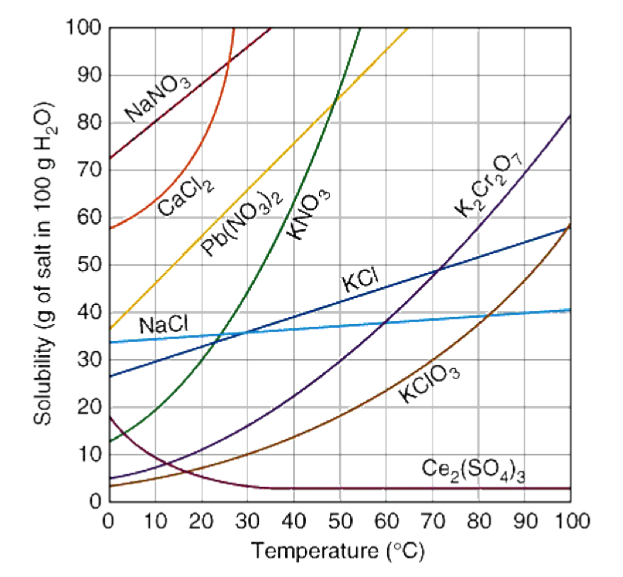
For solids and liquids, as temperature increases, what happens to solubility?
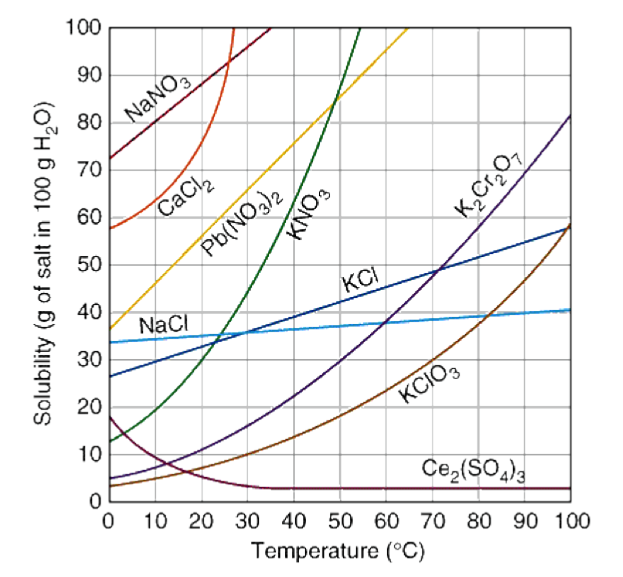
Which substance is LEAST affected by changes in temperature?
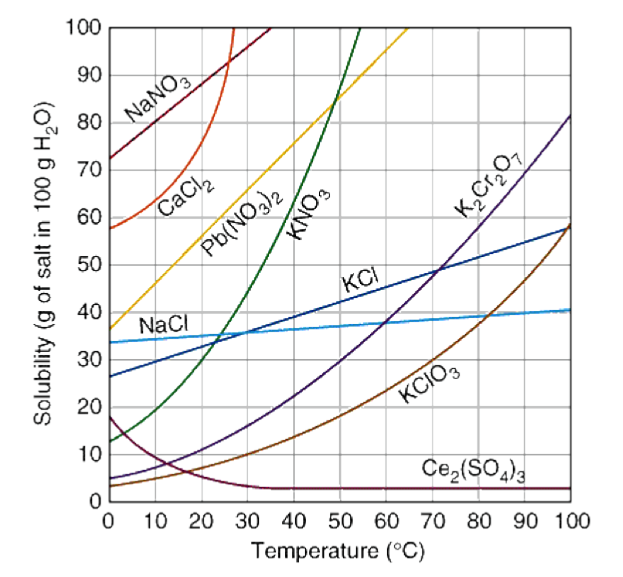
Which substance is LEAST soluble at 10 degrees Celsius?
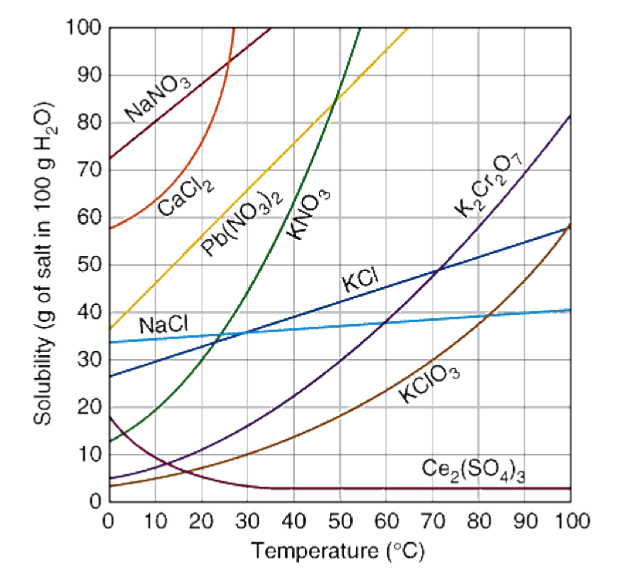
Which substance is a gas?
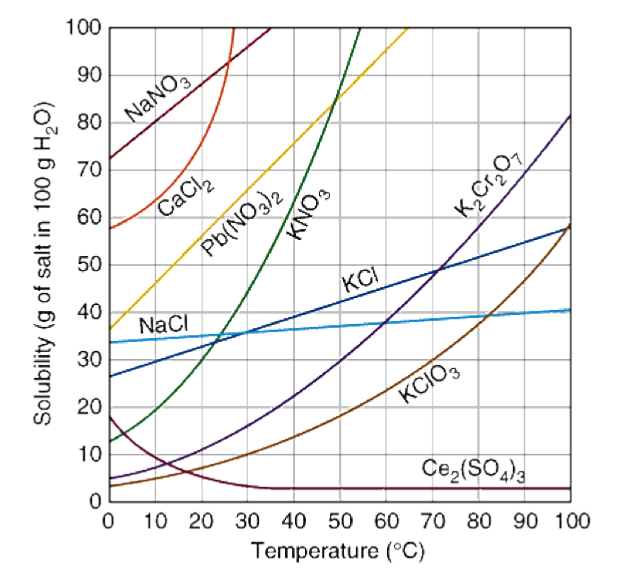
Which two substances have the same solubility at 30 degrees Celsius?
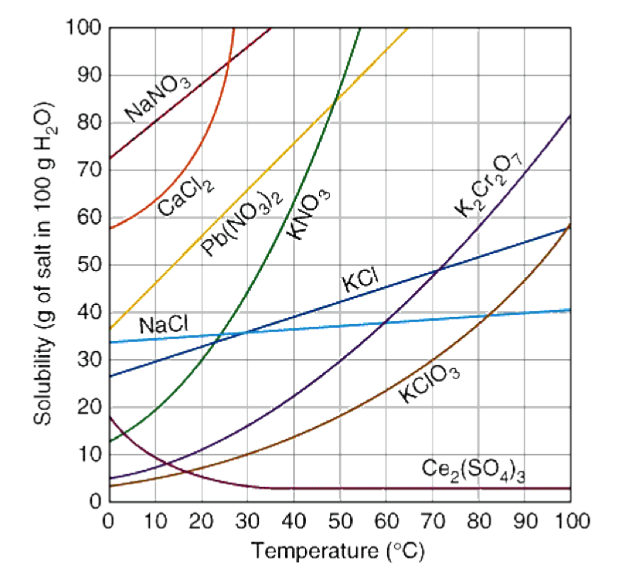
At what temperature would 100 grams of water dissolve 10 grams of KClO3?
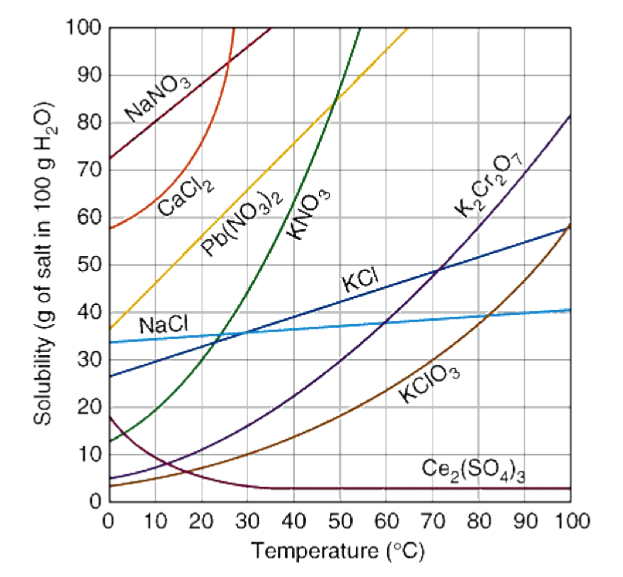
At what temperature would 100 grams of water dissolve 80 grams of NaNO3?
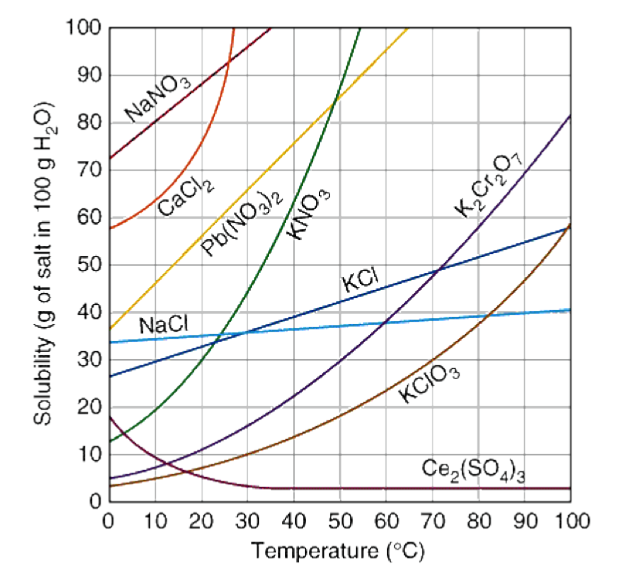
Classify a solution that contains 40 grams of KClO3 in 100 grams of water at 50 degrees Celsius.
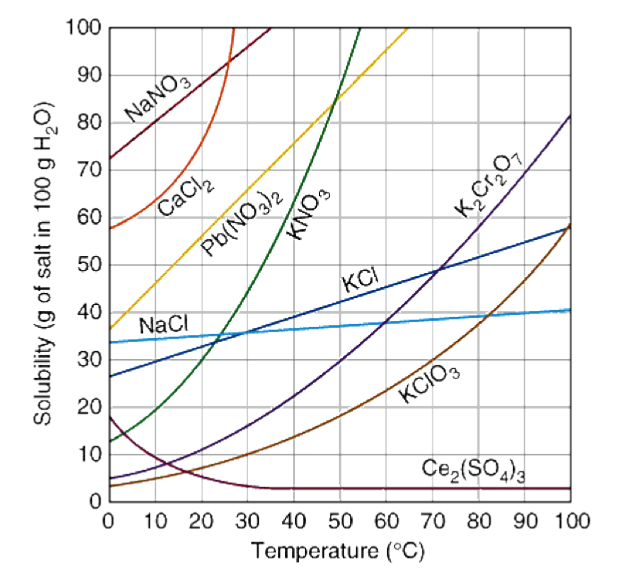
Based on the previous question (Classify a solution that contains 40 grams of KClO3 in 100 grams of water at 50 degrees Celsius.), how many grams of KClO3 will NOT dissolve at the same temperature?
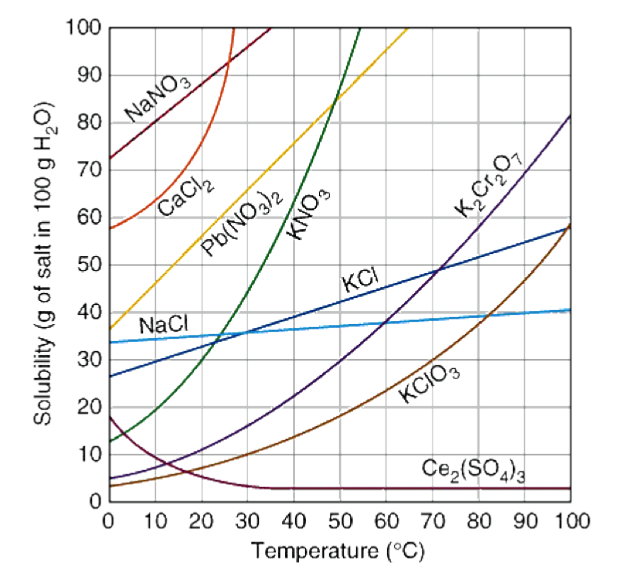
How many grams of K2Cr2O7 will dissolve at 90 degrees Celsius in 200 grams of water?
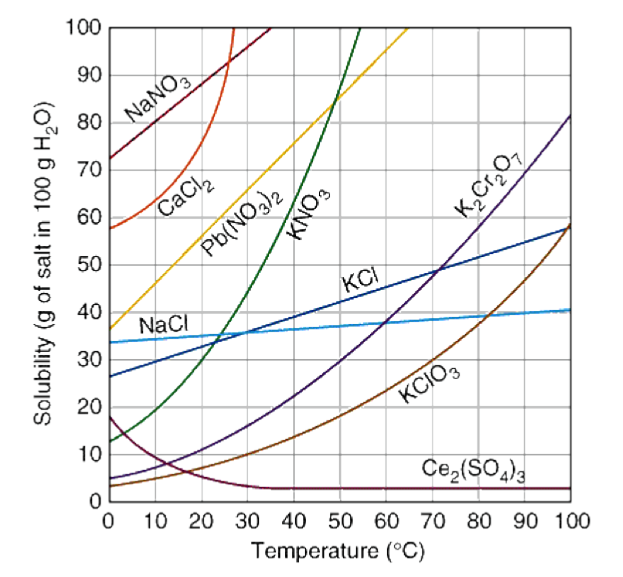
How many grams of NaCl will dissolve at 90 degrees Celsius in 50 grams of water?
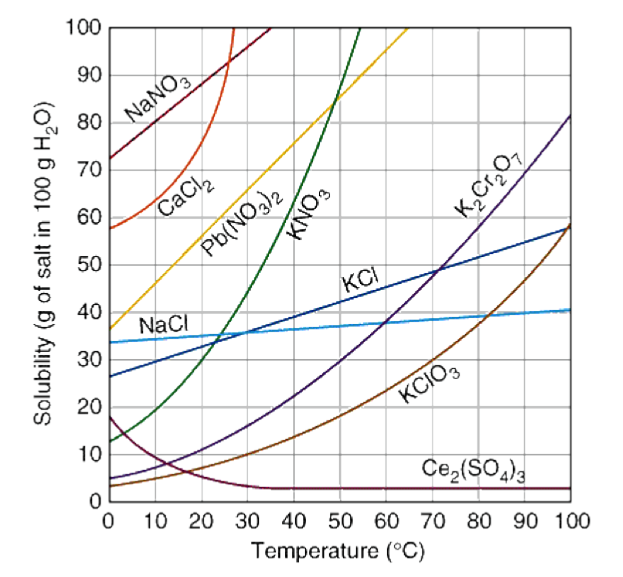
How would you classify a solution that contains 45 grams of KNO3 dissolved in 100 grams of water at 30 degrees Celsius?
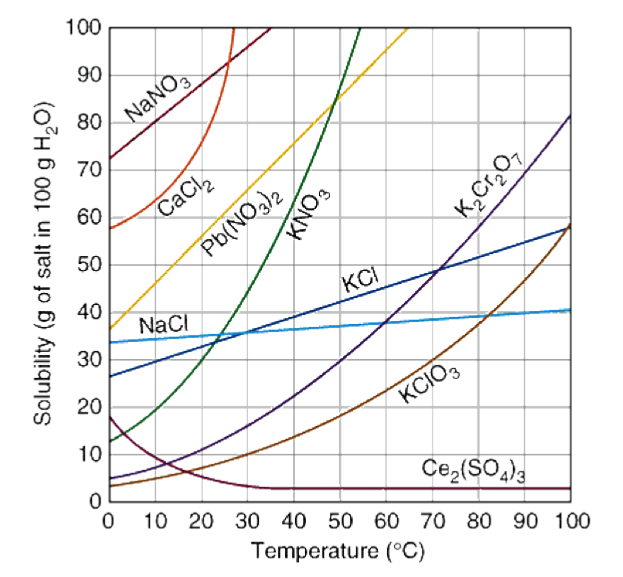
How would you classify a solution that contains 50 grams of CaCl2 dissolved in 100 grams of water at 20 degrees Celsius?
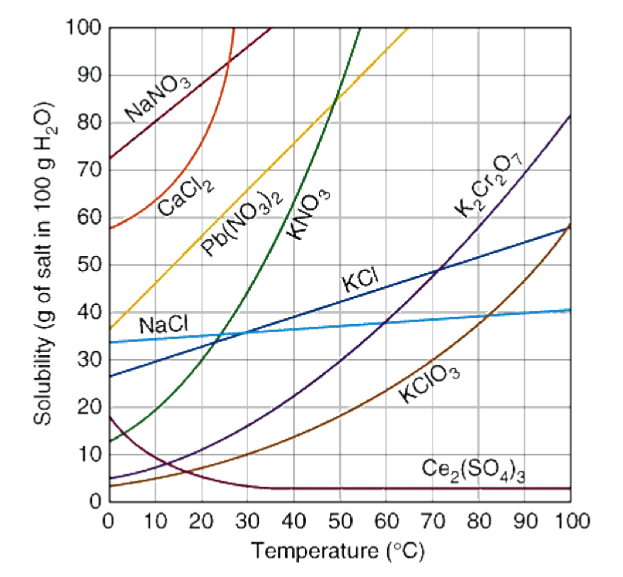
Based on the previous question (How would you classify a solution that contains 50 grams of CaCl2 dissolved in 100 grams of water at 20 degrees Celsius?), how many additional grams of solute must be added to create a saturated solution?
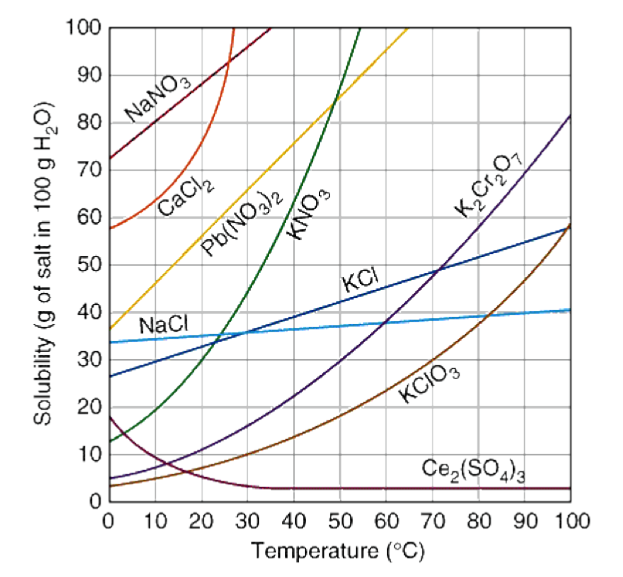
The substance that is doing the dissolving is called the ________________________________.
Describes the ability of a chemical substance to dissolve in another substance
In the following example, which is the solvent: milk + chocolate syrup = chocolate milk
Extra Credit: How much water is required to dissolve 48.0 g of KClO3 at 70 degrees Celsius?