Open Scied: Natural Selection Examples
star
star
star
star
star
Last updated over 2 years ago
14 Nsɛmmisa

1
1

An organism's traits are determined by its DNA
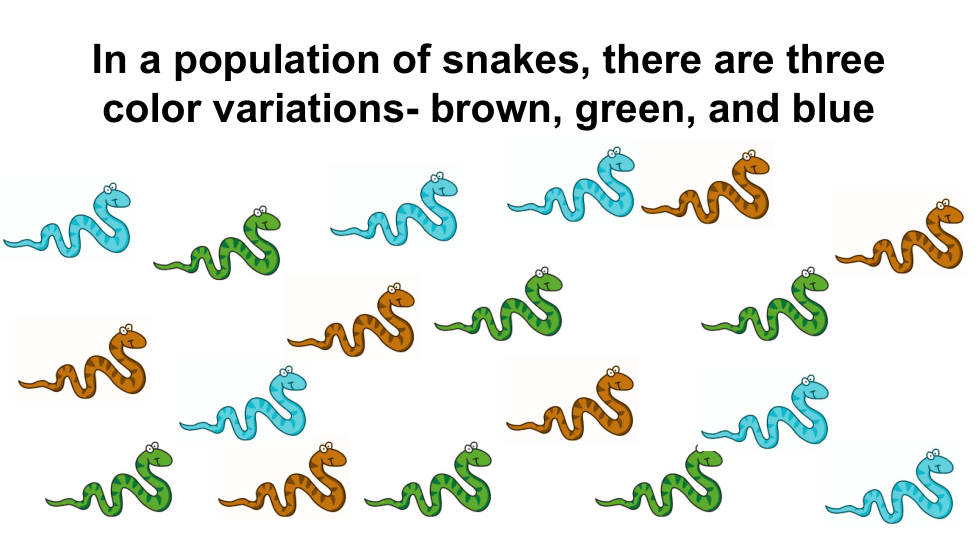
How many blue snakes are there in the population?
How many brown snakes are there in the population?
How many green snakes are there in the population?
Which color(s) of snakes are best suited for the environment grass and dirt environment?
Which color of snake is more likely to be seen by predators?

The blue snakes are most likely to be eaten by birds. What will happen to the blue allele (gene) in the population?

Due to the drought the environment is mostly brown dirt. Which color snake is "best fit" for the environment?

What happened to the allele frequency of green snakes in the population?
If there were no birds (aka the selective pressure) in the area, would there be a shift in the population to mostly brown snakes?
There are no genetic variations in populations
Variations or differences in individuals are due to mutations
In natural selection the organism with the best traits survive and reproduce
Organisms with "bad" traits can change their traits in order to survive