Choose the right camp according to the programme:
A Paintball Camp
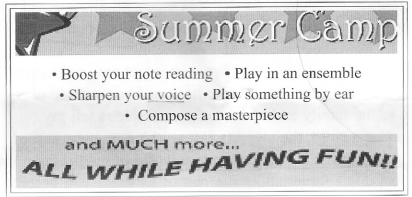
B Music Camp
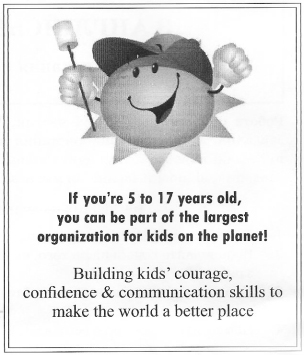
C Leadership Camp
D Theatre Camp
E Martial Arts Camp
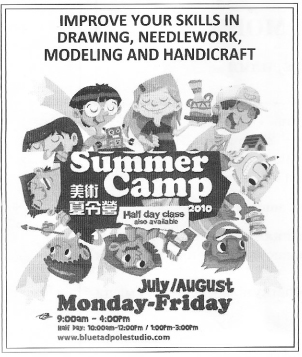
F Arts Summer Camp
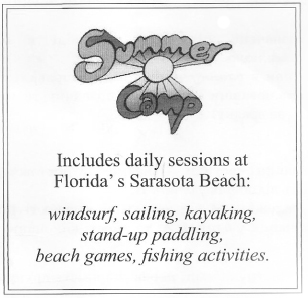
G Water Sports Camp
H Fitness Camp
Ɛhia
1
Asemmisa {{asɛmmisaAhyɛnsode}}
1.
Mock NMT - timing - 60 minutes

Title: "The Enigma of the Codebreakers: An Extraordinary Examination" Once upon a time, in the most protected depths of the United States government, there resided a group of exceptional individuals that history simply called: 'The Codebreakers.' These men and women were bearers of extraordinary intellect, who deciphered complex ciphers and indecipherable codes to secure the country. Their story, although clandestine, is one that encapsulates intrigue, mystery, and analytical prowess providing intriguing material for our national examination. The Codebreakers were assembled in the year 1941, just as the Second World War was enveloping the globe. Secluded within the leafy solitude of Bletchley Park, the team was a blend of mathematicians, linguists, and cryptographers, each chosen for their cognitive brilliance. The codes they unlocked held information about enemy plans and strategies, proving to be game-changers in the course of warfare. The team’s most significant success was deciphering 'Enigma.' Enigma was a device invented by German engineer, Arthur Scherbius, and used by the Axis powers to transmit encoded messages. The device was an intricate masterpiece that employed rotating mechanical rotors to generate ciphers. Each day, the system settings varied, meaning that every day revolved around a new, sophisticated puzzle. The chief Codebreaker was a man named Alan Turing, a prodigious mathematician. Turing invented the 'Bombe', a machine that expedited the decoding process, simulating the operations of the 'Enigma,' unveiling the daily settings, and consequently aiding in decoding messages. Much of the allies' information about enemy operations, as a result, was the fruit of the Codebreakers’ relentless diligence. While the work was mentally exhausting, the Codebreakers' spirit never wavered. The team knew that every decoded message had the power to save numerous lives on the battlefield. Their relentless dedication, however, came with a price. They had to live incognito, their deeds unsung, and their stories untold. It wasn't until years later, long after the war had ended, that their collective achievements started to come to light. An annual reunion of the surviving Codebreakers eventually became a tradition, where they'd share memories over a cup of tea, reminiscing about the cryptical challenges overcome every day. Each meeting was a testament to their vital and yet unsung contribution to world history. Weaving threads of history, mystery, and the relentless human spirit, the narrative of The Codebreakers brings forth five thought-provoking questions for our national examination. 6. Who were 'The Codebreakers,' and why is their story considered extraordinary? a) Linguists and Cryptographers from the Axis Powers. b) Mathematicians who developed the Enigma. c) Linguists, Cryptographers, and Mathematicians from the Allies. d) Scientists who built the Bombe. 7. What was 'Enigma,' and why was it significant? a) A top-secret US project. b) The Axis powers’ device for coding crucial wartime messages. c) Turing’s enigma decryption machine. d) A riddle created by the Codebreakers. 8. Who was Alan Turing, and what was the 'Bombe'? a) The founder of Bletchley Park. b) The German Engineer who invented Enigma. c) The mathematician who deciphered Enigma. d) The linguist who decoded German messages. 9. Why were the Codebreakers' contributions pivotal during World War II? a) They invented the Enigma. b) They broke the Enigma's code, aiding in strategic warfare. c) They developed the Bombe. d) They convinced the Axis powers to surrender. 10. What happened to the Codebreakers after the war? a) They were unknown until many years later. b) They became famous immediately. c) They invented new cryptographic devices. d) They joined the government.
Read the texts below. Match choices (A-H) to (11-16). There are two choices you do not need to use.
Funyakking
White water funyakking is a great fun alternative to white water rafting. It's a bit like white water canoeing but in a more stable and forgiving boat. You and your paddling partner will navigate the river under the guidance of one of our professional river guides who will teach you the basic skills required to negotiate the rapids.
Sledging
The sledge park just outside the Ptarmigan Top Station is an ideal place for non-skiers to enjoy some winter fun on one of our sledges. Please check at the ticket office to ensure the sledge park is operating. Sledges can be hired from the Shop at the Top and only these can be used in the sledge park.
Ski/board
'If you can ski in Scotland you can ski anywhere.' Weather conditions vary enormously from the 'bluebird' days to the more challenging and opportunities certainly have to be grabbed when the good days are forecast. Cairngorm Mountain is a resort for all levels and there are beginner areas located near the top of the mountain. It is generally possible to have lessons throughout the season.
Hiking
Stroll, walk or run along the majestic Erie Canal, where you can clear your mind and rejuvenate your soul with the beautiful scenery in the fall season. For a challenge, pack your bag and head south to “The Grand Canyon of the East”, Letchworth State Park, and hike the mountains and explore the views.
Tour Boat
Navigate the Erie Canal onboard the authentic packet boat replica Sam Patch. Relax and dine on the peaceful waters. Travel through a canal lock. Hear the story of the legendary waterway on a public tour, lunch or dinner cruise, private charters, or specialty tour.
Bike Sites by Segway
Segway the Sites with Bike and Roll! This tour will be an overview of the National Mall from the Capitol to World War II memorial including the north side of the White House, some fun off-the-Mall spots, and a ride down Pennsylvania Avenue. The perfect complement to our Monuments or Monuments@Nite tours! Ask about a discount for booking both!
Which of the advertisements mentions____________?
A an opportunity to have a meal
B the need to rent the equipment
C the necessity to have some experience
D a possibility to do the activity in pairs
E a chance to become a professional navigator
F the influence of local climate on the activity
G an opportunity to enjoy the picturesque landscape
H a chance to save some money
Read the text below. Choose from (A-H) the one which best fits each space (17-22). There are two choices you do not need to use.
Title: "The Mysterious Mountain Journey" Melissa, a young and ambitious girl, (17)_____, lived in a small town at the foot of a mysterious mountain. Everyone in the town (18)_____, suggesting that a great treasure was hidden at its apex. However, no one (19)_____ the courage to ascend the steep slopes and verify the stories. Instead, they rather enjoyed the unfathomable aura it emanated. One fine day, Melissa decided (20)_____ a plan. Armed with only a sketchy map, age-old stories, and a resolute heart, she decided to unravel the mystery. Her friends tried to dissuade her, but their pleas fell on deaf ears. She was bent on (21)_____ the mystery to rest. With every ascending step, she could feel her heart pounding in her chest, but there was a flicker of excitement in her eyes that told a different story. The journey was not as smooth as she had imagined. She slipped on loose gravel, felt the chilling wind slicing through her thin coat, and grappled with the thin mountain air. The night sky, a glittering tapestry, cast its frosty glow on the daunting path ahead, yet, it held a strange allure for Melissa despite the perilous journey. Reaching the summit, Melissa was awestruck. There was no treasure chest, no sparkling jewels but the view...(22)_____. The mountains basked in the morning sun, the valley was bathed in a misty hue, and the small town looked like a beautiful miniature diorama. Melissa understood that the real treasure was not materialistic but was the breathtakingly beautiful panorama that created a sense of vortex within her soul.
A. facing her fear
B. to hatch
C. who had a voracious appetite for adventure
D. was breathtaking
E. even when she climbed
F. ever mustered
G. whispered strange tales about the mountain
H . putting
Read the text and choose the correct option to fill the gaps.
Social networking Social networking has grown rapidly over the past few years. Just under half of the eight-to-seventeen age group and over 20 percent of adults have turned / done / made / set up their own profile on a social networking site. A profile is a personal webpage through which the user 23. .... up a list of contacts or 'friends'. These may be relatives and real friends, or people the user has never actually met. Once you're someone's friend, you can browse their profile and communicate with them directly or by 24. ... comments for others to see. Social networkers tend to be one of five 25. .... types. First, there are those who use sites intensively for a short period to 26. ... people up. Then there are the 27. ... people who love lots of attention from others and post numerous photos and make their profiles very personal. Some people join in order to 28. ... up with what their peers are doing, whilst others look for people they've lost contact with to find out about 29. ... friends. Finally, there are functional users, who use social networking for a specific purpose. Most people's experience of social networking is positive and enjoyable, but sharing 30. ...
information with strangers can 31. ... a risk. Indeed, some governments have commissioned research to investigate whether social networking is just 32. ... entertainment or not.