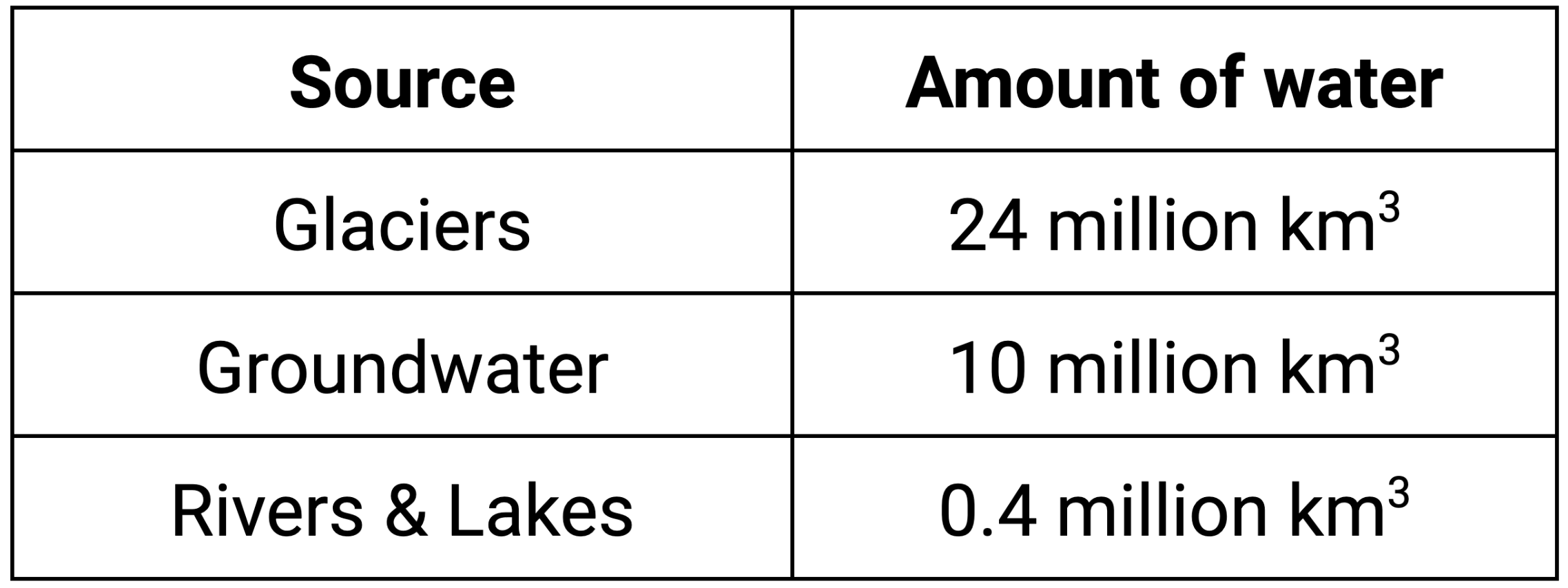
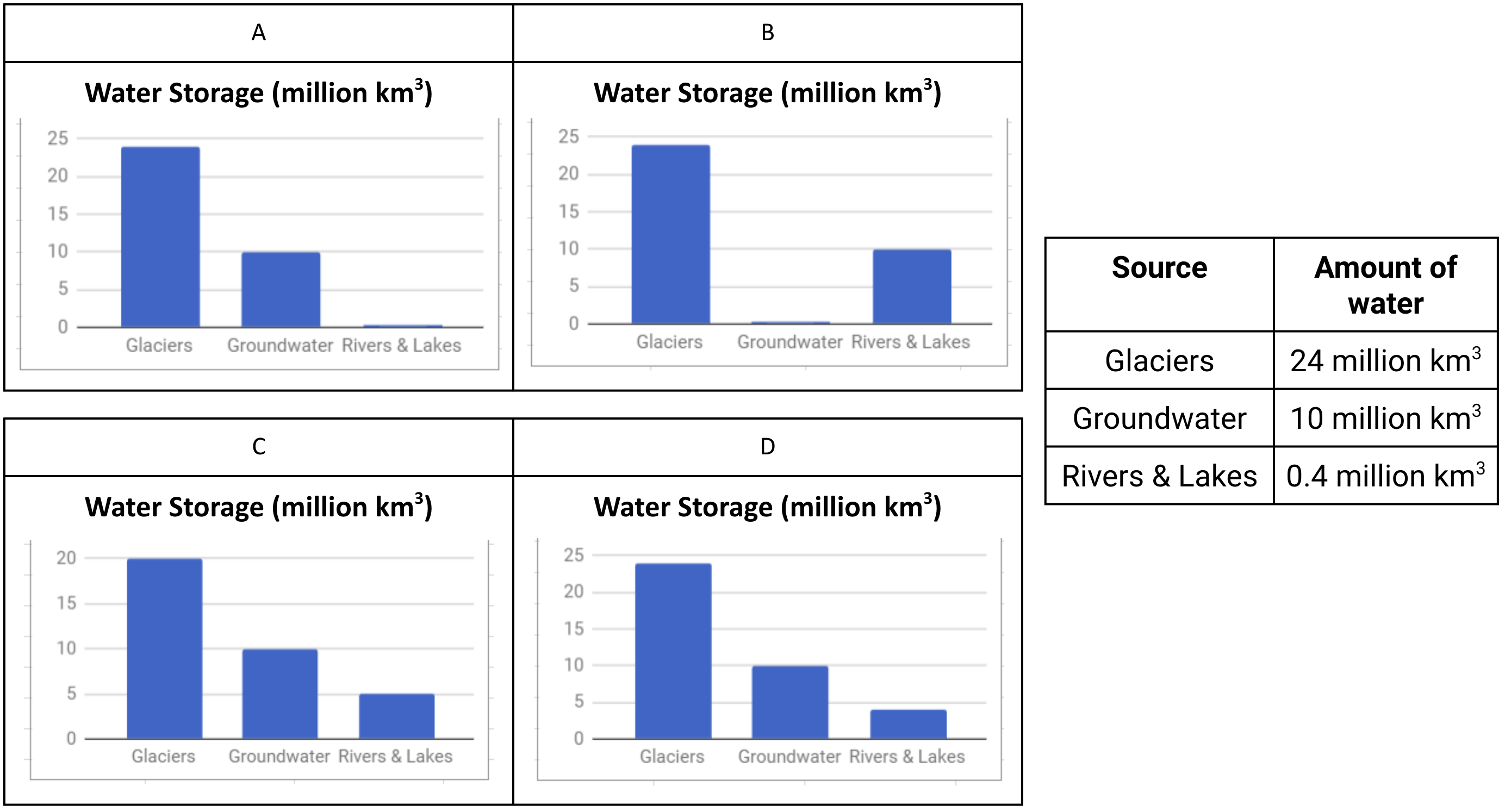
While doing research to help make their decision, Dasani found the following table showing the amount of water stored in glaciers, groundwater, and rivers & lakes.
Link 1: TES Unit Test - https://goformative.com/formatives/63fd84e988f9154bc785d409
Link 2: TES Unit Test Mod - https://goformative.com/formatives/640038b1e8f176c9d301bda9
Email me to grade your test, etuliao@kippsocal.org
Which of the following arguments best supports the choice to get water from oceans? (2 pts)
There is much more water in oceans than in glaciers
Glacier water is fresh and ocean water is salty
Ocean water doesn’t evaporate and glacier water does.
Ocean water molecules are larger than glacier water molecules
Which of the following arguments best supports the choice to get water from glaciers? (2 pts)
There is much more water in oceans than in glaciers
Glacier water is fresh and ocean water is salty
Glacier water doesn’t evaporate and ocean water does.
Glacier water molecules are larger than ocean water molecules
While doing research to help make their decision, Dasani found the following table showing the amount of water stored in glaciers, groundwater, and rivers & lakes.
Which of the following graphs accurately shows the data in this table above? (2 pts)
Use the information in this box to answer questions 4 - 7:
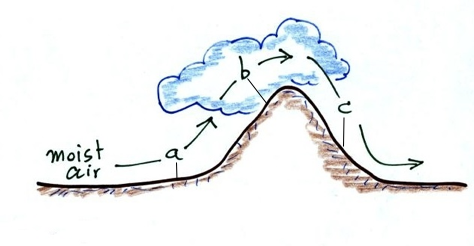
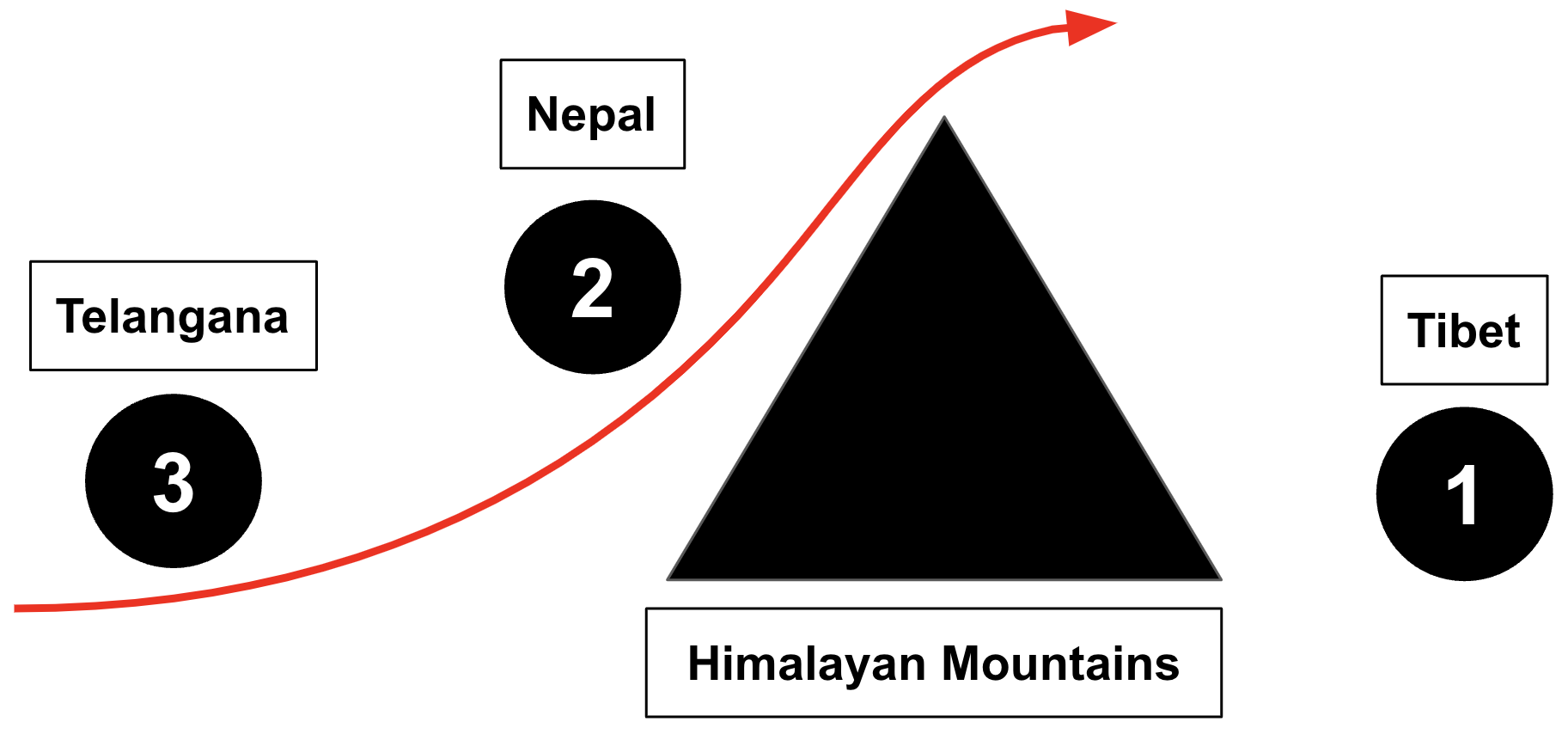
The model below shows how air travels across a landscape.
There will be the most rain at point ___ because ____. (2 pts)
A; the air is warmer, causing the water vapor to condense
B; the air is colder, so the water vapor will condense
B; the molecules will move farther apart as they get warmer
C; the air has gathered more moisture from the mountains
Use the information in this box to answer questions 8 & 9:
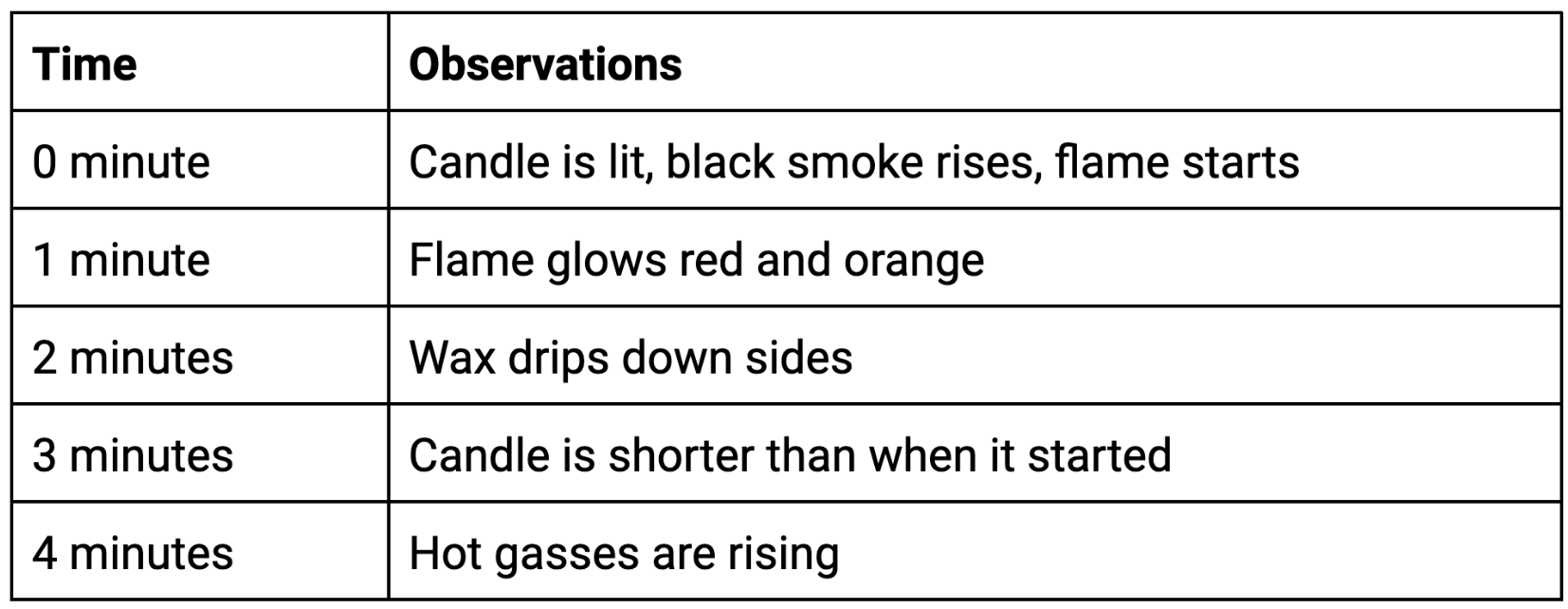
Wilfred made observations as he watched a white candle burn.
Which of Wilfred’s observations shows that a chemical reaction has taken place? (2 pts)
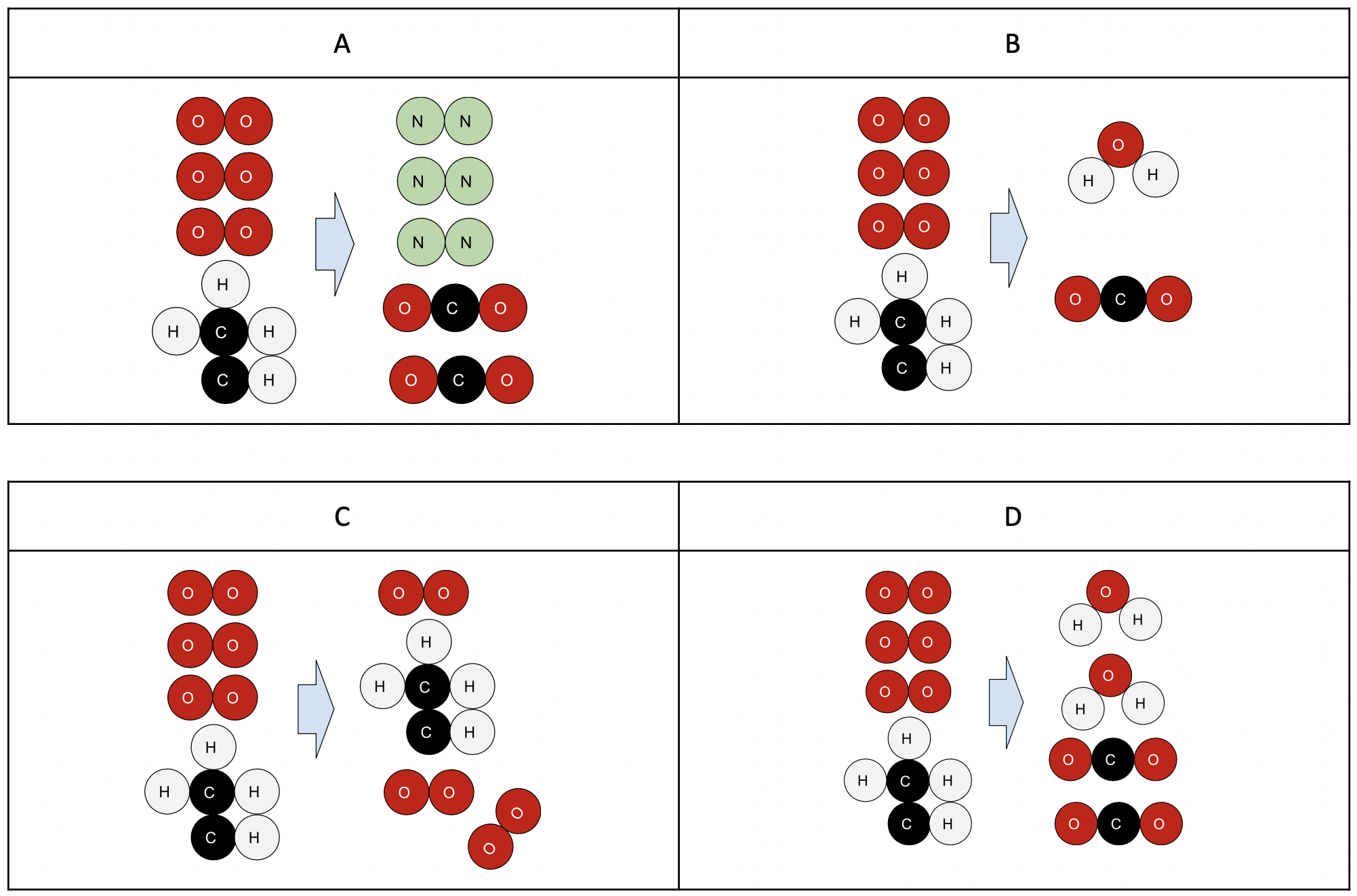
Use these models to answer Question 10
Which of the following models could show what happened to the molecules of the candle including the oxygen in the air during the chemical reaction? (2 pts)
CFS:
Conservation of Matter
Identify the number of atoms before and after the reaction
Identify if a new substance (with new molecules) was formed
Use the information in this box to answer questions 11-12:
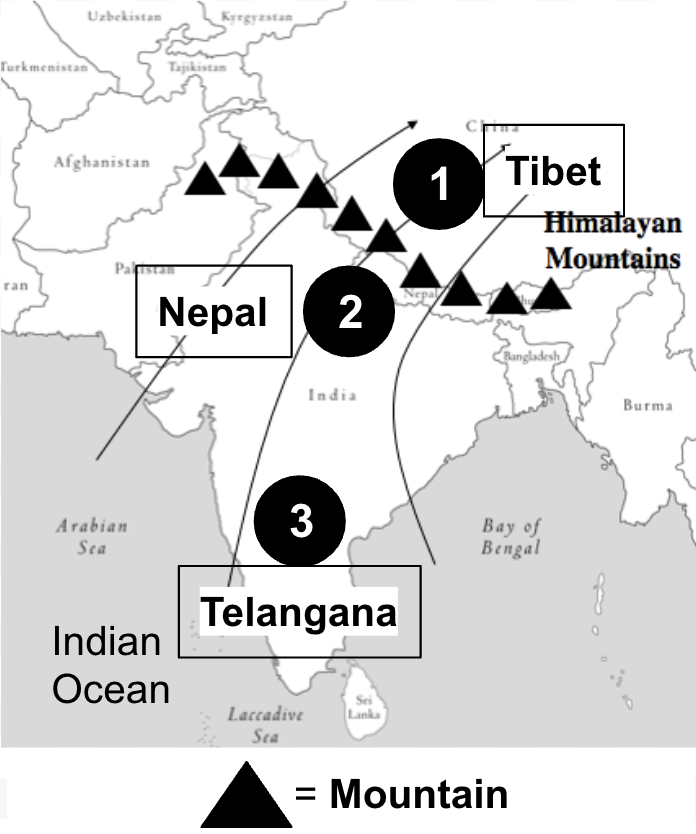
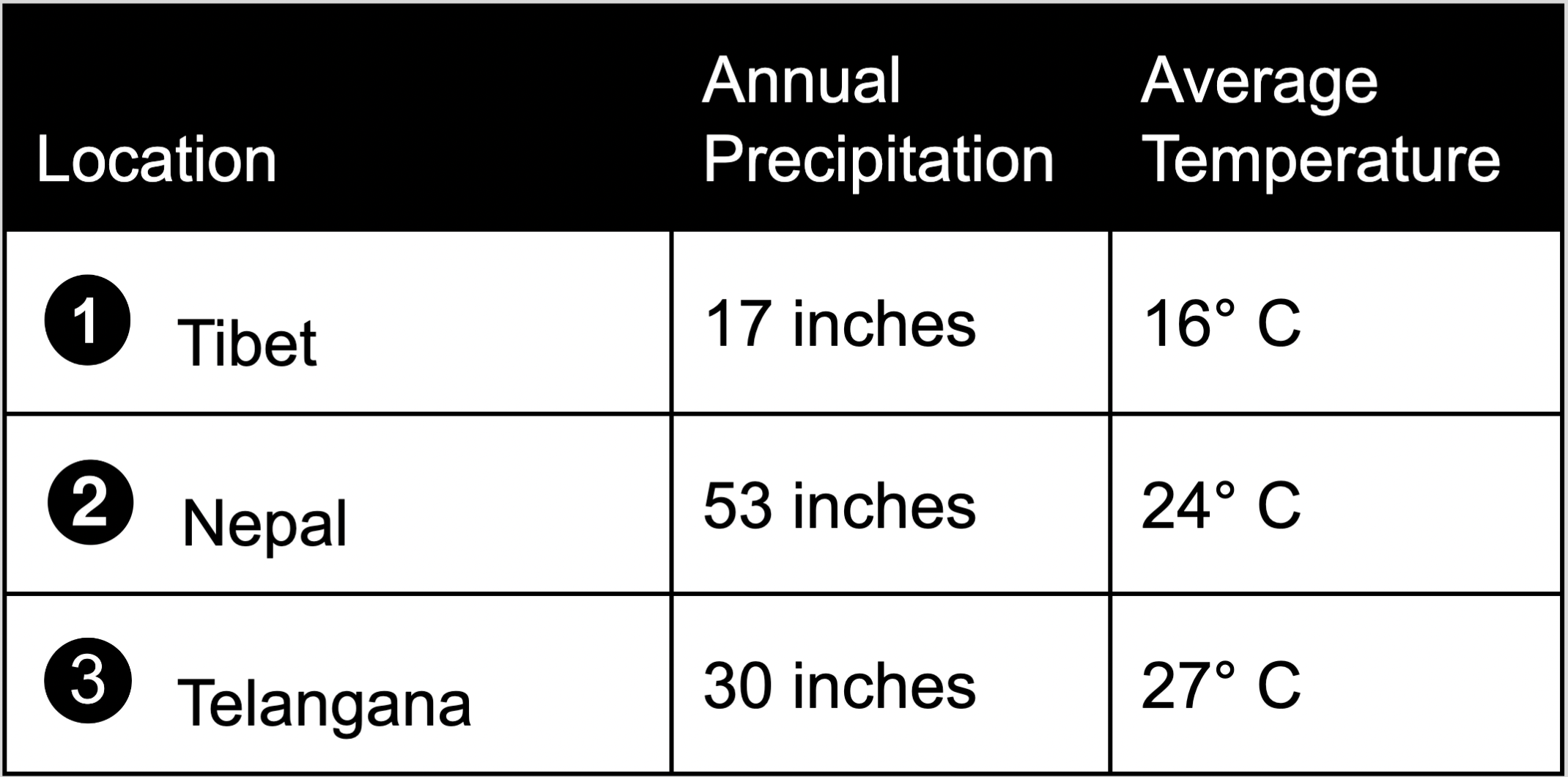
The map to the right shows the area surrounding the Himalayan Mountains. The triangles are the Himalayan Mountains and the arrows show the direction of the wind.
The rain that falls on Nepal will continue moving through the water cycle. Which of the following steps could happen after the rain falls? Choose 3 answers. (2 pts)
It could evaporate into water vapor
It could condense into fog
It could run-off into a stream or river
It could soak into the groundwater
It could precipitate
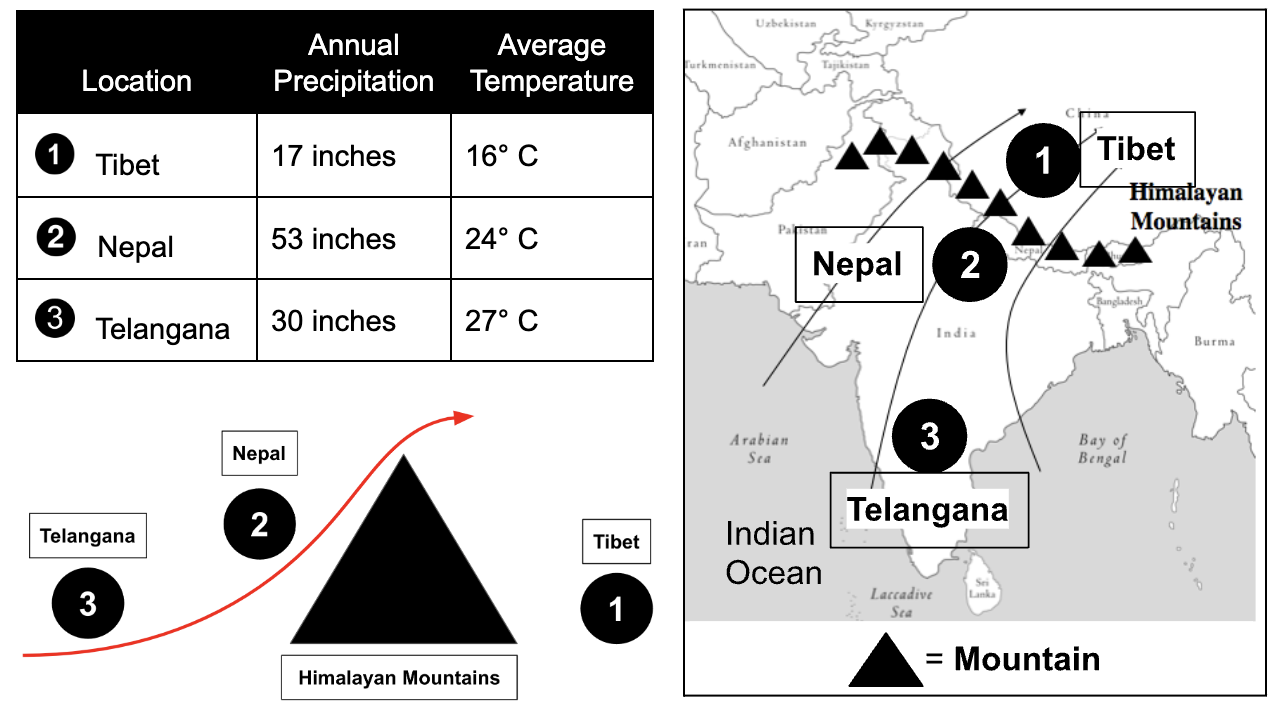
Why does Tibet receive less rainfall than Nepal? Include evidence from the map or the table to support your answer. (5 pts)
Criteria For Success:
Explain why it rains more in Nepal. Explain how the wind and mountain move water molecules. Identify the amount of water vapor and explain what happens to the water vapor.
Explain why it rains less in Tibet. Explain how the mountain affects the amount of water vapor and what happens to the water vapor.
Science Word Bank ( You can use these words, you don't have to use all of them): wind, mountain, rain, condensation, water vapor
Why does Tibet receive less rainfall than Nepal?
Sentence starters:
Tibet receives less rainfall than Nepal because ___________. On the map, it shows ___________. It rains more in Nepal because ___________. It rains less in Tibet because ___________.
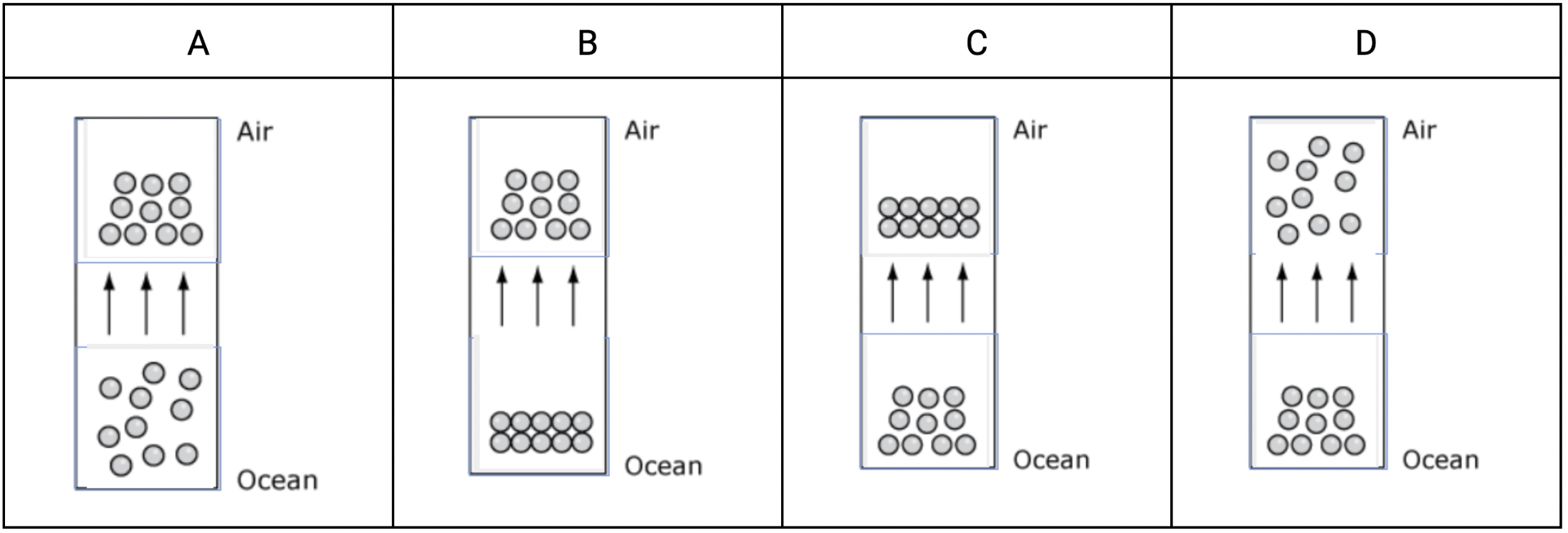
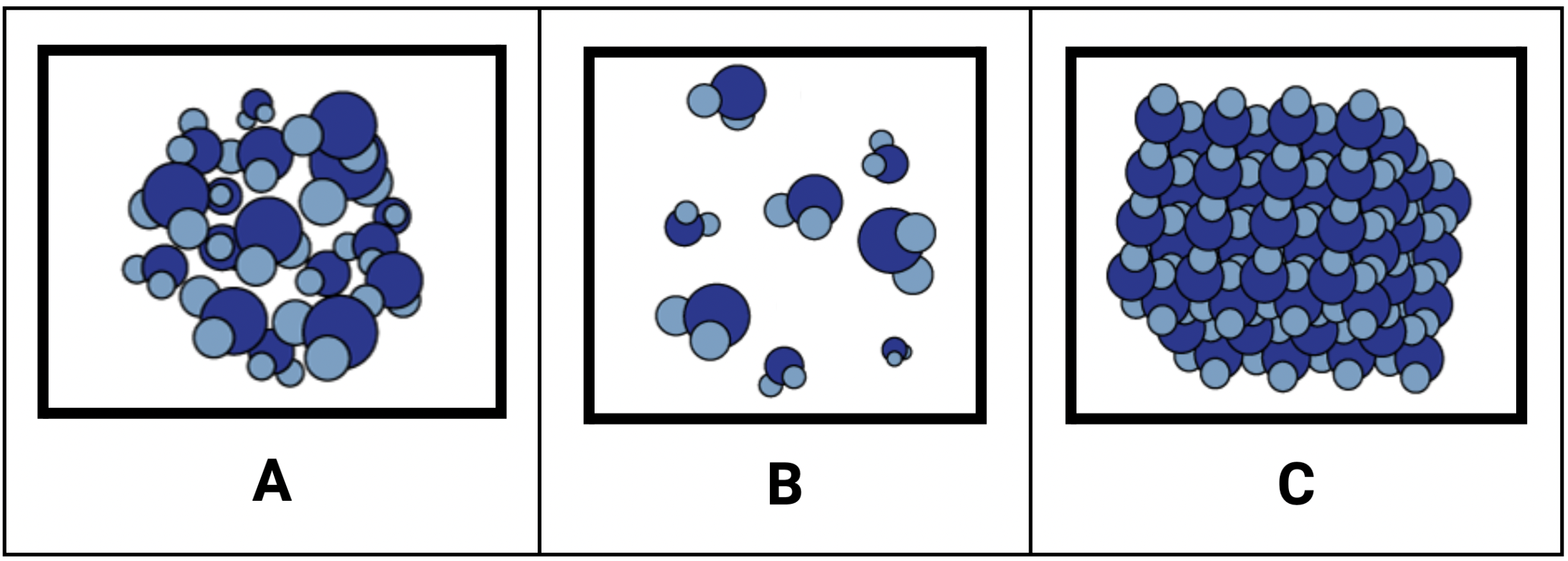
On a summer day, water particles from the ocean change phase as they move into the air. Which model best shows this change? Use the models below. (2 pts)
Criteria For Success:
Identify the phase change that causes water from the ocean to move into the air.
Identify the distance between the molecules before the phase change
Identify the distance between the molecules after the phase change?
On a summer day, water particles from the ocean change phase as they move into the air. Which model best shows this change?
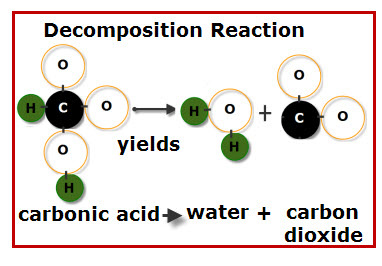
This is a picture of the substances in a chemical reaction before and after the reaction. (2 pts)
Using what you have learned about chemical reactions, choose the answer that best explains what happens to the weight of the substances after a chemical reaction occurs.
Use the information in this box to answer questions 15 & 16:
On a spring day, in Worcester, Massachusetts, a local river has flooded. A student asks their science teacher what caused the river to flood. The teacher explains that the flooding is a result of seasonal weather and the water cycle.
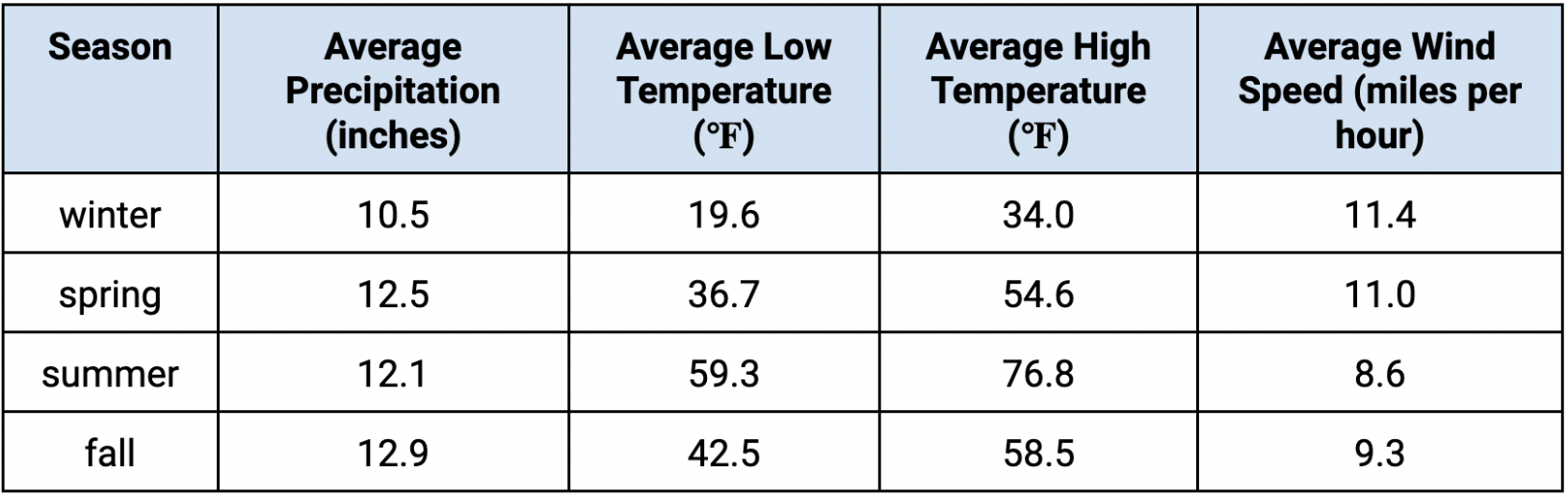
The table shows seasonal climate data for Worcester, Massachusetts.
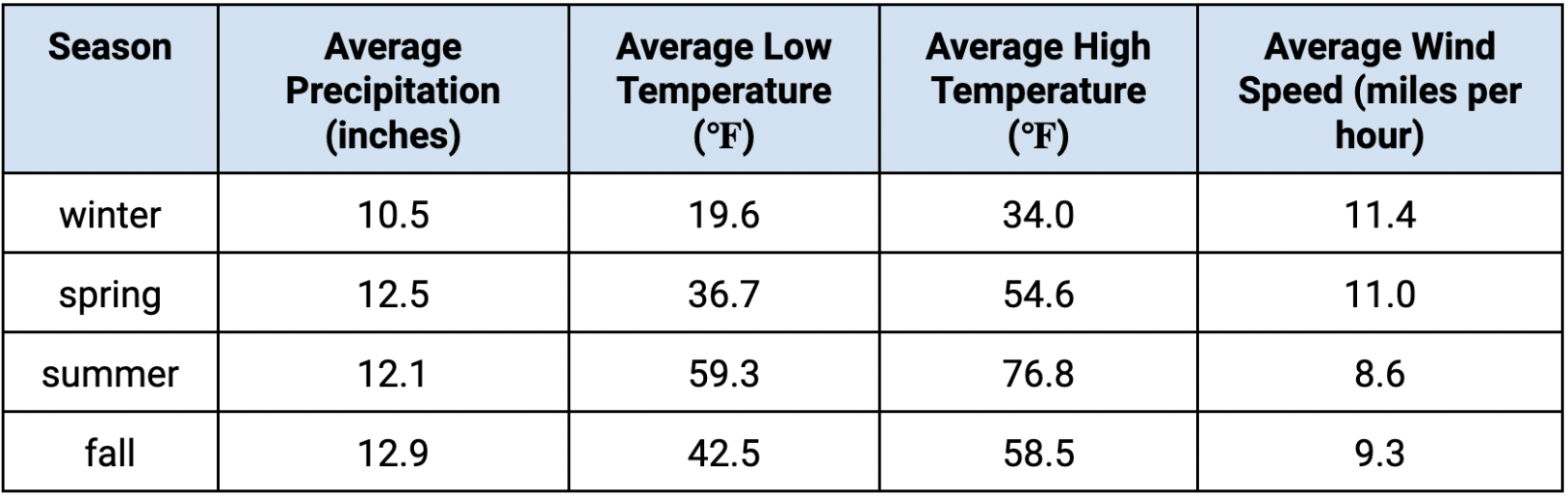
Use the data table to answer the question.
Criteria For Success:
Identify where groundwater comes from
Use information from the data table.
Science Word Bank (You can use these words, you don't have to use all of them): groundwater, data table, precipitation, temperature
Identify the season when you would see the least amount of groundwater (liquid) in Worcester. Explain why this season has the least amount of groundwater. Include data from the seasonal climate table to support your answer. (6 pts)
Sentence starters:
The season that would have the least amount of groundwater is __________. In the seasonal climate data table, it shows __________. The __________ season will have the least amount of groundwater because __________.
Use the data table to answer the question.
Criteria For Success:
Identify the temperature during the daytime and the phase change that happens at that temperature.
Identify the season that would have the most water moving into the atmosphere during the day
Use evidence from the weather data to support your claim.
Explain the phase change that causes water to move into the atmosphere, include the temperature
Identify the season when the greatest amount of water moves from Earth’s surface into the atmosphere in Worcester. Explain why this season has the greatest amount of water moving into the atmosphere. Include data from the seasonal climate table and describe the role of energy to support your answer. (7 pts)
Sentence starters:
The season that will have the most water vapor moving into the atmosphere is __________. In the seasonal climate data table, it shows __________. __________ season will have the most water vapor moving into the atmosphere because __________.
Which area -- A or C -- will have the most groundwater? Why? (2 pts)
A, because there is more rain on that side of the mountain
A, because it is hotter on that side of the mountain
C, because there is more rain on that side of the mountain
C, because it is hotter on that side of the mountain
Which model best represents what the molecules of water look like at location B? (2 pts)
CFS
Identify what happens at location B
Identify what phase will it be at location B
Identify what do molecules in that phase look like
Which direction will most runoff from precipitation occur? (2 pts)
CFS
Look at the model and explain how the water from runoff will water move
Why does this observation show a chemical reaction has taken place? (2 pts)
It shows that the candle has changed from one state to another
It shows that the candle did not change state
It shows that a new substance was created
It shows that no new substances were created