Wildlife wonders and Spongers of the Sea Assessment 3/22
star
star
star
star
star
Last updated about 2 years ago
12 questions
1
1
1
1
1
1
1
1
1
1
1
1
Question 1
1.
Question 2
2.
Question 3
3.
Question 4
4.
Question 5
5.
Question 6
6.
Question 7
7.
Question 8
8.
Question 9
9.
Question 10
10.
Question 11
11.
Question 12
12.
Read this information about the origin of the word verify. from Latin verus, meaning “true” This information helps the reader know that verified in paragraph 5 means
A proved
B compared
C observed
D suspected
What is the best summary of the article?
A Koalas are furry mammals that can be found in Australia. Over the years scientists have learned a great deal about these tree-dwelling animals. For example, scientists know that koalas eat eucalyptus leaves and hug trees.
B Scientists wondered why koalas grasp the lower trunks of eucalyptus trees when the temperature rises. By using technology to study koalas, scientists discovered that doing so allowed the koalas to conserve the water in their bodies.
C Scientists used technology to observe koalas that hug trees. The scientists located the animals with radio tags, took photographs of them, and measured their temperatures.
D It is difficult for koalas to live in hot environments because they cannot sweat. They can lick themselves or pant, but these methods can cause them to become dehydrated.
Which idea is supported by information found throughout the article?
A Koalas can dehydrate while trying to stay cool.
B Studying koalas requires special equipment.
C Searching for water is a dangerous activity for koalas.
D Changes in temperature affect the behavior of koalas.
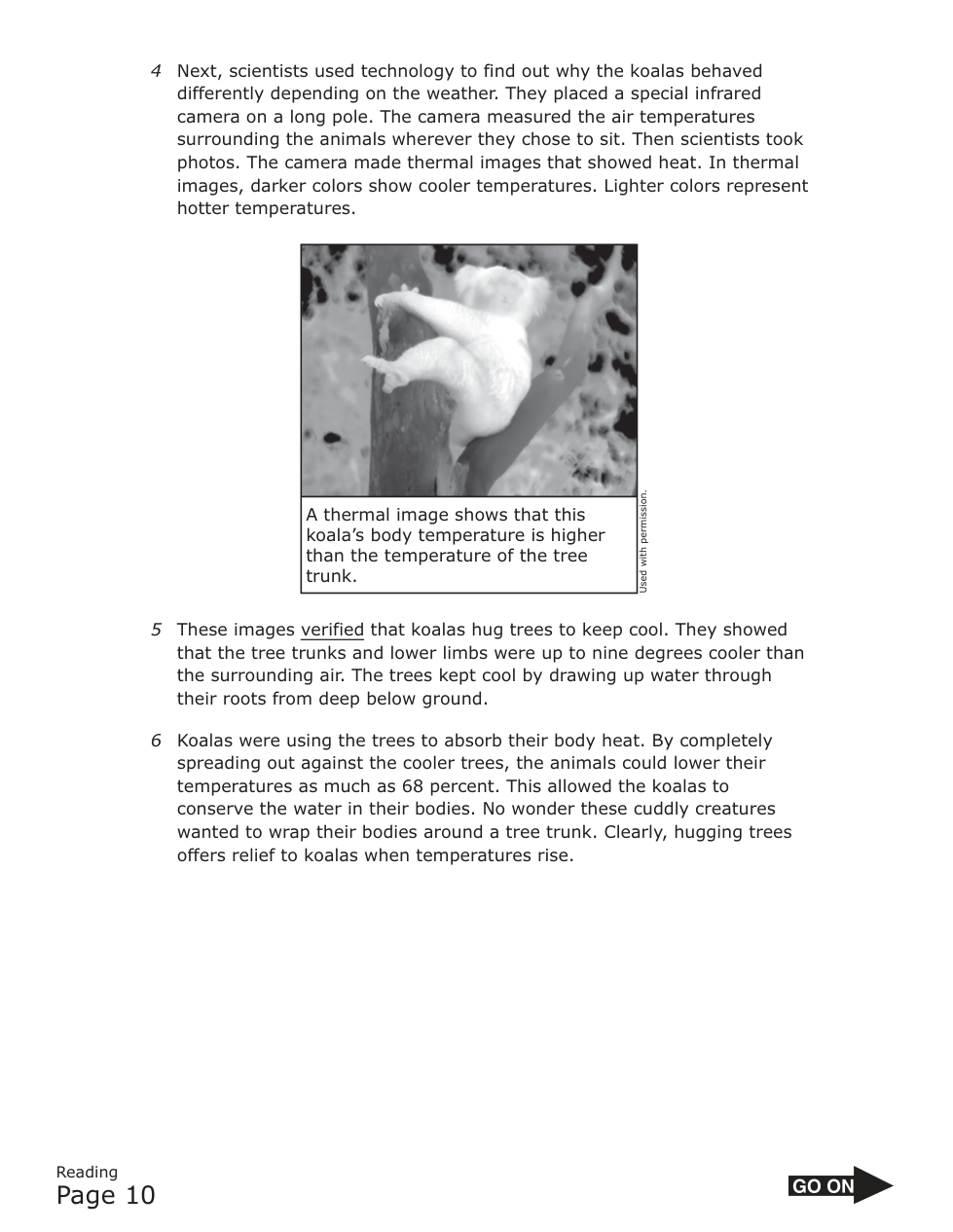
Based on information in paragraph 4, why does the tree trunk appear dark in the thermal image?
A To make the koala easier to see
B To show it absorbs heat from the koala
C To represent its cooler temperature
D To illustrate the water inside the tree trunk
How do the bottom-dwelling fish in Shark Bay cause a problem for the dolphins?
A The fish swim so quickly the dolphins are unable to catch them.
B The fish are not nutritious enough to support the health of the dolphins.
C The fish travel to other locations during certain times of the year.
D The fish do not have a certain body part that allows the dolphins to locate them.
The author wrote the selection most likely to —
A encourage the reader to visit Australia
B describe how dolphins use sponges as tools
C explain to the reader where dolphins find food
D identify which ocean animals live in Shark Bay
According to the selection, how do fish protect themselves from dolphins?
A They bury themselves beneath the sand along the sea floor.
B They take cover under sharp rocks and pieces of coral.
C They swim in a darting pattern in the open water.
D They make a ringing noise that tricks dolphins.
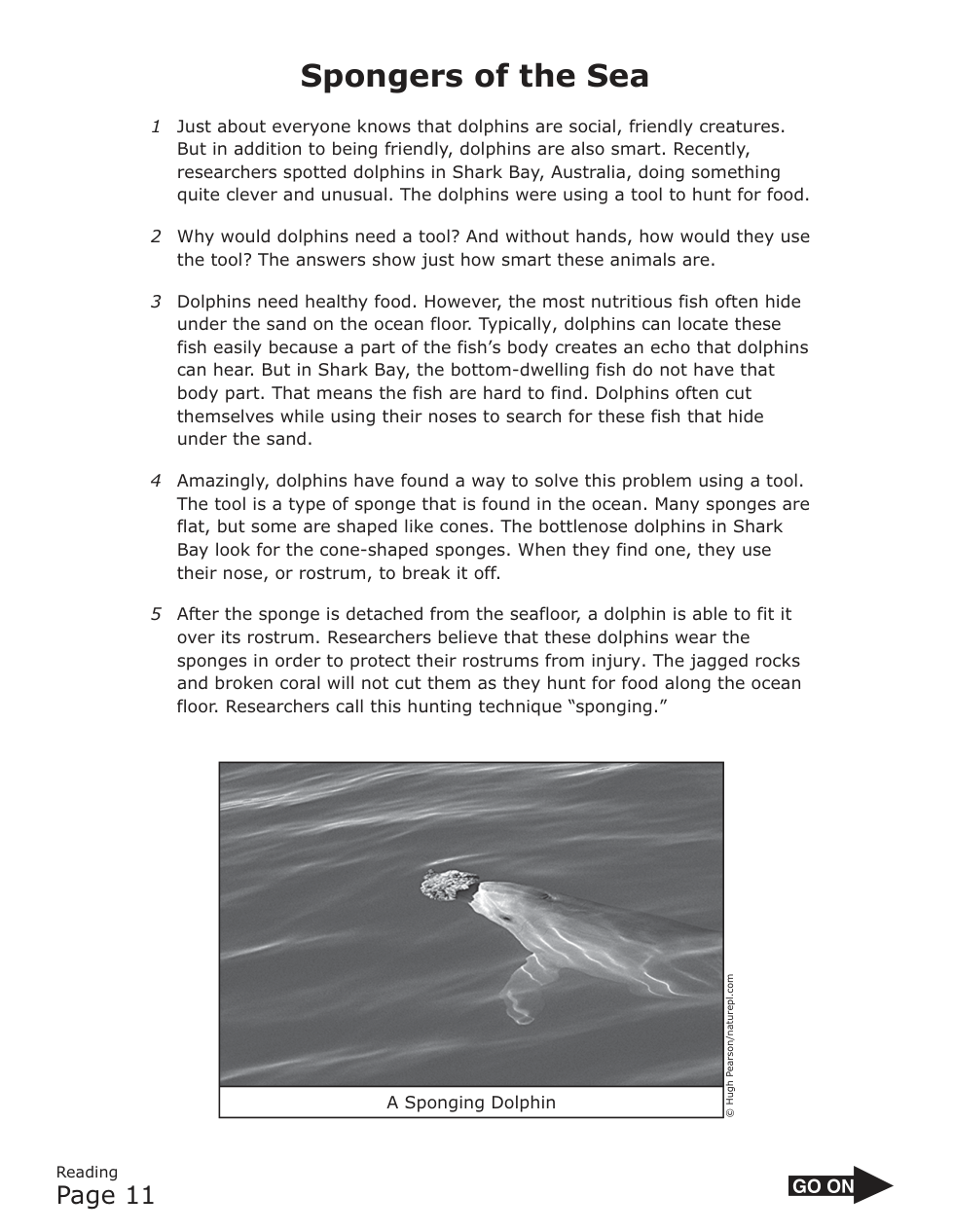
Which idea from the selection is illustrated by the photograph?
A Bottom-dwelling fish in Shark Bay may be hard for dolphins to find.
B Researchers think dolphins are more intelligent than many other animals.
C Dolphins use their rostrums to help them locate food in the ocean.
D Shark Bay dolphins fit sponges over their rostrums before searching for fish.
Both authors focus their selections on animal behaviors that —
A affect an animal’s diet
B happen only at certain times of year
C demonstrate cooperation
D are important to an animal’s survival
Which conclusion is best supported by both selections?
A Studying animals helps researchers learn why animals do what they do.
B Animals often act in ways that cannot be explained.
C The senses of animals are better developed than those of humans.
D Hot weather affects an animal’s food supply and comfort.
Which behavior did scientists observe among the dolphins that was not observed among the koalas?
A Behaving in a way that is out of the ordinary
B Teaching a behavior to their young
C Avoiding predators by staying close to home
D Decreasing activity to conserve energy
Based on the way information is presented in “Keeping Cool” and “Spongers of the Sea,” both authors most likely are —
A concerned for the safety of certain animals
B curious about the technology used by certain scientists
C impressed by the unique ways certain animals use their surroundings
D surprised by extreme conditions certain animals must survive