Read the text, follow the directions below, and answer the questions that follow.
The game of chess is a strategic board game that has been played for centuries, captivating millions of minds worldwide. Its origins can be traced back to ancient India, where it was originally known as "chaturanga." This early form of chess included pieces representing infantry, cavalry, elephants, and chariots - reflecting the military tactics of the time. As the game spread to Persia and then to Europe, its rules evolved and the pieces took on the familiar forms of kings, queens, bishops, knights, rooks, and pawns that we recognize today. Chess became especially popular in Europe during the Middle Ages, where it was played by nobility and commoners alike. The game was not only a form of entertainment but also a way to teach strategy and critical thinking skills. Chess was considered a valuable educational tool, with lessons in planning, foresight, and decision-making embedded in each move. In the 19th century, organized chess competitions began to emerge, leading to the development of formalized rules and strategies. Today, chess is recognized as a competitive sport, with players from around the world competing in tournaments and championships. The game continues to evolve, with new strategies and variations keeping it fresh and engaging for players of all ages. Chess remains a timeless classic that challenges the mind and teaches valuable lessons in strategy and critical thinking. Its enduring popularity speaks to the universal appeal of using one's intellect to outwit an opponent on the battlefield of the chessboard.
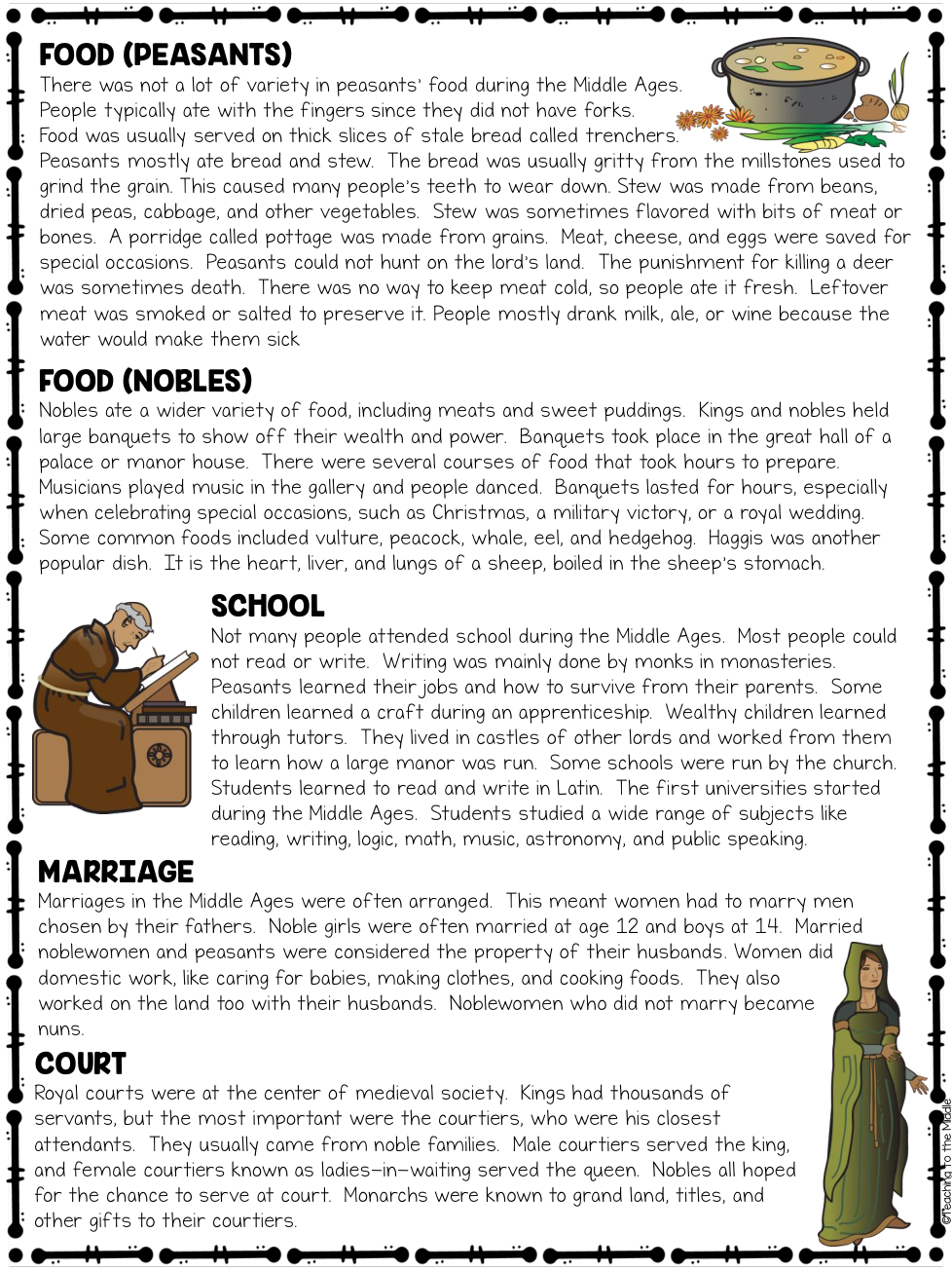
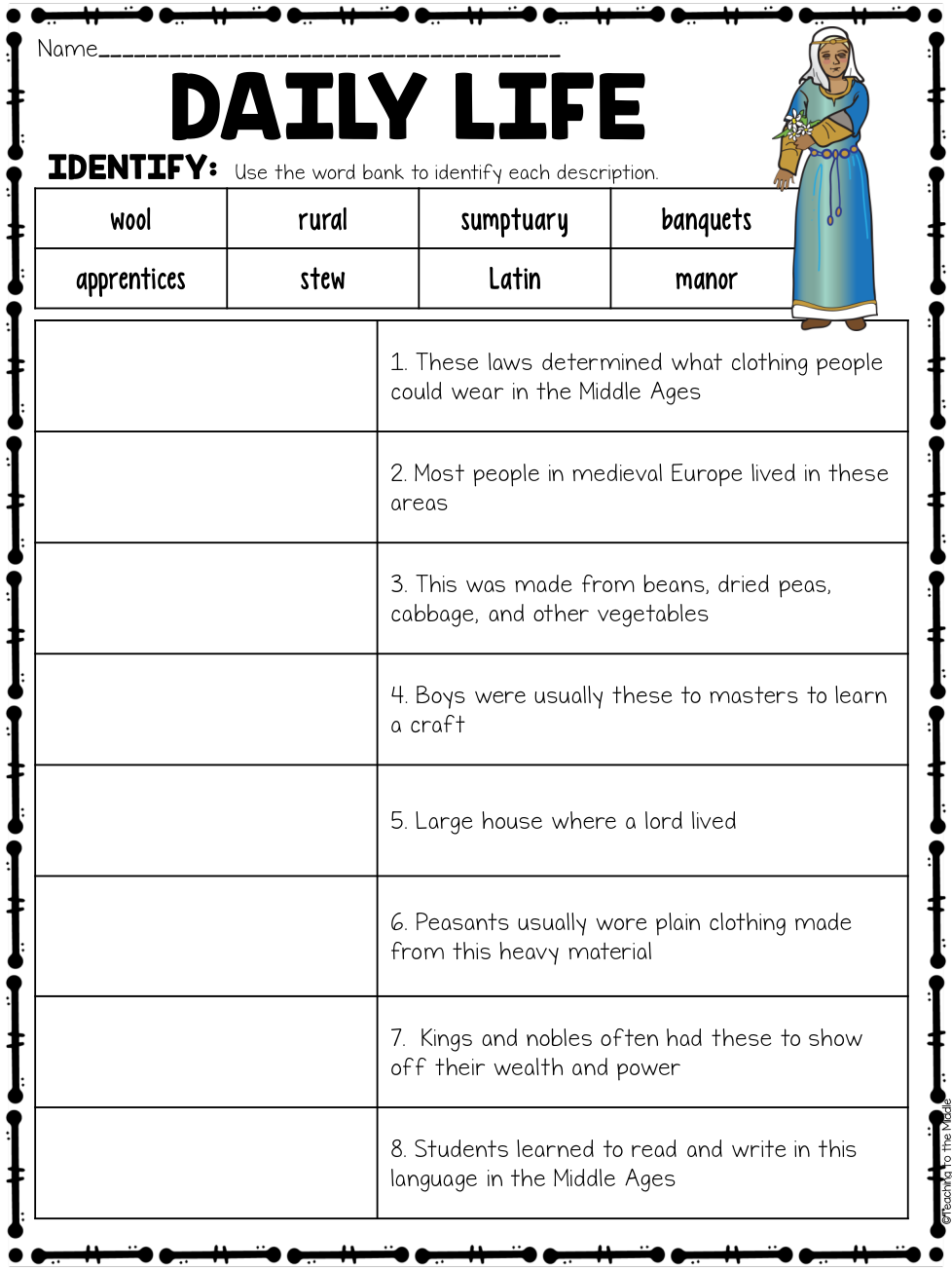
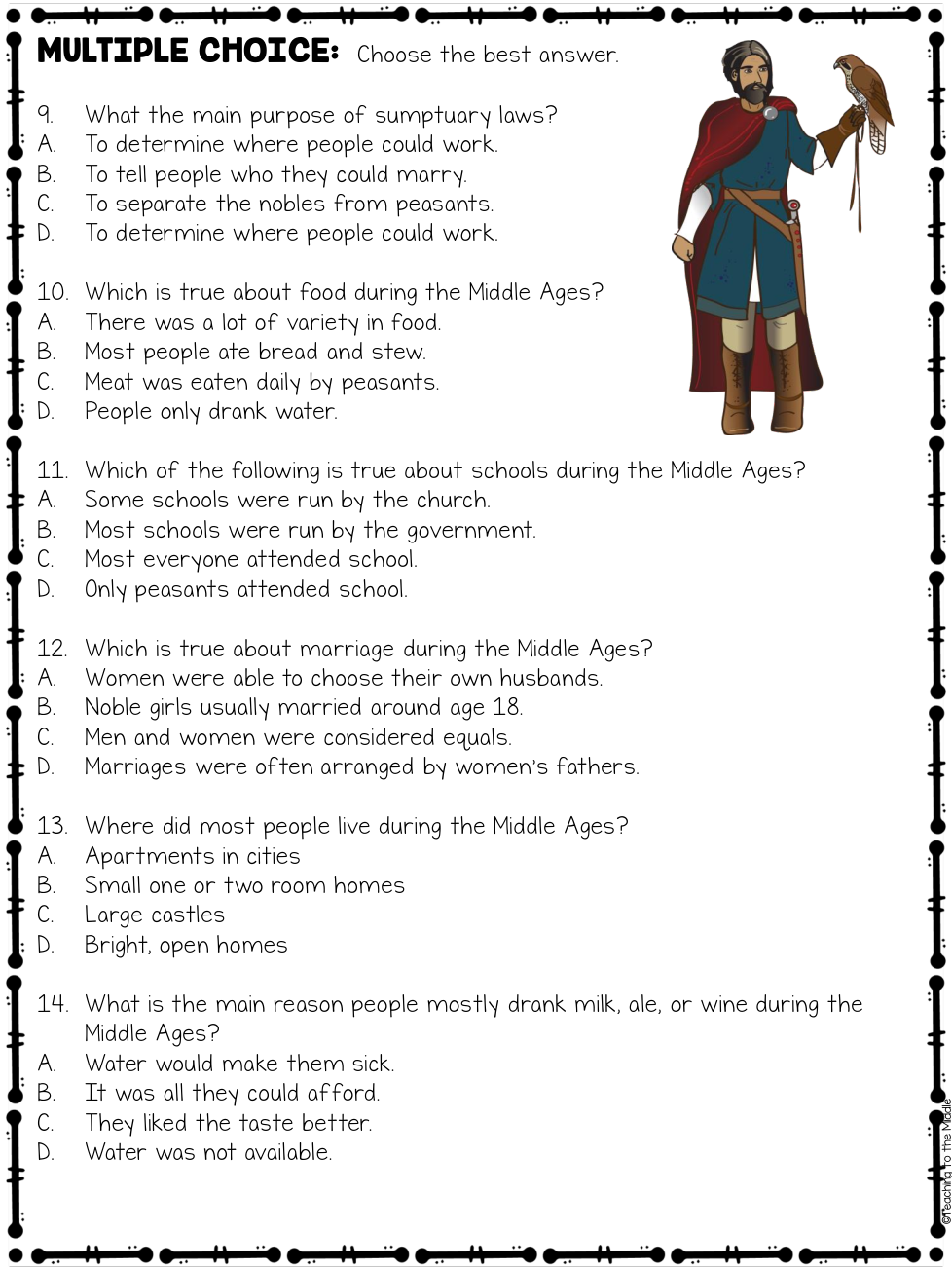
What were the main purpose of the sumptuary laws?
Which is true about food during the Middle Ages?
Which of the following is true about schools during the Middle Ages?
Which is true about marriage during the Middle Ages?
Where did most people live during the Middle Ages?
What is the main reason people mostly drank milk, ale, or wine during the Middle Ages?
Where did the game of chess originate?
What were the original pieces in chaturanga chess?
During which historical period did chess become popular in Europe?
How is chess described as a game in the text?