A six-sided die was tossed 4 times and it landed on “5” 3 times. In theory, what is the probability it will land on “5” again? Type your answer as a fraction.
1 point
1
Question 2
2.
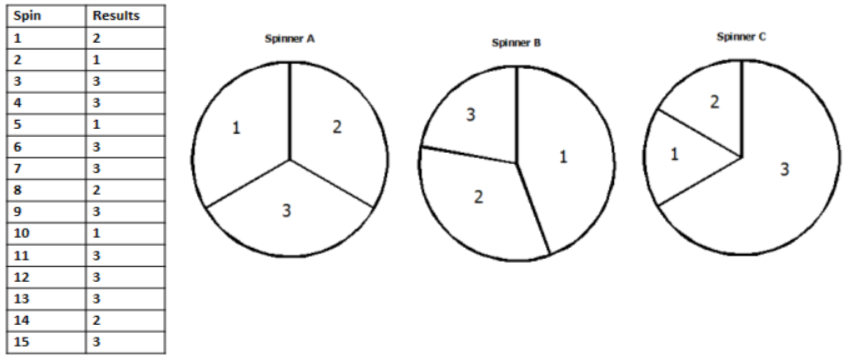
A student played a game using one of the spinners below. The table shows the results of 15 spins. Which spinner did the student use?
1 point
1
Question 3
3.
A bag contains 10 Snickers bars and 1 Twix bar and the outcome is drawing a Twix bar. Which phrase best describes the possibility of drawing a Twix bar?
1 point
1
Question 4
4.
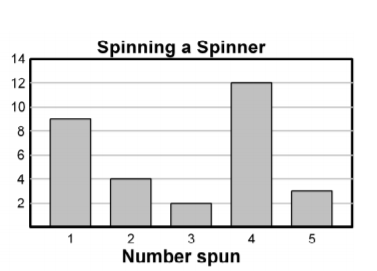
Willie spun a spinner 30 times and recorded his results. What is the experimental probability of rolling a 2 or a 4?
1 point
1
Question 5
5.
A six-sided die is rolled 600 times. In theory, how many times would you expect the die with the number "6" facing up?
1 point
1
Question 6
6.
A bag contains green, blue, and white marbles. The P(green) is 20%. The P(blue) is 0.50. Explain how likely it is to get a white marble?
1 point
1
Question 7
7.
In a math class, 25 out of the 30 students completed their homework. If this is representative of 180 students, how many students DID NOT complete their homework?
1 point
1
Question 8
8.
A spinner is divided into equal sections of red, white, blue, and green. Out of ten spins, the spinner landed on blue 7 times. How does this experimental probability compare with the theoretical probability?
1 point
1
Question 9
9.
What is the sample space for choosing a letter from the word "Probability"?
1 point
1
Question 10
10.
A bag has 10 red marbles, 12 blue marbles, 8 white marbles, 6 green marbles, and 4 yellow marbles. What is the P(compliment of yellow)?
1 point
1
Question 11
11.
Malua can win a free trip to Disney if he wins a game. He can choose from the following:
Flip a coin and it lands on heads.
Roll a dice it is an even number.
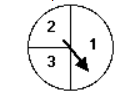
Spin the pointer on the spinner below and it lands on an odd number.
What should he do?
1 point
1
Question 12
12.
There are 20 marbles in a bag. 50% are red, 0.20 are blue, and 3/10 are green. Complete the graph to represent the data.