Log in
Sign up for FREE
arrow_back
Library

The Vikings Guided Activity

star
star
star
star
star
Last updated about 1 month ago
35 questions
Follow the directions below. You are graded on accuracy! Do your best.
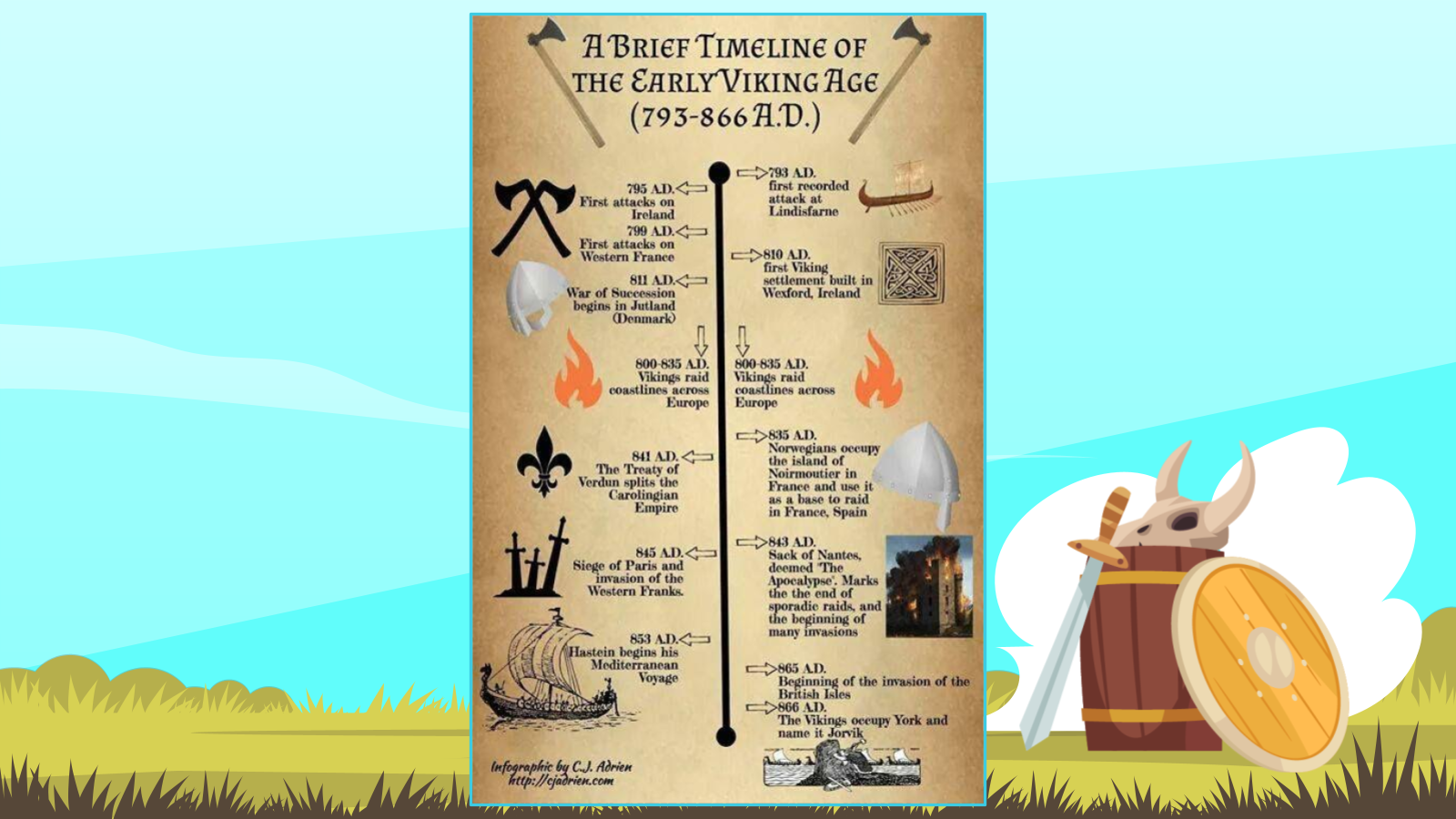
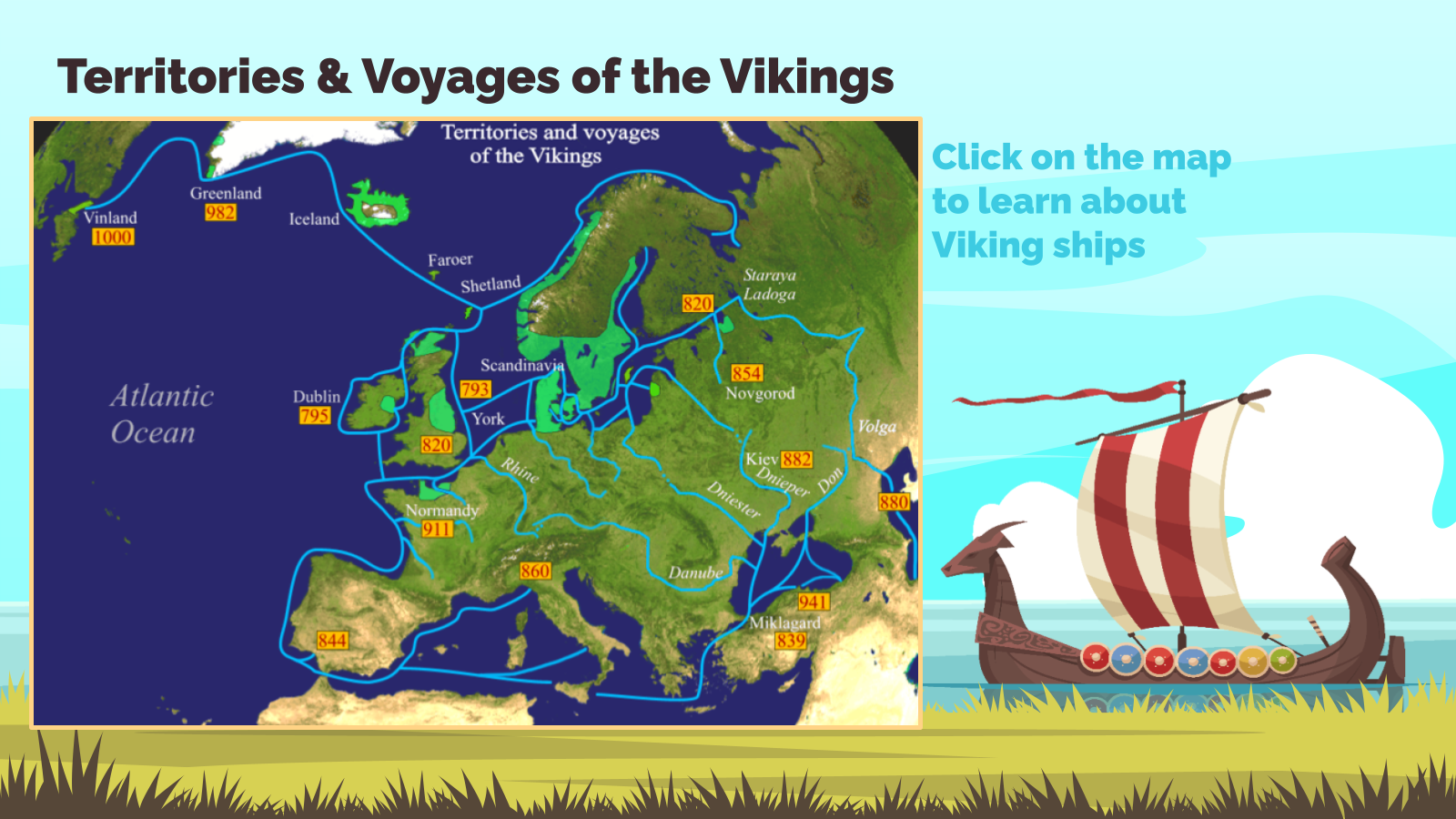
The Vikings were skilled seafarers and warriors who lived in Scandinavia from around the late 8th to the early 11th century. Their history can be divided into three main periods: the Viking Age, the Great Heathen Army invasion of England, and the eventual conversion to Christianity. The Viking Age began around 793 AD with the raid on the monastery of Lindisfarne in England. This event marked the beginning of the Vikings' expansion across Europe, as they explored, traded, and raided distant lands. The Viking Age reached its peak around 850 AD when Viking ships sailed as far as North America. In 865 AD, the Great Heathen Army – a large Viking force – invaded Anglo-Saxon England, leading to widespread battles and settlements. This period of Viking influence in England lasted for several decades until the kingdom of Wessex, led by King Alfred the Great, pushed back the Viking invaders. By the early 11th century, many Vikings had converted to Christianity, leading to the end of the Viking Age as they settled into more peaceful lives as farmers and traders. This marked the completion of the timeline of Viking history, showcasing their journey from fierce raiders to settlers and traders across Europe.
Required
1
Required
1
Required
1
Required
1
The video from the map link above is provided below. Please watch it and answer the questions.
Trim End | 04:58
Question 5 | 00:12
Question 6 | 00:21
Question 7 | 00:34
Question 8 | 02:56
Question 9 | 03:35
Question 10 | 03:50
Question 11 | 04:28
00:00/00:00
Question 5
00:12
Question 6
00:21
Question 7
00:34
Question 8
02:56
Question 9
03:35
Question 10
03:50
Question 11
04:28
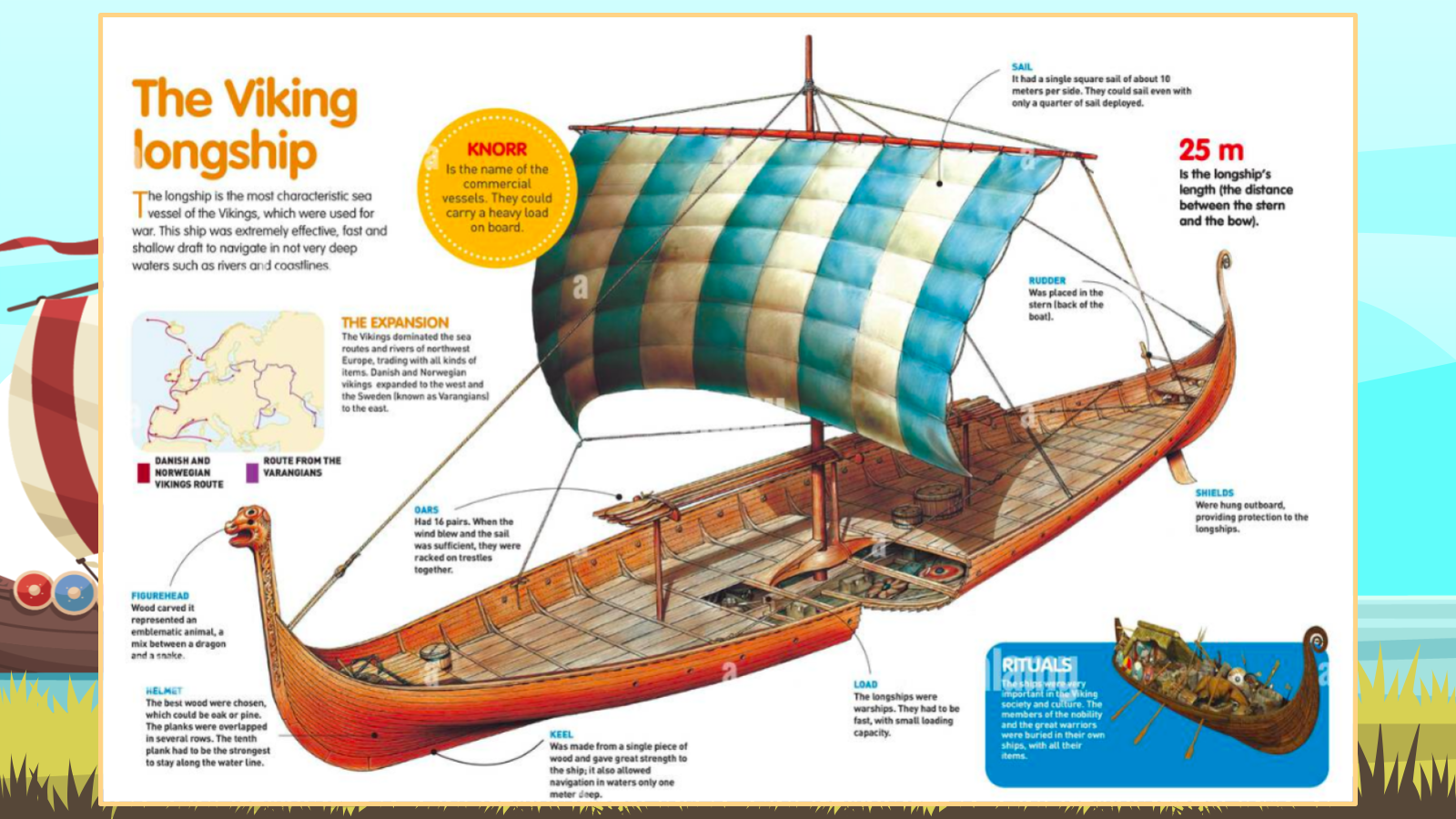
In the early Middle Ages, the Viking longship was a key element of Scandinavian culture and expansion. These mighty vessels were renowned for their speed, versatility, and fearsome appearance. Viking longships were designed to navigate both open seas and shallow rivers, allowing the Vikings to travel far and wide across Europe and beyond. At the heart of the longship was its sleek and streamlined design. With their shallow draft, longships could easily navigate through shallow waters, making them ideal for surprise attacks and swift getaways. Their symmetrical hulls and sturdy construction allowed these ships to withstand rough seas and adverse weather conditions, ensuring the safety of the crew on long voyages. Equipped with both oars and a large rectangular sail, longships were propelled by a combination of rowing and sailing. This dual propulsion system gave the Vikings a tactical advantage during raids and battles. Additionally, the longship's narrow shape and high prow made it highly maneuverable, allowing crews to quickly change direction and outmaneuver larger, slower vessels. The iconic image of a dragon-headed prow adorned many longships, striking fear into the hearts of enemies and symbolizing the power and ferocity of the Viking warriors. These intricate carvings were not just for decoration but were also believed to provide protection and guidance during voyages. In conclusion, the Viking longship was much more than a means of transportation—it was a symbol of power, innovation, and exploration that helped shape the course of history in medieval Europe.
Required
1
Required
1
Required
1
Required
1
Required
1
Required
1
Required
1
Required
1
Required
1
Required
1
Required
1
Required
1
Required
1
Required
1
Required
1
Required
1
Required
1
Trim End | 05:20
Question 29 | 00:56
Question 30 | 01:22
Question 31 | 02:07
Question 32 | 02:55
Question 33 | 03:31
Question 34 | 03:54
Question 35 | 04:49
00:00/00:00
Question 29
00:56
Question 30
01:22
Question 31
02:07
Question 32
02:55
Question 33
03:31
Question 34
03:54
Question 35
04:49

Further Learning and Review

Click the Quizizz LINK and play one game minimum. Play more if you'd like. Use your first name and the first letter of your last name so that you can get credit for playing. This is part of the assignment!

Enrichment Opportunity!

Learn how to make your very own Viking longship! Follow the directions below. You will need to take a piece of 8.5"x11" copy paper and cut it to 8.5"x8.5" so that it is a square.

Question 1
1.

When did the Viking Age begin?

Question 2
2.

What country did the Vikings originate from?

Question 3
3.

What event marked the end of the Viking Age?

Question 4
4.

Where did the Vikings explore and settle?

Question 12
12.

What was the purpose of the Viking longships?

Question 13
13.

What made the Viking longship well-suited for travel?

Question 14
14.

How did the Vikings navigate their longships?

Question 15
15.

What material were Viking longships typically made from?

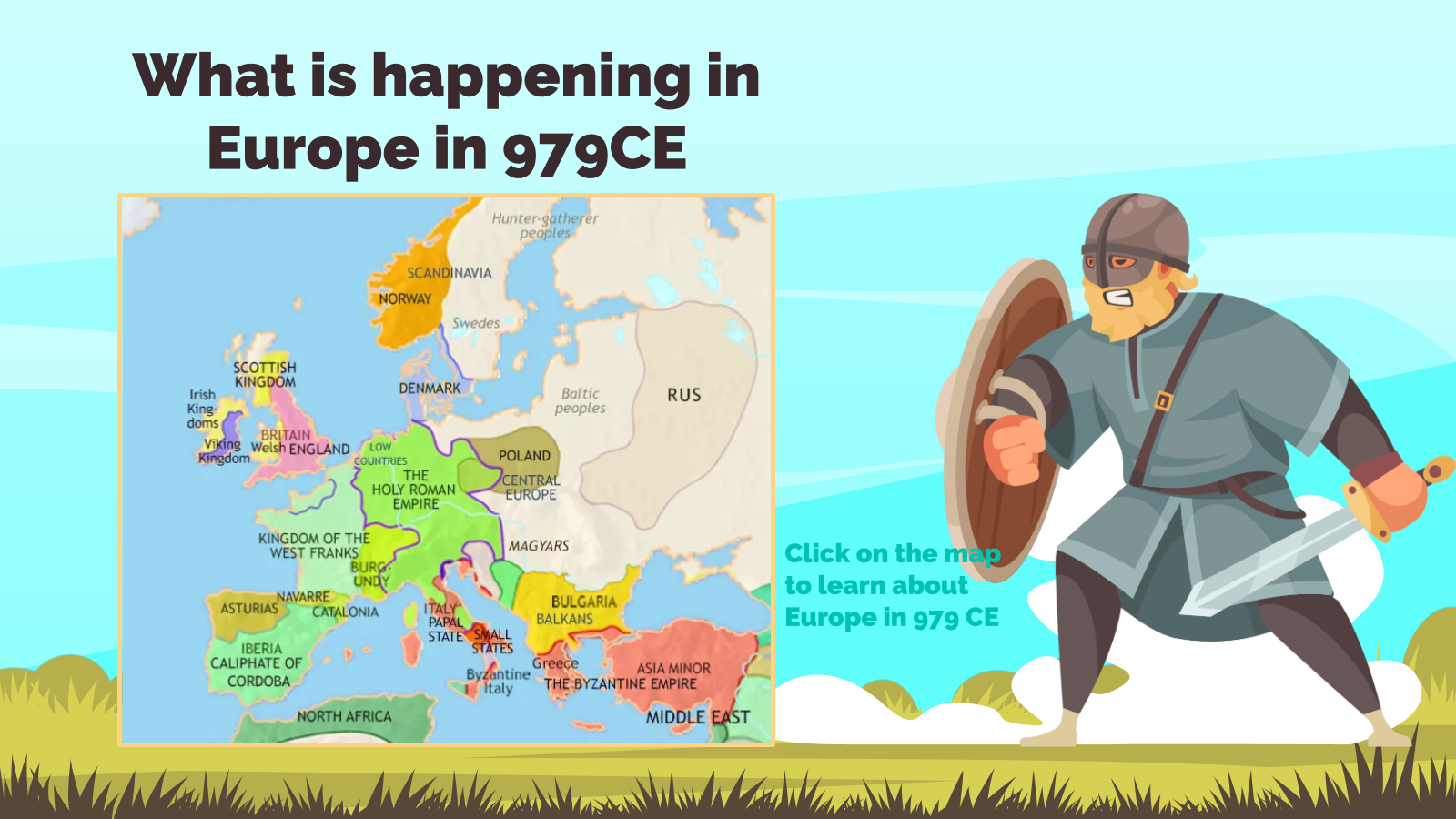
What is happening in Europe in 979CE

Western Europe

The past two hundred years have seen the Frankish kingdom expand over much of Europe under its vigorous ruler, Charlemagne; but then, after his death, swiftly break up. The kingdom of France and the Holy Roman Empire (covering Germany, northern Italy, and some eastern lands) have emerged from the wreckage.
Destructive invasions from outside – Vikings from the north, Magyars from the east, and Arabs from the south – have hastened the disintegration of central power. Widespread disorder spreads across much of Western Europe, in which a new feudal society is taking shape.

The rise of Feudalism

Thrown on their own resources by the weakness of the kings, local landowners build castles (at this stage of wood, later of stone), hire armed retinues (now mounted on horseback, the forebears of medieval knights), and establish almost royal power over their localities (in what would later be known as ‘fiefs’ – from which the term ‘feudalism’ comes).
The nobility used this power, not only to resist invaders and brigands but royal officials as well. Rulers are therefore forced to come to terms with them if they are to exercise any leadership at all, and the feudal system – essentially a way of co-ordinating the military capabilities of a region at a time of fragmented authority – is gradually emerging.

The expansion of Christendom

Despite the troubles of the time, Christendom (a term often applied to Medieval Europe, denoting the dominating role Christianity has in its society and culture) is continuing to expand. However, it is increasingly divided into an eastern branch (today represented by the Orthodox Church) based on Constantinople, and a western branch (the Catholic Church), headed by the pope in Rome. Missionaries of the Western Catholic Church are active in northern and central Europe, while those from Constantinople are winning eastern Europe and much of the Balkans to Orthodox Christianity.
The Christian kingdoms of northern Spain have been able to chip away at Muslim power.

The British Isles have experienced massive Viking attacks. At one time the Christian Anglo-Saxons looked as if they might be completely conquered by the pagan Vikings, but, now united into a single kingdom, they have recovered all their territory and incorporated the Vikings (now converted to Christianity) under their rule.
Question 16
16.

What hastened the disintegration of central power in Europe in 979CE?

Question 17
17.

Who emerged as major powers in Europe after Charlemagne's death?

Question 18
18.

What strategy did local landowners employ during the rise of Feudalism?

Question 19
19.

What term is derived from the establishment of 'fiefs'?

Follow the LINK and answer the questions below.

Question 20
20.

Where was Eric the Red from?

Question 21
21.

What material were Viking longhouses typically constructed from?

Question 22
22.

What type of roofs did Viking longhouses usually have?

Question 23
23.

What is a fjord?

Question 24
24.

Who was Erice the Red's son?

Question 25
25.

Who led the first known European expedition to North America?

Question 26
26.

Who discovered North America around 1000 AD?

Question 27
27.

Where did the Viking explorer Leif Erikson land?

Question 28
28.

What was the period known for Viking explorations called?