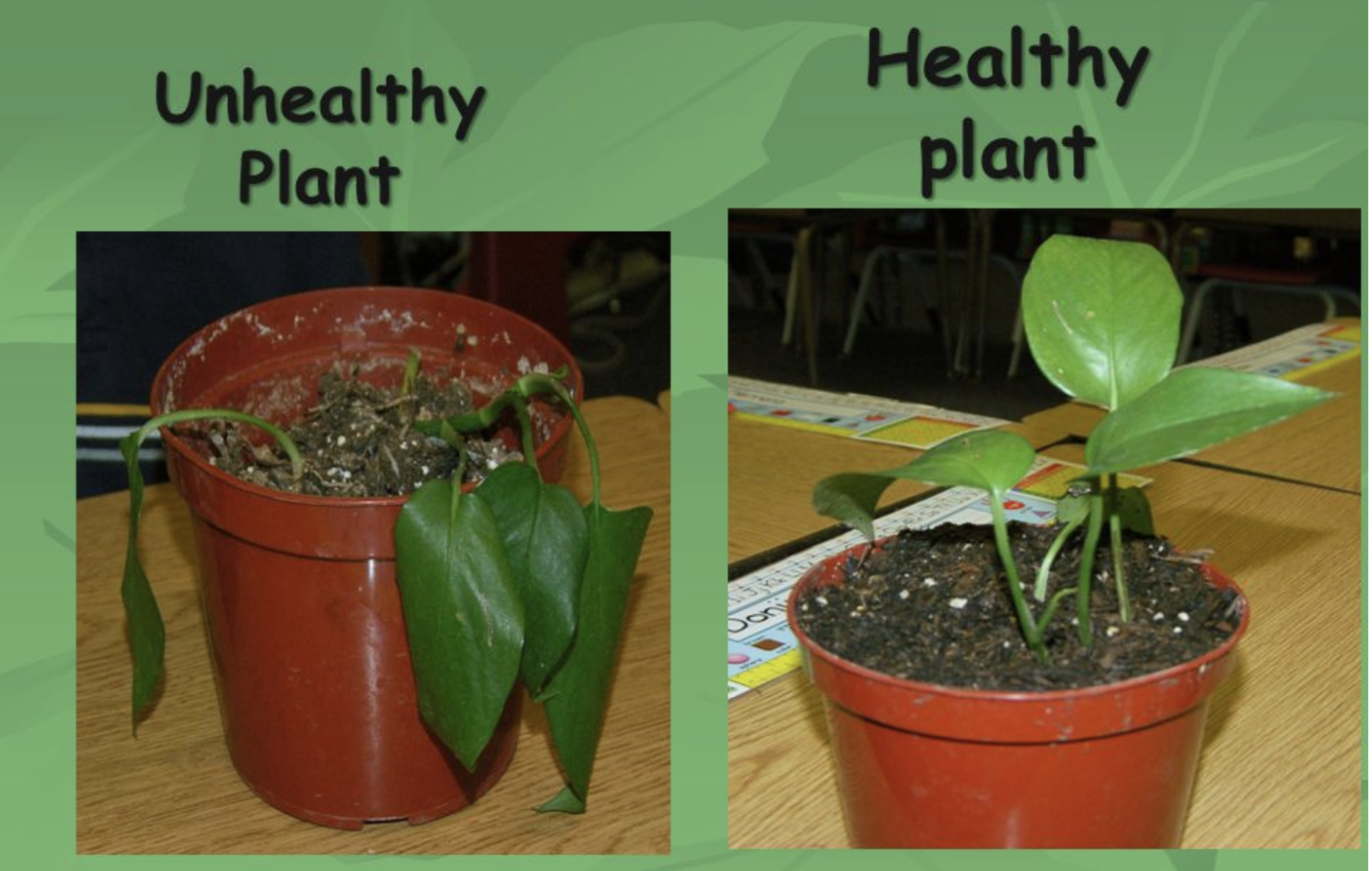
The picture below shows two plants. One is unhealthy (left) and the other is healthy (right).
0
Why do you think the left plant is unhealthy? Explain.
Why do you think the left plant is unhealthy? Explain.
The picture below shows two plants. One is unhealthy (left) and the other is healthy (right).
Why do you think the left plant is unhealthy? Explain.
Putting nutrients back in the soil helps new plants grow! Nitrogen, Phosphorus and Potassium are the main nutrients.
WHAT DOES EACH NUTRIENT DO?
Nitrogen is often called the Builder. It helps plants stay green by building strong stems and healthy green leaves. Nitrogen helps the plants we eat become good for us by adding proteins we need to grow and be strong.
Phosphorus is referred to as the Enforcer. It helps the plant trap and use the sun’s energy to make food (photosynthesis). Plants also need Phosphorus to grow healthy root systems.
Potassium is often called the Protector. Potassium protects our plants against diseases and helps them stay healthy when it is cold or dry. It also helps plants move nutrients and water in the plant to where it’s needed most.
Based on the text to the left, how can a nutrient help plants grow?
Nitrogen helps plants grow by __________.
Phosphorus helps plants grow by __________.
Potassium helps plants grow by __________.
You will use a digital model to demonstrate your understanding of the effects of various parts of the environment on plant growth.
INVESTIGATION QUESTION
Why aren’t the cecropia trees growing and thriving in the soil?
GOAL: Show the effects of six different environments on plants.
DIRECTIONS:
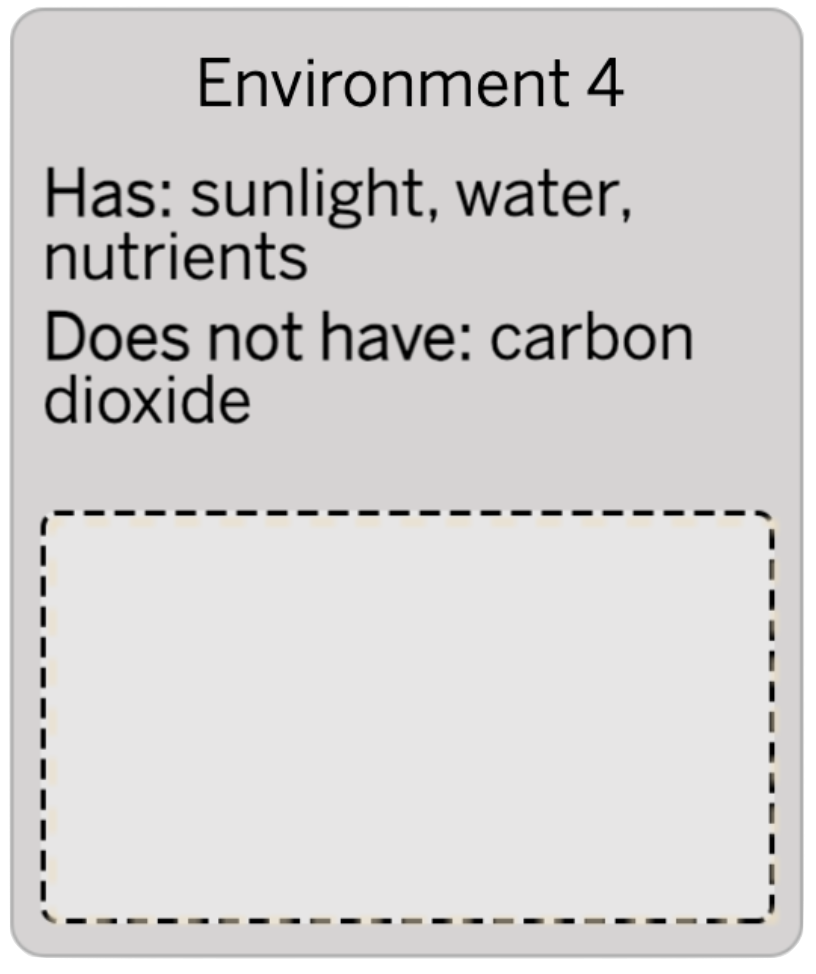
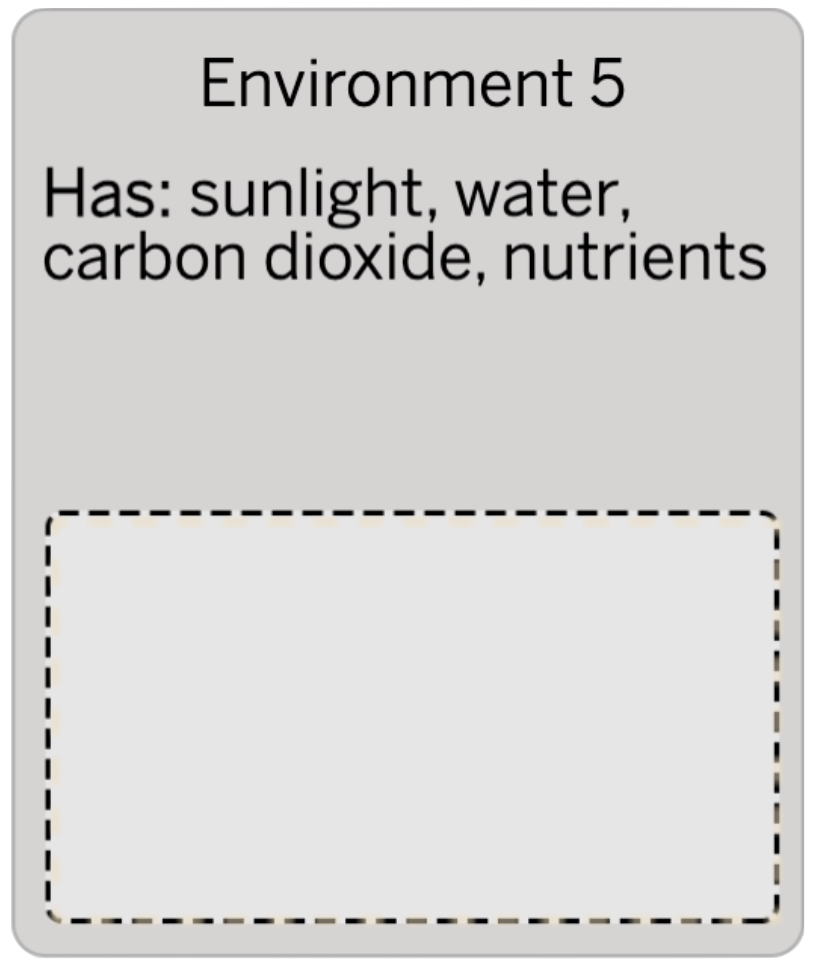
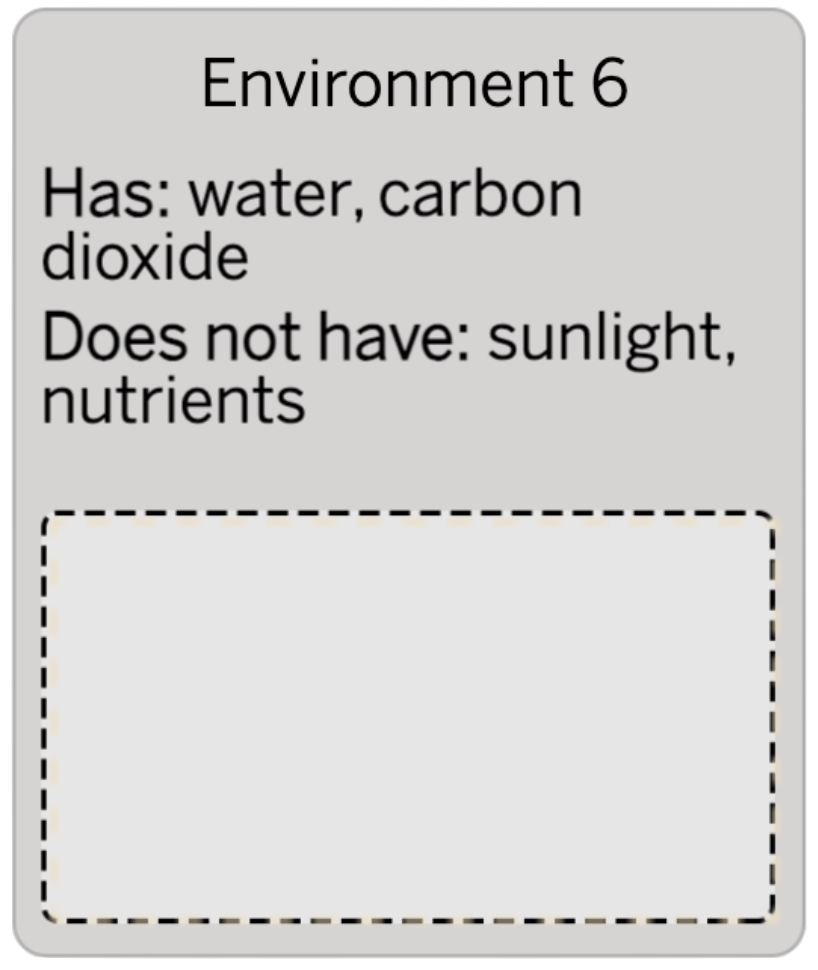
Read the description of each environment.
Decide which picture best shows what the plants in that environment would look like.
In each box - Choose healthy plants, unhealthy plants, or dead plants under each description.
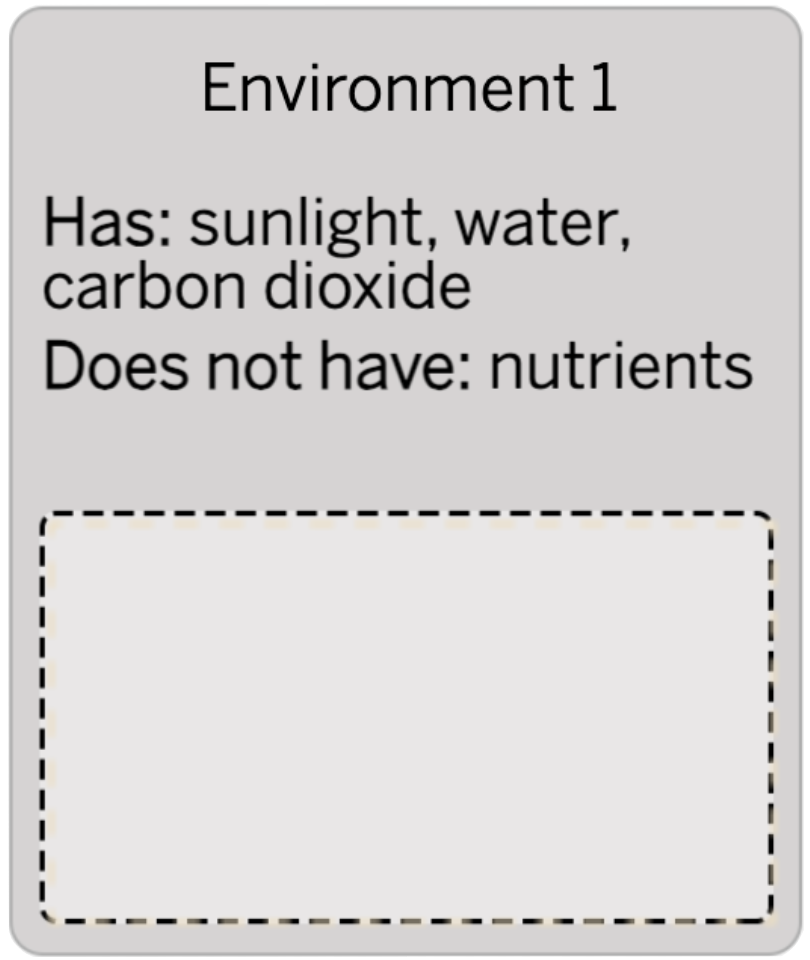
Choose healthy plants, unhealthy plants, or dead plants.
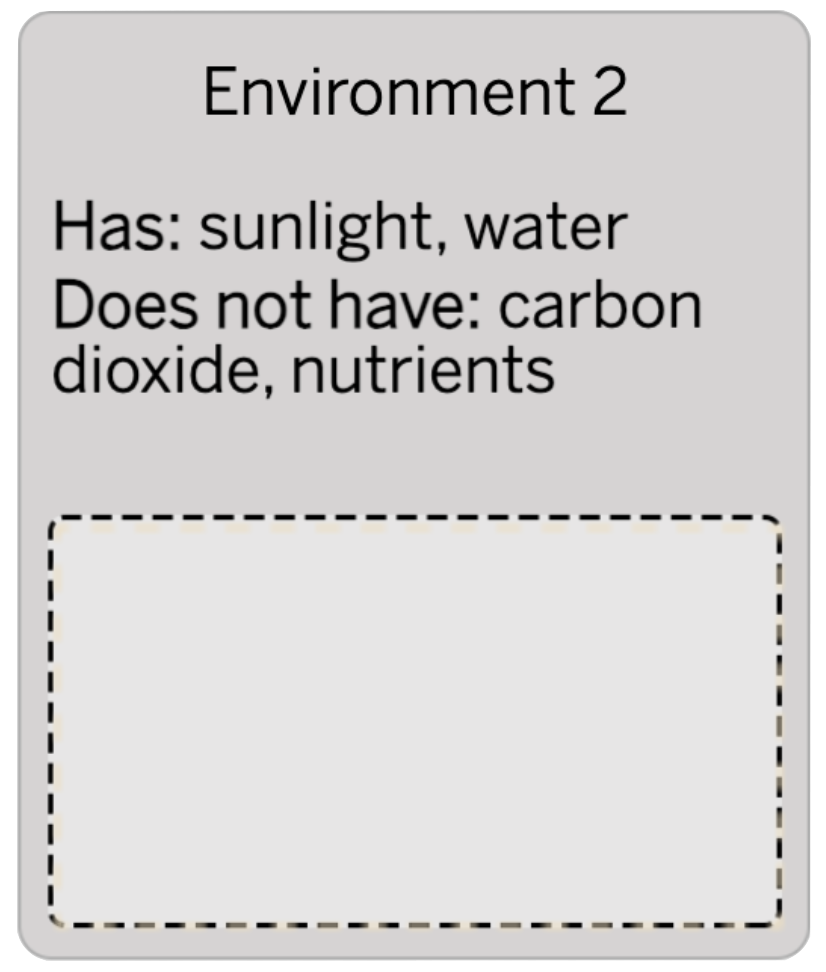
Choose healthy plants, unhealthy plants, or dead plants.
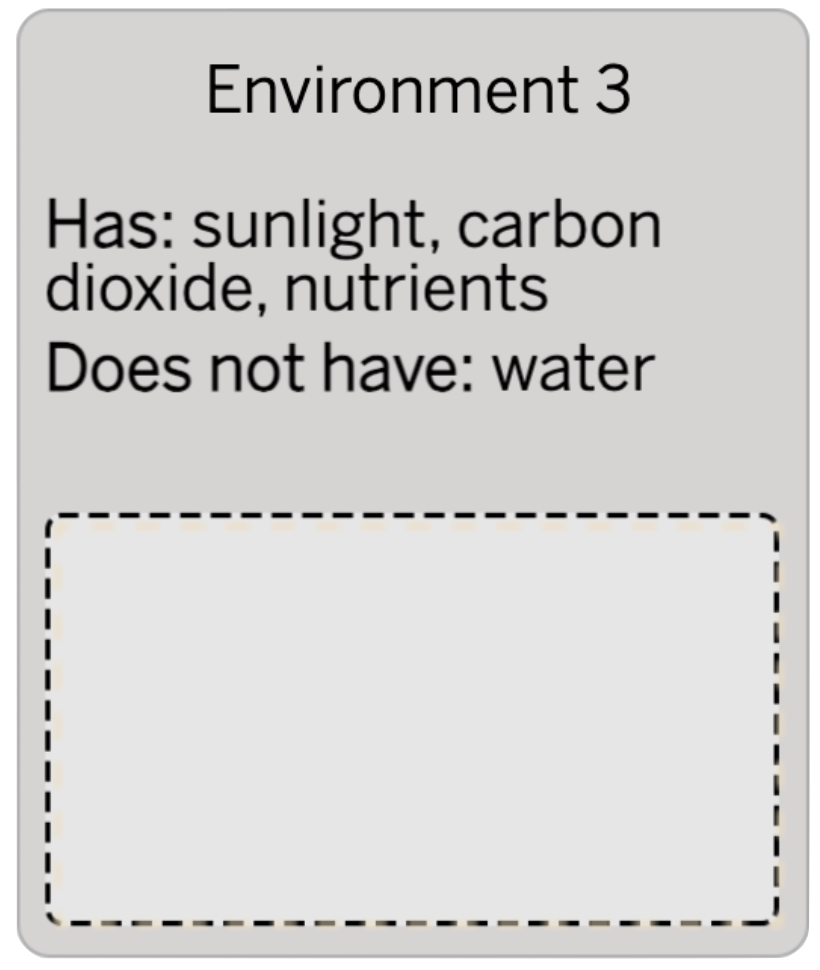
Choose healthy plants, unhealthy plants, or dead plants.
Choose healthy plants, unhealthy plants, or dead plants.
Choose healthy plants, unhealthy plants, or dead plants.
Choose healthy plants, unhealthy plants, or dead plants.
How do you think the rest of the ecosystem might be affected if the plants aren’t growing and thriving?
Based on everything we’ve learned from observing the Ecosystem Restoration Simulation, reading Restoration Case Studies, and our class discussions, why do you think plants need nutrients to grow and thrive?
Let’s read about two real-life ecosystems in order to learn more about how nutrients affect plants.
DIRECTIONS:
Click on the link below to open to your first case study.
As you read, write notes about the role of nutrients in the ecosystem
What are the problems in the ecosystem?
How are nutrients part of the restoration plan?
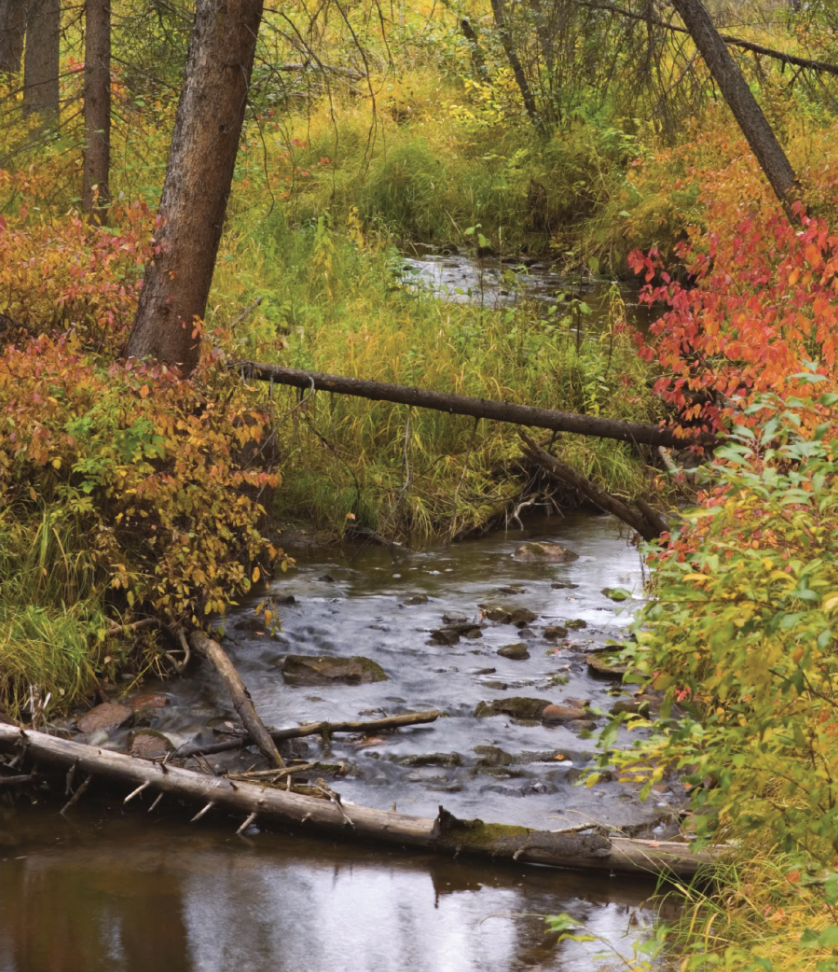
Alberta Forest and Wetlands (pages 12–17)
https://learning.amplify.com/books/9781943228560/#page=14
What are the problems in the ecosystem?
How are nutrients part of the restoration plan?
1. It answers a question with a claim about the natural world.
2. It includes evidence to support the claim. Evidence can be:
Data from the project area.
Ideas from investigations.
Ideas from books.
3. It connects the evidence to the claim by linking different pieces of evidence together to show how they support the claim.
4. It uses scientific language.
5. It ends with a conclusion.
Question: Why isn’t the grass in an area of the African savanna growing and thriving?
Draft of a Scientific Argument
The grass is not growing and thriving because there is not enough water in the soil. Usually, it rains about 50 cm (19.7 inches) in the month of July. This July, it rained 30 cm (7.8 inches). Grass also needs carbon dioxide and sunlight. Another reason the grass is not growing is that it needs carbon dioxide molecules to add to its body matter.
How would you improve this scientific argument? What criteria are missing or not done well?
When returning from a vacation, Mr. Weaver finds over a dozen mushrooms are popping out of the soil in one of his flower pots.
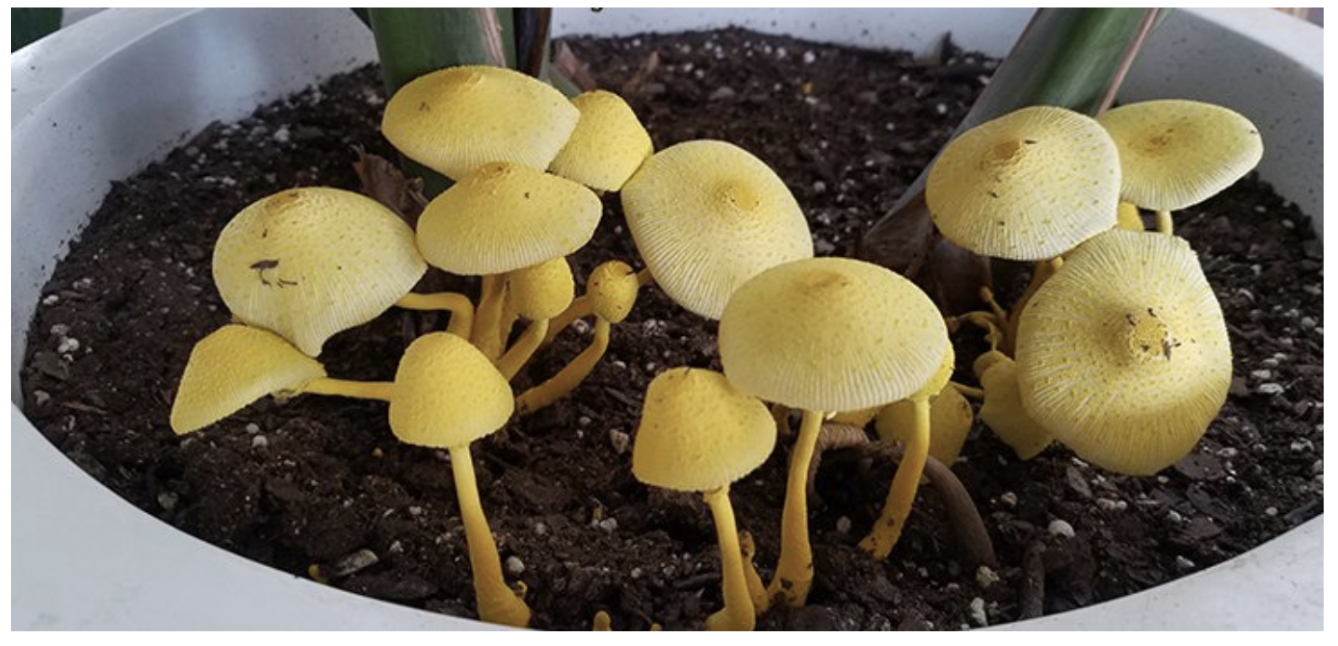
Mr. Weaver thinks “I should rip the mushrooms out, because they will make it hard for the flowers to grow!” Is he right or wrong?
Explain your answer
Explain your answer
Mr. Weaver thinks about leaving the mushrooms in the flower pot.
Does he need to make sure that the mushrooms get enough sun, in order for the mushrooms to stay alive?