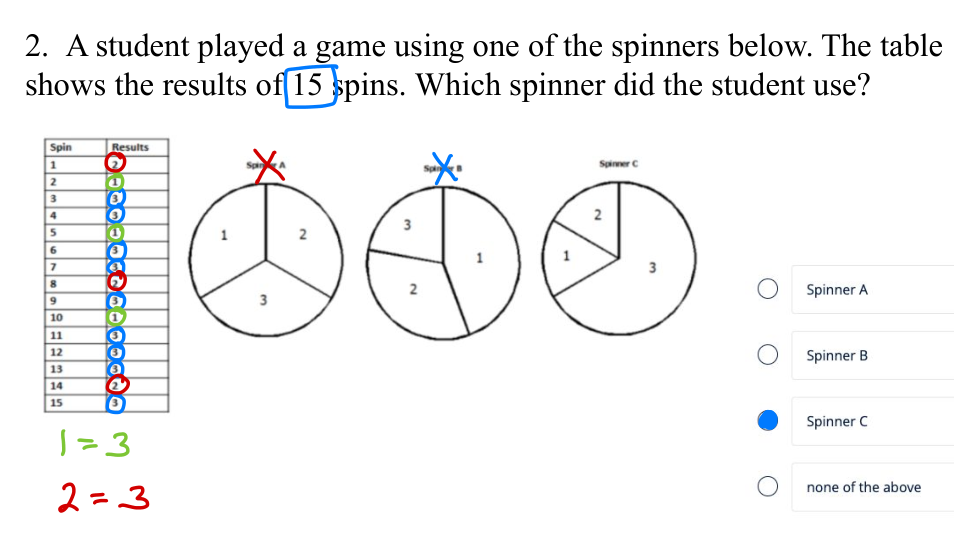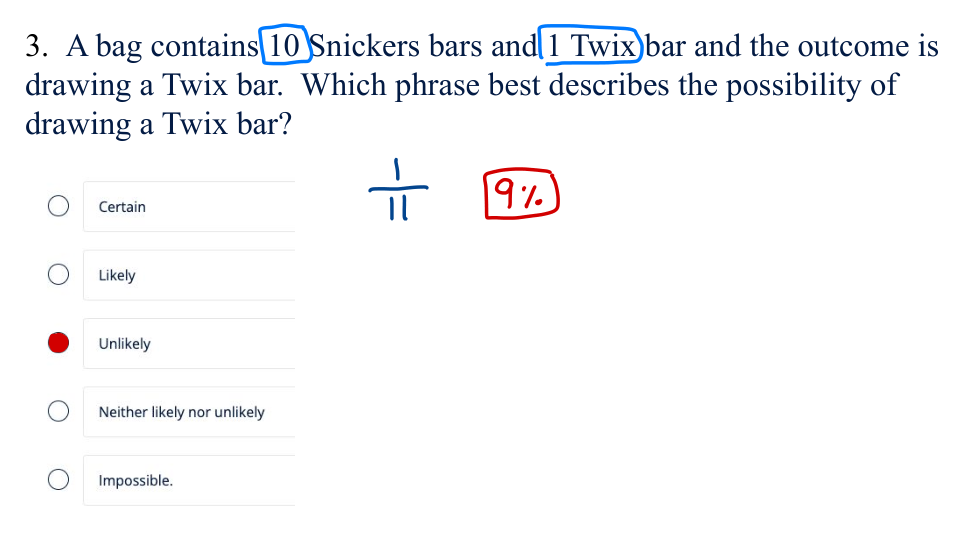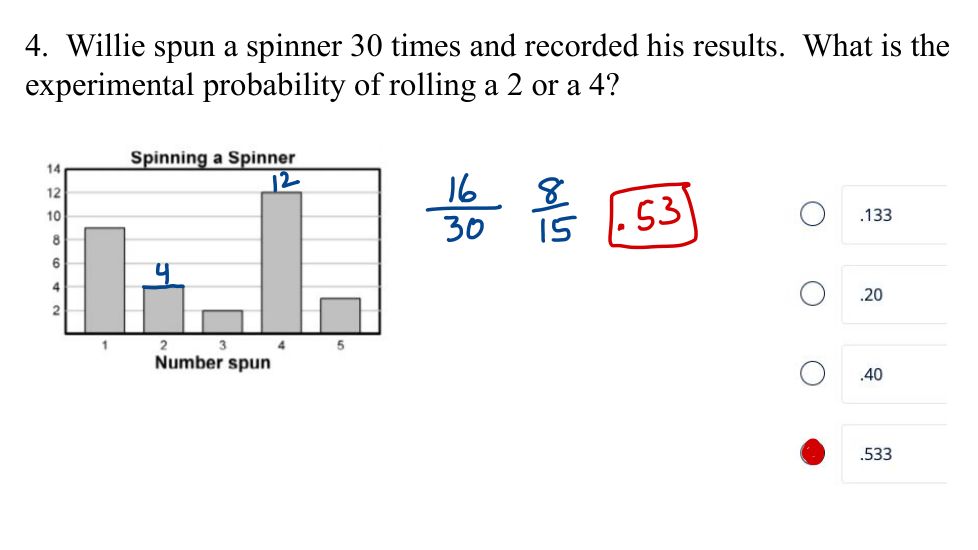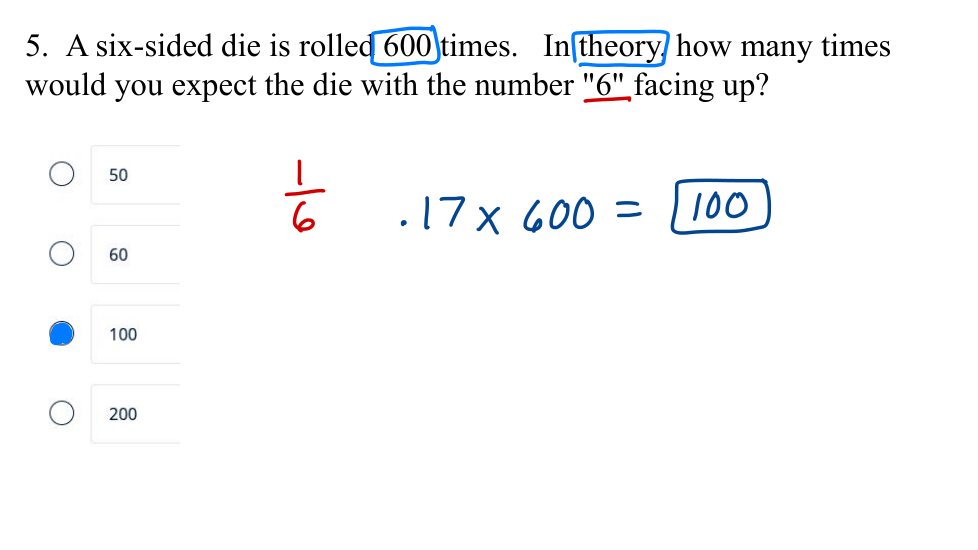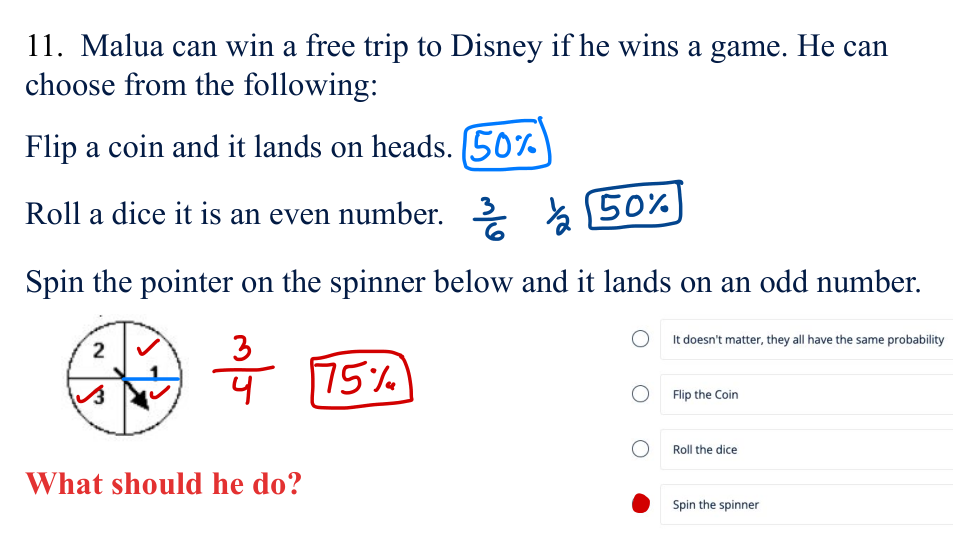
A spinner is divided into five colored sections that are not of equal size: red, blue, green, yellow, and purple. The spinner is spun several times, and the results are recorded below:
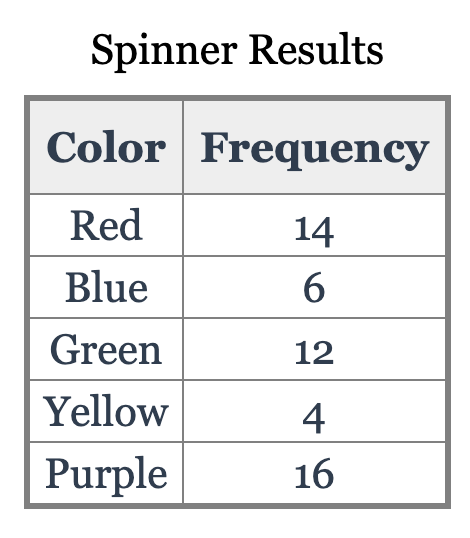
Based on these results, express the probability that the next spin will land on purple as a fraction in simplest form. Write your answer as a simplified fraction.
Megan owns a small business selling bagels. He knows that in the last week 39 customers paid cash, 9 customers used a debit card, and 59 customers used a credit card. Based on these results, express the probability that the next customer will pay with a debit card as a fraction in simplest form. Write your answer as a simplified fraction.
Liam has a bag that contains pineapple chews, cherry chews, and lime chews. He performs an experiment. Liam randomly removes a chew from the bag, records the result, and returns the chew to the bag. Liam performs the experiment 62 times. The results are shown below:
A pineapple chew was selected 58 times.
A cherry chew was selected 2 times.
A lime chew was selected 2 times.
Based on these results, express the probability that the next chew Liam removes from the bag will be cherry chew as a decimal to the nearest hundredth.
A spinner is divided into five colored sections that are not of equal size: red, blue, green, yellow, and purple. The spinner is spun several times, and the results are recorded below:
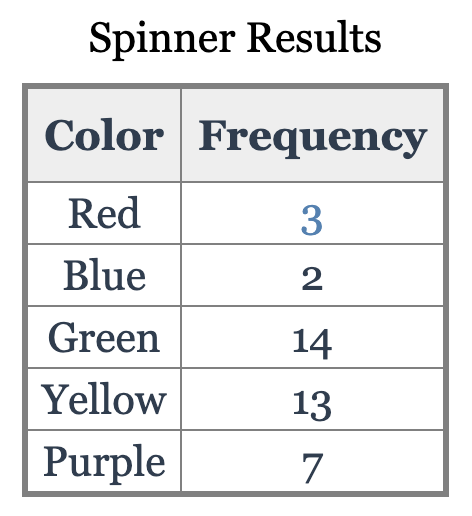
Based on these results, express the probability that the next spin will land on red as a percent to the nearest whole number.
Shandra recorded the grade-level and instrument of everyone in the middle school School of Rock below.
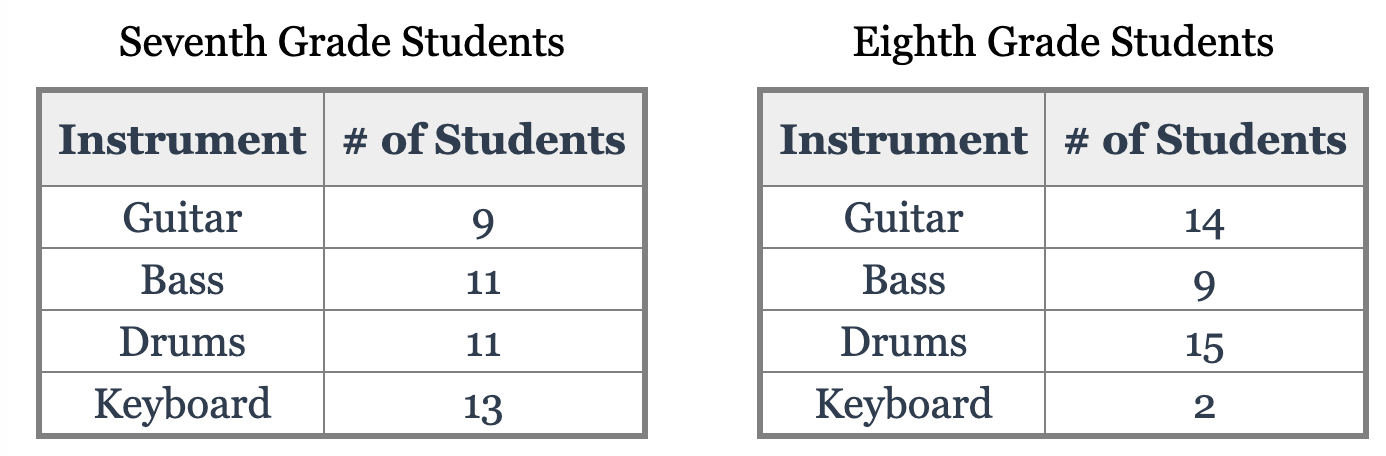
Based on these results, express the probability that a seventh grader chosen at random will play the bass as a percent to the nearest whole number.
Owen owns a small business selling ice-cream. He knows that in the last week 102 customers paid cash, 3 customers used a debit card, and 8 customers used a credit card. Based on these results, express the probability that the next customer will pay with a credit card as a decimal to the nearest hundredth.
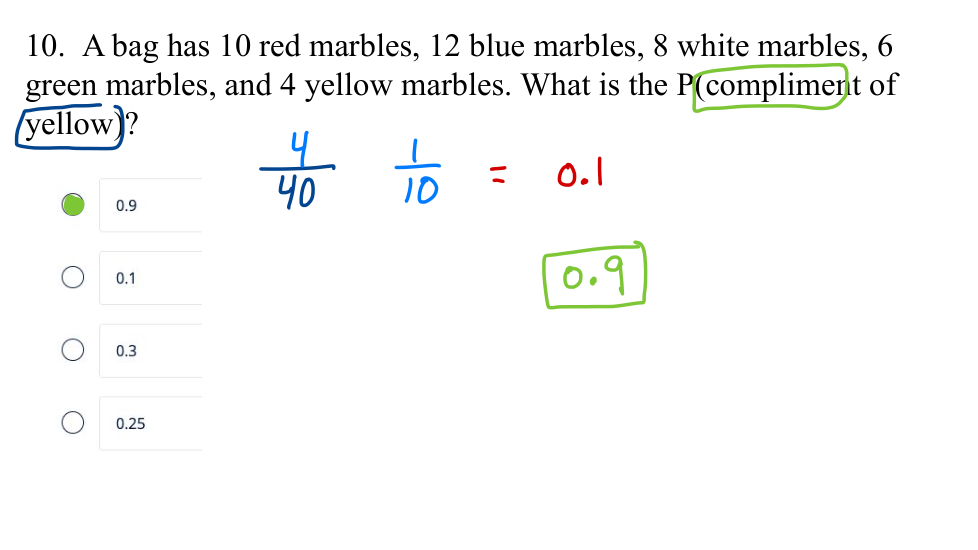
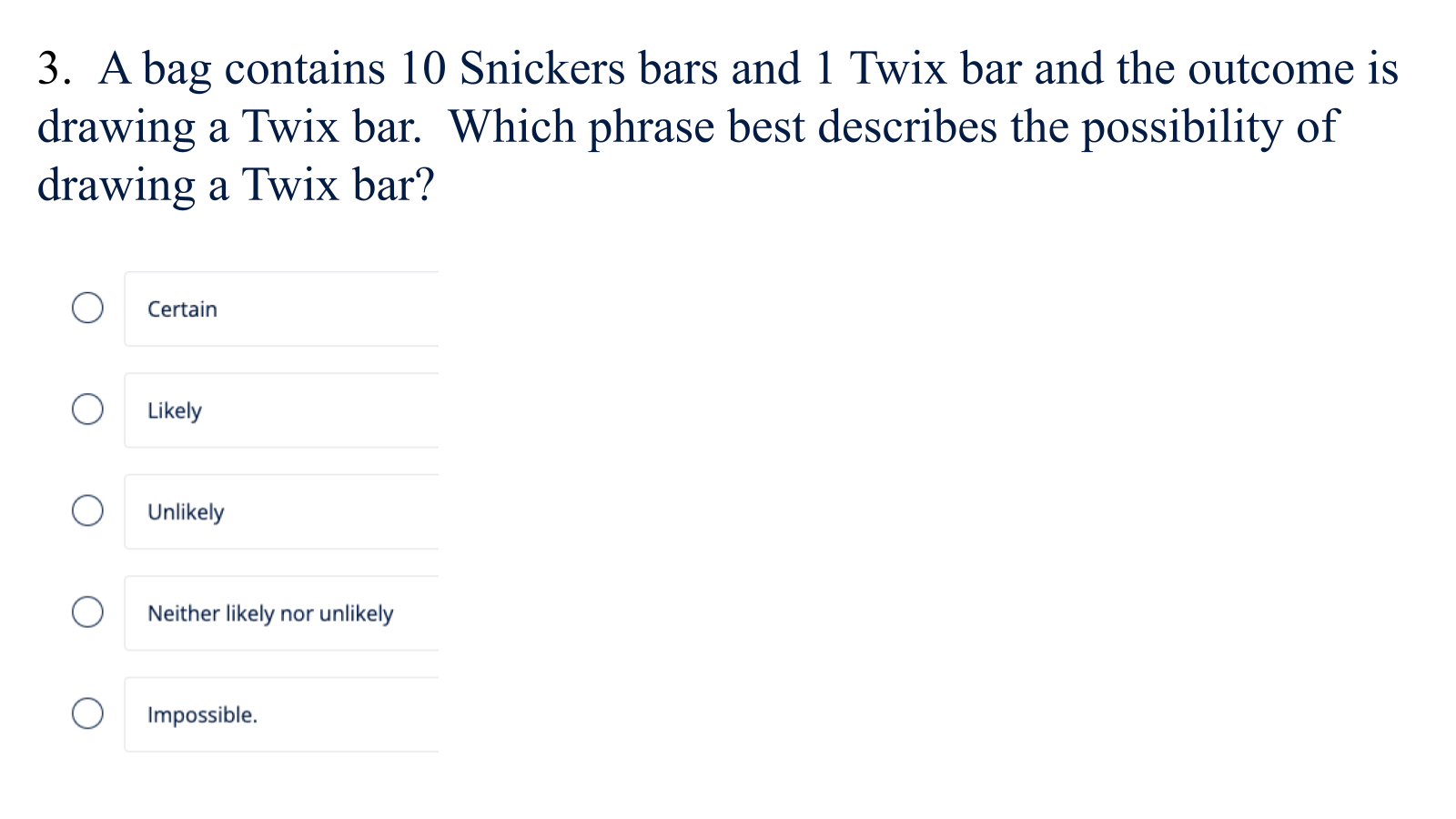
A bag contains 6 blue marbles, 2 yellow marbles, 1 green marble and 3 clear marbles. Which phrase best describes the possibility of drawing a clear marble?
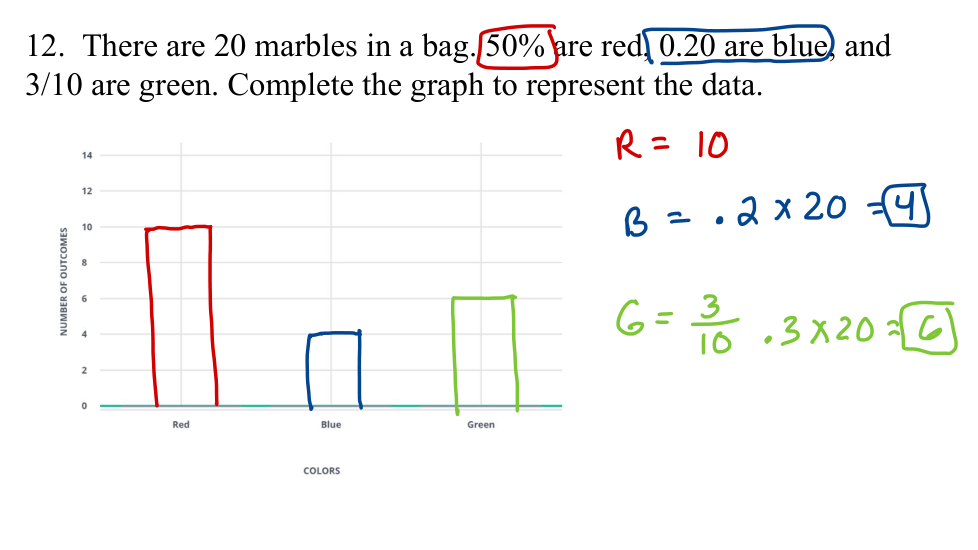
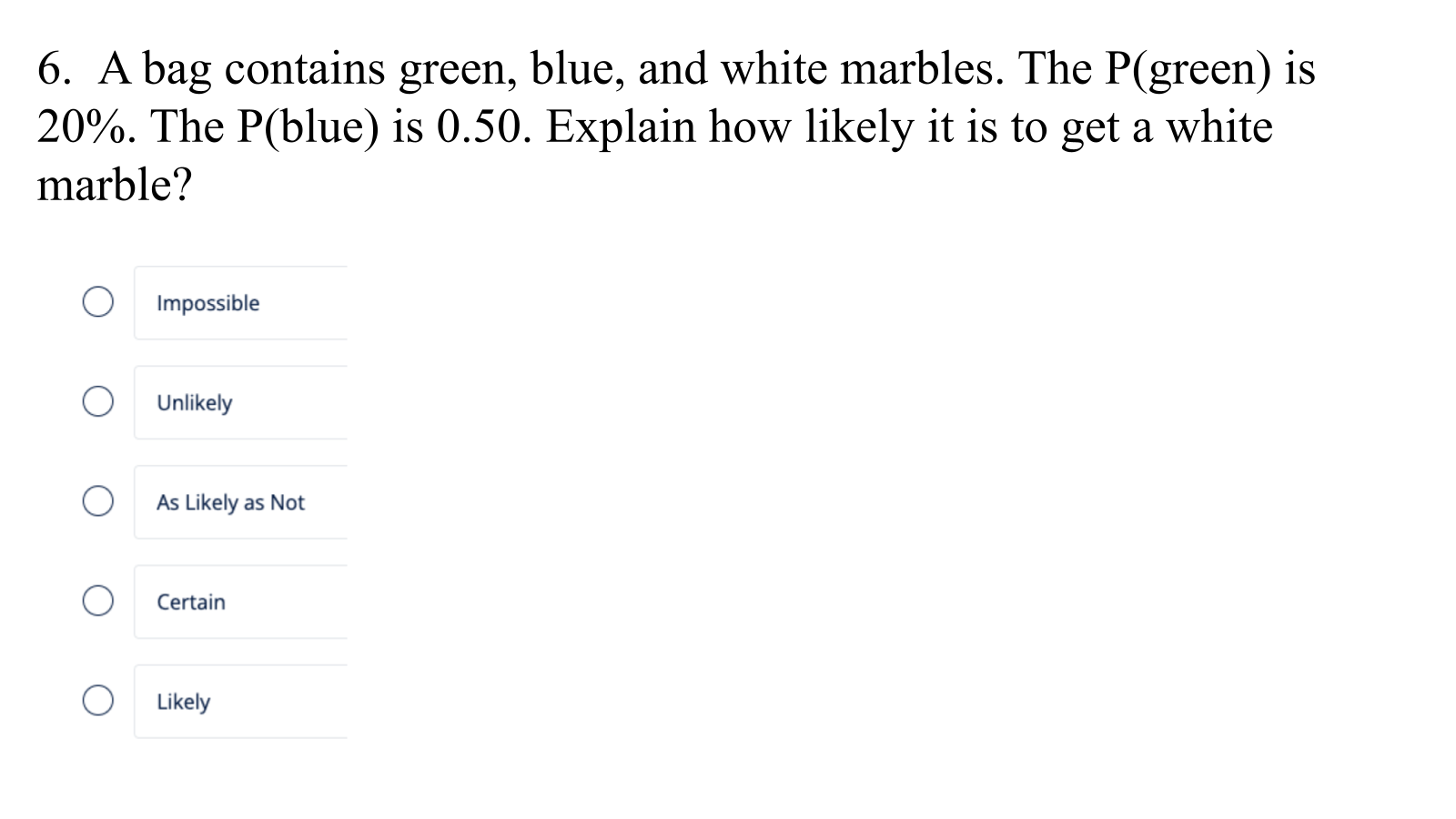
Bob has 30 coins in his bank. In his bank are quarters, dimes and pennies. The probability of randomly choosing a quarter from the bank is 3/5. The probability of randomly choosing a dime is 0.20. How likely is it, in relation to 1, for Bob to randomly choose a penny from his bank?
There are 4 red cards and 8 black cards in a bag. How likely is it that you will randomly draw a blue card?
A bag contain blue, green, yellow, and red marbles. The probability of drawing a yellow marble is 3/20. What is the probability of NOT drawing a yellow marble?
During his first 20 picks from a bag of marbles, Kai chose 8 yellow marbles, 3 green marbles, and 9 blue marbles. Each time he replaces the marble before selecting another. Which percent is closest to the experimental probability that Kai will choose a green marble on his next pick?
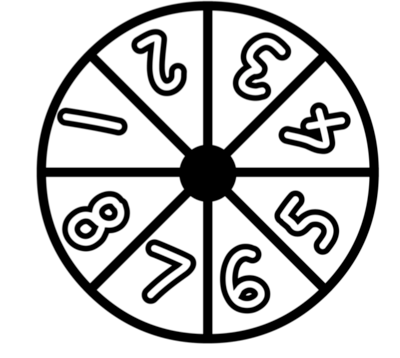
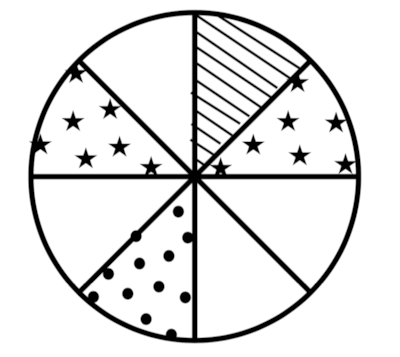
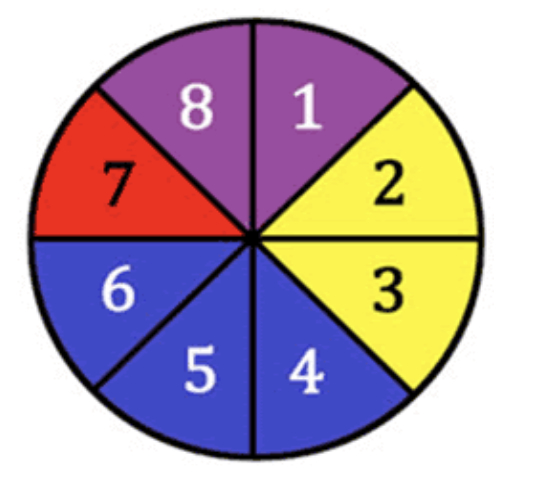
If you spin the spinner 400 times, how many times can you expect to land on a number greater than 4?
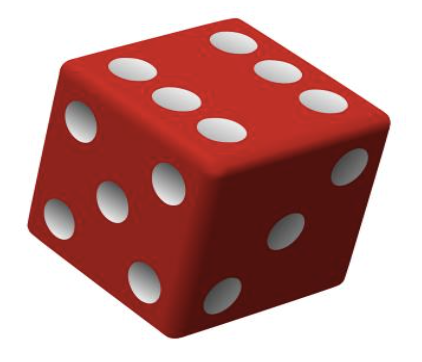
If you roll the number cube 300 times, how many times can you expect to land on a number less than 6?
One morning, boats from all along the Atlantic coast docked at a busy marina. The table below shows where each boat is from.
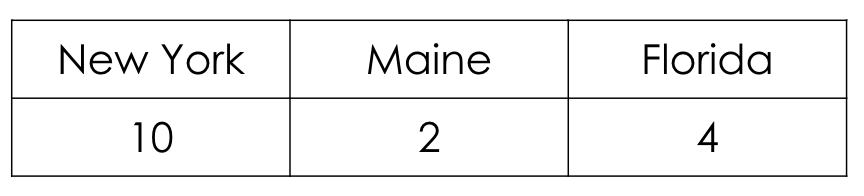
How many of the next 12 boats would you expect to be from Florida?
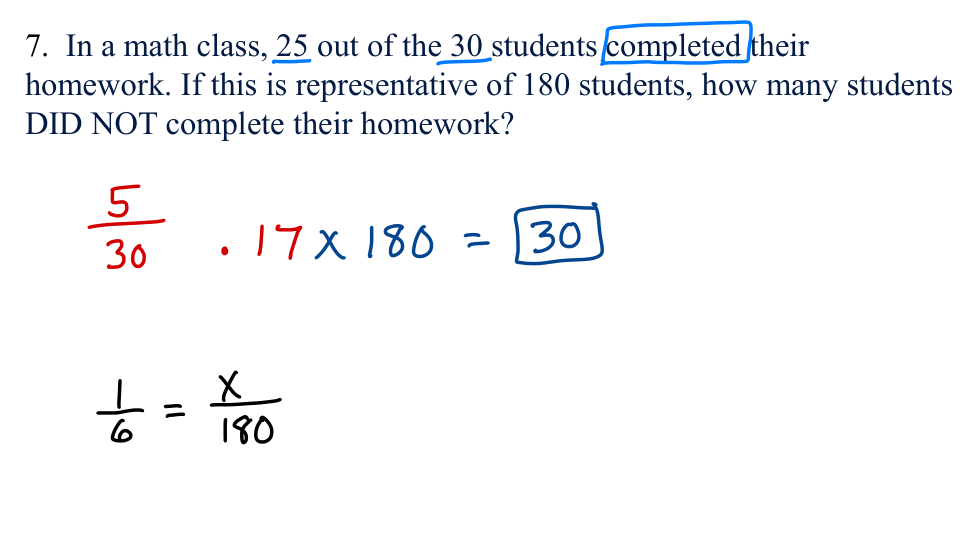
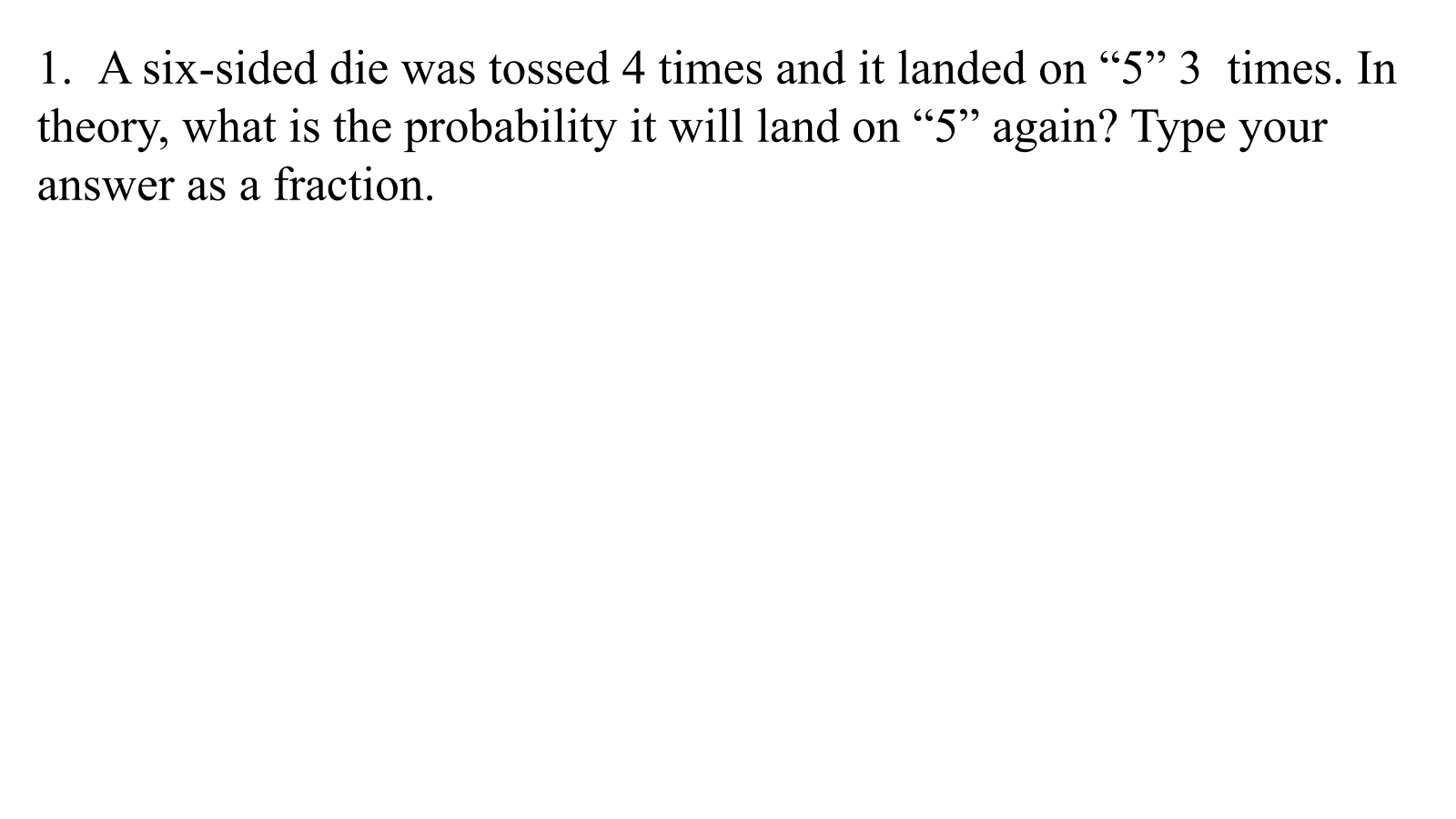
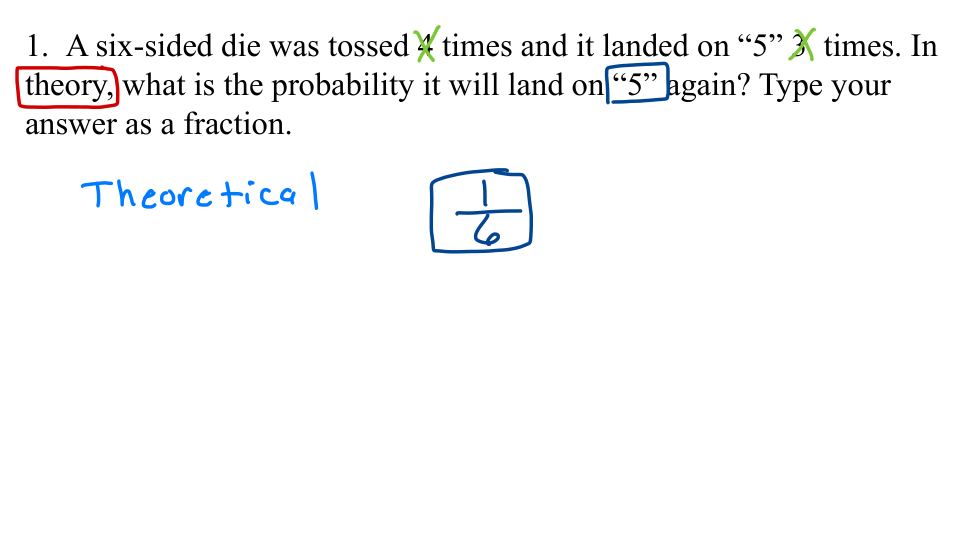
At a glass factory, 3 out of the last 15 vases produced were chipped. Considering this data, how many of the next 10 vases would you expect to be chipped?
A spinner with four colors was used 100 times. The results are shown in the table below.

If the same spinner is spun 20 more times, how many times would you expect it to land on a color that is not blue?
Of the sundaes recently sold at Ice Cream Haven, 10 had sprinkles and 20 did not. Considering this data, how many of the next 774 sundaes sold would you expect to have sprinkles?
Melissa recorded how many shirts of each color were recently sold at her T-shirt stand.

Considering this data, how many of the next 88 shirts sold would you expect to be orange?
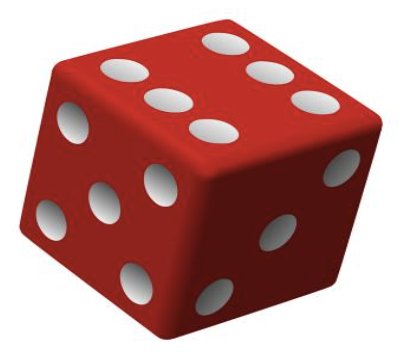
If you roll a fair number cube 120 times, how many times can you expect to land on an even number?
The runners in a charity race get free T-shirts, and the organizers used the table below to keep track of which sizes have been picked up.

Considering this data, how many of the next 138 shirts claimed should you expect to be extra-large?
Of the 14 people who have signed up for a genetics lecture, 7 have brown eyes, 3 have blue eyes, and 4 have green eyes. Considering this data, how many of the next 18 people to sign up would you expect to have brown eyes?
Drag items to the appropriate description.
There are 5 green, 5 white, 5 yellow, and 3 blue marbles in a bag.
Flipping a fair coin
There are six marbles in a bag. Three are green and three are yellow.
Uniform
Non-Uniform
What is the probability of landing on green on this uniform probability model? Write your answer as a decimal.
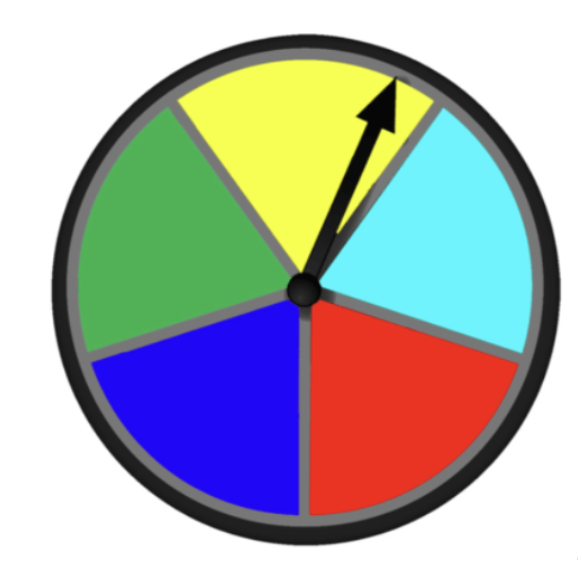
What is the probability of landing on green on this non-uniform probability model? Write your answer as a simplified fraction.
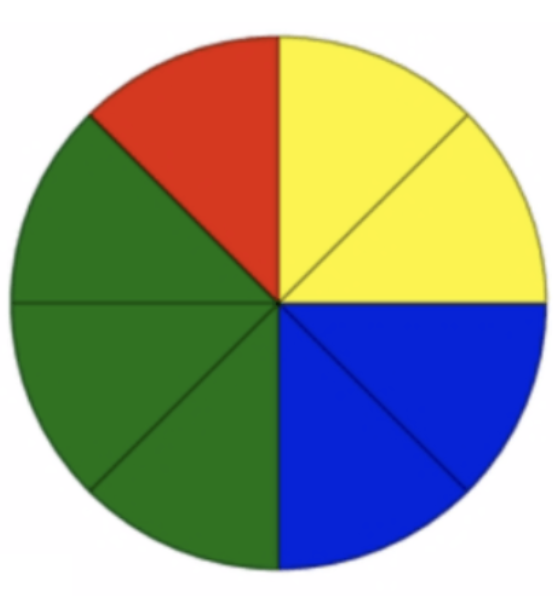
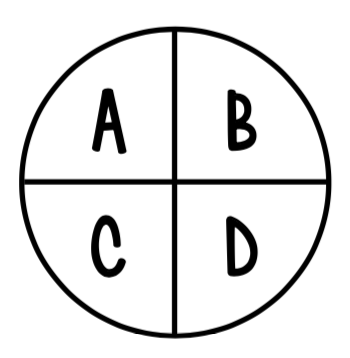
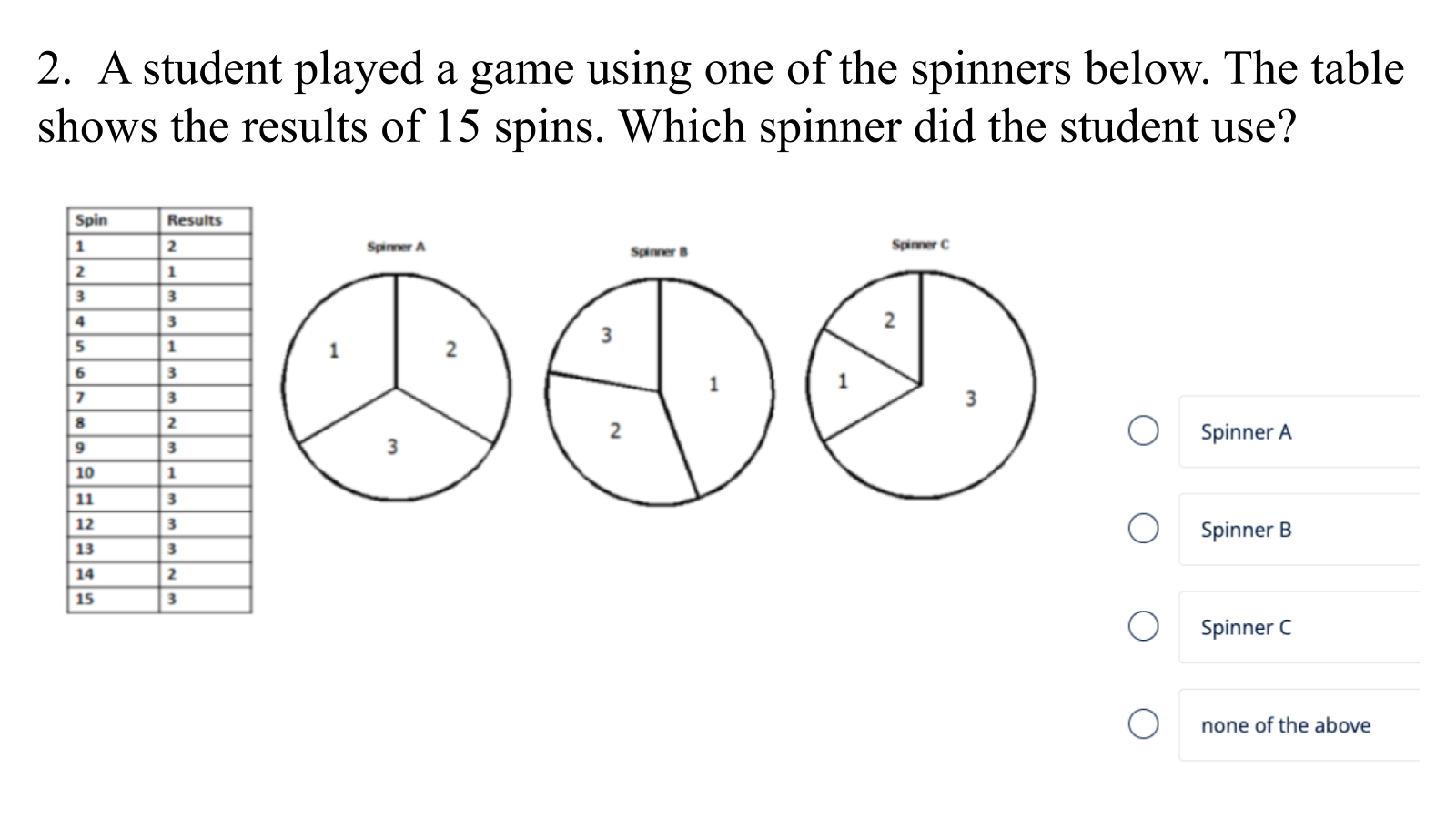
Which number is the spinner least likely to land on?
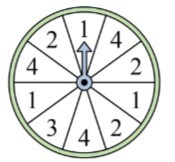
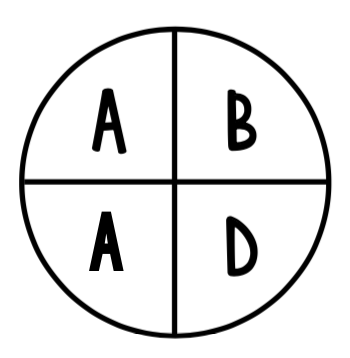
P(not A) Write your answer as a decimal.
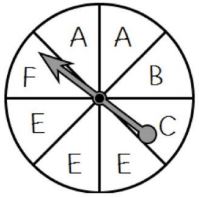
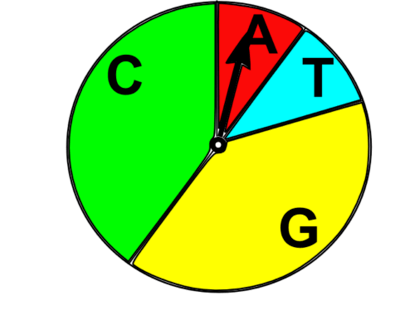
What is the probability of spinning a blue or red? Write your answer as a fraction.
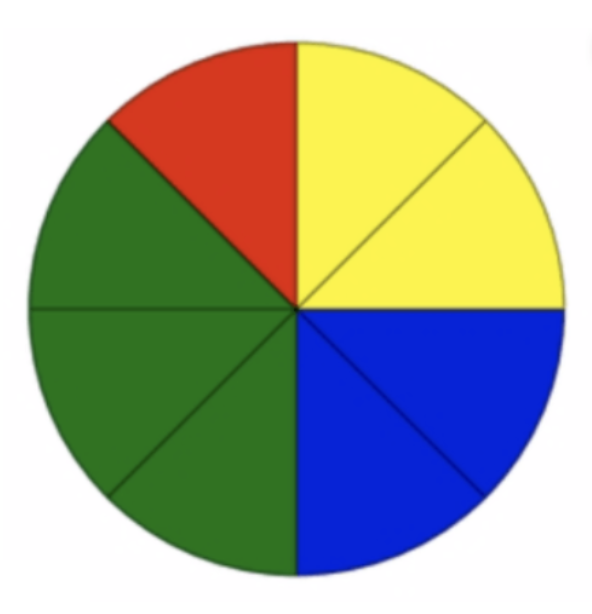
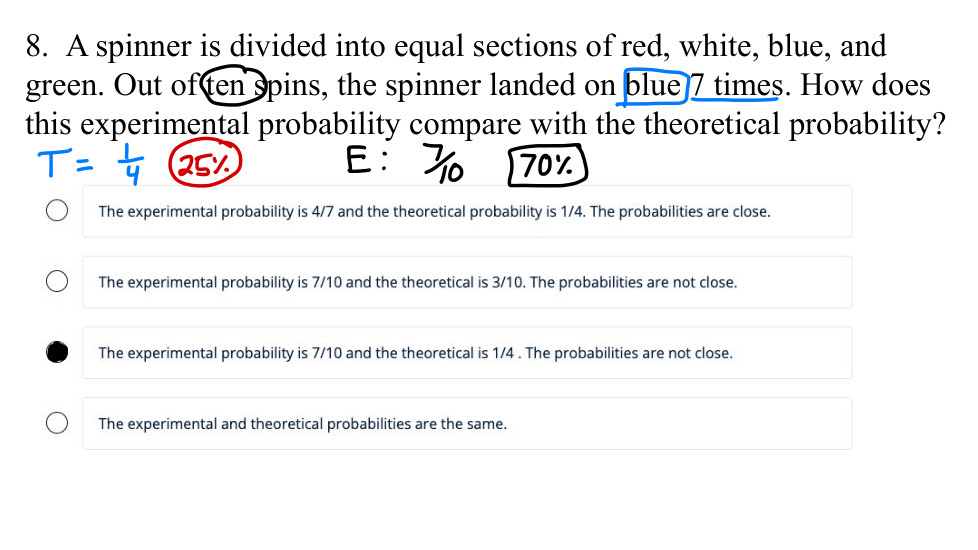
A dice is rolled 50 times. It lands on six 37 times. Compare the theoretical and experimental probabilities of rolling the dice and describe any discrepancies.
Jessica wants to test if a coin is biased. She throws the coin 24 times. The results are shown below. Compare the theoretical and experimental probability of getting heads and describe any discrepancies.

Jessica wants to test if a coin is biased. She throws the coin 24 times. What is the experimental probability of the coin landing on tails? Write your answer as a fraction.

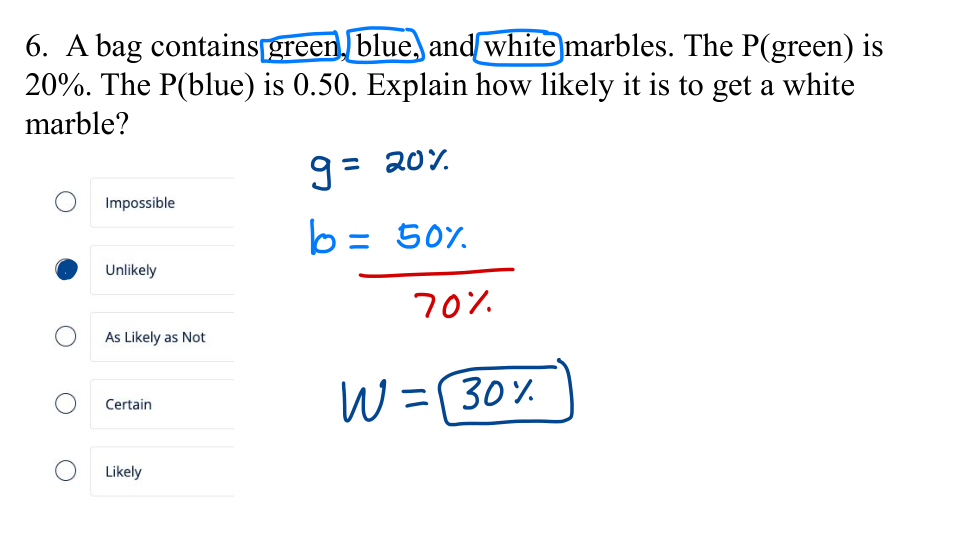
A bag contains 5 quarters, 2 dimes, and 4 pennies. what is the likelihood of picking a quarter?
Ayra can either walk away with $100 or play a game where she must roll a six-sided dice for a chance to win more. If Ayra rolls a 6, she wins $200, but if she rolls anything other than a 6, she walks away with nothing. Should she roll the dice based on how likely, or unlikely, it is to roll a 6?
You are on a game show that has 5 doors that have items hidden behind them. The host offers you $200 guaranteed if you walk away and don't play the game. Two of the doors have $20 behind them, two different doors have $250 behind them, and one door has $500 dollars behind it. Should you play the game based on how likely, or unlikely, you are to win equal or more money than just walking away without playing the game?