Log in
Sign up for FREE
arrow_back
Library
Outcome C1: #6 Circulatory System
By Andrew Wilson
star
star
star
star
star
Share
share
Last updated about 1 year ago
13 questions
Add this activity
1
1
1
1
1
1
1
1
1
1
1
Question 1
1.
What makes up the circulatory system?
The lungs and the digestive tract
The brain
The nerves
The heart, blood, and blood vessels
zoom_in
1
Question 2
2.
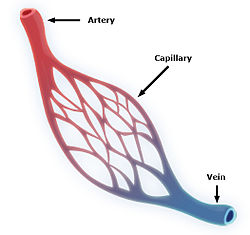
The smallest type of blood vessel is the:
Nerve
Vein
Artery
Capillary
Question 3
3.
The movement or flow of blood around your body is called?
Respiration
Absorption
Digestion
Circulation
Question 4
4.
A blood vessel is called an artery when it...
Transports oxygenated blood to the heart
Contains many valves
Transports blood away from the heart
Transports blood to the heart
Question 5
5.
Arteries, Veins, and capillaries are 3 types of ___?
Cells
Blood Vessels
Organs
Systems
Question 6
6.
Which carries oxygen-poor blood back to the heart?
Veins
Arteries
Capillaries
Platelets
zoom_in
1
Question 7
7.
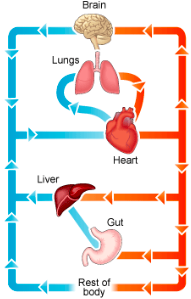
How does the heart work?
It pumps blood first to the lungs, back to the heart and then around the rest of the body.
It pumps blood first to the rest of the body, back to the lungs and then to the heart.
It pumps blood around the rest of the body, back to the heart and then to the lungs.
Question 8
8.
What are the functions of the circulatory system?
Carries waste away from our cells
Helps regulate body temperature
Delivers needed substances to the cells
Question 9
9.
Which part of the blood carries oxygen?
Red blood cells
White blood cells
Platelets
Plasma
Question 10
10.
Which part of the blood protects the body from disease?
Red blood cells
White blood cells
Platelets
Plasma
Question 11
11.
The heart has ___ chambers
1
2
3
4
Question 12
12.
Which tool is useful for examining the heart?
Electrocardiogram (EKG)
CAT Scan
EEG
X-Ray
Question 13
13.
Which of the following tools and their functions are matched CORRECTLY.
EEG: Shows brain electrical activity
CAT Scan: Shows damage to only the bones.
Blood Pressure Monitor: Takes the pressure your blood puts on your veins
X-Ray: Allows doctors to see damage in tissue and bones
EKG: Used to monitor electrical activity of the heart
Endoscope: Used to see up your butt