Log in
Sign up for FREE
arrow_back
Library

Unit 6 Test

star
star
star
star
star
Last updated about 2 years ago
25 questions
2
SSUSH16.b
1
SSUSH16.e
1
SSUSH16.d
1
SSUSH16.b
1
SSUSH15.a
1
SSUSH15.b
1
SSUSH16.a
1
SSUSH15.a
1
SSUSH15.b
1
SSUSH15.c
1
SSUSH16.b
1
SSUSH16.d
1
SSUSH15.b
1
SSUSH16.a
1
SSUSH16.c
1
SSUSH16.e
1
SSUSH16.c
1
SSUSH15.b
1
SSUSH15.a
1
SSUSH16.b
1
SSUSH15.c
1
SSUSH16.a
1
SSUSH15.a
1
SSUSH16.e
1
SSUSH16.d
Question 1
1.
Complete the paragraph by selecting the correct term or phrase from each drop-down menu.

In the early 1900s, many people in the United States were concerned that drinking alcoholic beverages was causing many problems in society. This concern led to the passage of the __________ Amendment. An unintended effect of the enactment of this amendment was an increase in __________.
Question 2
2.

Question 3
3.

Question 4
4.

Question 5
5.

Question 6
6.

Question 7
7.

Question 8
8.

Question 9
9.

Question 10
10.

Question 11
11.

Question 12
12.

Question 13
13.

Question 14
14.

Question 15
15.

Question 16
16.

Question 17
17.

Question 18
18.

Question 19
19.

Question 20
20.

Question 21
21.

Question 22
22.

Question 23
23.

Question 24
24.

Question 25
25.

Which term BEST reflects the cultural, social, intellectual, and artistic accomplishments of African-Americans/Blacks in the 1920s to mid-1930s?
the NAACP
the Harlem Renaissance
the Great Migration
the Great Society
Which of these was an impact of new technologies, such as the radio and movies, combined with the growth of cities?
a theory of mass demonstrations
the efficiency of mass production
the rise of mass culture
a trend toward mass migration
Which amendment to the US Constitution guaranteed women the right to vote in 1920?
Nineteenth
Seventeenth
Eighteenth
Twentieth
The policy that kept the US out of World War I for three years was called what?
the alliance system
the convoy system
neutrality
nationalism
What role did the federal government play in the economy during World War I?
The government stripped the corporate world of its power.
The government gave industries more economic freedom.
The government lowered taxes to promote economic growth.
The government created wartime boards to regulate production of goods.
Which act, passed in 1924, was a reaction to the growing mistrust of immigrants to the United States and set limits on the number of people legally allowed into the county?
Palmer Raid Act
Immigration Limitation Act
National Origins Act
Anti-Communist Act
Use the diagram to answer the question.
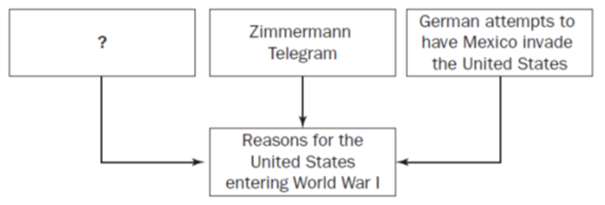


Which description correctly completes the diagram?
sunken American battle ships
destroyed American skyscrapers
unrestricted submarine warfare
exploded nuclear weapons
Use the quote to answer the question.

“They [the government / the elite] have always taught and trained you to believe it to be your patriotic duty to go to war and to have yourselves slaughtered at their command. But in all the history of the world you, the people, have never had a voice in declaring war, and strange as it certainly appears, no war by any nation in any age has ever been declared by the people.”

The quote was most likely given in a speech by which of the following?
Teddy Roosevelt
Woodrow Wilson
Warren G. Harding
Eugene Debs
Use the timeline to answer the question.
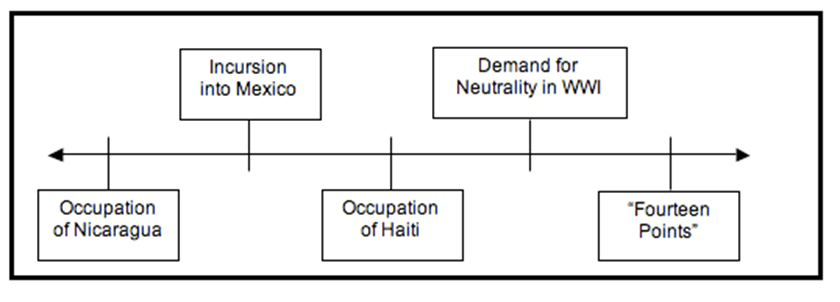


These events show the foreign policy issues of which US president?
Calvin Coolidge
William Taft
Woodrow Wilson
Teddy Roosevelt
Which of the following contributed to the passage of the Nineteenth Amendment?
anti-German sentiment leading to a boycott of beer
women filling jobs in factories as men went off to war
the assassination of President Wilson
Progressive ideas on the direct election of US senators
Automobiles, radio, and motion pictures affected American life in the 1920s because they
were generally too expensive for working-class people.
had little impact on traditional lifestyles and values.
helped create a national culture.
were all less popular than had been anticipated.
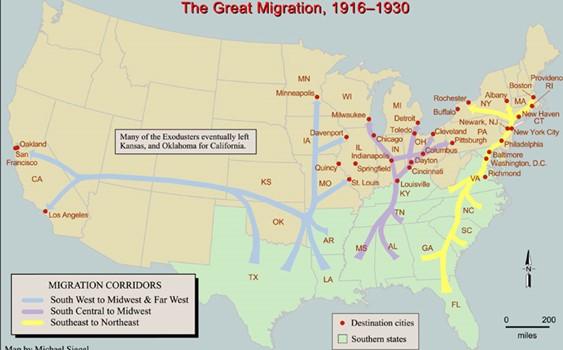
Use the map to answer the question.


The map above BEST depicts the migration routes of which of the following?
African-American sharecroppers to northern industrial cities
World War I soldiers from their homes to training facilities
White former plantation owners to Union states after the Civil War
“snowbirds” from their winter vacation spots back to their hometowns
The Red Scare of the 1920s in the United States was a result of which of the following?
the outbreak of the Spanish Influenza among soldiers that killed millions during World War I
the close proximity of German submarines to the East Coast during World War I
the Bolshevik revolution that created the Soviet Union and called for a worldwide revolution against capitalism
Congress’s refusal to join the League of Nation
Use the graphs to answer the question.

Cost of Model T Ford
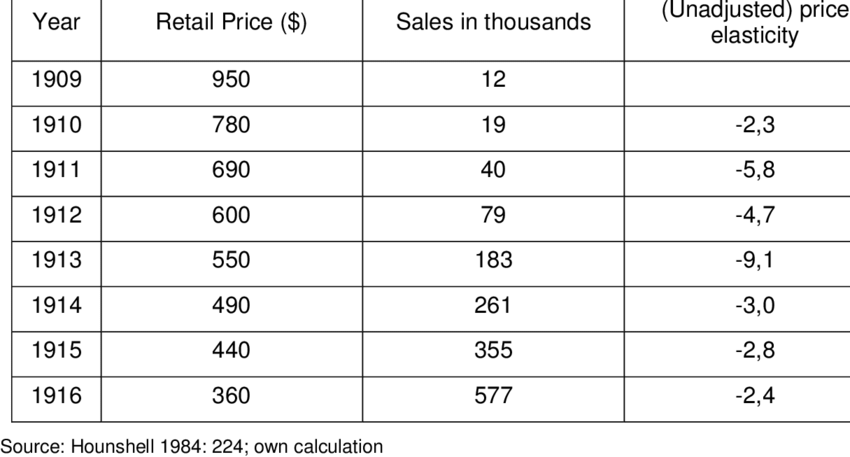
Henry Ford’s ability to get the cost of his Model T down from its original cost of $950 to just $280 by the 1920s can be attributed to
a decline in the production of Chevrolet automobiles after World War I.
his willingness to hire employees of all races and backgrounds.
an effective use of the assembly line to mass produce his automobiles.
rapid deflation faced by the American economy.
Which statement BEST describes the Harlem Renaissance?
The era gave rise to Langston Hughes, Louis Armstrong, and the Cotton Club.
Poverty and starvation crippled the New York borough.
The era gave rise to F. Scott Fitzgerald, flappers, and speakeasies.
Jackie Robinson broke the color barrier in Major League Baseball.
Use the picture to answer the question.
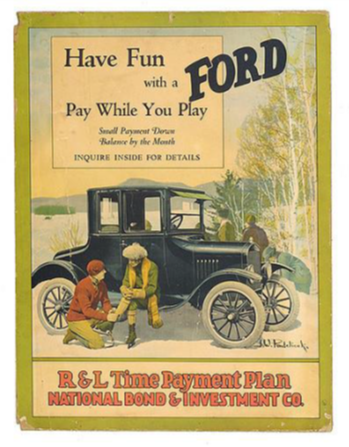

This advertisement is typical of what aspects that emerged in American culture during the era between World War I and the Great Depression?
the president’s New Deal with the American people
anti-immigration sentiment and the KKK
poverty and homelessness
mass communication and consumerism
To help finance World War I, the US government raised taxes, created war boards to oversee production, and
sold Liberty Bonds to American citizens.
borrowed money from Canada.
sold submarines to Germany.
asked for volunteer soldiers who would fight for free.
Which of these BEST describes the events leading up the United States’ involvement in World War I?
American citizens overwhelmingly wanted to join the war in Europe from its start in 1914.
The government took part in military operations in Europe before 1917.
The government tried to gain support for entering the war from the very beginning of the war.
American citizens wanted to remain neutral until a number of events swayed public opinion against Germany.
The Seneca Falls Convention in 1848 began the movement that ultimately led to which of the following?
the reemergence of the Ku Klux Klan
an amendment abolishing slavery
an amendment granting women’s suffrage
an amendment banning alcohol
President Wilson’s Fourteen Points were intended to do which of the following?
redistribute Germany’s colonies among the Allied nations
make the United States, Great Britain, and France into leading world powers
punish Germany for causing World War I
prevent future international tensions from leading to war
Growing fear of immigration led to the increase of which organization’s membership in the 1920s?
Socialist Party
NAACP
Ku Klux Klan
Democratic Party
Use the excerpt to answer the question.
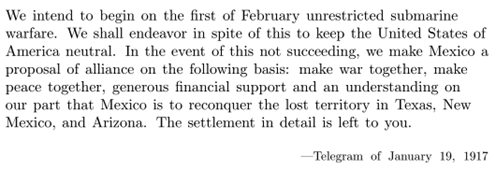

This telegram was part of an effort to
bring Mexico into the war on the side of Great Britain and France.
enlist Mexican support for Germany if the United Stated entered World War I.
convince several states to secede from the Unites States.
form an alliance between Germany and the United States.
Which of the following is LEAST associated with the Harlem Renaissance and African-American culture in the 1920s?
Louis Armstrong
WEB Dubois
Charles Lindberg
Langston Hughes
The 1920s brought about many new elements of what we consider American culture; which of the following was NOT a part of this new culture?
a progressive government focused on regulating business
an acceptance that debt is a part of the American standard of living
more leisure time for entertainment like movies, baseball games, and vacations
an increase in commercial goods like washing machines and toasters