Log in
Sign up for FREE
arrow_back
Library

4/3 - Warmup (SB-D4)

star
star
star
star
star
Last updated almost 2 years ago
5 questions
1
5.7.A
1
5.7.A
1
5.6.B
1
5.7.A
1
5.7.A
Question 1
1.

Draggable itemarrow_right_altCorresponding Item
arrow_right_alt
arrow_right_alt
arrow_right_alt
arrow_right_alt
Question 2
2.

Question 3
3.
The image shows dead plants and animals under a body of water.
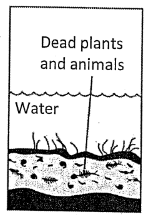

What type of fossil fuels could potentially form from this environment AND what other processes would need to occur to form the fossil fuel(s)?

The type of fossil fuels created under water are __________. The processes needed to produce these fossil fuels include the __________ of sediment that leads to the __________ of different types of sediments. __________ then occurs which produces heat and pressure. Over millions of years, __________ then occurs which cements all the layers together, producing fossil fuels.
Question 4
4.

Question 5
5.

Match the titles on the left to the correct definition on the right.
Renewable resources
A resource that can be replaced in a long time (millions of years)
Fossil fuels
A resource that can be replaced in a short time
Sedimentary rock
A nonrenewable resource formed from the remains of ancient plants and animals using heat, time, and pressure
Nonrenewable resources
Formed when layers of sediment are compacted and cemented together
Which of the following is NOT a nonrenewable resource?
Petroleum
Coal
Solar energy
Natural gas
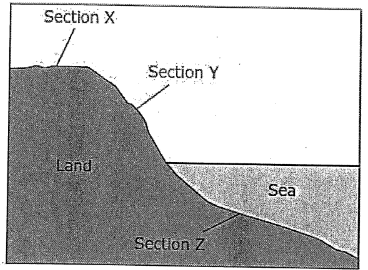
A diagram of different sections of land is shown.


Which action is most likely happening in Section Y in the diagram?
Wind and rain compacting rock into larger pieces
Water carrying rocky material to a new location
Chemicals in water gluing sediments to each other
Pressure causing layers of sediment to form over time
The diagram below shows the sequence of the processes that turn solid rock into sandstone.


Which two processes best complete this diagram?
Melting and cooling
Erosion and compaction
Compaction and cementation
Evaporation and dissolving
