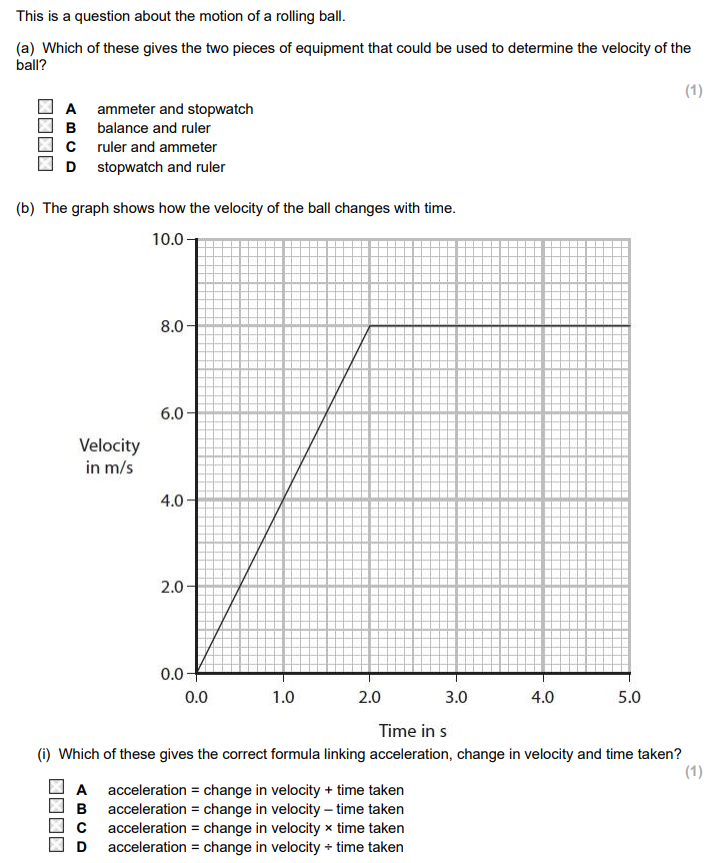
1
Which of these gives the two pieces of equipment that could be used to determine the velocity of the ball?
Which of these gives the two pieces of equipment that could be used to determine the velocity of the ball?
1
Which of these gives the two pieces of equipment that could be used to determine the velocity of the ball?
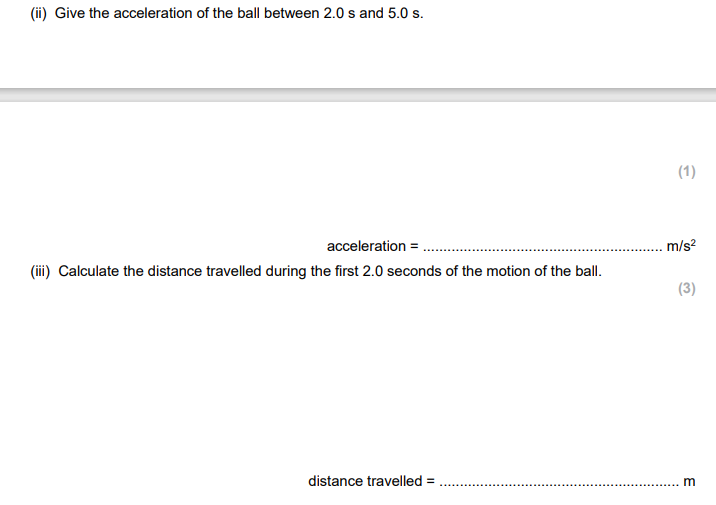
Give the acceleration of the ball between 2.0 s and 5.0 s
Calculate the distance travelled during the first 2.0 seconds of the motion of the ball.
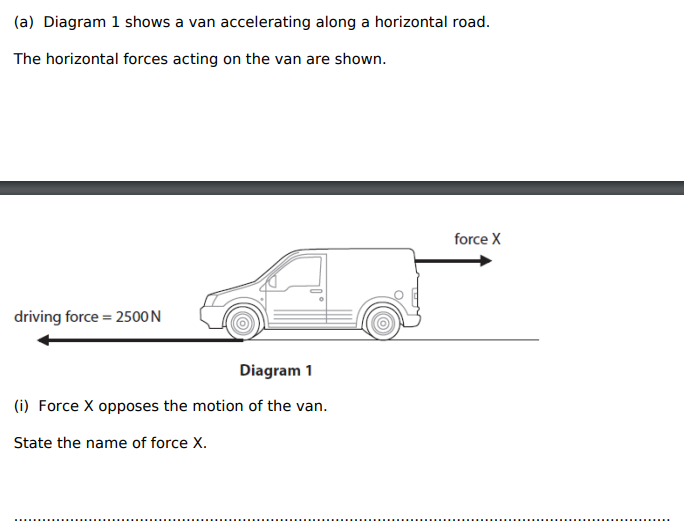
Force X opposes the motion of the van. State the name of force X
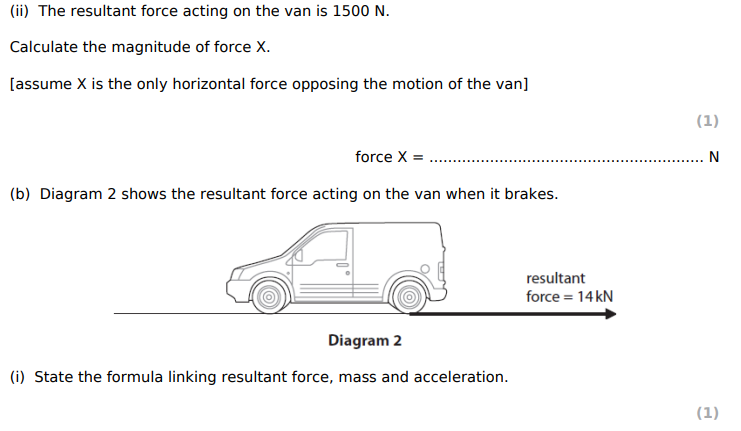
The resultant force acting on the van is 1500 N. Calculate the magnitude of force X. [assume X is the only horizontal force opposing the motion of the van]
State the formula linking resultant force, mass and acceleration.
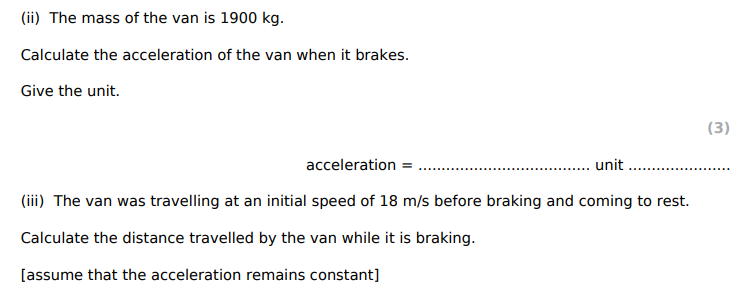
The mass of the van is 1900 kg. Calculate the acceleration of the van when it brakes (2 decimal places). Give the unit.
Unit
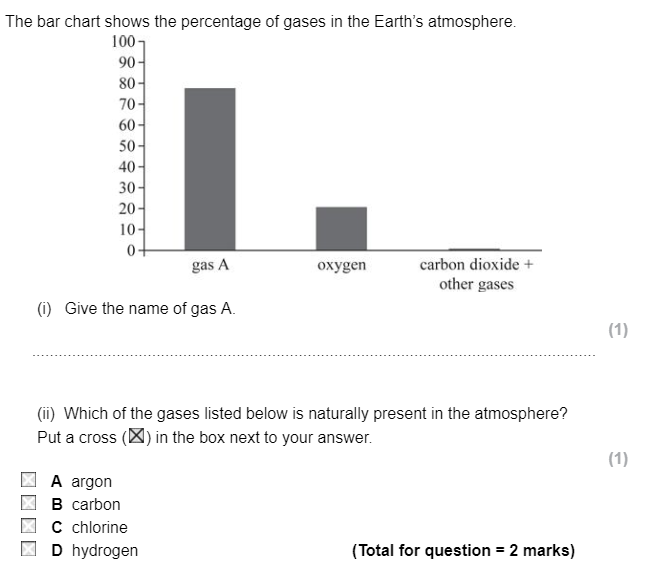
Give the name of gas A
Which of the gases listed below is naturally present in the atmosphere?
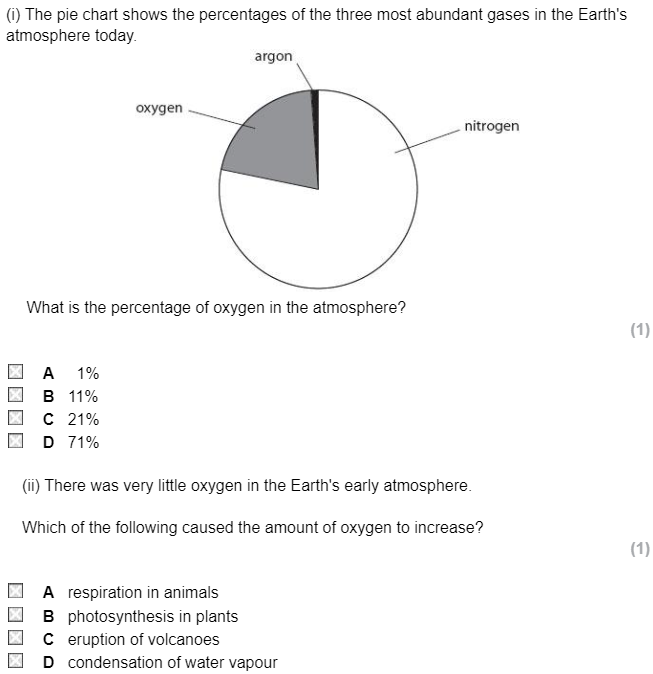
What is the percentage of oxygen in the atmosphere?
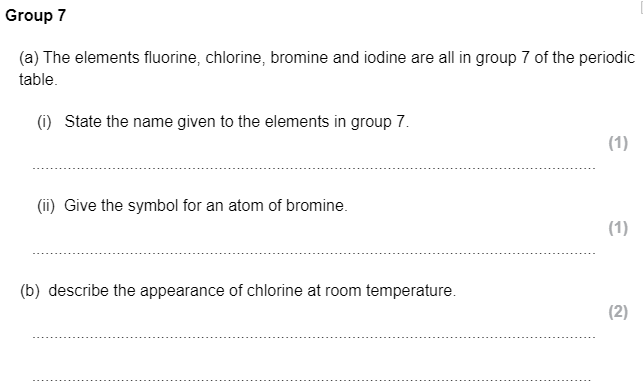
State the name given to the elements in group 7.
Give the symbol for an atom of bromine.
Describe the appearance of chlorine at room temperature.
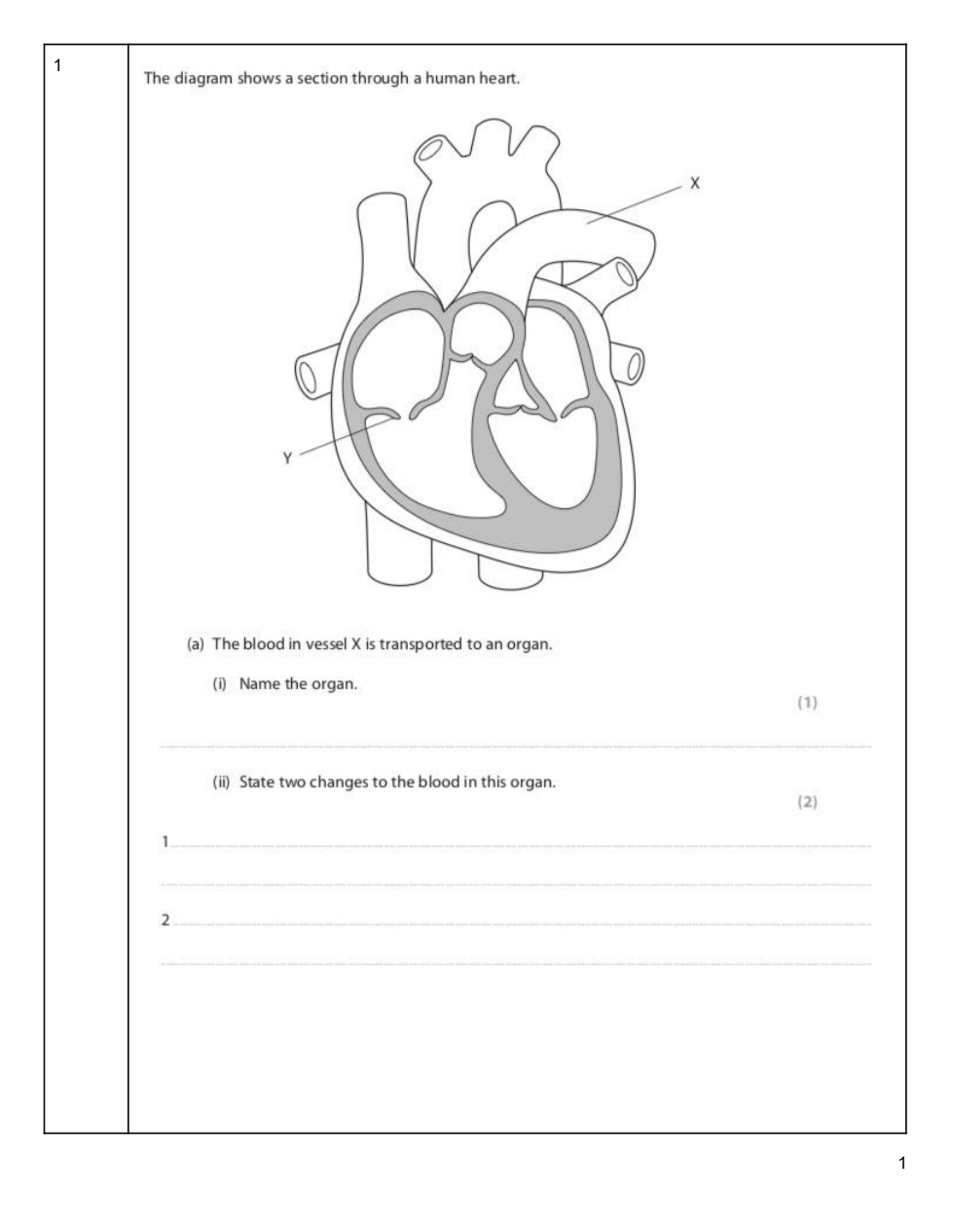
Name the organ
State 2 changes to the blood in this organ
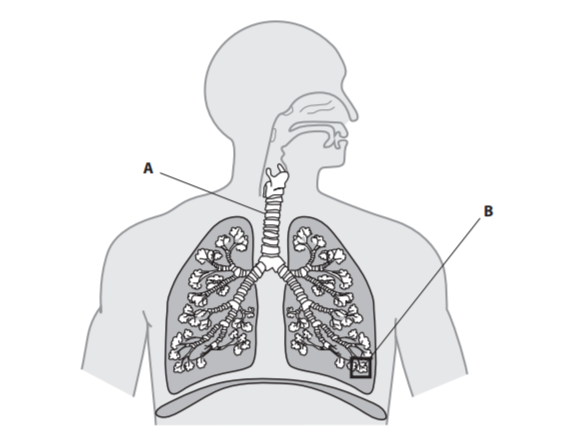
Name structure A
Name structure B
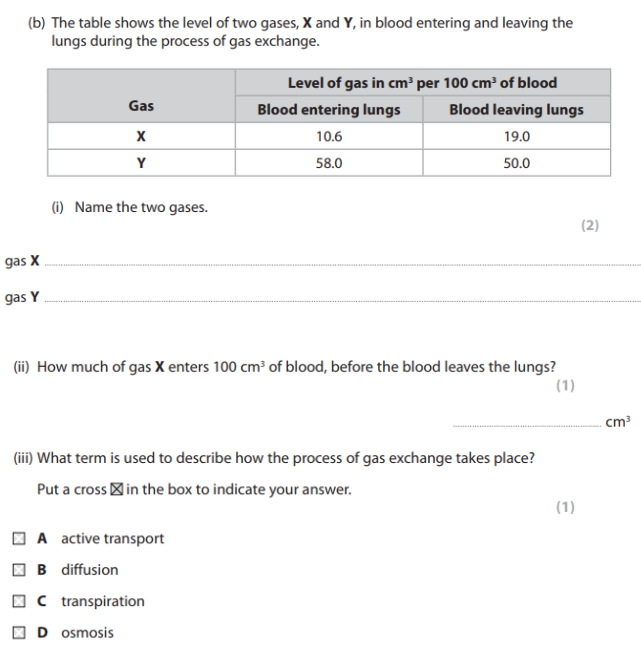
Name the two gases X and Y
How much of gas X enters 100 cm3 of blood before the blood leaves the lungs?
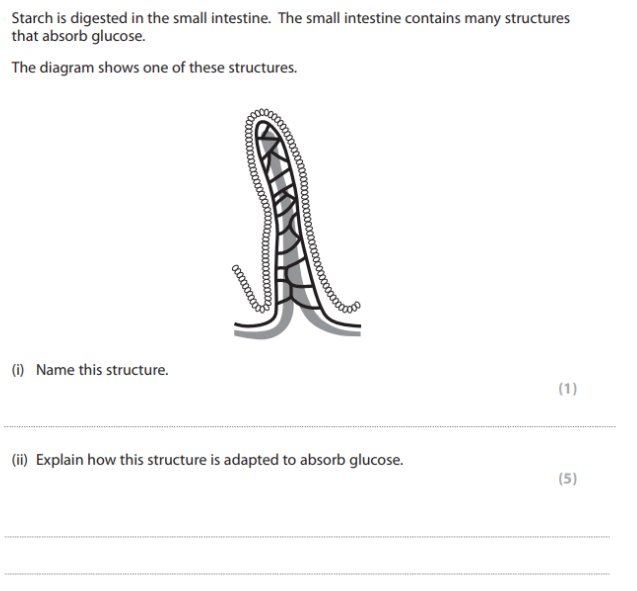
Name the structure
Explain how this structure is adapted to absorb glucose
Which of these gives the correct formula linking acceleration, change in velocity and time taken?
There was very little oxygen in the Earth's early atmosphere.
Which of the following caused the amount of oxygen to increase?
What term is used to describe how the process of gas exchange takes place?