Genes & Incomplete Dominance

Last updated 7 months ago
9 questions
Note from the author:
Answer the questions in the beginning to review some of the genic concepts we've already gone over, and then read the info about incomplete dominance and answer the questions that follow.
1

What is a gene?

1

What is the purpose of genes?

1

Where are genes located?

1

How are genes passed down?

1
Genes are made up of __________.
1
Draggable itemCorresponding Item
Homozygous gene
contains identical alleles
Heterozygous gene
contains different alleles
When an organism is typically heterozygous for a trait, its phenotype will be the dominant trait. For example, if available alleles in a population of pea plants are:
T = tall plant
t = short plant
Plants with the genotype TT or Tt will both be tall & only plants with the genotype tt will be short.
Sometimes traits can mix and we see the phenomenon of incomplete dominance. This means that the heterozygous genotype results in a completely new trait or phenotype.

For example:
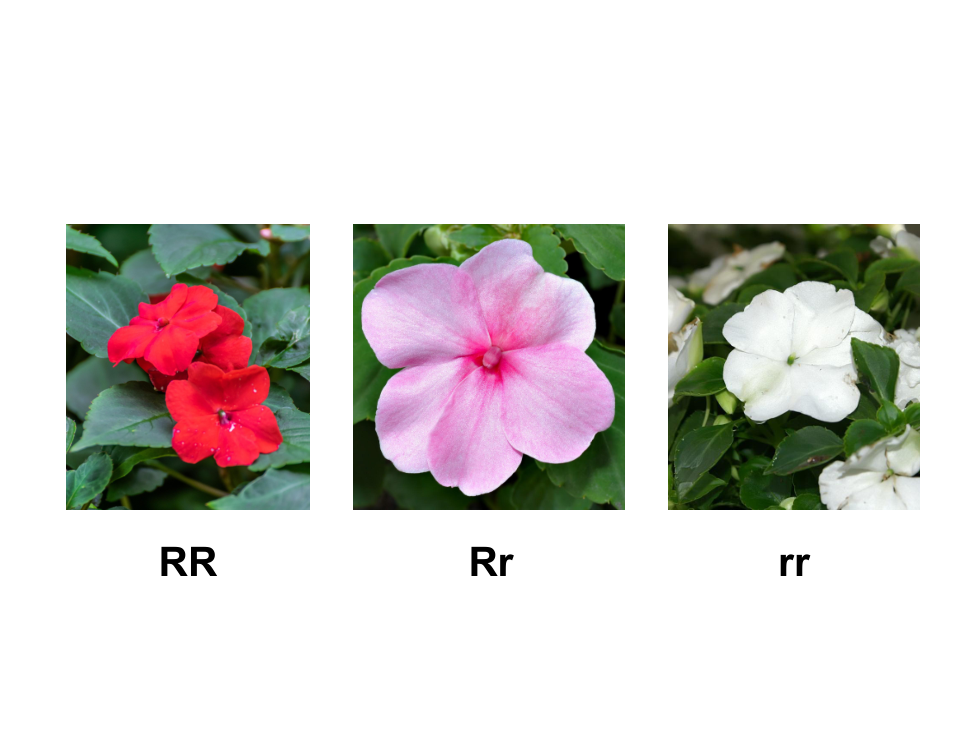
In a population of impatien flowers R is the dominant allele.
  • Flowers with the genotype of RR are red.
  • Flowers with the genotype of rr are white.
  • BUT...Flowers with the genotype of Rr are pink

The pink flowers are a result of incomplete dominance. When a plant with white flowers is crossed with a plant with red flowers, the offspring will have pink flowers.
Other flowers that exhibit incomplete dominance include; snapdragons, roses, & four o'clock flowers.
1

What is the term for a genetic situation where neither allele is dominant?

1

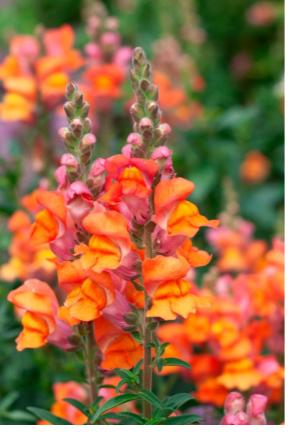
In a population of snapdragons, the phenotypes for the the homozygous genotypes are shown below. What would you predict the phenotype for the heterozygous (Ry) genotype to be?

2
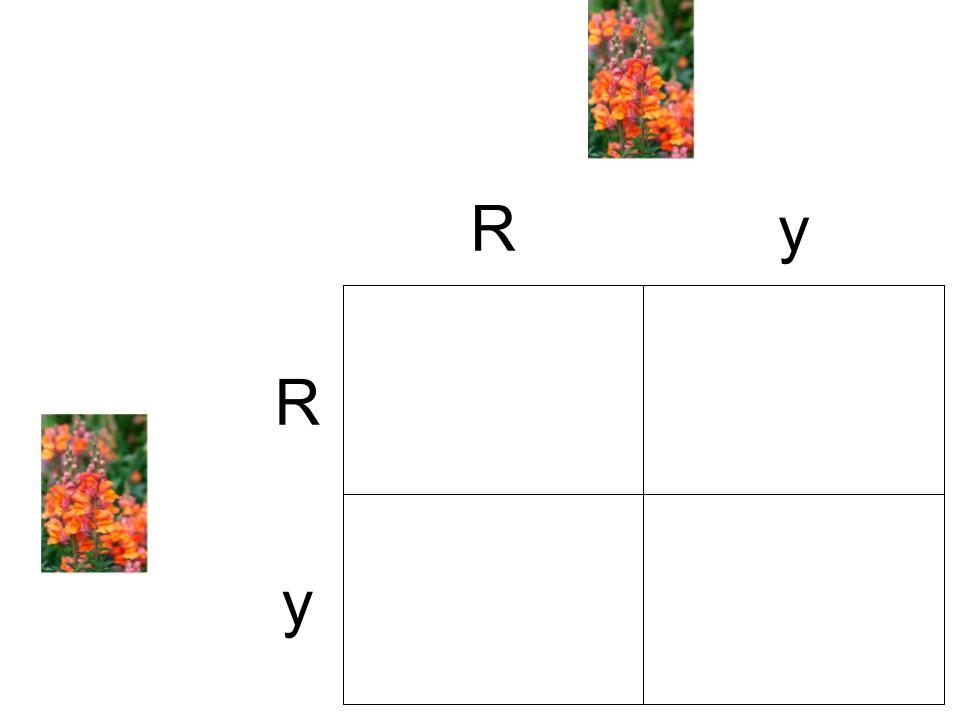
Complete the punnett square below for a shown pair of snapdragons with a genotype & phenotype for each possible offspring. (Put the genotype in the even numbered spots & phenotype in the odd numbered spots).

Other Answer Choices:
Ry
yy
RR