Where in this diagram is there a high concentration of hydrogen ions?
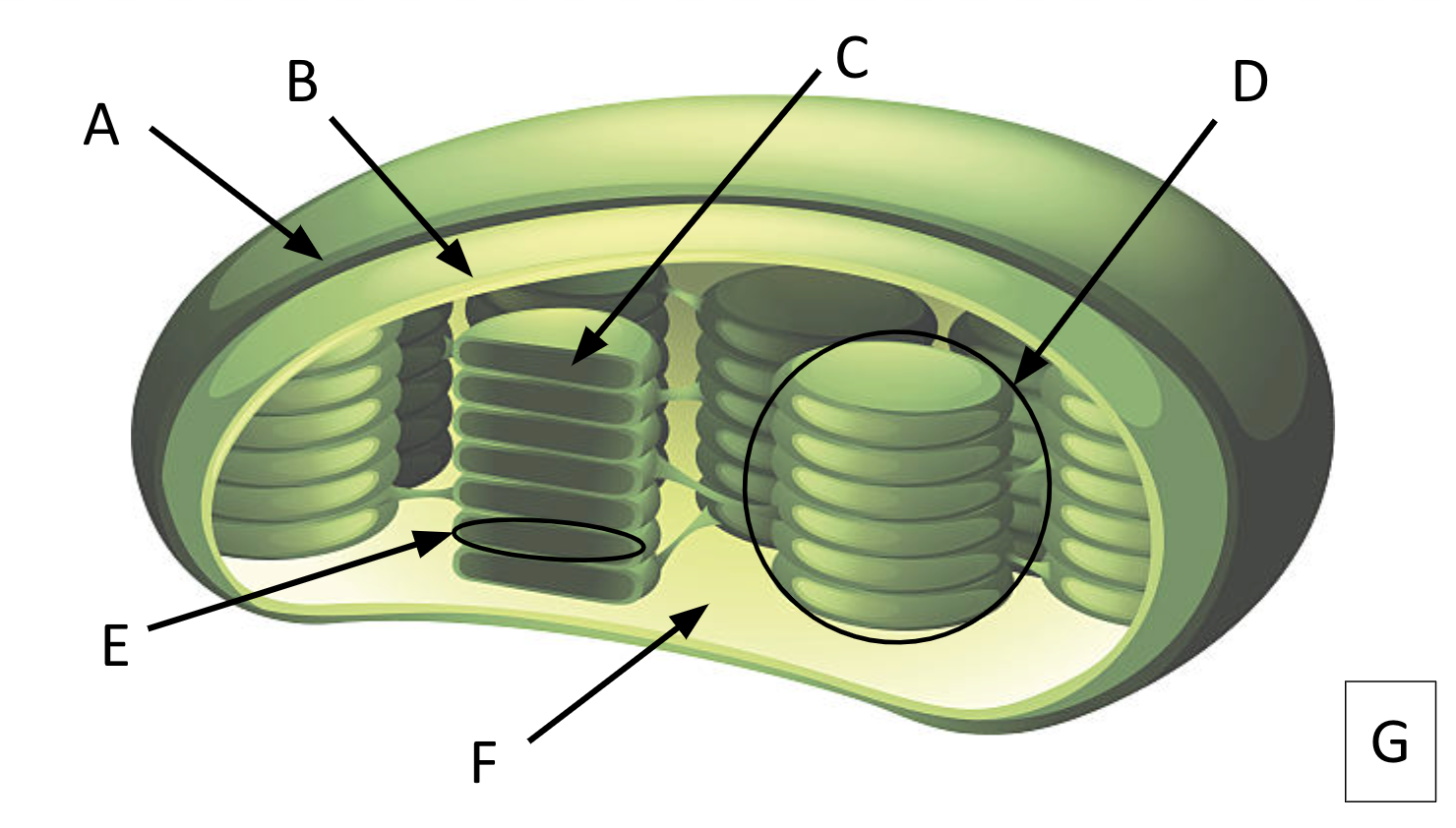
Where in this diagram is there a high concentration of hydrogen ions?
What is the main goal of photosynthesis?
Which of the following is true about photosynthesis (select all that apply)?
Sort the following into the two major steps of photosynthesis:
Uses the hydrogen ions/electrons from the electron carriers
Makes a small amount of ATP
Converts carbon dioxide into glucose
Involves ATP synthase
Directly needs light
Occurs across the thylakoid membrane
Involves and electron transport chain
Makes some electron carriers
Is fueled by ATP
Converts water into oxygen
Uses the hydrogens in water to make a concentration gradient
Does not directly require light
Occurs in the stroma
Light Reactions
Dark Reactions/Calvin Cycle
What common pigment absorbs light (reflecting green light) and is found in the thylakoid membrane?
Where in this diagram is there a high concentration of hydrogen ions?
Where in this diagram do the dark reactions/Calvin Cycle occur?
The following questions are all free response questions. Once you answer each question it will automatically mark them as "wrong" because you haven't written exactly what I wrote. Once you click submit compare your answers to mine (they should show up after you click submit). Be thoughtful in your answers (think about them as practice test questions). I wrote 4-10 sentences in my sample answers for each question.
In your own words explain the Light Reactions in photosynthesis (as in the process that occurs).
In your own words explain the Dark Reactions/Calvin Cycle (as in the process that occurs).
What is the primary function of the light-dependent reactions of photosynthesis?
Which molecule absorbs energy from sunlight in the light-dependent reactions?
What is the end product of the electron transport chain in the light reactions of photosynthesis?
In what part of the chloroplast do the light-dependent reactions take place?
What are the hydrogen ions and electrons pulled off of in the light reactions?
What is the primary function of the Dark Reactions/Calvin Cycle?
The dark reactions directly require light to occur.
Where do the hydrogen ions and electrons for the glucose come from originally?
Which of the following is used in the Dark Reactions/Calvin Cycle from the light reactions?
What molecule is converted into glucose in the Dark Reactions/Calvin Cycle?