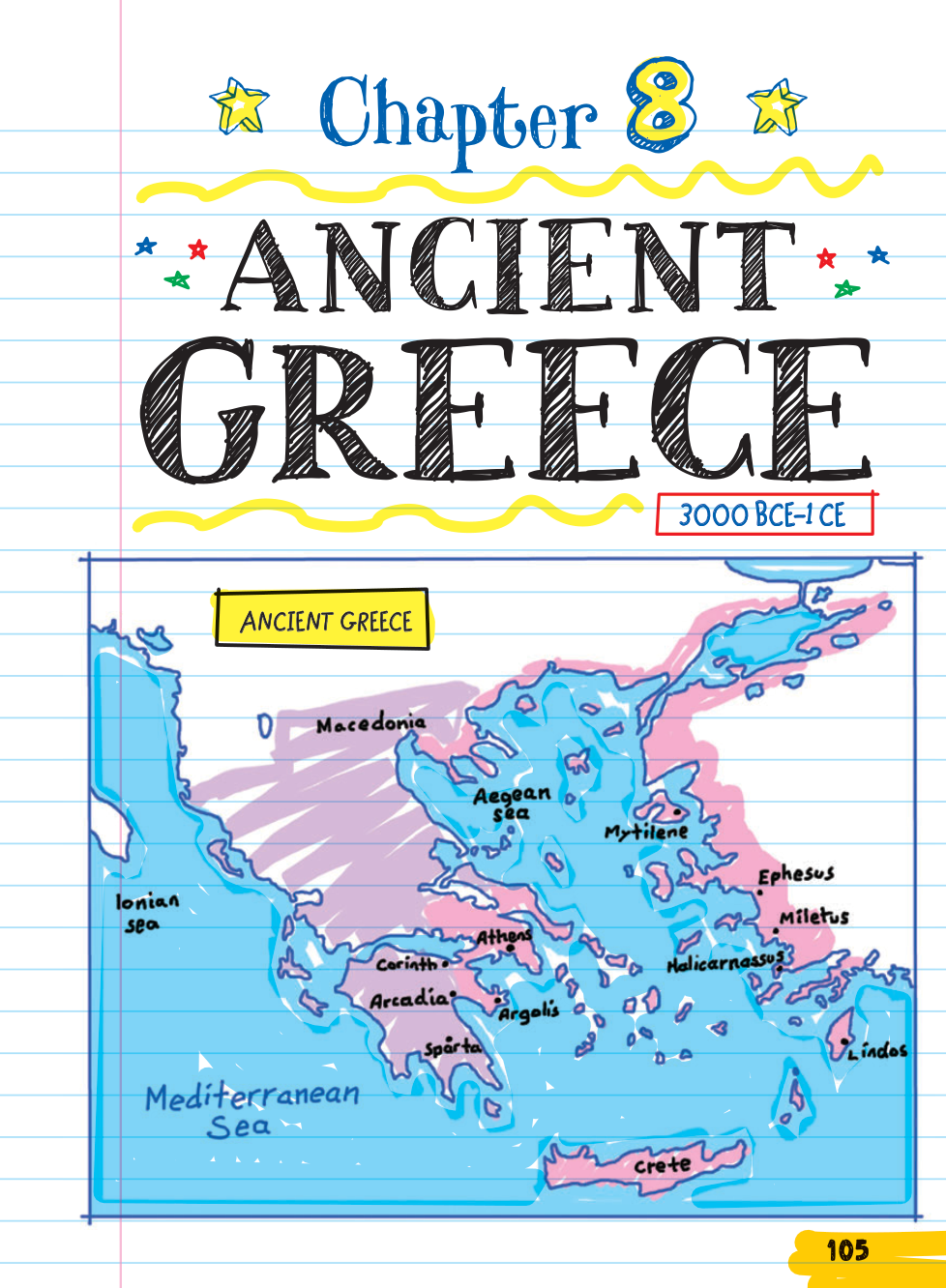
Learning Intention:
I am learning about the civilization that is often considered the founder of the Western World, ancient Greece.
Success Criteria:
I know about the early History of Greece and the Greek peninsula.
I can describe the responsibilities of a citizen, define democracy, and explain what makes a democracy a direct democracy.
I know the story of the Trojan War.
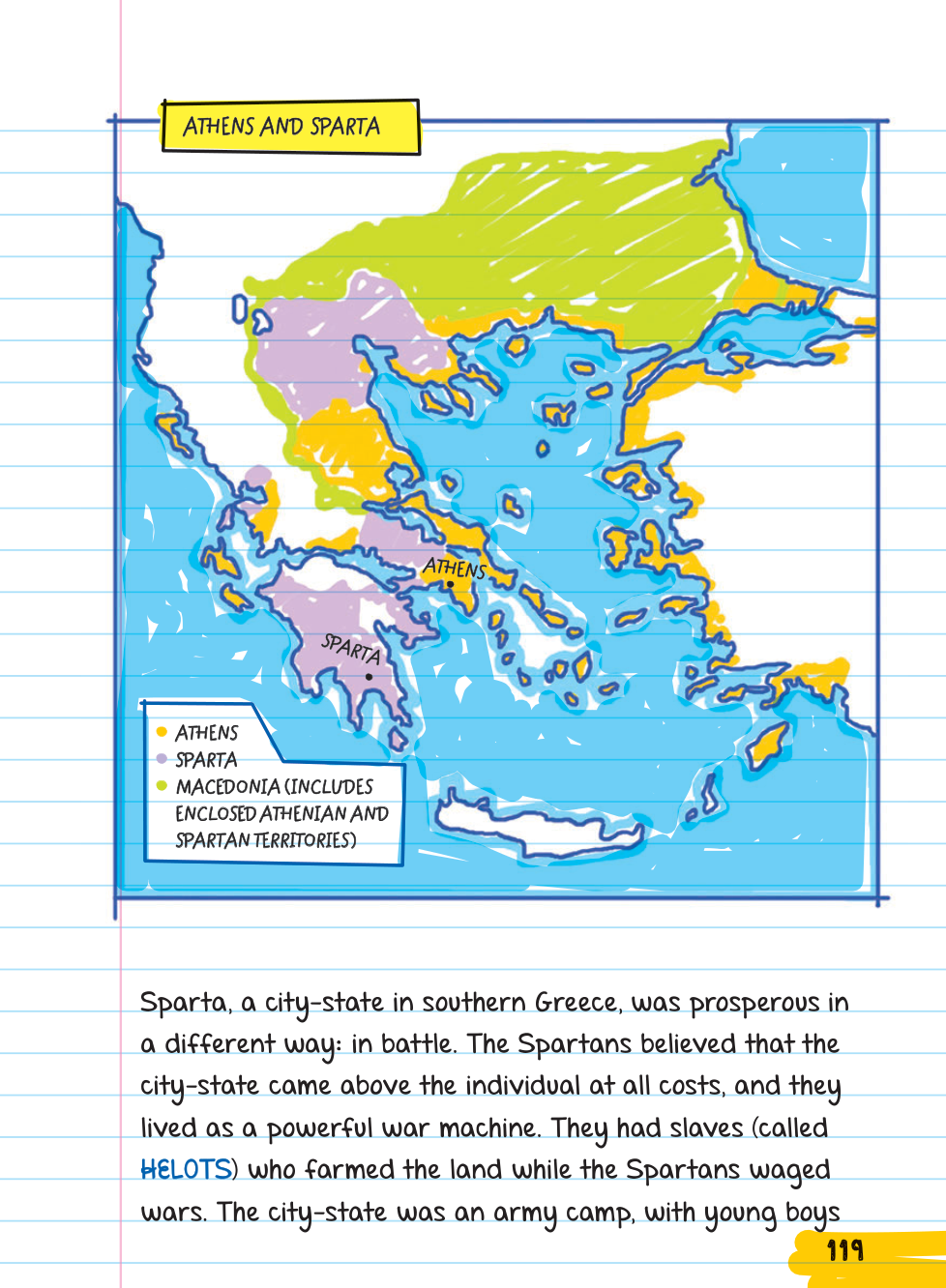
I can describe the cultures of Athens and Sparta in comparison to each other.
I know of Greek gods, myths, and plays.
I can define philosophy, know the three main Greek philosophers, and describe their philosophies.
I can describe the Greco-Persian Wars and its result.
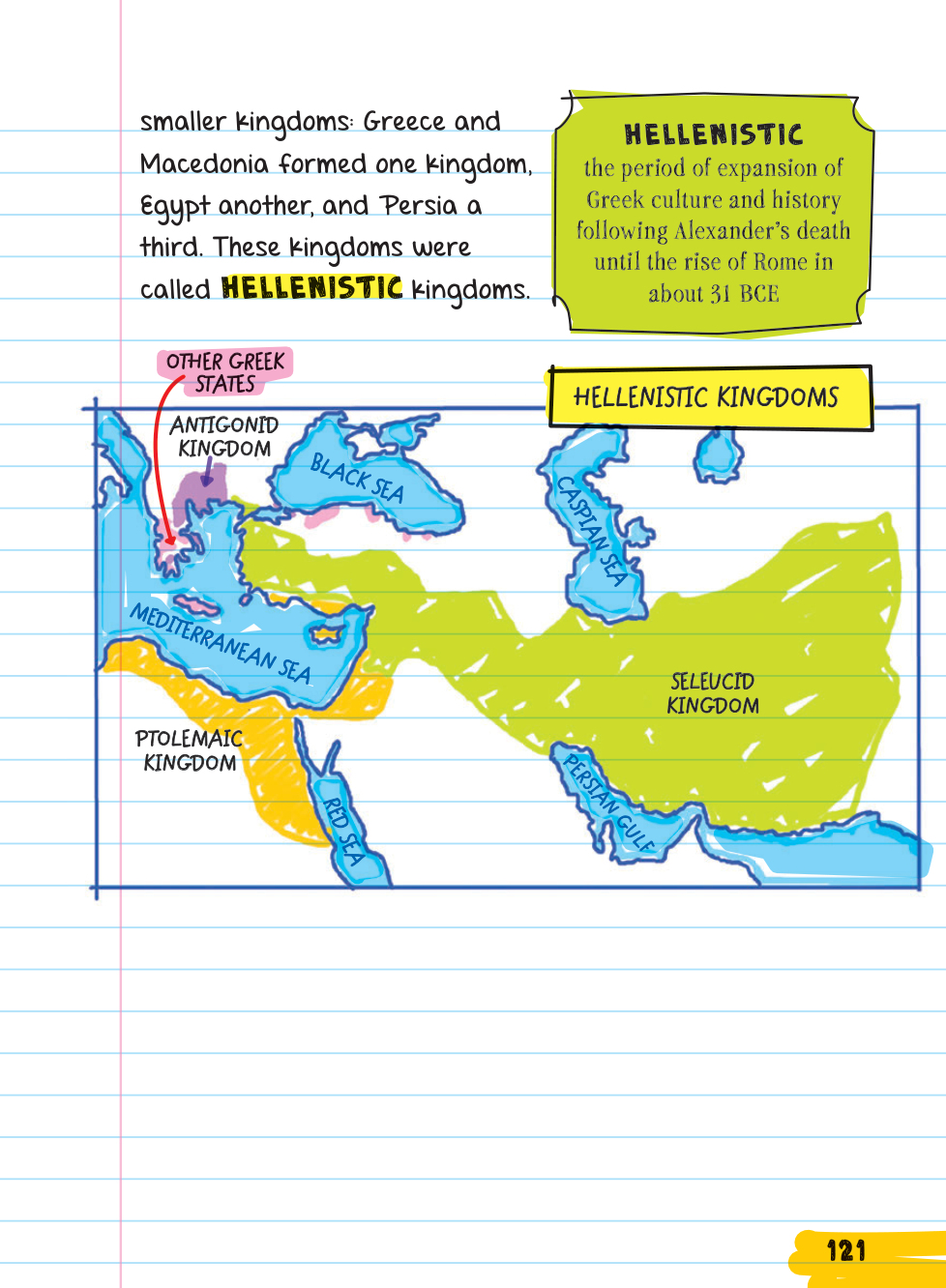
I can follow the conquests of Alexander the Great and understand their impact on the ancient world.
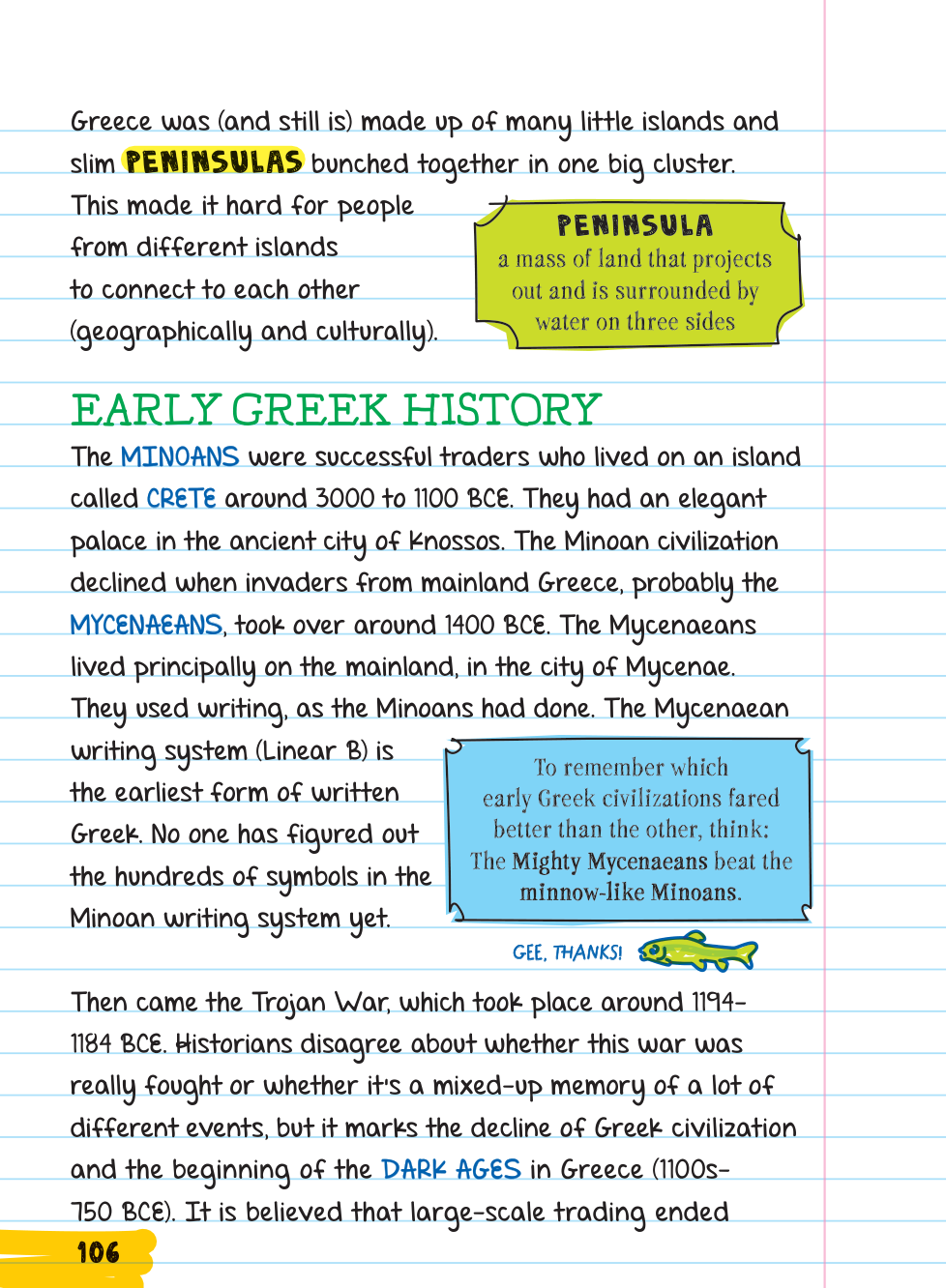
Early Greek History was started by the who lived on the island of and the who lived on the mainland city of . The Minoans were successful traders. The Myceneans invented the earliest form of written Greek (linear B). No one has figured out the hundreds of symbols in the Minoan writing system yet.
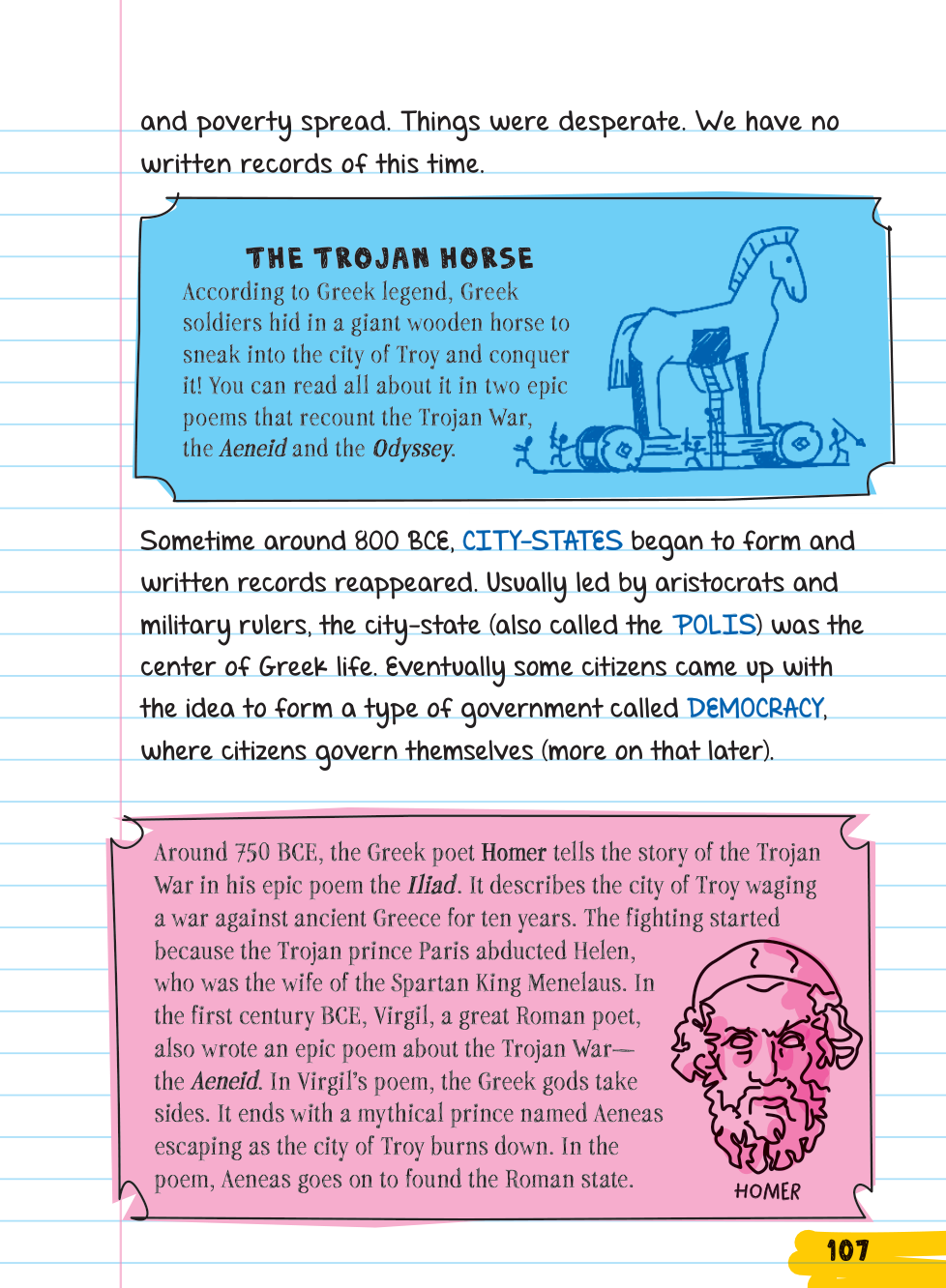
Match the vocabulary to its definition.
| Draggable item | arrow_right_alt | Corresponding Item |
|---|---|---|
polis | arrow_right_alt | A city whose laws and influence extend to the surrounding countryside and operates as it's own country. |
Dark Ages | arrow_right_alt | The center of Greek life and culture. |
city-state | arrow_right_alt | A form of government where citizens govern themselves. |
democracy | arrow_right_alt | A time of civilizational decline. |
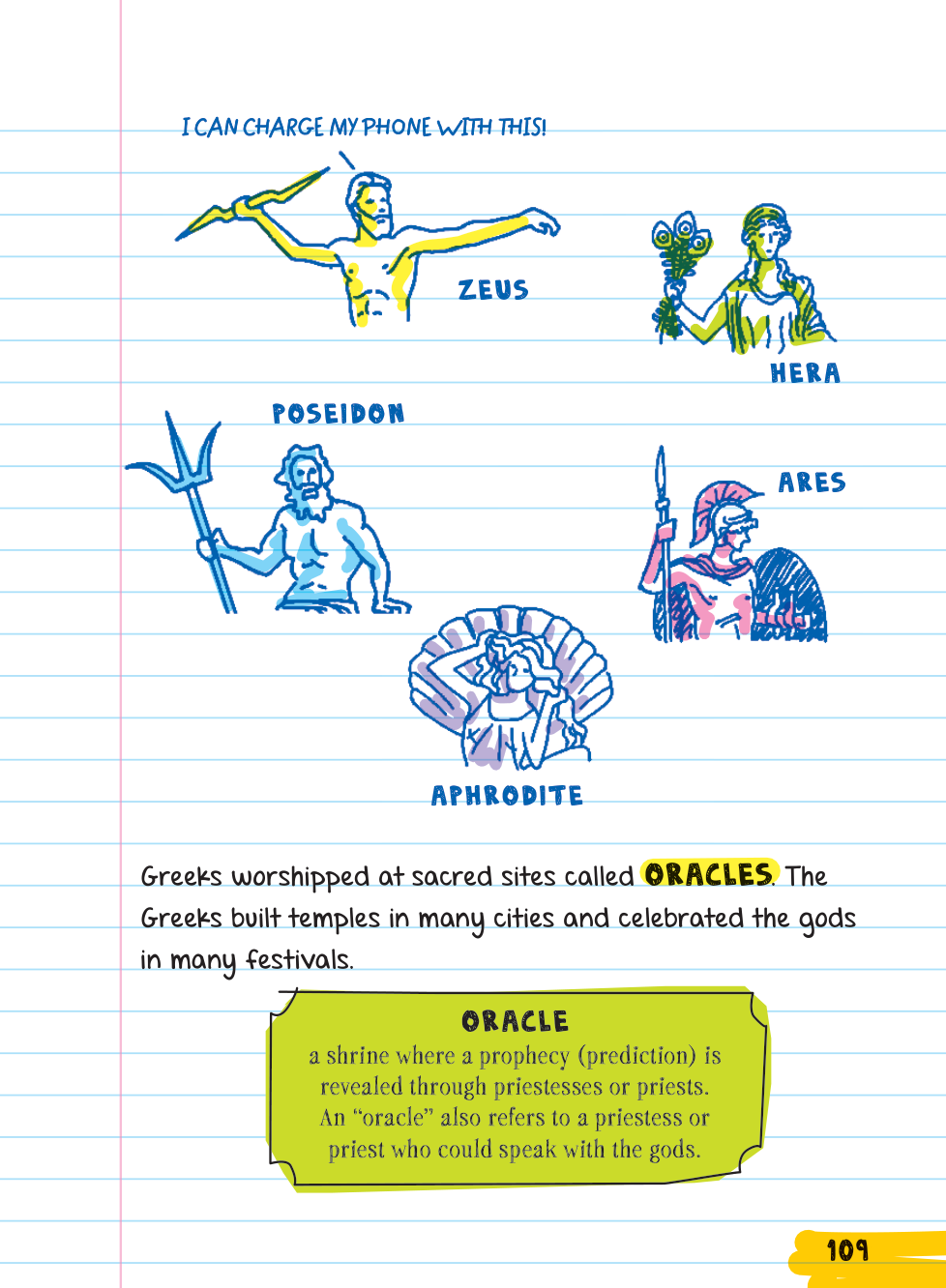
What is an oracle?
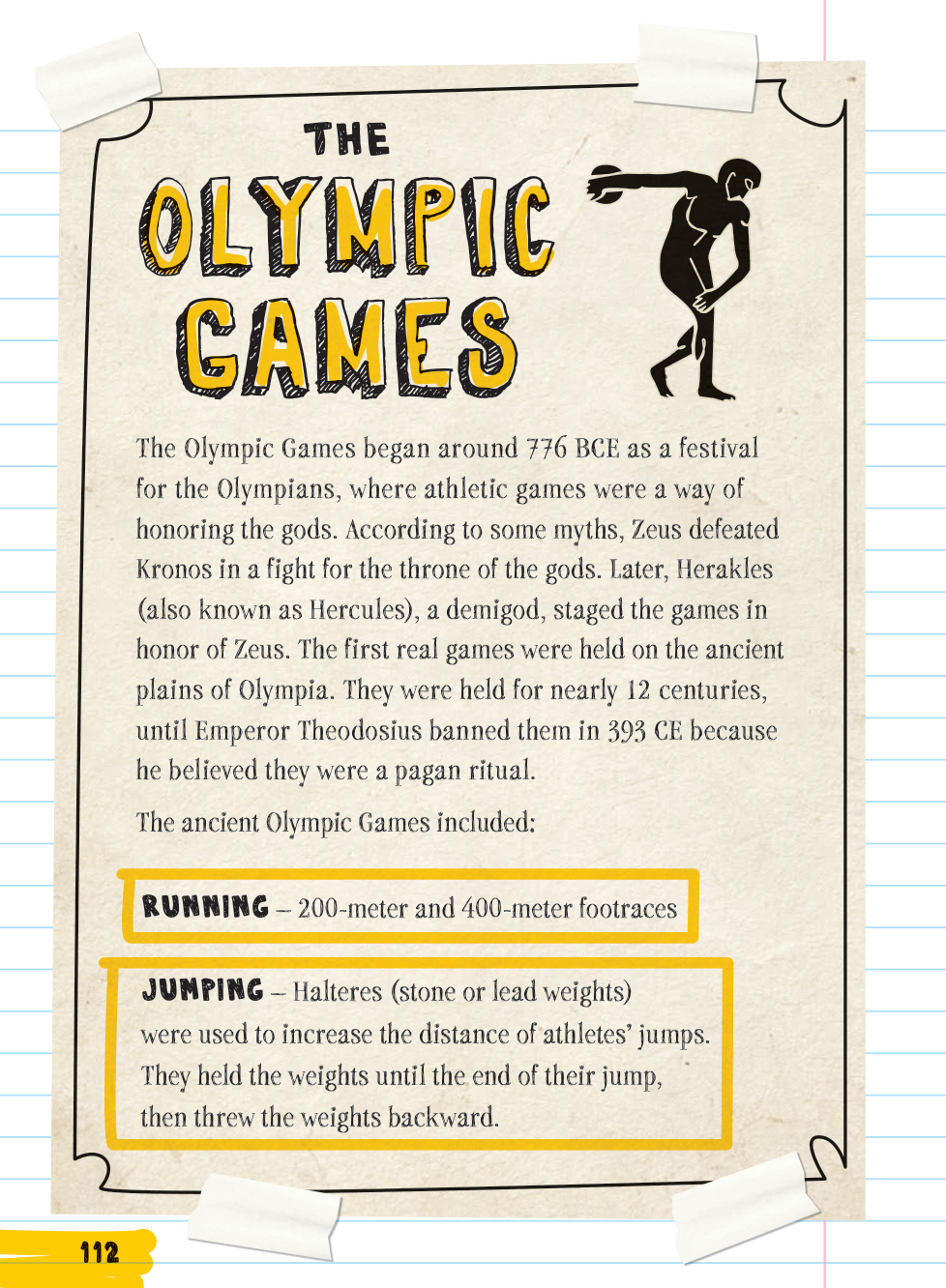
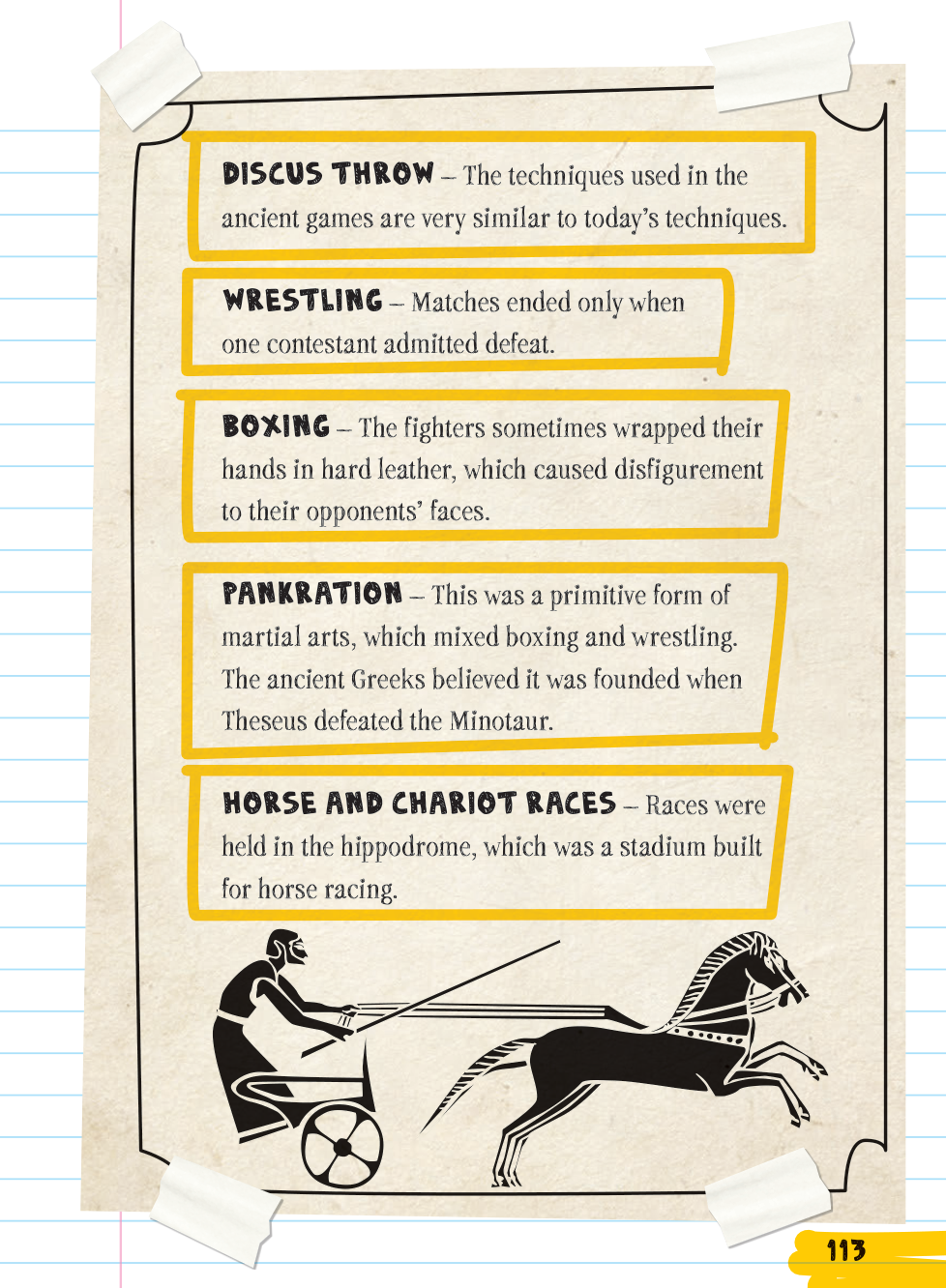
Which of the original Olympic Games do you think would be the most fun to participate in or watch? Answer in at least two complete sentences.
Match the major Greek playwright to their great work.
| Draggable item | arrow_right_alt | Corresponding Item |
|---|---|---|
Euripides | arrow_right_alt | Wrote a trilogy called The Oresteia, three plays about the family of Agamemnon during the Trojan War. |
Aeschylus | arrow_right_alt | Wrote the famous play Oedipus Rex, a family tragedy where the main character kills his father and is forced to marry his own mother. |
Sophocles | arrow_right_alt | Wrote plays that focused on war and human suffering, such as his play Medea. |
In your own words what kind of people were the Athenians?
Voting in a Direct Democracy
Step 1 Issues
In Direct Democracy the citizens of a place vote directly on the laws they follow. There may be elected official but those officials cannot create new laws or take certain acts without the consent (vote) of the citizens. Direct Democracy is a means by which a community can come together to solve a issue equitability. As a community our class will now come together to solve a real issue. Below are two examples of common issues classes have. Students may come up with their own as well. These issues will be written on a white board.
Issue 1 : An assignment the teacher gave was unfair or really difficult. The whole class should be allowed to redo it!
Issue 2 : One student is especially rude (or some other problem that affects other students) during class. Something must be done.
Issue 3+ : All communities are different. If our class has a particular issue they think is important to solve any student may wait for their turn to speak and put forward an issue.
If you have the "talking stick" no one else may talk. The teacher is the "censor" and may block students from debating if they are not polite and/or talk out of order. A time limit will be placed on the debate. Once the issues have been collected we will raise our hands for each issue. The issue to get the most hands raised will be addressed. The others may not.
Step 2 Actions
Now that an issue has been selected it must be decided what to do about it. We will debate back and forth until two options are chosen on what to do. Both options will be put on the whiteboard. Repeat debate steps from step 1. The teacher may modify actions if they break school or classroom rules as a judge.
Step 3 Voting
Each action will be assigned to LEFT or RIGHT. Two piles will be formed of rocks just like the Athenian Greeks did, LEFT and RIGHT. Which ever pile is larger (more rocks) is the action that will be taken by the class to solve the issue.
Step 4 Results in Action
The students and the teacher are obliged by the vote results to put the action in effect. This step will be different depending on what was voted on.
CONGRATULATIONS you participated in Direct Democracy! If you think this was helpful we may repeat this for other issues but only if they do not take too much time, the class is polite, and the issues are something the teacher is willing to address.
This assignment is based on PARTICIPATION. The teacher will be recording on his seating chart who did and didn't participate and by how much. You must participate to earn your grade. Voting automatically gives two points. Debating gives one point. If you go over four points all extra points will be turned into PBIS points.
Rubric (How you will be graded in the activity.)
4 - I participated in Direct Democracy within the classroom collecting at least four participation points.
3 - I participated in Direct Democracy within the classroom collecting at least three participation points.
2 - I participated in Direct Democracy by voting (or collected 2 points).
1 - I participated in Direct Democracy within the classroom collecting at least one participation point.
Greek Myth
Step 1
Decide if you want to complete a one-pager (poster) alone or as a group. Pick one of the following myths and watch the corresponding video about it. Take notes of events and characters in the myth as you watch. If you are in a group, all group members should watch the same video. Mr. Bergh will pass out the group role cards.
The myth of Prometheus - https://youtu.be/U_u91SjrEOE?feature=shared
The myth of King Midas and his golden touch - https://youtu.be/nn8YGPZdCvA?feature=shared
The Greek myth of the serpent’s curse - https://youtu.be/H7ZhDe1K8uU?feature=shared
The myth of Arachne - https://www.youtube.com/watch?v=XvUHcsZOhJ8
The Greek myth of Talos, the first robot - https://youtu.be/vVTA-E3G8bQ?feature=shared
The ancient origins of the Olympics - https://youtu.be/VdHHus8IgYA?feature=shared
The tragic myth of the Sun God's son - https://youtu.be/zAxfrI8zHU4?feature=shared
The Greek myth of Demeter's revenge - https://youtu.be/TXv085TttHw?feature=shared
The myth of Zeus' test - https://youtu.be/ogE1nzLawJ0?feature=shared
Step 2
Take what you've learned and turn it into a one-pager. A one-pager is a page of text and graphics created to inform the reader. You may do this on digitally or on paper. Use the rubric below as a guide. If your in a group follow your role card.
Step 3
Double check to make sure your project meets the rubric. Turn it in digitally to Google Classroom if done digitally. Turn it in physically if done physically.
Rubric (How you will be graded in the activity.) A project should include all of the following:
4 - Details of the Story - Explain in your own words what occurs during the story.
3 - Moral of the Story - In your opinion what is this story's greater meaning or lesson trying to be taught? Explain in your own words.
2 - Graphic Design - Draw out graphics related to your story. The art should be related to the story in some way. The only limit to your creativity is staying on topic.
1 - Layout and Neatness - Include your name(s), period, leave no excessive blank space, have few spelling or grammar errors, and list of the back the sources you used to make your project. (For example, write/type the links to websites used for pictures or extra information. If you take quotes or screenshots from the Ted-Ed video just list the video's name.)
Our Class Philosophy Project
Merriam-Webster Defines philosophy in it's 4th definition as "the most basic beliefs, concepts, and attitudes of an individual or group".* What is our philosophy?
Step 1
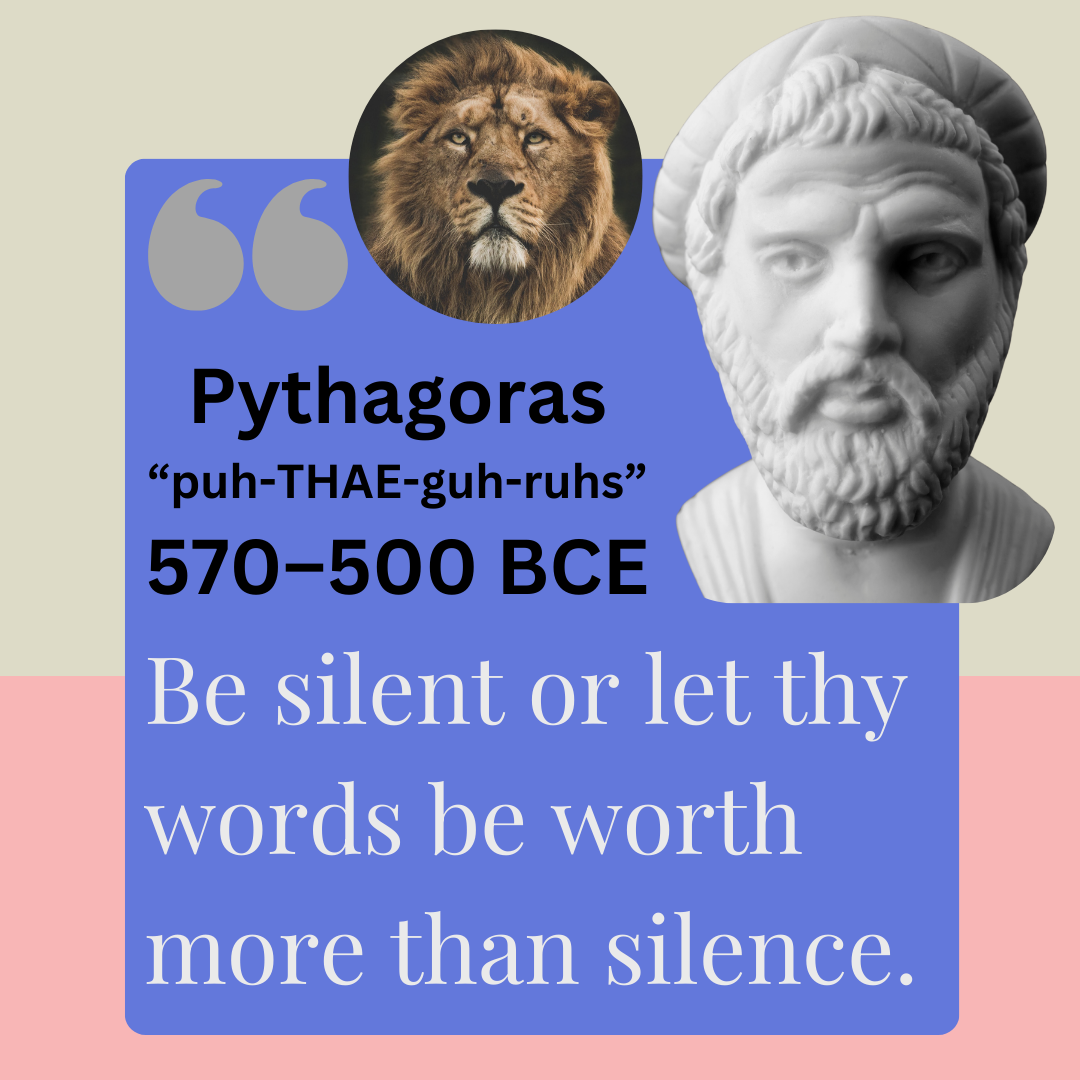
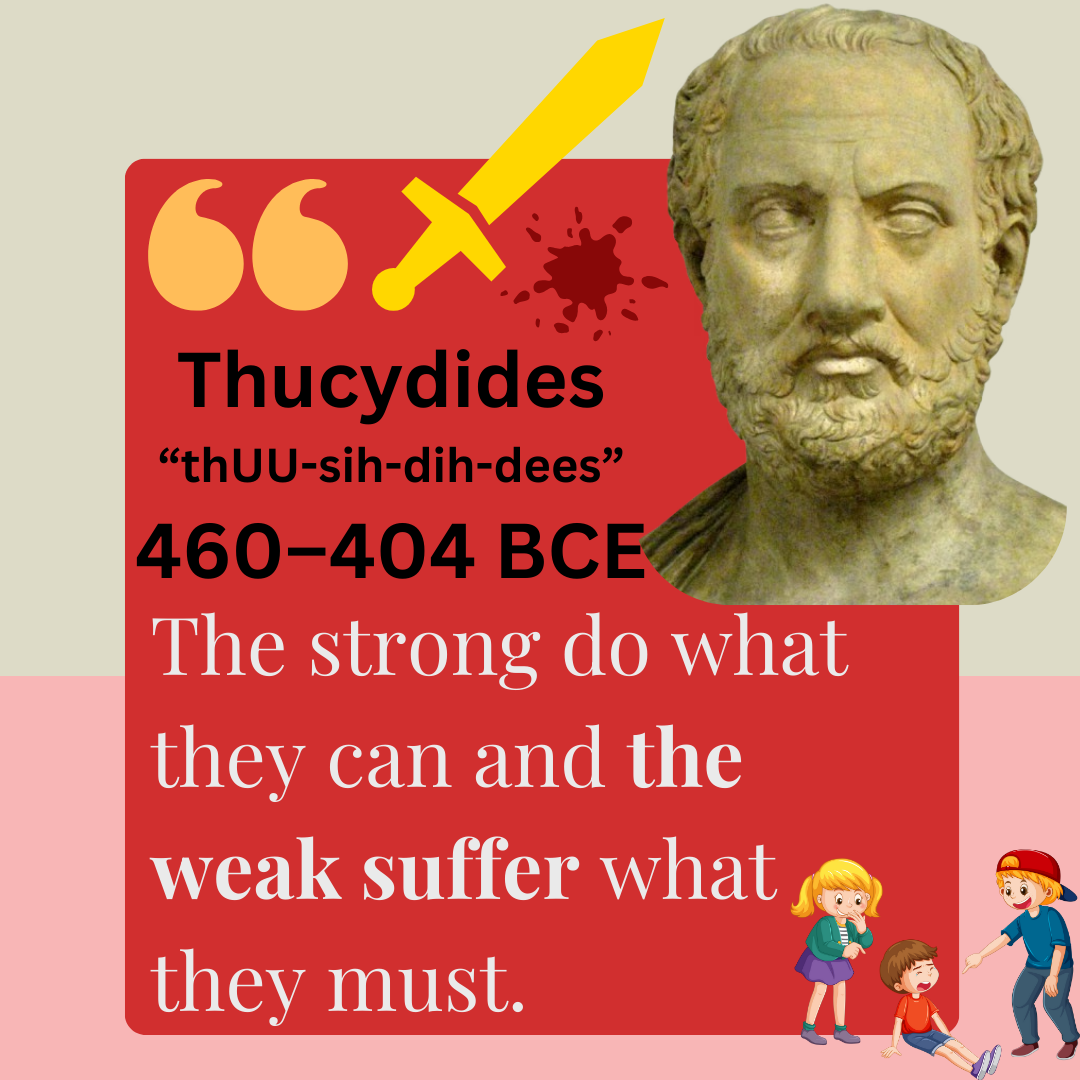
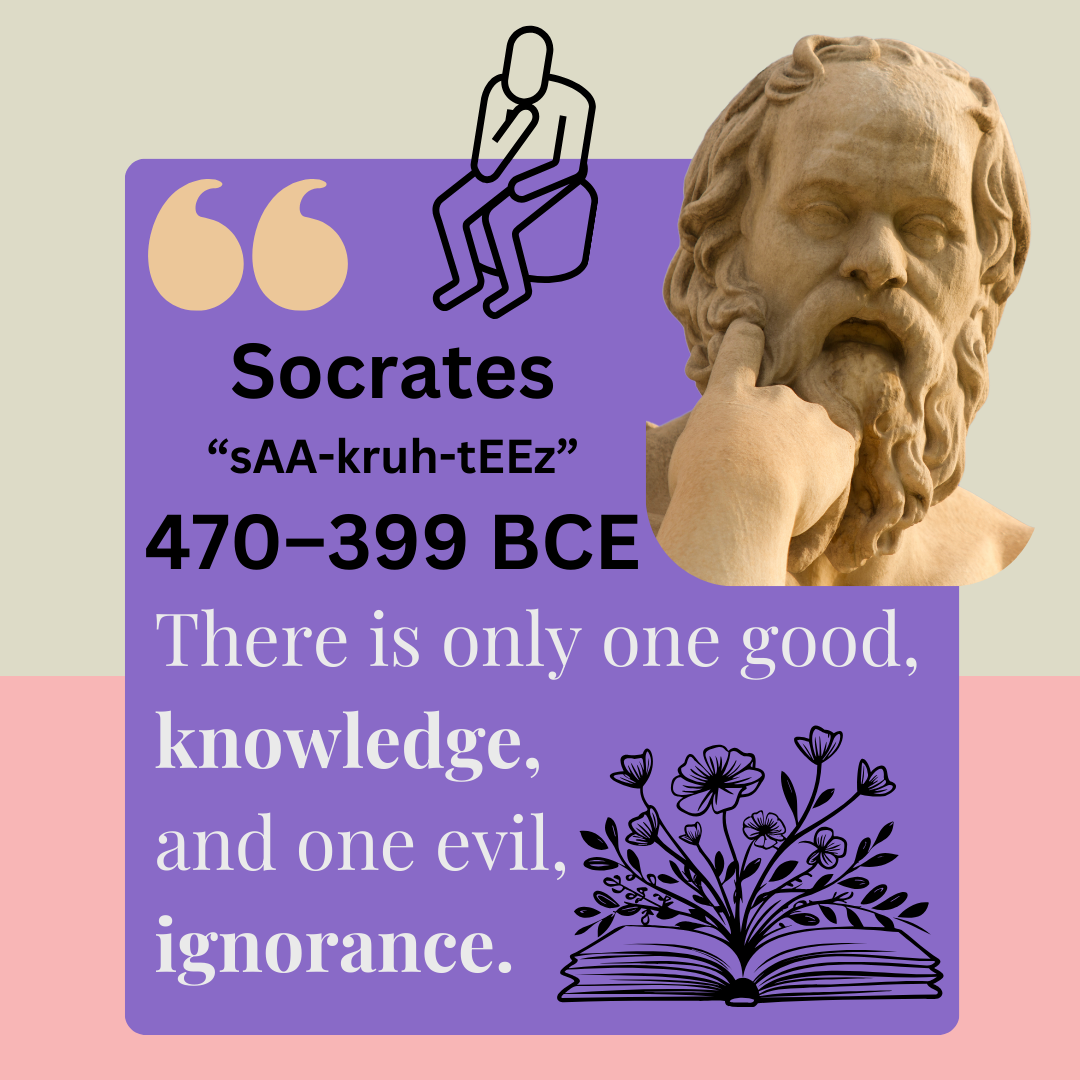
We will look over simple examples of philosophies of various famous philosophers. We will discuss with a partner what we think it means and then share out for each philosophy. This will be timed.
Step 2
Using these philosophies as inspiration we will create own personal philosophies. They can be on life, relationships, science, schoolwork, whatever topic you can think of! Write this down on a blank sheet of paper. Write your name on that paper. This will be timed.
Step 3
Flip the paper over to the blank side. You will now boldly rewrite your philosophy with artistic embellishments so that it can be seen by others easily. Your art should have something to do with your philosophy. You may do this using CANVA, Google Slides, or a quote making website and have it printed in black and white if you find that easier. Email Mr. Bergh the digital copy to have it printed.
Step 4
Each student will be called on to stand and present their philosophy in less then two minutes. While students are presenting all others are quiet. No questions or debate.
Step 5
Each student's philosophy paper will be quickly adhered to the wall. Each student will be given a sticky note. One student at a time will be called to stand up, take their sticky note, and place it on a philosophy that is NOT their own that they agree with. The philosophy with the most sticky notes will be made the class philosophy! It will be given a special place within the classroom and can be used throughout the remainder of the year. All other philosophy papers will be taken home.
Rubric (How you will be graded in the activity.)
4 - I have come up with my own personal philosophy and have written it down boldly and with artistic embellishments. Then I have presented my philosophy to the class. I have voted on a philosophy to make the class period's community philosophy.
3 - I have come up with my own personal philosophy and have written it down boldly and with artistic embellishments. Then I have presented my philosophy to the class.
2 - I have come up with my own personal philosophy and have written it down boldly and with artistic embellishments.
1 - I have come up with my own personal philosophy and have written it down.
What is a peninsula?
Why was it hard for Greek people to connect to each other (geographically and culturally)?
The city-state of Athens led the Greek golden age in terms of culture and wealth.
What is a "citizen"?
Select below responsibilities of a citizen.
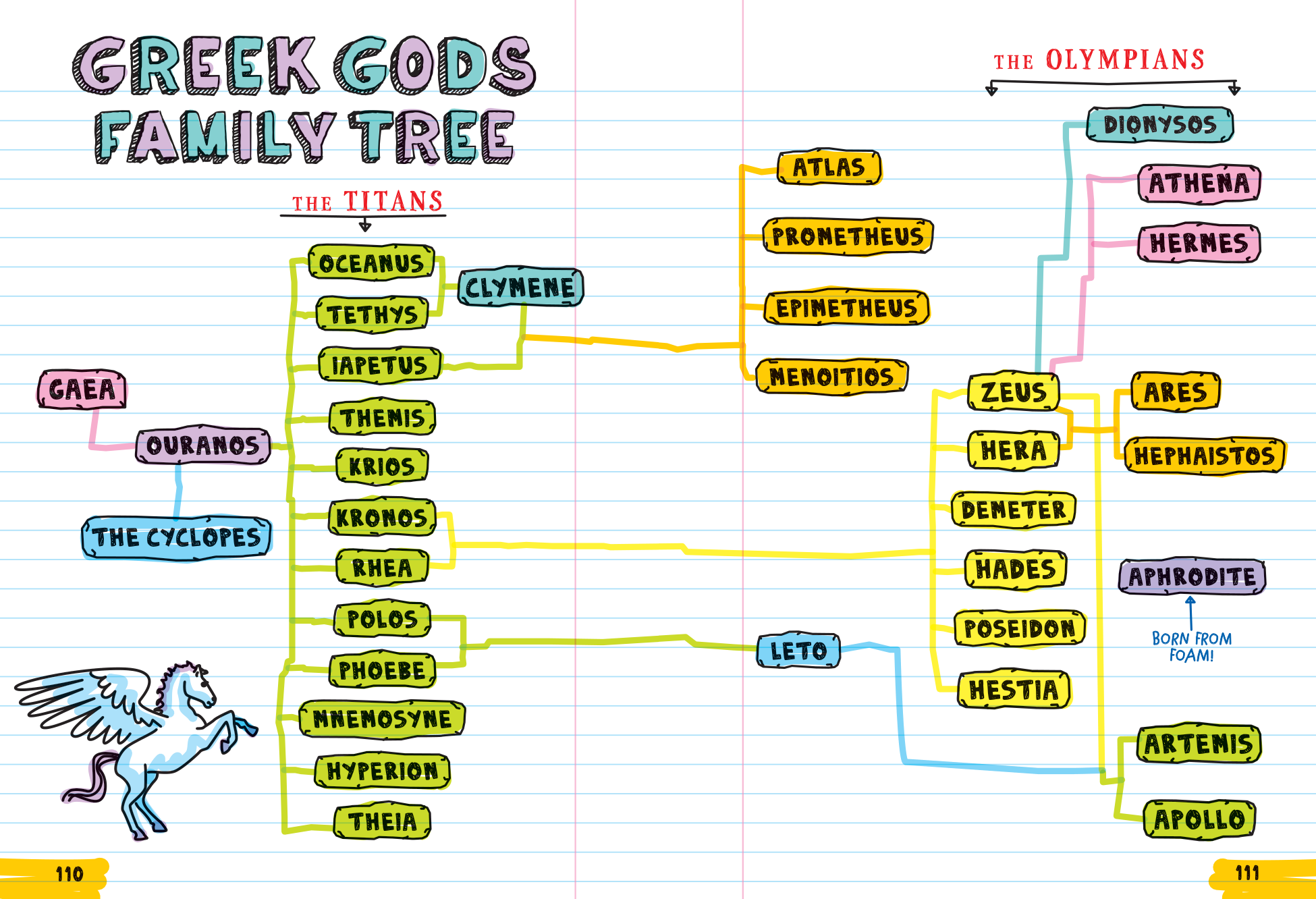
Hera is the king of the gods.
Zeus is the god the sea.
What were the Greco-Persian Wars?
In your own words, using information from the video, What started the Greco-Persian Wars?
Why was the Battle of Marathon described as a 'watershed' moment for the Greeks during the war?
In your own words, using information from the video,
What is the story behind the word Marathon?
Why did the Spartans lose the Battle of Thermopylae?
Themistocles saved the Greek people in the naval battle of Battle of Salamis by forcing the Persian Navy to retreat.
After the battles of Plataea and Mycale the Greeks were free from Persian control.
Match the event in the Persian Wars to it's consequence.
| Draggable item | arrow_right_alt | Corresponding Item |
|---|---|---|
Sparta's King Leonidas was killed in the Battle of Thermopylae. | arrow_right_alt | Either way a general peace between the Greeks and Persians existed that allowed both civilizations to flourish. |
The Spartans and the Athenians led the Greeks in the war against Persia. | arrow_right_alt | The Spartans became resentful of Athens and other Greek city-states who refused to help them during the war. |
The Peace of Callias may or may not have been signed. | arrow_right_alt | The Athenians claimed victory over the Persians and created the Delian League of Greek-city states which they controlled. |
The Athenian Naval General Themistocles defeated the Persian navy. | arrow_right_alt | As a result the Athenians and the Spartans became the two most powerful Greek city-states. |
What is Direct Democracy?
Select below examples of "Direct Democracy".
In your own words what kind of people were the Spartans?
Even though the Spartans beat the Athenians in the Peloponnesian War, who benefited the most from the war's outcome?