DE_LE_2.5_MechanicalAndChemicalWeathering_TestBank

Last updated 2 months ago
21 questions
Practice Assessment
1

Which is a type of chemical weathering?

1

Which is an example of chemical weathering?

1

Which of the following factors affect the rate of weathering in an area?

1

Mechanical weathering is

1

Which is an agent of chemical weathering?

1

Which is an agent of mechanical weathering?

1

Which of the following climate factors affect rates of weathering?

1

What is weathering?

1

Which parts of a tree are agents of mechanical weathering?

1

Which is an example of mechanical weathering?

1

What is chemical weathering?

Summative Assessment
1

Samples of limestone, granite, quartz, and stalactite are exposed to acidic groundwater. All other conditions being equal, which rock would weather most quickly?

1

While exploring an ancient lava field, a geologist discovers a piece of granite that has a coating of soft, crumbling rust. What is the most likely explanation for this rust?

5

You’re the editor of a popular science magazine. One of your writers wrote an article about mechanical and chemical weathering. However, some of the information is wrong. Click on the sentence(s) that are incorrect.

Mechanical and chemical weathering are two geological process that break small rocks into larger pieces.
For example, water can penetrate a crack and freeze.
When the ice contracts, it widens the crack.
This process can repeat until the rock breaks apart.
In a different process, a bottom layer of bedrock peels away.
This loss of material releases pressure, causing the rocks above it to expand and cause weathering.
Plants can also cause weathering.
For example, plant roots wedge into small cracks within a rock.
This action forces the crack to widen and eventually break apart.
These examples illustrate chemical weathering.
In one type of mechanical weathering, oxygen combines with iron in the rock.
This process forms a coating of rust that colors the rock.
In another type, water dissolves salts in the rock and washes them away, causing the rock to deteriorate.
In a third type, acidic rainwater will precipitate minerals in the rock, causing it to break apart.
3

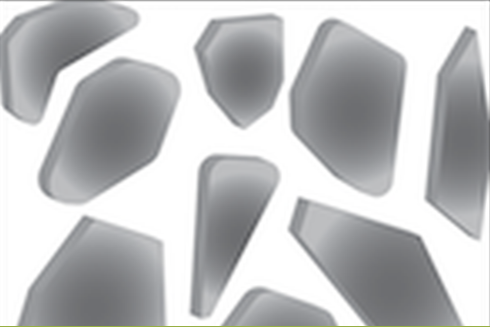
Luke is developing a science project that focuses on mechanical weathering. He takes samples from three different areas. Each area different weathering agents. Connect the images of different rock shapes to the type of action that created those shapes.

Draggable itemCorresponding Item
river action
frost action
wave action
plant action

4

When a rock undergoes chemical weathering, its chemical composition changes. A change in the molecular structure of the rock can result in a faster rate of breakdown. Match the type of chemical weathering process to the correct description.

Draggable itemCorresponding Item
Carbonation
Potassium feldspar in igneous rock is a silicate mineral that reacts with slightly ionized water to form a new mineral
Hydration
a rock that contains the mineral magnesium carbonate dissolves in the presence of carbonic acid.
Hydrolysis
within its structure, minerals react with water molecules causing it to expand and put added pressure on the rock.
Oxidation
Iron minerals in the rock react with oxygen causing it to lose electrons and precipitate as a different mineral.
6

Many forces cause mechanical weathering. Classify the weathering process according to the force that causes it.

  • Liquid water is forced into cracks in the rock.
  • Water within cracks is frozen.
  • Weight of overlying rocks creates pressure and fracture.
  • Sunlight heats the rocks causing them to swell.
  • Plants penetrate cracks in the rock
  • Exfoliation
  • Unloading
  • Wedging
  • Wave Action
  • Expansion
4

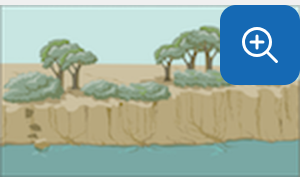
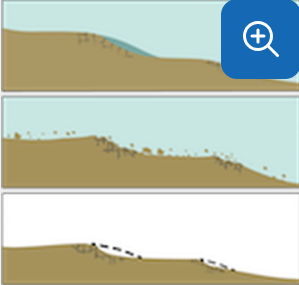
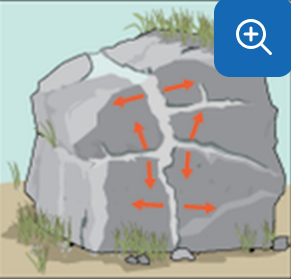
The images illustrate different types of weathering. Connect each term to the associated image.

Draggable itemCorresponding Item
Root Wedging
Exfoliation
Frost Wedging
Abrasion
1

How is chemical weathering different from mechanical weathering?

1

Why is wind an agent of mechanical weathering?

4

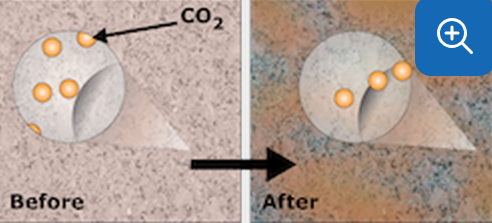
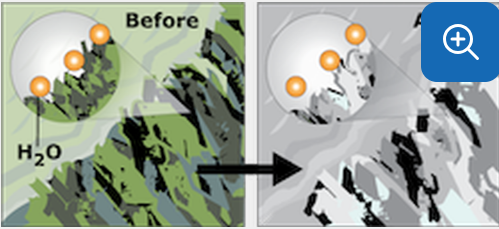
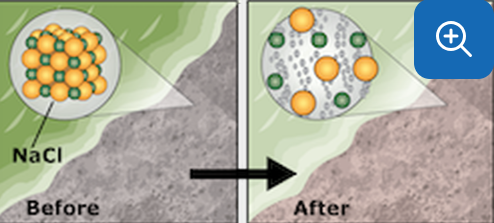
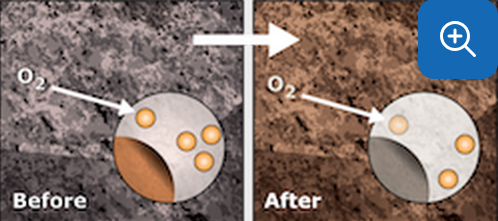
The following diagrams illustrate molecular processes during chemical weathering. Match the type of weathering process to the diagram that shows the corresponding molecular process.

Draggable itemCorresponding Item
dissolution
hydration
oxidation
carbonation