If your grade was less than a C, if you correct all your answers you can earn 204 points. If you earned a C or higher, any corrections will earn you points toward raising your grade.
You receive points you must show all your work on corrected problems.
All corrections are due by Friday, March 11th @ 3:15pm
If your grade was less than a C, if you correct all your answers you can earn 204 points. If you earned a C or higher, any corrections will earn you points toward raising your grade.
You receive points you must show all your work on corrected problems.
All corrections are due by Friday, March 11th @ 3:15pm
Match the definition of the angle relationship with the angle relationships it describes...
| Draggable item | arrow_right_alt | Corresponding Item |
|---|---|---|
Any two angles whose sum is 90° | arrow_right_alt | Vertical angles |
Two angles that are adjacent and supplementary. They form astraight line! | arrow_right_alt | Supplementary angles |
Any two angles whose sum is 180° | arrow_right_alt | Complementary angles |
Two angles that are next to each other and share a common side. | arrow_right_alt | Linear pairs |
Two angles across from each other on intersecting lines. They are always congruent! | arrow_right_alt | Adjacent Angles |
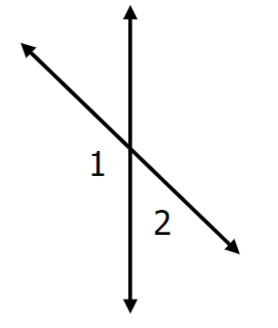
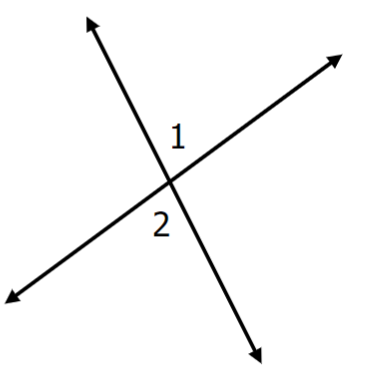
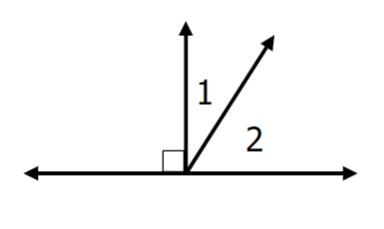
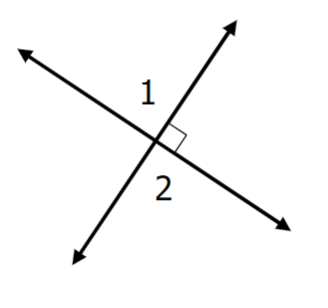
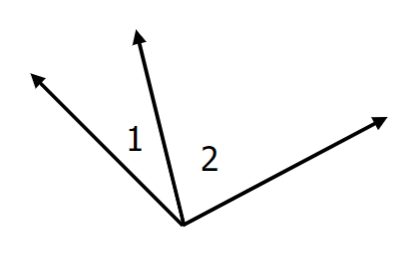
Match the image with the angle relationship it describes...
| Draggable item | arrow_right_alt | Corresponding Item |
|---|---|---|
| arrow_right_alt | Vertical angles | |
| arrow_right_alt | Supplementary angles | |
| arrow_right_alt | Complementary angles | |
| arrow_right_alt | Linear pairs | |
| arrow_right_alt | Adjacent Angles |
What is the value of x?
Find the m∠BDC.
What is the value of x?
What is the value of y?
What is the m∠1?
What is the supplemental angle to ∠1?
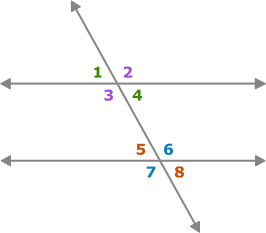
Select all the adjacent angles to ∠5
Select all the angles congruent to ∠6
Select all the angles supplemental to ∠4
Solve for x.
x=
Solve for x.
x=
Use one corner only and connect it to another corner to form a triangle. How many triangles can you form?
Match the number of triangles formed inside each regular polygon.
| Draggable item | arrow_right_alt | Corresponding Item |
|---|---|---|
15 | arrow_right_alt | pentagon |
4 | arrow_right_alt | 17-gon |
3 | arrow_right_alt | quadrilateral |
2 | arrow_right_alt | hexagon |
From Notes page 2, what is the formula for the sum of all the angles of a polygon?
Use the formula from question 12 to match the sum of interior angles with the correct regular polygon.
| Draggable item | arrow_right_alt | Corresponding Item |
|---|---|---|
2700 | arrow_right_alt | decagon |
1440 | arrow_right_alt | octagon |
1080 | arrow_right_alt | pentagon |
540 | arrow_right_alt | 17-gon |
What is the correct order of steps to find one interior angle of a polygon?
Use the formula
to find the sum of the interior angles.
Divide the sum of the interior angles by the number of sides to find each angle.
Count the number of sides.
Use question 12 to help you answer this question.
What is the sum of all the interior angles of this regular polygon?
What is the measure of one angle of this polygon?
Use the properties of parallelograms to solve for the unknown values.
y=
∠B=
∠C=
Use the properties of parallelograms to solve for the unknown values.
x=
B̅C̅=
y=
B̅A̅=
Use the properties of parallelograms to solve for the unknown values.
n=
∠P=
∠Q=
Use the properties of parallelograms to solve for the unknown values.
x=
y=
T̅S̅=
TP=
Find the measure of each angle.
x=
∠QRS=
∠RSQ=