Test 3: Air and Water Quality, Human Impacts and Environmental Legislation

Last updated over 1 year ago
15 questions
Required
1

Select all the main sources of water pollution from the choices below.

Required
1

In each of the following scenarios, there is a source of contamination. Sort each as either a point source or nonpoint source.

  • A chemical factory releases untreated wastewater directly into a nearby river, resulting in elevated levels of toxins downstream.
  • A large oil tanker accidentally spills thousands of gallons of crude oil into the ocean, creating a slick that spreads over miles of coastline.
  • Rainwater flows over impermeable surfaces like roads and parking lots, picking up pollutants such as motor oil, litter, and pet waste before draining into nearby creeks.
  • A gas station's underground fuel storage tank develops a leak, allowing gasoline to seep into the soil and contaminate groundwater in the vicinity.
  • Heavy rainfall washes fertilizers and pesticides from a farm field into a nearby stream, causing algal blooms and fish kills.
  • Point source
  • Nonpoint source
Required
1

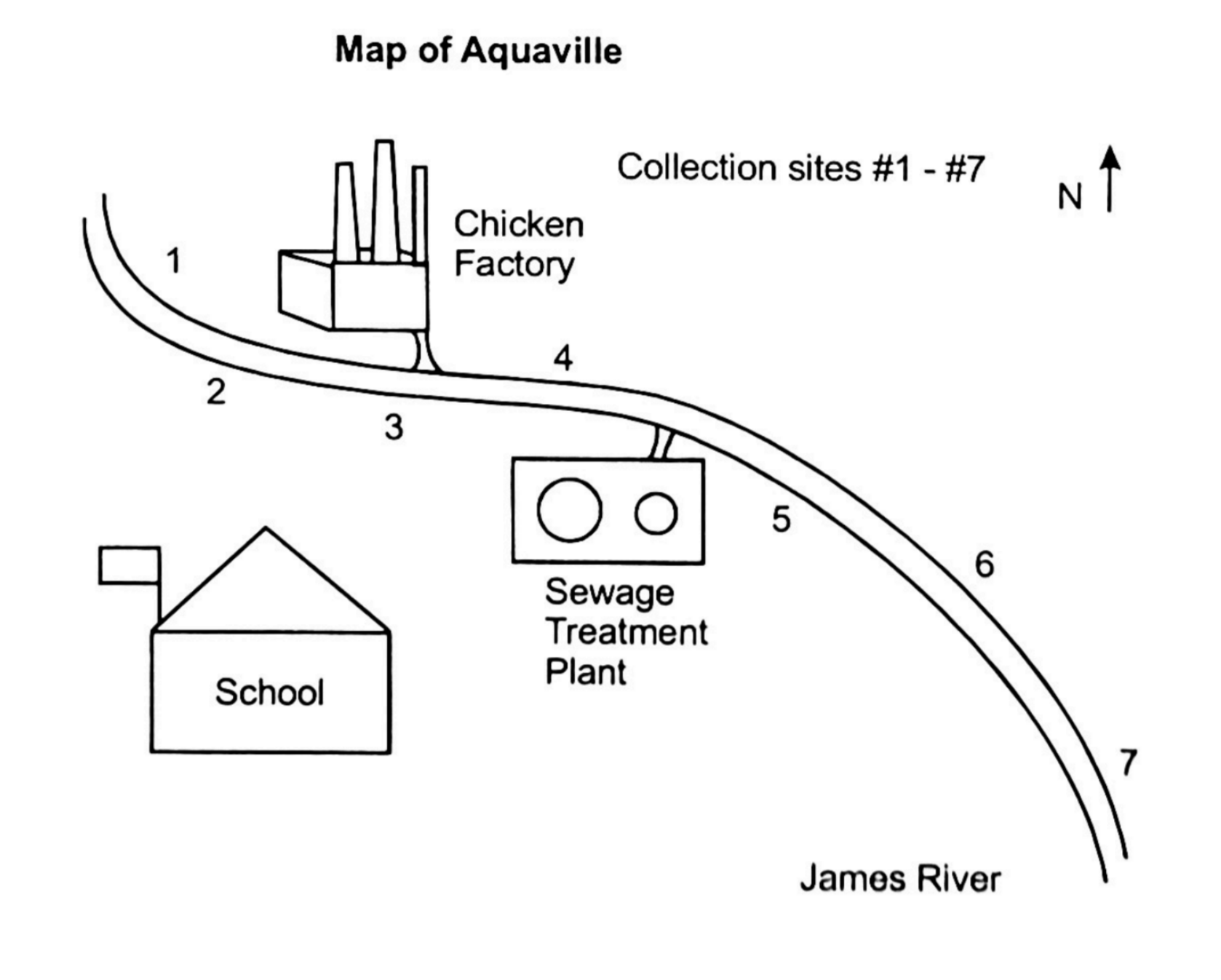
Benthic macroinvertebrates are a useful tool in identifying water quality because different species have different abilities to adapt to changing water quality. In other words, intolerant species will generally be found in less contaminated locations due to their inability to adapt to contaminated water. Below is a map of Aquaville showing the path of a fictional James River and potential contamination sources. If the water of James River generally flows southbound, which site on this map would you expect to have the most tolerant macroinvertebrate species?
Required
1

Match each of the following water borne illnesses to their appropriate descriptions.

Draggable itemCorresponding Item
Hepatitis A
A bacterial infection causing severe diarrhea and dehydration, often transmitted through contaminated water sources in developing countries.
E. coli infection
A parasitic infection causing gastrointestinal symptoms such as diarrhea, abdominal cramps, and nausea, often contracted from contaminated water sources in wilderness areas or developing countries.
Giardiasis
A protozoan infection causing gastrointestinal symptoms such as diarrhea, abdominal cramps, and fever, commonly found in recreational water sources such as swimming pools and lakes.
Cholera
A viral infection causing inflammation of the liver, transmitted through fecal-oral contamination of water or food, leading to symptoms such as jaundice, fatigue, and nausea.
Cryptosporidiosis
A bacterial infection causing gastrointestinal symptoms such as diarrhea, abdominal cramps, and fever, commonly associated with contamination of water sources by human or animal feces.
Required
1

Which of the following best describes LD50?

Required
1

Based on what you know about biomagnification, reorder the following images in order from lowest to highest concentrations of toxic substances.

  1. large fish (e.g. tuna)
  2. polar bear
  3. seal
  4. small fish (e.g. anchovies)
  5. phytoplankton
  6. zooplankton
Required
1
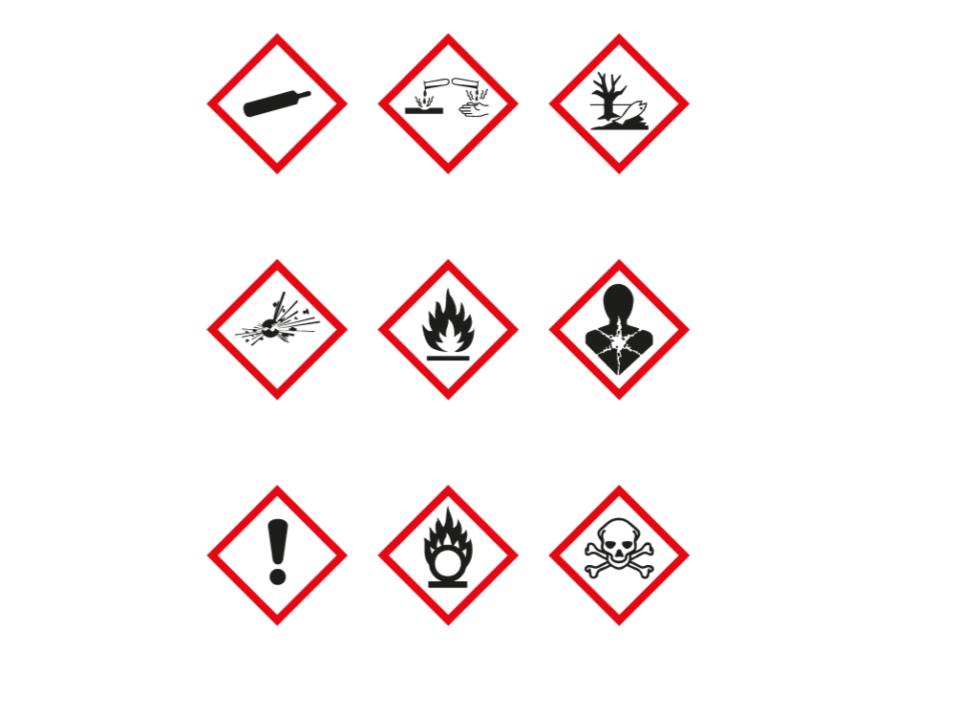
Label each of the following Hazardous Waste Symbol with their appropriate meaning.
Other Answer Choices:
health hazard
explosive
oxidizing
toxic
corrosive
compressed gas
environmentally damaging
flammable
irritant
Required
1

Match each type of hazardous waste to its definition

Draggable itemCorresponding Item
E-waste
Waste generated from healthcare facilities, such as hospitals and clinics, containing infectious or potentially infectious materials.
Radioactive waste
Waste resulting from the use, handling, or disposal of chemicals, including solvents, pesticides, and laboratory reagents.
Chemical waste
Waste containing substances that are harmful or fatal when ingested, inhaled, or absorbed through the skin, posing health risks to humans and ecosystems.
Toxic waste
Waste generated from the production, use, or disposal of electronic devices and equipment, such as computers, televisions, and cell phones.
Biomedical waste
Waste containing radioactive materials, such as spent nuclear fuel, nuclear reactor components, or radioactive medical equipment.
Required
1
Eutrophication is the process by which a body of water becomes overly enriched with_______ and organic matter , leading to excessive growth of _______ such as algae and aquatic plants. This excessive growth can result in decreased levels of dissolved oxygen and _______ , and may eventually lead to the formation of dead zones where _______ levels are too low to support aquatic life.
Required
1

What is the main purpose of the Clean Air Act?

Required
1
Draggable itemCorresponding Item
Clean Water Act (CWA)
A United States federal law enacted to protect and improve water quality by regulating pollutant discharge into water bodies and setting water quality standards.
Montreal Protocol
An international treaty aimed at phasing out the production and consumption of ozone-depleting substances (ODSs) to protect the ozone layer.
Endangered Species Act (ESA)
A United States federal law designed to protect endangered and threatened species and their habitats.
Kyoto Protocol
An international treaty under the United Nations Framework Convention on Climate Change (UNFCCC) aimed at reducing greenhouse gas emissions to combat climate change.
National Environmental Policy Act (NEPA)
A United States federal law that establishes the basic structure for environmental impact assessments of federal government actions.
Required
1

Select all of the following options that represent renewable resources:

Required
1

Groundwater refers to the water found beneath the Earth's surface in soil pore spaces and in the fractures of rock formations. It originates from precipitation that infiltrates the soil and percolates downward until it reaches the water table, where it fills the spaces between grains of soil and rock. Groundwater is distinct from surface water sources such as rivers and lakes because it is located underground and often moves slowly through subsurface aquifers. Based on this information, identify potential sources of contamination groundwater might have due to its location.

Required
1
Waste refers to any unwanted material or substance that results from a human activity or process and includes types such as __________, which originates from homes and businesses, __________, which results from manufacturing, agriculture and mining, __________, and __________, which includes used and discarded water and runoff.
Required
1

What is the difference between bioaccumulation and biomagnification?