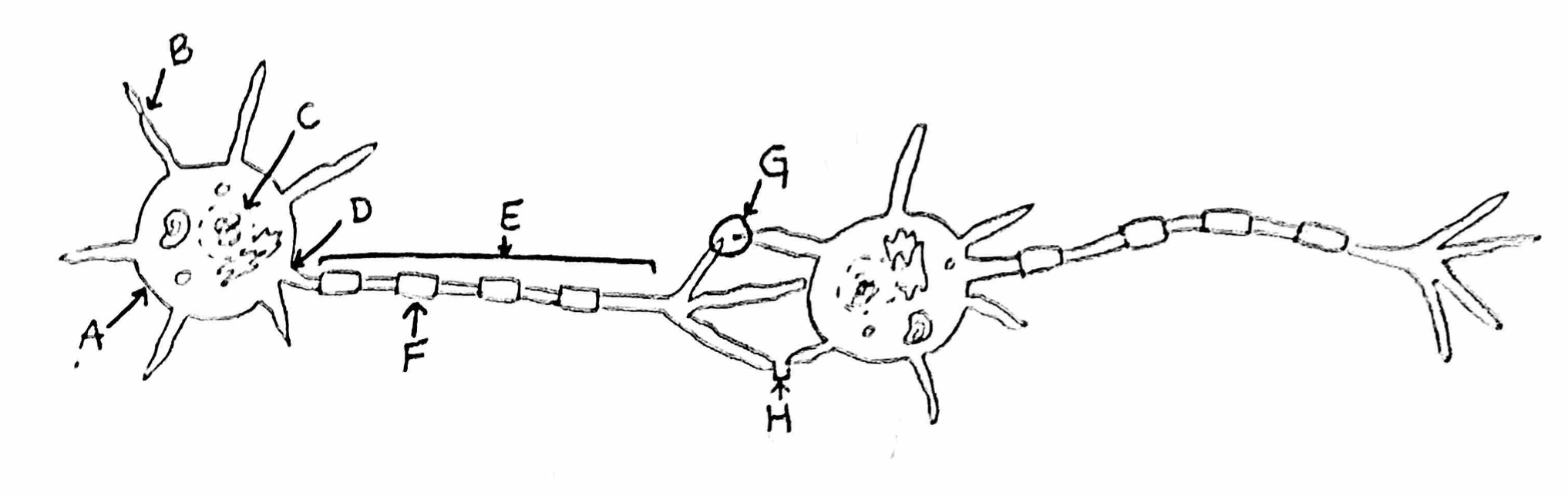
What is A pointing to?
What is B pointing to?
What is C pointing to?
What is D pointing to?
What is E pointing to?
What is F pointing to?
What is G pointing to?
What is H pointing to?
The signal sent down the axon is an _____________ signal because it involves electrical charge changes.
What is the charge inside of a neuron when it is at rest?
What is the charge outside of a neuron when it is at rest?
What charge does the inside of the neuron change to when a signal is received from the previous neuron?
What charge does the outside of the neuron change to when a signal is received from the previous neuron?
What is the name of the signal being sent down the axon?
What is surrounding and insulates parts of the axon that increase the speed of a signal being sent down an axon?
The myelin surrounding the axon is made up of ... (select all that apply)
What are the names of the cells that produce the myelin?
What is the name of the exposed parts of the axon that are not covered in myelin?
The cell before a synapse is known as the ____________________ cell.
The cell after a synapse is known as the ____________________ cell.
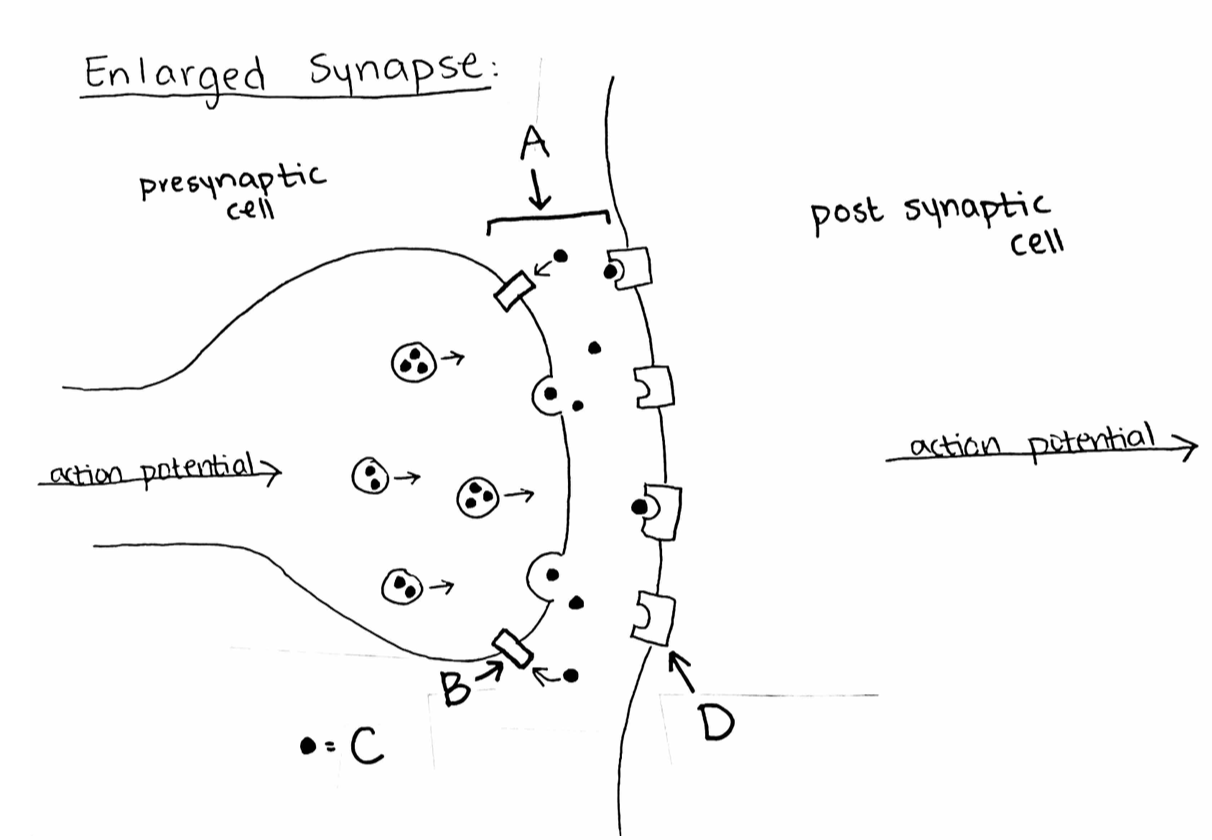
What is A pointing to?
What is B pointing to?
What is C pointing to?
What is D pointing to?
What type of membrane transport occurs to release neurotransmitters into the synaptic cleft?
Once the neurotransmitters are in the synaptic cleft, what do they bind to in order to signal a new action potential in the post-synaptic cell?
When the new action potential is triggered in the post synaptic cell what does the charge inside of the postsynaptic cell change to?
Which of the following can occur to stop the signal from continuing to be sent down the postsynaptic cell?