Log in
Sign up for FREE
arrow_back
Library

Unit 8 Test Corrections

star
star
star
star
star
Last updated almost 2 years ago
13 questions
Required
1
5.10.A
Required
1
5.10.B
Required
1
5.10.A
Required
1
3.10.B
Required
1
5.10.B
Required
1
5.10.A
Required
1
5.10.B
1
5.10.A
Required
1
5.10.B
Required
1
5.10.A
Required
1
5.10.A
1
5.10.B
1
5.10.B
Question 1
1.

Question 2
2.

Question 3
3.

Question 4
4.

Question 5
5.

Question 6
6.

Question 7
7.

Question 8
8.

Question 9
9.

Question 10
10.

Question 11
11.

Question 12
12.

Question 13
13.

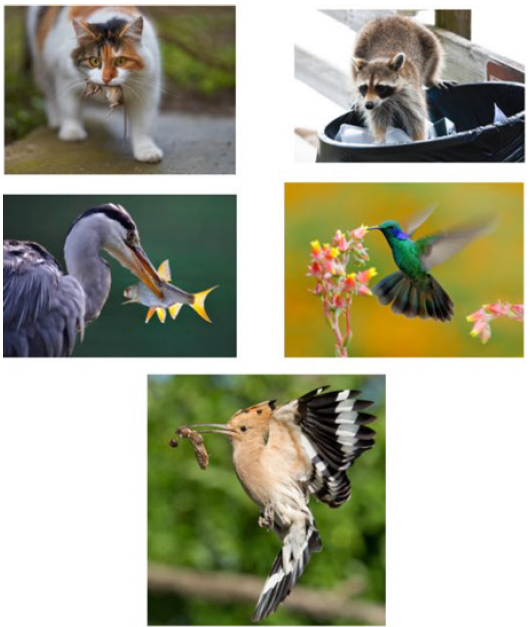
Below are pictures of animal behaviors of each species providing food for themselves.


Which picture shows an animal behavior of providing food that is learned?
In the box below, explain which animal is providing food for themselves through a learned behavior. Explain why the behavior is considered learned.

The foot of a hawk and the foot of a chicken are shown.
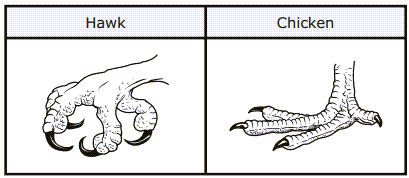

The difference between the shapes of their feet is most likely associated with the —
predators that hunt them
climate in which they live
way they get their food
distance they can fly
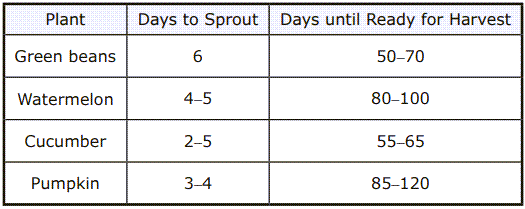
A gardener plants seeds in the garden. After the flower stage, the fruits and vegetables grow. A table of how many days are needed for some plants to be ready for harvest is shown.


Which statement is supported by the data shown in the table?
Pumpkins take the most time to sprout and to be ready for harvesting.
Green bean seeds sprout faster because they are smaller than other seeds.
Cucumbers are ready for harvest in less time than watermelons.
Watermelon seeds take longer to sprout because watermelon plants produce large fruits.
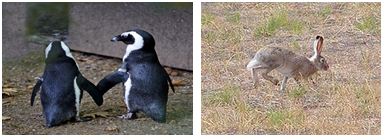
Penguins and a rabbit are pictured in their natural environments.


Flippers on penguins and strong back legs of rabbits are limb adaptations that help these animals —
find food
leap long distances
swim across the pond
escape predators
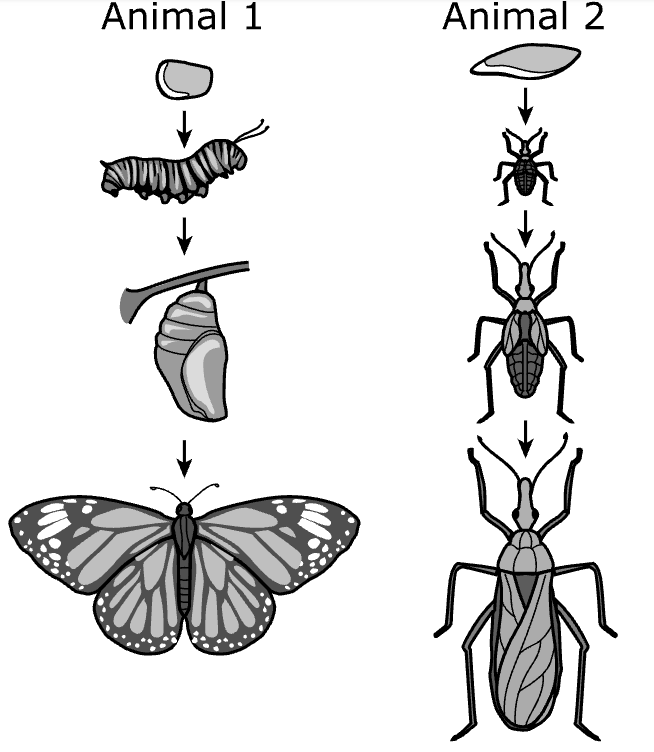
The life stages of two animals are shown.


Which statement BEST describes a stage in the animals' development?
Animal 1 changes form to become an adult.
Both animals look like the adult while growing up.
Animal 2 reaches adulthood in a shorter period of time.
Both animals have young that live in similar habitats.
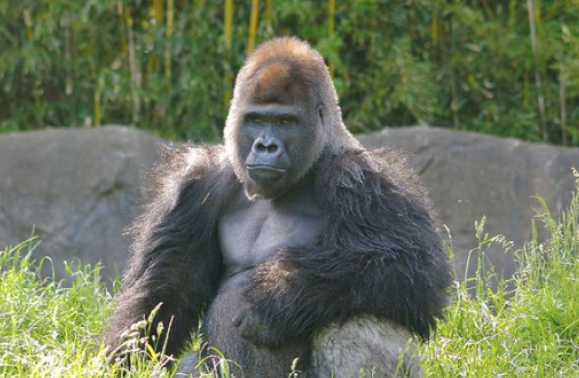
A class visits the zoo and observes the gorilla habitat for several minutes.


Which of the following observations are learned behaviors?

Choose TWO correct answers.
The gorilla ate a piece of bamboo that was growing in the habitat.
The gorilla used a stick to dig an ant out of a hole.
The gorilla had thick, black fur on most of its body.
The gorilla ran to the zookeeper and became excited at feeding time.
The gorilla laid in the grass and slept.
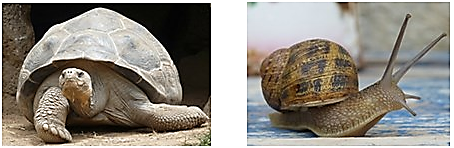
The shells of a tortoise and a snail are shown below.


How do shells help the organisms pictured above?
They help the organisms move from one place to another.
They help the organisms defend against predators.
They help the organisms catch and kill their food.
None of these
Which group contains only inherited traits?
Most polar bears live in the arctic tundra. Which structures of a polar bear are adapted to help it survive in the tundra’s cold, snowy climate?

Select TWO correct answers.
White fur
Four legs
Thick layer of fat
sharp claws
Pointed teeth
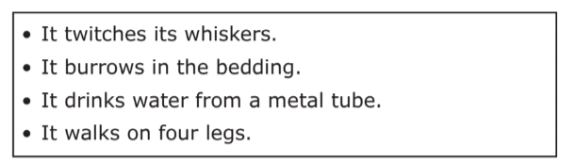
Students observe a gerbil in a cage. They write their observations as shown.


Which of these observations is most likely a learned behavior?
Twitching its whiskers
Burrowing in the bedding
Drinking water from a metal tube
Walking on four legs
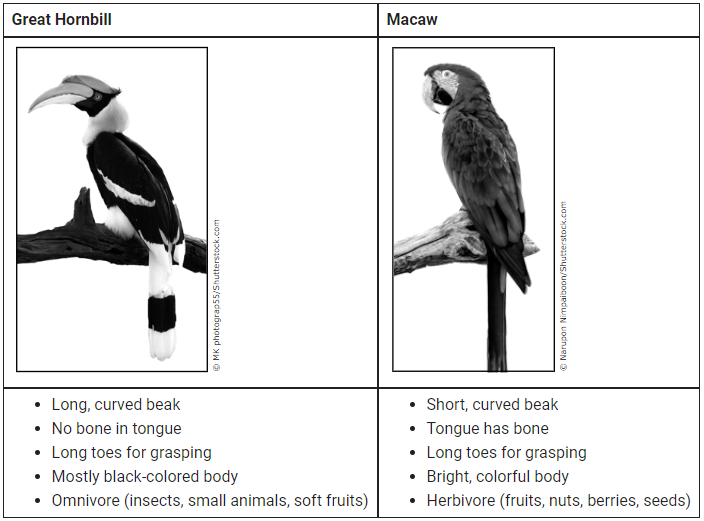
The table shows characteristics of two different types of birds that live in similar forest environments.


Which statement explains an advantage of a bone in the macaw's tongue that the hornbill does NOT need?
It helps macaws catch and chew small mammals and crustaceans.
It helps macaws break open and eat tropical fruits and nuts.
It helps macaws make large holes in trees to reach insects to eat.
It helps macaws swallow whole prey.
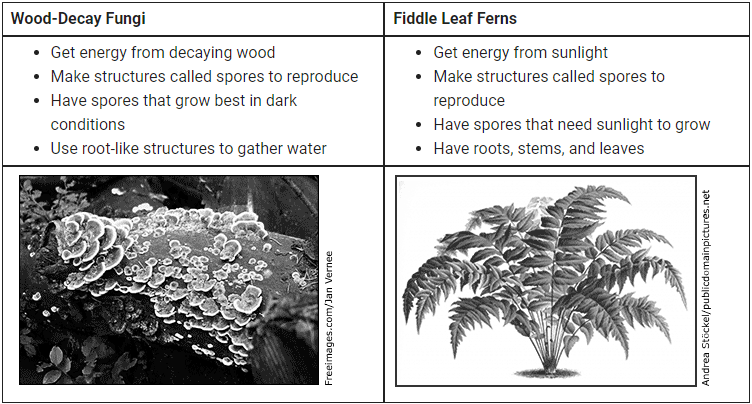
The tallest trees in a rain forest are removed for lumber. This increases the amount of light on the forest floor. The table shows information about fungi and ferns that grow on the forest floor.


Which statement explains why one organism is better adapted to the removal of the tall trees?
The fungi are better adapted because they have spores that grow better in the dark.
The ferns are better adapted because they have strong root systems.
The fungi are better adapted because they can get energy from decaying trees.
The ferns are better adapted because they get energy from the sun.
A student makes a list to describe a friend. Which of the listed characteristics is a learned behavior?

Select TWO correct answers.
Brown eyes
Draws well
Has freckles
Reads daily
Blond hair