Unit 8 Review - Structures & Functions

Last updated over 1 year ago
20 questions
Required
1

A ptarmigan’s feathers change from brown in the summer to white in the winter. An Arctic hare’s fur changes from brown or gray in the summer to white in the winter.
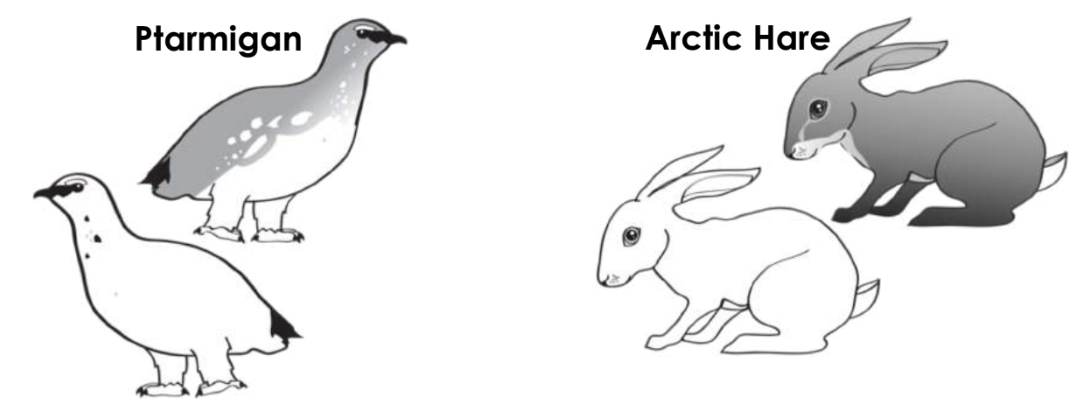

In which environment are animals with this adaptation best suited?
Required
1

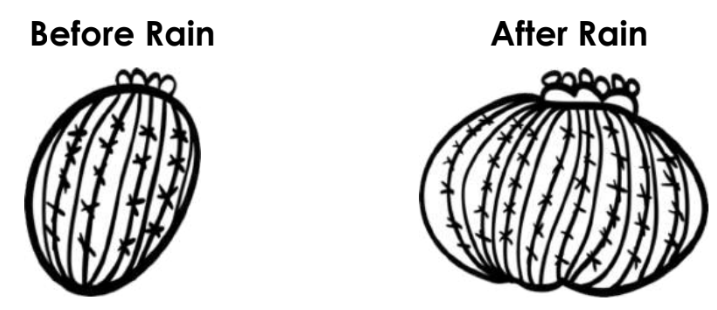
The barrel cactus can expand and contract similar to a balloon! During rain, the barrel cactus’s volume increases to store water. As they use up the water, their volume decreases. When it rains again, the cactus expands.


What characteristic of the environment does the adaptation described help the barrel cactus adapt to?

Required
1

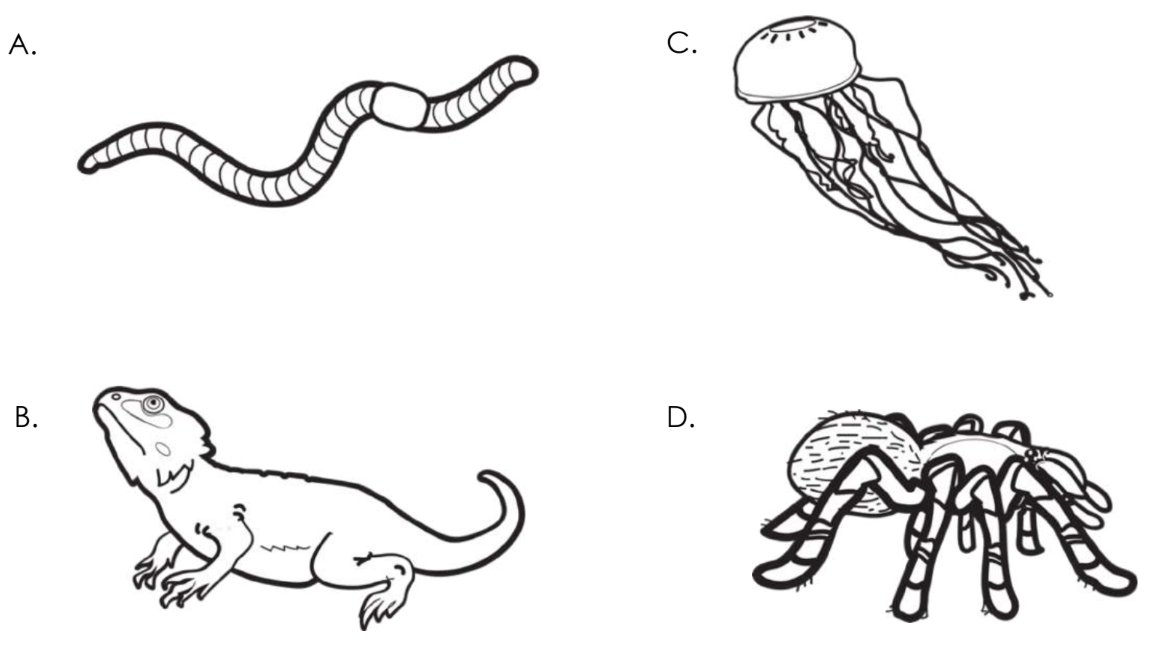
Which organism is a vertebrate, an organism with a spine?

Required
1

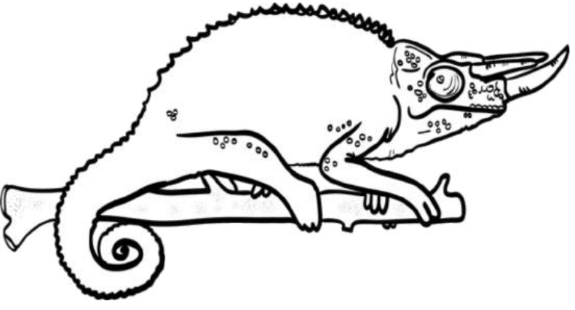
The Jackson’s chameleon is an insect- eating reptile that lives in mountain forests. Unlike most other chameleons, female Jackson’s chameleons give birth to their babies. The babies are born brown but turn green. Males have three horns. Females have no horns. All Jackson’s chameleons have a curled prehensile tail.

What characteristic of the Jackson’s chameleon is used by a male to defend its territory?

Required
1

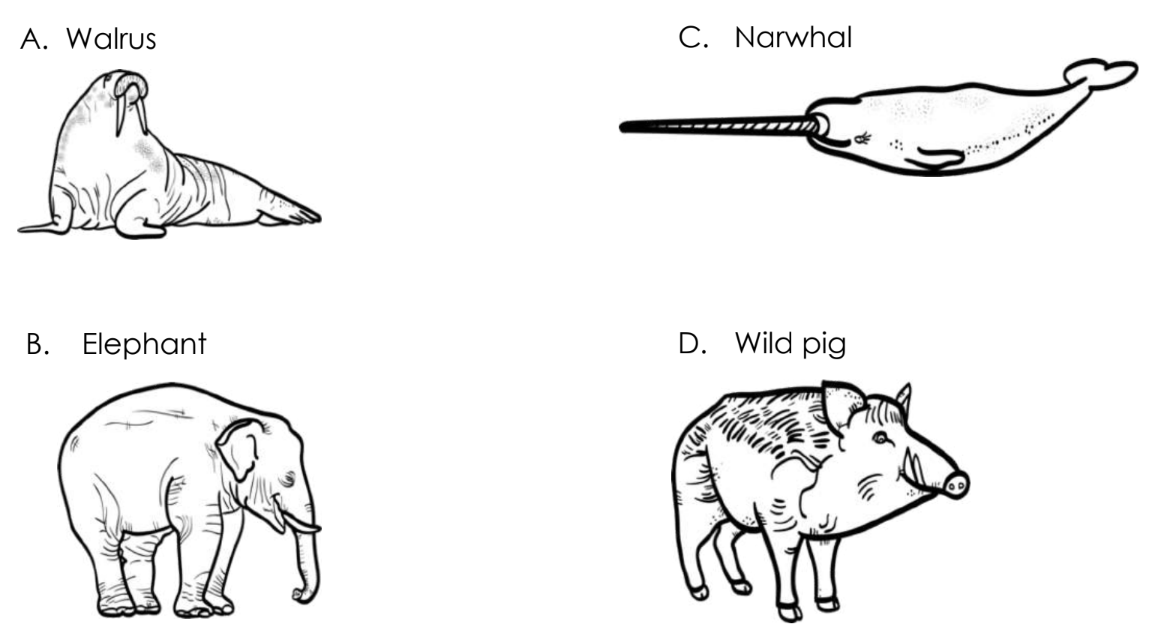
Which animal’s tusks are most likely used to help them climb out from water onto the ice?

Required
1

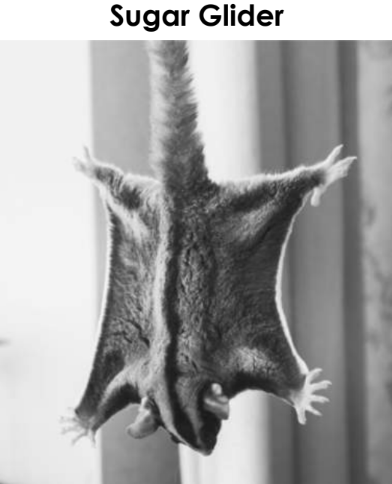
Sugar gliders are marsupials from Australia that have a built in parachute. While these creatures can’t actually fly, they can glide as they leap from tree to tree. To glide, they use flaps of skin that are connected to the front and hind legs.

Which organism’s structure has a similar function as the sugar glider’s skin flaps?

Required
1

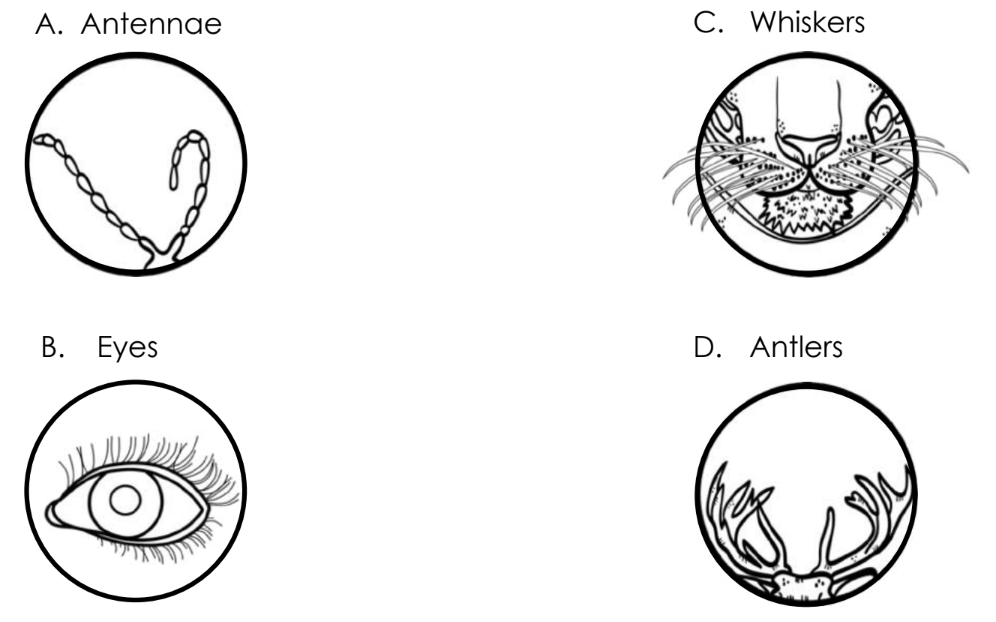
Which structure is NOT primarily used for helping an animal sense its environment?

Required
1

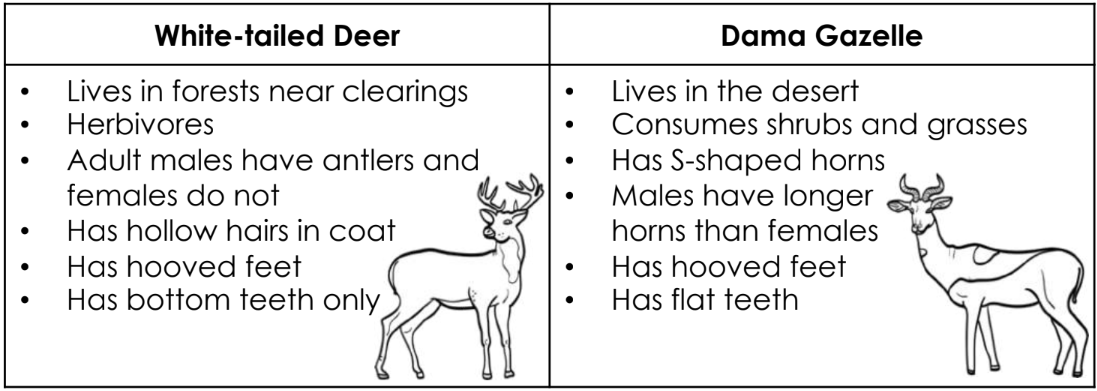
The chart describes the white-tailed deer and dama gazelle


What characteristic of the white-tailed deer helps it stay warm in a cold environment?

Required
1

Many prairie grasses and aquatic plants have flexible stems. How does this adaptation help these plants survive in different environments?

Required
1

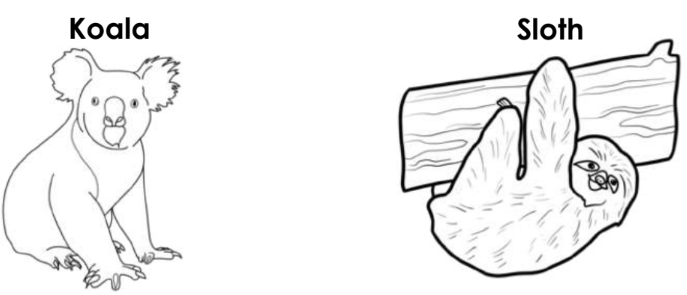
Both sloths and koalas spend nearly all of their time in trees. Both animals sleep over 15 hours a day! Both are herbivores. Koalas munch exclusively on eucalyptus leaves, while sloths eat a variety of leaves.


How do sharp claws help both the koala and sloth survive?

Required
1

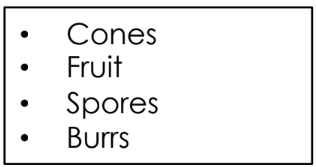
Four characteristics of different plants are listed.


What is the function of all four characteristics?

Required
1

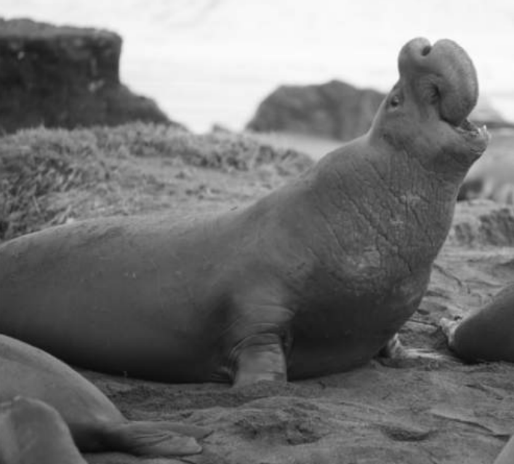
Unlike most mammals, elephant seals spend most of their time underwater. They have large amounts of blubber, nostrils that can remain closed for long periods, large noses in adult males, and whiskers.

Which characteristic of the elephant seal helps it sense its environment?

Required
1

Scales are made of keratin, the same material in your hair and fingernails. Most reptiles, such as alligators and snakes, have scales. A pangolin is a scaly- skinned, nocturnal mammal that lives in forests and grasslands. It can curl into ball to protect its body, burrow underground, and climb trees. It is a toothless insectivore that uses its claws to dig up ant and termite mounds for a delicious feast!


What is most likely the function of a pangolin’s scales?

Required
1

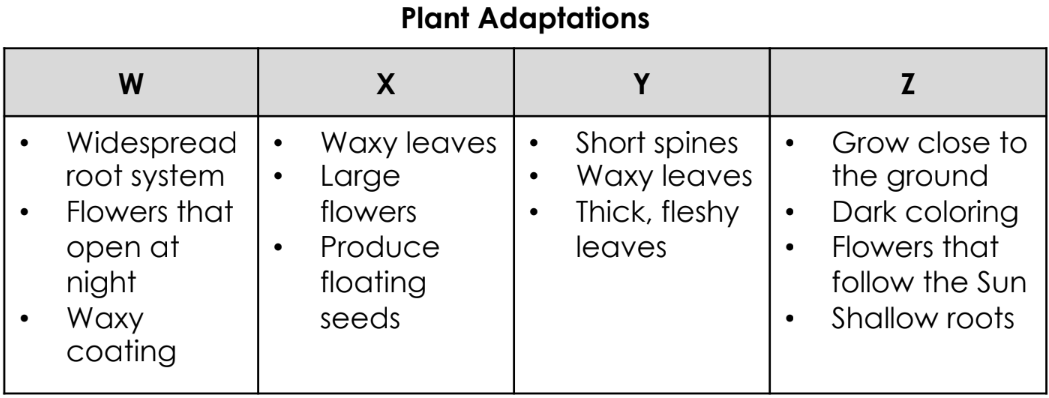
The chart describes some plant adaptations.


Based on these adaptations, which of the plants are most likely located in the desert?

Required
1

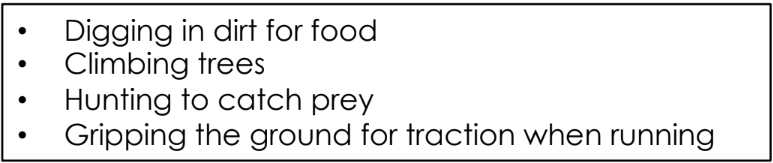
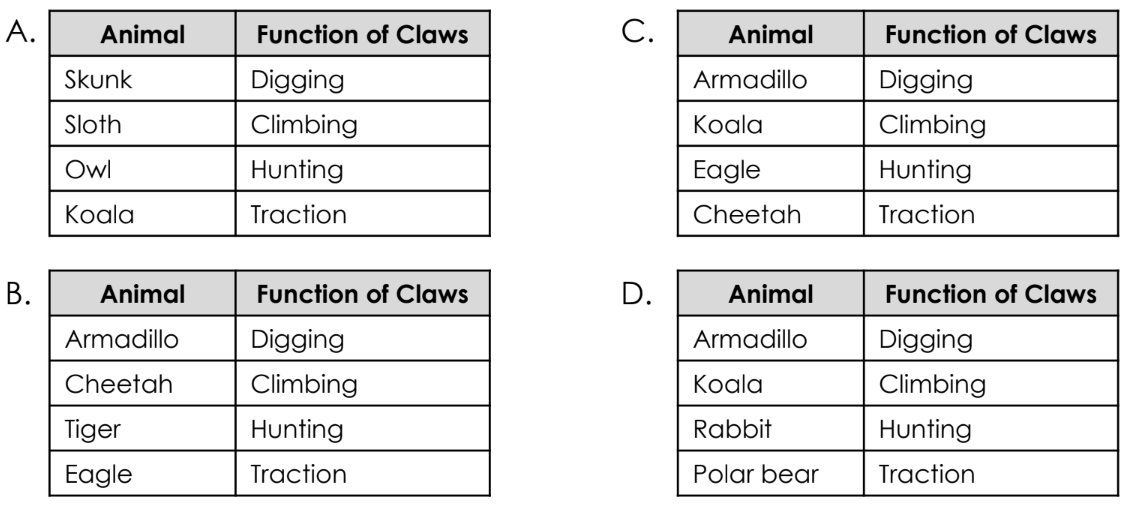
Four functions of claws are shown in the box.


Which table best matches the animal to the function of its claws?

Required
1

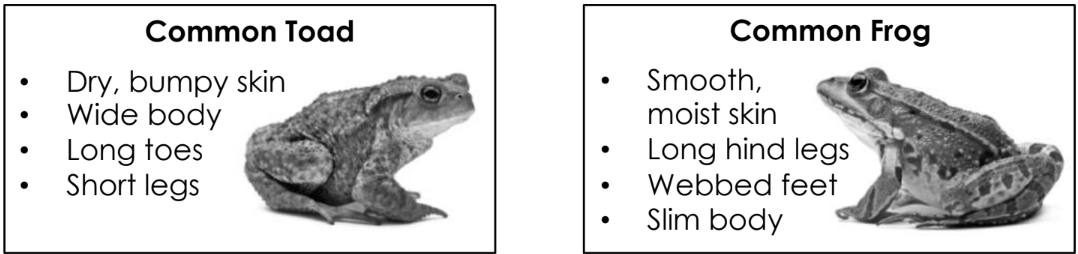
Toads and frogs are both amphibians. While toads spend most of their time on land, frogs spend most of their time in water.


Which statement does NOT describe how the body structures help them move in their environments?

Required
1

Sea lions and camels live in very different environments, but both have nostrils that can close.

How does this ability help them survive in their unique environments?

Required
1

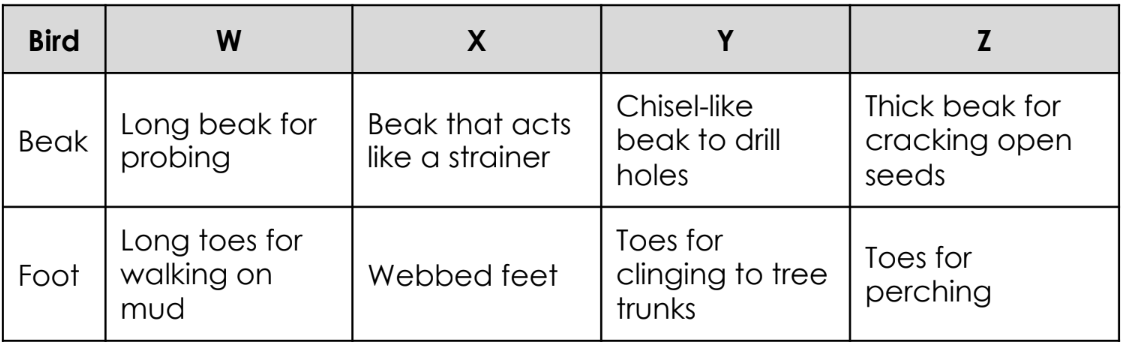
The chart describes some beak and foot adaptations that help four bird species survive in different habitats.


Based on these adaptations, which of the birds most likely live in a forest environment?

Required
1

The pictures show two types of trees that can survive cold winters.


While these trees grow in similar environments, their leaves have different structures. What differences in the structure of the leaves of these plants help them survive during cold winters?

Required
1

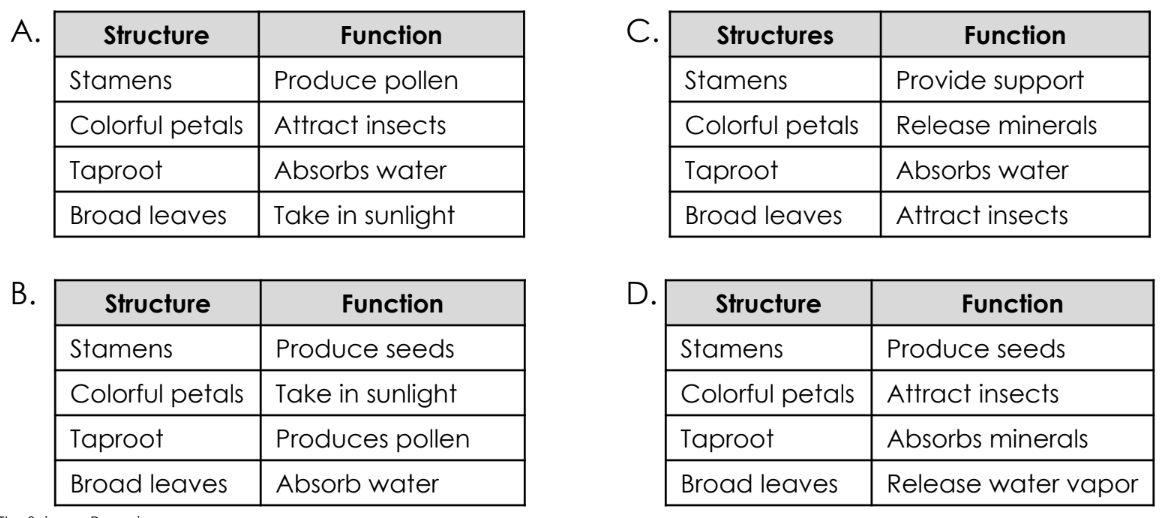
Four flowering plant structures are listed.


Which table best matches the plant structure to the function?