Log in
Sign up for FREE
arrow_back
Library
Musculoskeletal System Part 1 Practice
By Kate Turner
star
star
star
star
star
Share
share
Last updated 11 months ago
30 questions
Add this activity
1
1
1
1
1
1
1
1
1
1
1
1
1
1
1
1
1
1
1
1
1
1
1
1
1
1
1
1
1
1
Question 1
1.
Which of the following are functions of the skeletal system? Select all that apply.
Allows for movement by anchoring muscles
Transports oxygen
Produces blood cells
Provides support
Stores minerals like calcium and phosphorus
Regulates metabolism
Protects internal organs
Question 2
2.
Which of the following are functions of the muscular system? Select all that apply.
Supports the gastrointestinal system by helping to move food throughout the digestive tract
Maintains posture
Filters blood
Allows for movement
Helps to circulate blood throughout the body
Produces blood cells
Generates body heat
Question 3
3.
Which of the following are components of the skeletal system? Select all that apply.
Anterior Cruciate Ligament (ACL)
Posterior Cruciate Ligament (PCL)
Skull
Small intestine
Bicep
Hamstring tendon
Cartilage
Brain
Rotator cuff tendon
Rib cage
Heart
Question 4
4.
Which of the following are components of the muscular system? Select all that apply.
Liver
Skull
Anterior Cruciate Ligament (ACL)
Brain
Hamstring tendon
Smooth muscles
Bicep
Rib cage
Heart
Rotator cuff tendon
Skeletal muscles
Posterior Cruciate Ligament (PCL)
Cartilage
Question 5
5.
Sort the following into the axial or appendicular skeleton.
Bones in the arms
Bones in the legs
Rib cage
Skull
Vertebrae
Bones in the fingers
Pelvis
Axial Skeleton
Appendicular Skeleton
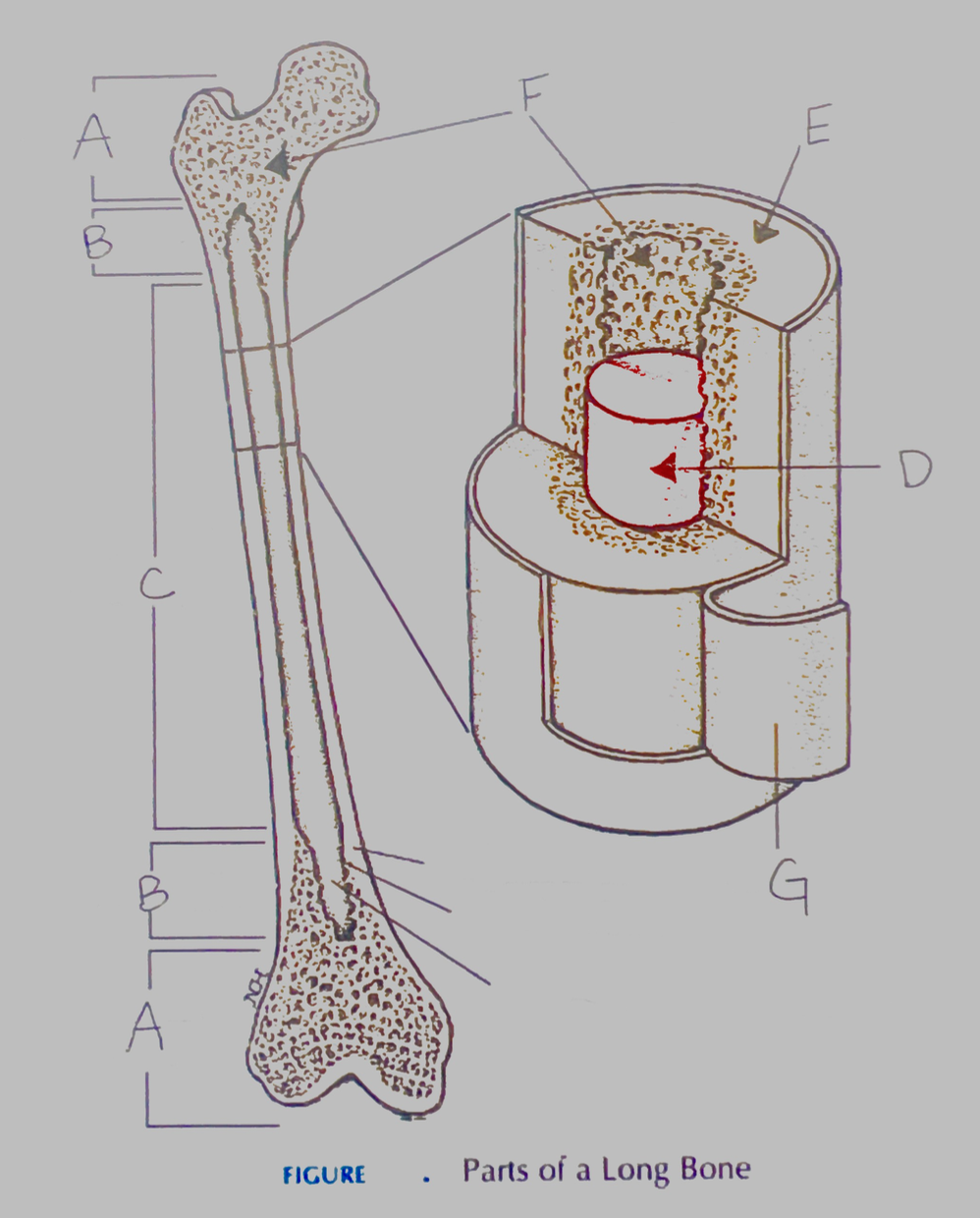
Use the next diagram to answer the questions that follow.
zoom_in
Question 6
6.
What part of the long bone are the two As pointing to? (no need to write proximal or distal)
Question 7
7.
What part of the long bone are the two Bs pointing to?
Question 8
8.
What part of the long bone is C pointing to?
Question 9
9.
If D produces red blood cells, what is it pointing to?
Question 10
10.
If D stores fat, what is it pointing to?
Question 11
11.
What is E pointing to?
Question 12
12.
Which of the following is true about structure E? Select all that apply.
It is very hard
It is very dense
It stores fat
It is very porous
It stores calcium
It produces red blood cells
It has canals for blood vessels
It helps to make the bones strong and not easy to break
Question 13
13.
What is F pointing to?
Question 14
14.
Which of the following is true about structure F? Select all that apply.
It is still very strong
It is very dense
It is porous
It helps to keep the bones light
It produces red blood cells
It stores fat
It is located in the epiphysis
Question 15
15.
What is G pointing to?
Now you're going to answer some questions about muscles and contracting muscles.
Question 16
16.
What are the protein strands that make up muscle cells called?
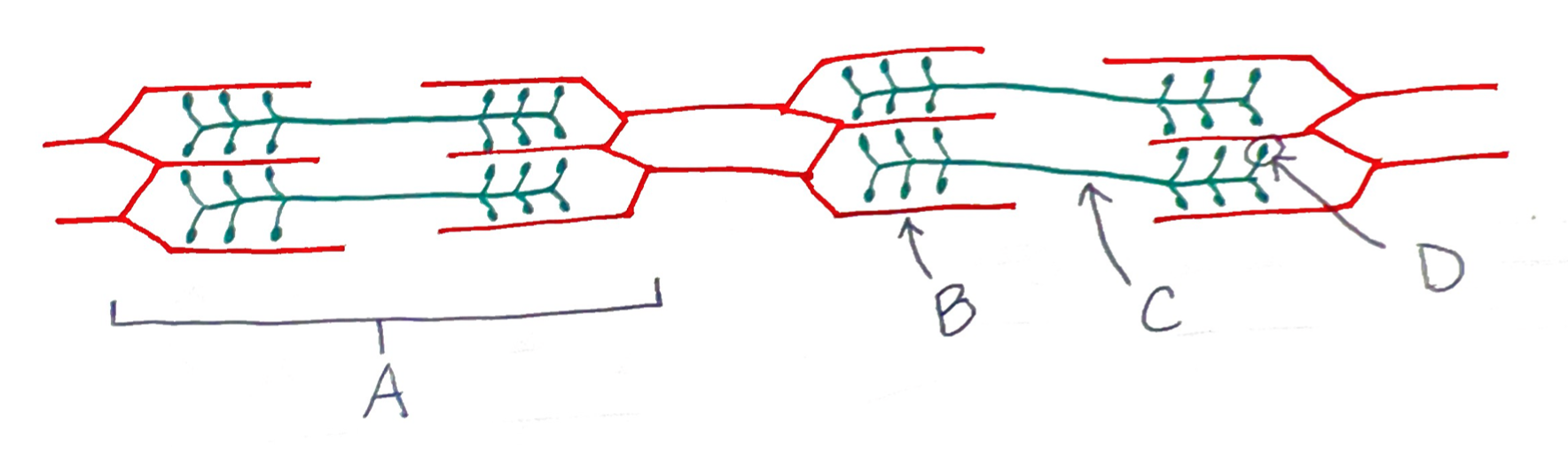
Look at the following diagram to answer the questions that follow.
zoom_in
Question 17
17.
What is A pointing to?
Question 18
18.
What happens to A when a muscle contracts?
It gets shorter
It gets longer
It stays the same length
Question 19
19.
What happens to A when a muscle relaxes?
It gets shorter
It gets longer
It stays the same length
Question 20
20.
What is B pointing to (the red)?
Question 21
21.
Is B the thick or the thin filament?
Thin
Thick
Question 22
22.
What happens to B when a muscle contracts?
It gets shorter
It gets longer
It stays the same length
Question 23
23.
What happens to B when a muscle relaxes?
It gets shorter
It gets longer
It stays the same length
Question 24
24.
What is C pointing to (the green)?
Question 25
25.
Is C the thick of the thin filament?
Thick
Thin
Question 26
26.
What happens to C when a muscle contracts?
It gets shorter
It gets longer
It stays the same length
Question 27
27.
What happens to C when a muscle relaxes?
It gets shorter
It gets longer
It stays the same length
Question 28
28.
What is D pointing to?
Question 29
29.
What needs to bind in order for D to attach to the actin?
Question 30
30.
What attaches in order to release the myosin heads from the actin?