Log in
Sign up for FREE
arrow_back
Library

DE_LE_3.1_History of Life on Earth_TestBank

star
star
star
star
star
Last updated 7 months ago
19 questions
Practice Assessment
1
1
1
1
1
1
1
1
1
1
1
1
Summative Assessment
1
1
1
1
1
1
1
Question 1
1.

Question 2
2.

Question 3
3.

Question 4
4.

Question 5
5.

Question 6
6.

Question 7
7.

Question 8
8.

Question 9
9.

Question 10
10.

Question 11
11.

Question 12
12.

Question 13
13.

Question 14
14.

Question 15
15.

Question 16
16.

Question 17
17.

Question 18
18.

Question 19
19.

According to the diagram, which organisms do NOT share a common ancestor?
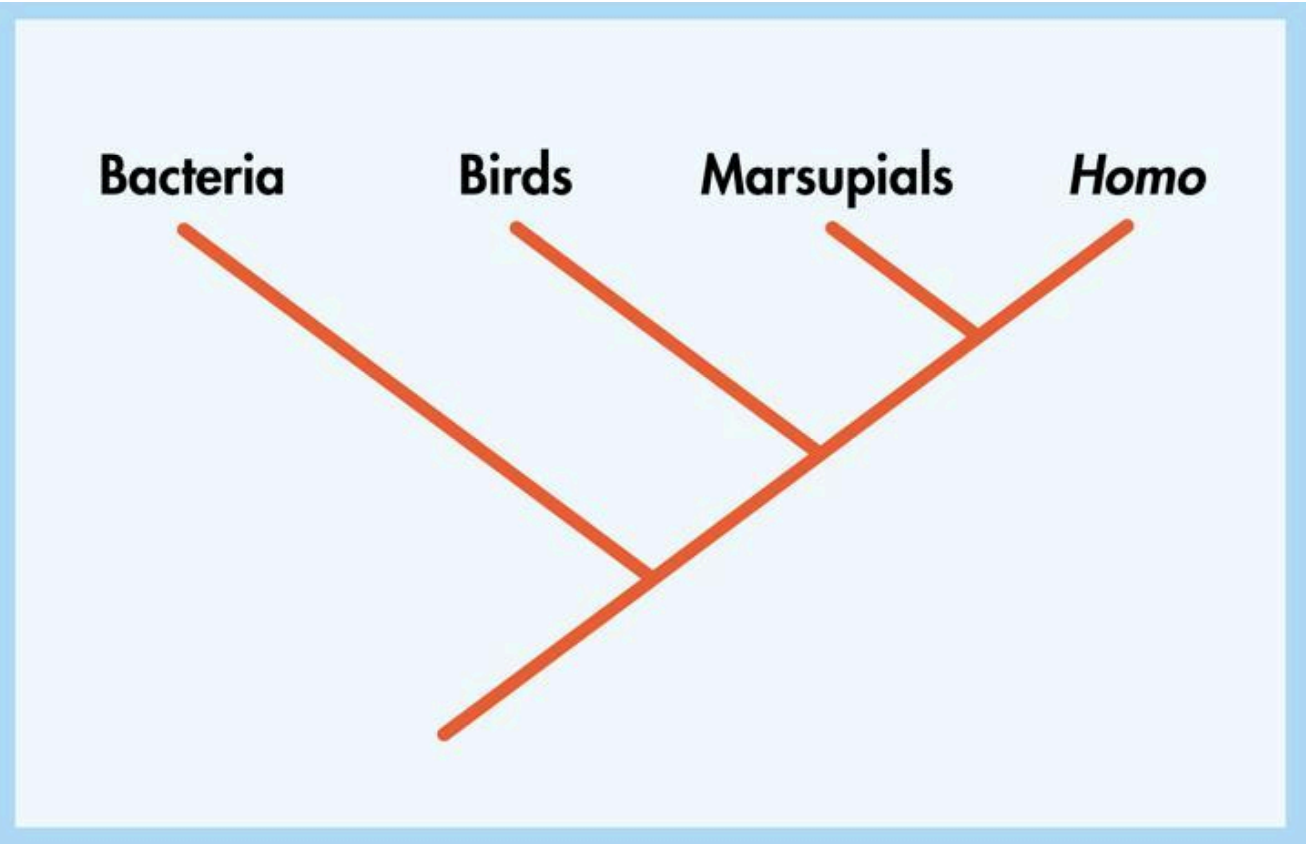
bacteria and modern man
birds and modern man
bacteria and marsupials
they all share a common ancestor
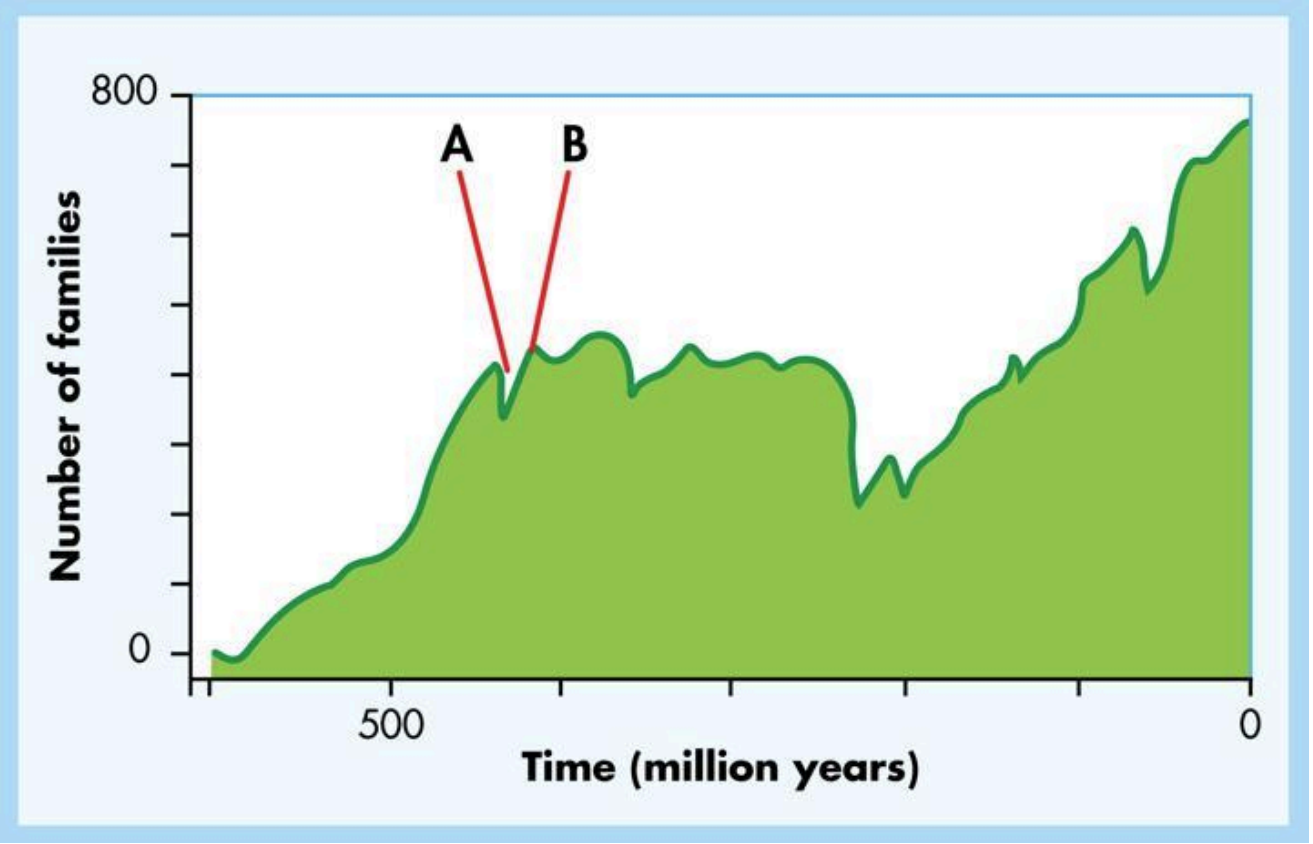
Event A is an example of _______, and Event B is an example of ________.
gradual extinction; episodic speciation
mass extinction; episodic speciation
episodic speciation; gradual extinction
episodic speciation; mass extinction
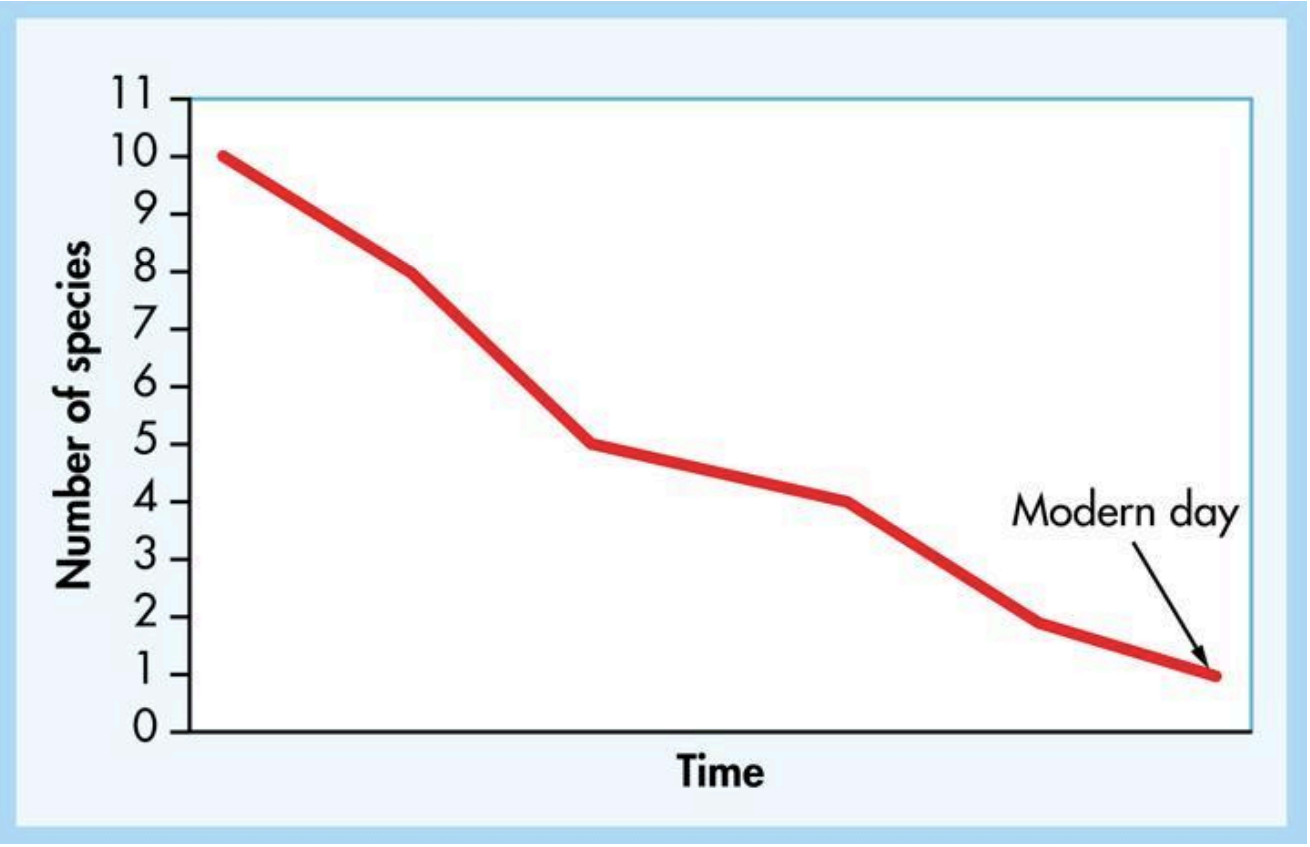
This graph shows the number of living species of a taxonomic unit of organisms. Using your knowledge of the history of life on Earth, which group of organisms do you think this graph represents?
modern humans
apes
Homo
Neanderthals
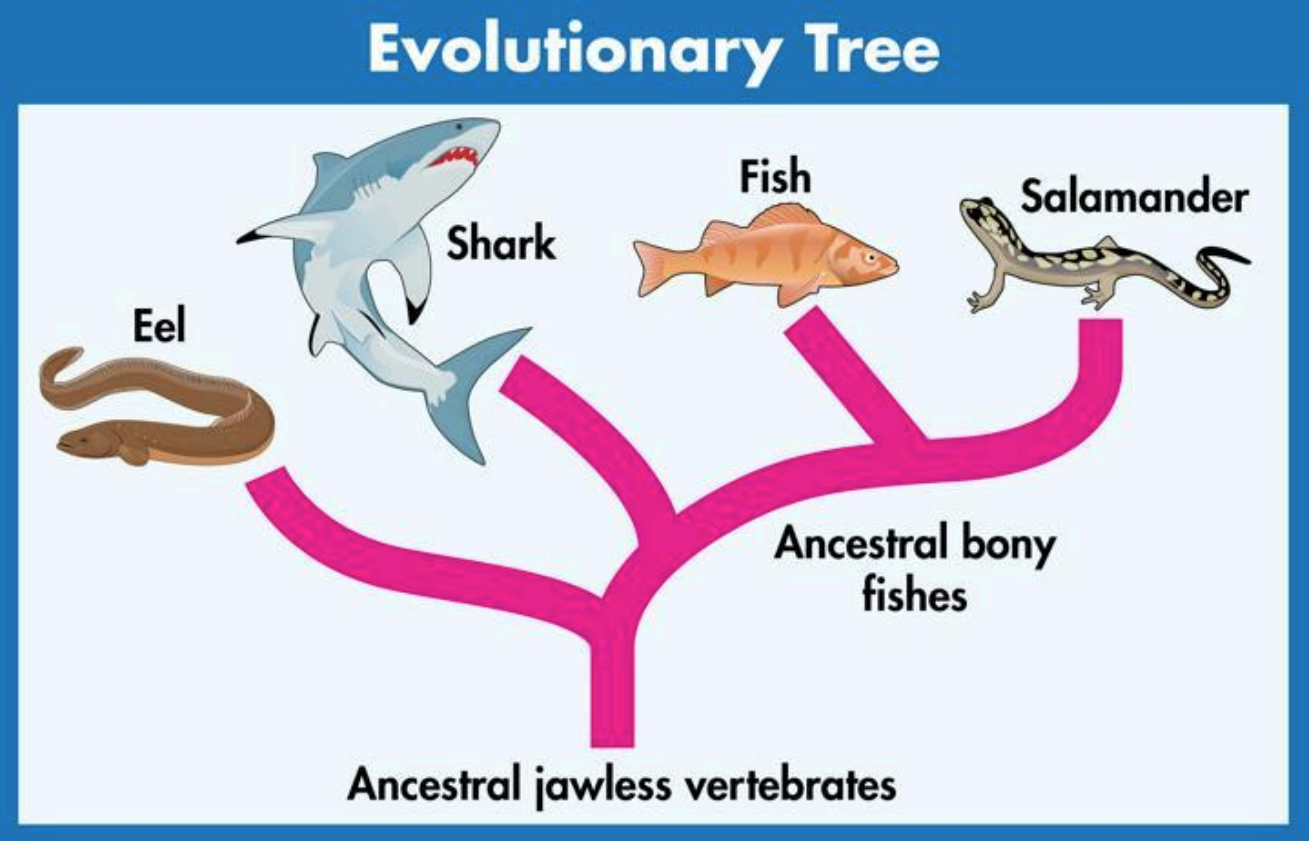
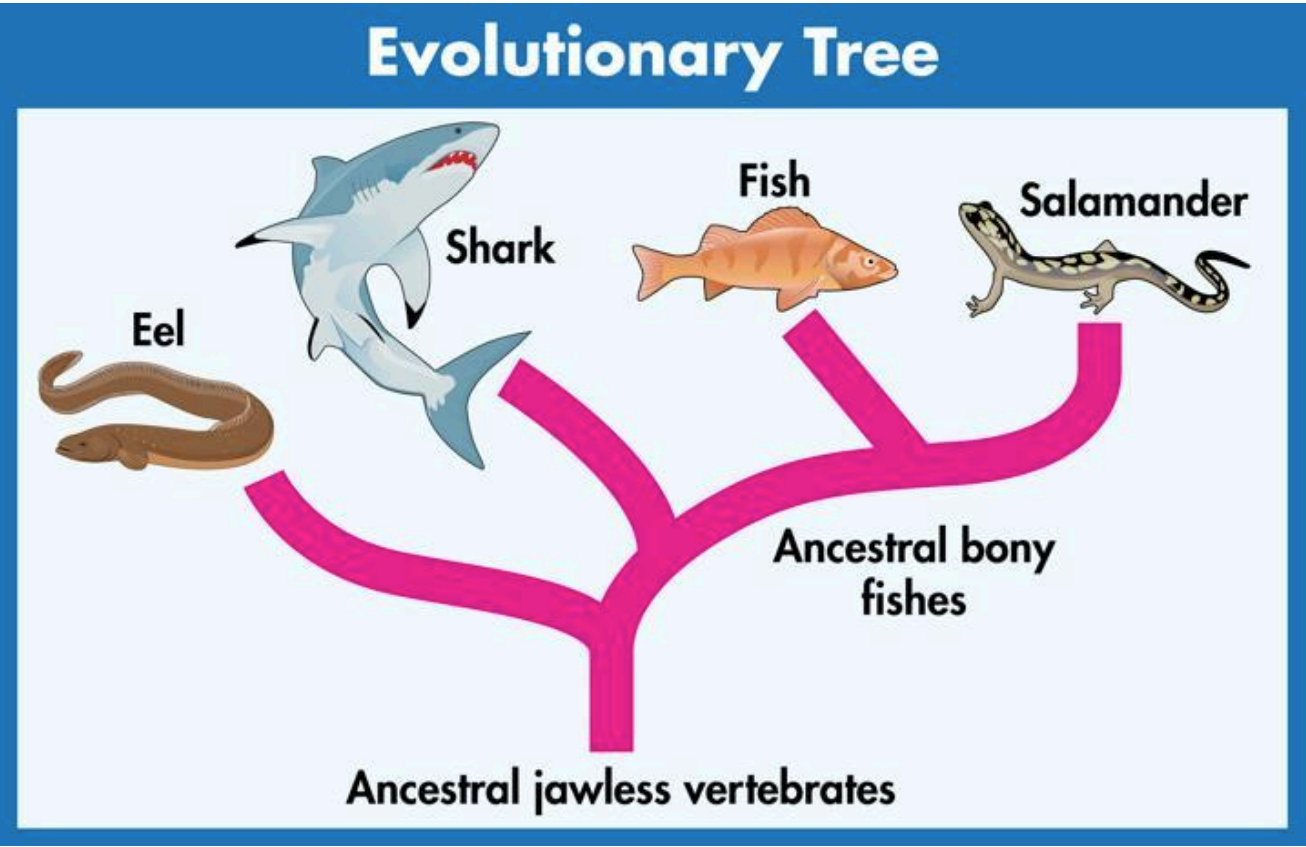
How many taxonomic units are on this evolutionary tree diagram?
1
2
3
4
When did complex animals first begin to appear?
400 million years ago
550 million years ago
670 million years ago
700 million years ago
Prokaryotes are unicellular organisms that do not contain ________.
a nucleus
ribosomes
a cell membrane
a cell wall
When did arthropods first appear?
500 million years ago
550 million years ago
570 million years ago
600 million years ago
When did eukaryotes first form?
200,000 years ago
2 million years ago
20 million years ago
2 billion years ago
When did modern humans first appear?
10,000 years ago
100,000 years ago
150,000 years ago
200,000 years ago
In this evolutionary tree diagram, which two organisms are least closely related?
the eel and the salamander
the eel and the shark
the fish and the salamander
the fish and the shark
A scientist looking at animal fossils from 400 million years ago might see the first appearance of which organism?
insects
amphibians
jellies
land plants
When did multicellular life forms appear?
about 100,000 years ago
about 1 million years ago
about 10 million years ago
about 1 billion years ago
The codons that code for alanine in a potato beetle are the same as those that code for alanine in mackerel and humans. This evidence best supports which of the following ideas?
humans and fish evolved from insects
different species synthesize the same proteins
insects, fish, and humans express the same genes
different species share components of the genetic code
Why was the development of proto-amphibians so significant to life on early Earth?
Proto-amphibians were the first organisms with bilateral symmetry.
Proto-amphibians were the first organisms to reproduce sexually.
Proto-amphibians were the first organisms not confined to a water environment.
Proto-amphibians contributed huge amounts of oxygen to the atmosphere.
Which is a reasonable statement about the asteroid impact 65 million years ago?
It caused birds to evolve from dinosaurs.
Surviving organisms were able to diversify and spread.
This event immediately increased biodiversity.
It was the largest asteroid impact in the solar system.
Why is sexual reproduction critical to the process of evolution?
Sexual reproduction results in organisms that are genetically identical to their parents.
Sexual reproduction can produce more offspring than asexual reproduction.
Sexual reproduction results in offspring with more genetic variety than asexual reproduction.
Sexual reproduction produces stronger organisms than asexual reproduction.
A scientist claims to have found a fossil that is more than 6 billion years old. Why is the scientist’s claim false?
Fossils disintegrate after 10,000 years.
Earth had not yet formed 6 billion years ago.
The hot magma covering early Earth would have destroyed fossils.
Life did not emerge on Earth until 5 billion years ago.
A global storm system lowers the average temperature of Earth by 10 degrees. Most of the organisms on Earth are wiped out. 1 million years later, Earth is once again populated by a variety of organisms. This repopulation is an example of a(n)
decrease in biodiversity.
episodic speciation.
mass extinction.
gradual extinction.
A scientist claims to have found fossil remains of an arthropod. The specimen has bilateral symmetry and a backbone. Why is her claim false?
Arthropods do not have bilateral symmetry.
Arthropods are invertebrates.
A backbone would not have fossilized.
Arthropods did not leave any fossil remains.