Twa kɔ nsɛm atitiriw so
Log in
Sign up for FREE
arrow_back
Laabri

Unit 7 Practice Test

star
star
star
star
star
Last updated about 2 years ago
19 Nsɛmmisa
1
1
1
1
1
1
1
1
1
1
1
1
1
5
1
1
1
2
1
Asemmisa {{asɛmmisaAhyɛnsode}}
1.

If a half cup of butter weighs 4 ounces, then how many cups are in a pound of butter?

Note: There are 16 ounces in a pound.

Asemmisa {{asɛmmisaAhyɛnsode}}
2.

In an Oreo cookie factory, 15,000 cookies are made every five minutes. How many cookies are produced in one 8-hour shift? Label you answer.

Asemmisa {{asɛmmisaAhyɛnsode}}
3.

Solve the proportion.

Asemmisa {{asɛmmisaAhyɛnsode}}
4.

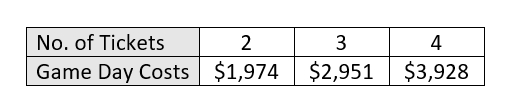
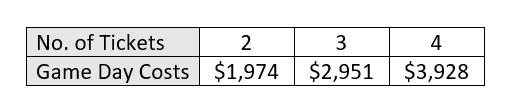
During the NBA play-offs, ticket prices often are inflated due to scalpers. Calculate the price for a Bucks ticket based on the information in the table.
Asemmisa {{asɛmmisaAhyɛnsode}}
5.

The Fiserv Forum has a parking garage that charges a flat fee for parking, which is included as part of the game day costs. How much is the parking fee?

Hint: Use your answer from problem 4 to help you determine the cost of parking.

Asemmisa {{asɛmmisaAhyɛnsode}}
6.

Write an equation in slope-intercept form that models the linear relationship in the table.

Hint: Use your answers from problems 4 & 5 to help you write the linear equation.

Asemmisa {{asɛmmisaAhyɛnsode}}
7.

Use your equation from problem 6 to calculate the game day costs for a family of six to go to a play-off game to see the Bucks play at the Fiserv Forum.

Asemmisa {{asɛmmisaAhyɛnsode}}
8.

A car had an initial value of $31,250. After 5 years, the car value dropped to $12,500. What is the average depreciation of the car over those 5 years?

Asemmisa {{asɛmmisaAhyɛnsode}}
9.

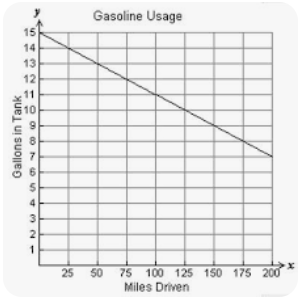
Michael tracks his gas usage over a 200 mile trip. Determine the slope from the following graph and explain it meaning.

Asemmisa {{asɛmmisaAhyɛnsode}}
10.

Michael tracks his gas usage over a 200 mile trip. Determine the y-intercept from the following graph and explain it meaning.

Asemmisa {{asɛmmisaAhyɛnsode}}
11.

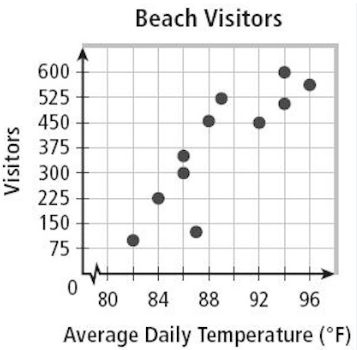
Draw a trend line. Estimate and interpret the slope of the line.

Asemmisa {{asɛmmisaAhyɛnsode}}
12.

Estimate and interpret the y-intercept of the line.

Asemmisa {{asɛmmisaAhyɛnsode}}
13.

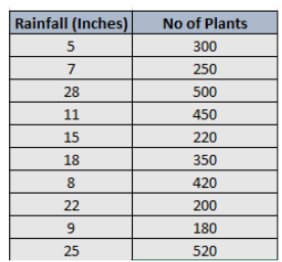
Identify the independent and dependent variables in the table provided.

Draggable itemarrow_right_altCorresponding Item

Time in minutes

arrow_right_alt

independent

Rainfall in inches

arrow_right_alt

dependent

Number of plants

arrow_right_alt

None of the above.

Asemmisa {{asɛmmisaAhyɛnsode}}
14.

Create a scatterplot. Label the axes. Draw a trend line and write a linear model for your trend line.

Round the slope & y-intercept to the nearest hundredth.

https://www.desmos.com/calculator

Asemmisa {{asɛmmisaAhyɛnsode}}
15.

Using your equation from #14, predict the number of plants for 20 inches of rain.

Asemmisa {{asɛmmisaAhyɛnsode}}
16.

Is your prediction in #15 an example of interpolation or extrapolation?

Asemmisa {{asɛmmisaAhyɛnsode}}
17.

What is the correlation coefficient for the scatterplot you made in #14? Is this a strong or weak correlation?

Asemmisa {{asɛmmisaAhyɛnsode}}
18.

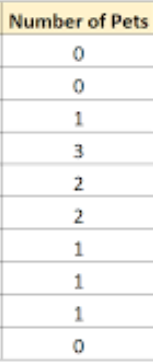
Determine the following using the data in the table:

Match the correct value to the correct statistic.

Draggable itemarrow_right_altCorresponding Item

2 pets

arrow_right_alt

Median

1 pet

arrow_right_alt

Quartile 1

1.6 pets

arrow_right_alt

Quartile 3

0 pets

arrow_right_alt

Mean

1.1 pets

arrow_right_alt

None of the above

Asemmisa {{asɛmmisaAhyɛnsode}}
19.

Data on the number of pets someone owns is an example of what kind of data?