Look at the structure and determine what type of carbohydrate it is.
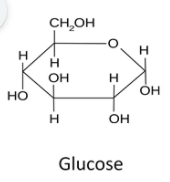
Look at the structure and determine what type of carbohydrate it is.
Carbohydrates or simple sugars are a major source of energy for all living things. Carbohydrates are made up of three key compounds; carbon, hydrogen, and oxygen. The name carbohydrate is derived from two words- carbo for carbon and hydrates for water. The chemical formula for glucose, a simple sugar, is C6H12O6. A simple sugar is also known as a monosaccharide. Two sugars joined together are called a disaccharide. More than two sugars joined are known as polysaccharides.
Carbohydrates are found in many of our foods like potatoes, rice, pasta, corn, and breads however, our bodies cannot absorb polysaccharides (long chains of carbohydrates). The breakdown of carbohydrates begins with saliva in the mouth. Our saliva contains an enzyme called amylase. The amylase works like a pair of scissors breaking the bonds between each simple sugar.
Once carbohydrate digestion is complete, single molecules of glucose are left. Glucose is small enough to be absorbed by the small intestine. Once it is absorbed, glucose can be carried to your body cells. The organelle the breaks down glucose to release energy is the mitochondria. The process in which glucose is broken down is called cellular respiration.
Look at the structure and determine what type of carbohydrate it is.
Look at the structure and determine what type of carbohydrate it is.
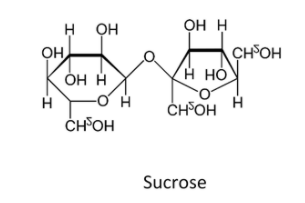
Look at the structure and determine what type of carbohydrate it is.
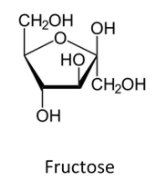
Look at the structure and determine what type of carbohydrate it is.
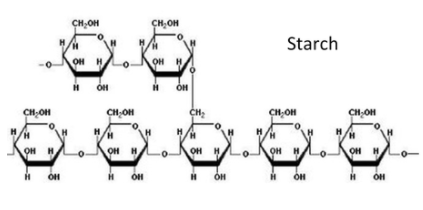
Carbohydrates are a major source of _________for all living things.
A carbohydrate that is a simple sugar like glucose and fructose. It is the building blocks of carbohydrates.
Three or more monosaccharides that are joined together like starch and cellulose.
Two monosaccharides that are joined together like sucrose and lactose.
List 1 type of food that contain carbohydrates.
What organelle breaks down glucose to release energy?
What are the three major elements in carbohydrates?
What is the ratio of carbon, hydrogen, and oxygen found in carbohydrates?
If carbohydrates have a 1:2:1 ratio of C:H:O. . What is the chemical formula of a carbohydrate that has 12 carbons.
Most carbohydrates end in
What is the general shape of carbohydrates?
Name the three most common polysaccharides in biology.
What polysaccharide stores energy in plants?
The word carbohydrate is made up of two parts - carbo and hydrates. What does carbo mean?
What polysaccharide stores energy in humans?